family

Frank Schwa

“Can I rearrange this room?” “Fred” asked a couple of days before Christmas.

“Sure,” I said. “What do you want to do?”

“I want to move the Christmas tree,” he said, “and, I don’t know, I need to think about it. But the feng shui in this room is all wrong.”

“You can’t move the Christmas tree,” I said. “It stays by the sliding door so people driving past the house can see the lights.”

I told Bud about it later.

“Who’s Frank Schwa?” he asked.

How do I explain feng shui, the harmony in a room, to man who had hoed out so much junk just to make this room usable?

The family room, as we called it, had become a depository — first for the boxes that we moved out of my brother’s apartment after he passed away, then for the boxes and furniture we moved when we rearranged to make space for a downstairs bedroom and bathroom for my father, and finally for the boxes that we moved home from the nursing home after my mother passed away.

Maybe the feng shui was all wrong.

Maybe the “flow” didn’t work.

But there’s a level of comfort in that same orange loveseat being in the same spot through the years.

1979
My grandparents — Christmas 1979
1999
Christmas 1999
Christmas 2009
Christmas 2009

I confess — we moved it this year, though. Not because of feng shui, but to make room for a smart TV.

The focal point still is, and always has been, the fireplace.

img_1015

I think Frank Schwa would approve.

The ambience, the aesthetic appeal — both are present in its friendly warmth.

Even more important to me, though, are the people who fill the room.

img_9594
Christmas 2016
Christmas 2016
Christmas 2016

Frank Schwa may or may not be among them.

To me, he’s the least important guest.

family · Life

Colorblind

pict1161
The way you can tell which of these boys isn’t my brother is the Yankees shirt. No one in my family would dare to wear such a thing.

My parents did a good job raising colorblind children in a lily-white town. I never heard either of them make any kind of racist statement. Instead I watched both of them operate from a platform of compassion toward all people.

Every summer for a number of years my parents invited Fresh-Air children from New York City to stay with us for a week or two. Honestly, what made Hector and Barbara different from me wasn’t the color of their skin.  Rather it was their experiences as city kids.

We had a garden and a menagerie. We caught frogs in the pond during the day and fireflies in the yard at night. We could see the stars.

Barbara and I shared my room. We lay in bed at night and talked. She missed her mom and her mother’s food the same as I would have missed my mom and her cooking.

The battle for middle-class America isn’t about seeing or not seeing the color of the skin. It’s about understanding the similarities and differences of our experiences.

At our Sunday worship service before MLKJr Day, a woman talked about her experiences in the late 60s – early 70s when she, a white woman, was married to a black man. Her husband, college-educated and employed, some days was quite late getting home because police prevented from entering his own neighborhood simply because of the color of his skin. She spoke about “white privilege” — something we white folks can’t see because we live it.

In Cooperstown, I remember watching both white and black baseball players inducted into the Hall of Fame. Arrogance comes in all colors. But so does humility and friendliness.

My two favorite ball players that I met when I worked at the Hall of Fame — Cool Papa Bell and Ernie Banks — were both black. I don’t know a single one of their statistics, but I remember their smiles and the way they made me feel.

Jackie Robinson is one of my father’s heroes. When I read his story, it made me cry. Such indignity in the way he was treated. Such strength in his response.

But I ramble.

I hope I have passed on to my children what was given to me — eyes that don’t see skin color. It can’t stop there, though.

Now we need to understand the difference of our experiences.

We’re making progress.

But we still have a long way to go.


elderly · family

House Beautiful

Whenever I drive my father anywhere, he comments on the houses we pass.

“Those are some well-kept houses,” he says, especially in the summer when the yards are groomed and flowers are blooming.

Somewhere along the line maintaining his house became too much.

My mother kept beautiful gardens. She was outside nearly every day in the spring and summer planting, weeding, and pruning so that passers-by were treated to some beauty.

In May 1994 the house was featured in a 2-page spread of Runner’s World magazine. A 10K race was routed right past the house.

the 2-page spread
the 2-page spread
a better picture
a better picture

As dementia crept in, we discouraged her from being out near the road. I was worried about her safety.

Plus she would shake her fist at cars that drove past too fast.

I was worried she would get a reputation for being a crazy old lady.

As the gardens were overtaken by weeds, the fence rotted.  The split rail fence needed a number of rails replaced but when my father purchased new rails a few years ago and brought them home, he discovered they were too short.

“That’s okay,” he said to me. “I’ll just dig up the posts and move them closer.”

My eighty-something father, who was struggling was balance issues and growing frailer by the minute, honestly thought he could do that.

With aging parents — as with children — figuring out how to address challenges without totally discouraging them with you-can’ts is tricky.

“How about if we get someone to help you with it?” I suggested.

“I can do it,” he insisted.

But he didn’t.

And now the rails are rotting in a pile.

Bud has been working hard to reclaim the gardens. Last summer, he weeded and weeded and weeded. He cleared brush. He mowed. He pruned. He’s one of the hardest working people I know and I wondered if my father even noticed.

We were driving to get his haircut last week, and he commented on how well-kept the houses were on the way.

“It takes a lot of work to keep a house looking nice,” I said.

My father was quiet for a few minutes staring out the window. “When is Bud coming again?” he finally asked.

“Friday,” I told him, “when he gets done with work.”

I was relieved because that told me two things:

  1. He made the connection between the work required to keep the house looking nice and Bud.
  2. He recognized that Bud and I don’t get to see each other every day.

We’re doing it for him.

It isn’t easy, but it’s important.

And I’m grateful that we can be there — and get that house looking nice again.

Faith · prayer

Prayer of Confession

In the Book of Common Prayer, the morning prayer of confession begins,

ALMIGHTY and most merciful Father; We have erred, and strayed from thy ways like lost sheep…

I was interested to read Lancelot Andrewes note on this prayer —

We have wittingly and willingly run from Your ways like an untamed heifer

img_0672Last summer, on my walks, I often saw the cattle in a neighboring field.  Sometimes they would run up to the fence as I walked past. One liked to lower his head and shake his horns at me threateningly.img_9663 I tried to reassure him that I meant no harm. I was simply out for a walk.img_0675

My bovine friends — or not-friends — became a fixture on these walks. I would scan the field to see where they were grazing. When one escaped, I tried to encourage him to go back with his compadres, but it’s hard to encourage an 1800 pound animal and keep a safe distance. img_0504

One fall day, Bud was working in the barn across the street when he heard the screech of tires. He ran out to see a woman, wide-eyed, sitting in her stopped car in the middle of road, staring a herd of cattle thundering toward her up the road. They ran past the house, tipping the mailbox as they went and disappearing over the crest of the hill followed by men in pick-up trucks.

“I had seen them trying to load them into a trailer earlier,” Bud told me. “Must be they decided to get them to the other farm the old-fashioned cattle drive way.”

That evening, when we went for a walk, we saw the guys in the pick-ups sitting outside the pasture that had once held their steer.

“That was something else,” Bud said to them, “watching them run up the road.”

“They didn’t want to get on the trailer,” one guy said, “and broke the fence. If you see ’em, let us know.”

“You weren’t herding them?” we both asked.

“Hell, no,” the man replied.

About a dozen steer were now on the wild in Otsego County, including the one who occasionally menaced.

As best I know, they were never found — although I did hear of occasional steer-sightings.

I pictured them when I read Lancelot Andrewes words.

Breaking through the fence — wittingly and willingly.

Running from the livestock trailer — running from Your ways

Like wild cattle — like an untamed heifer

It’s quite an image.

Almost exquisite — if one can use that word for cattle.

elderly · Faith · family

Incapable

Below is a(nother) dusted-off post from 2011. In 2011 my mother was still alive and living at home. She clearly had dementia and her body was slowly failing on her.  My father was her main care-provider, but that summer was hard on him, too. With all that was going on, I helped out as best I could.

Mom and Dad -- summer of 2011
Mom and Dad — summer of 2011

Last Thursday we went for the follow-up visit for my mother’s bladder biopsy.

The baby-faced doctor handed my father the pathology report.  “It’s bladder cancer, just as I suspected,” he said.

He continued speaking, “It’s high-grade papillary urothelial carcinoma.”  I could see the words on the path report in my father’s hands. “The cancer hasn’t spread past the lining of the bladder.  There is no invasion into the muscle or the subepithelial tissue.”

When he began discussing the treatment options, it was truly a discussion.  He listened to our concerns, answered questions, explained, and listened some more.

We finally reached the point in the process that I was anticipating (and dreading).

My mother is now incapable of making decisions, especially decisions like this.  She can decide what she wants for lunch — usually something involving marmalade.  She can decide what she wants to wear — usually the same thing she has been wearing for the past three days.  She can decide when she wants to take a nap — often.  She cannot make an informed decision about her health care.

My father has always shown the utmost respect for people and guarded their dignity.  I knew my father would want to include my mother in the decision-making process. When the moment came, my father turned to my mother and said, “I suppose we need to ask the patient what she would like to do.”

I started to pipe up, “Dad, I think we’re at the point when you need to make these decisions for Mom,” but my mother interrupted.

My mother, with the utmost clarity, said, “I don’t think I understand what’s going on.  I trust whatever you decide.”

Hallelujah!  If the angels weren’t singing in heaven, they were singing in my heart!

I hadn’t known to pray for this, but this was an answer to prayer.

The rest of the visit was a piece of cake.  We made the decision to simply wait.  At 83, any treatment may have been worse than the disease itself….

I had forgotten so much about that time period. The bladder cancer turned out to be a red herring. So many other things made that season hard. Had I know what lay ahead, I would have said that I was not capable of any of it.

But I was.

God makes our path a little windy so we can’t see what’s around the next bend. Perhaps if we knew, we wouldn’t want to go on.

Today, January 13, 2017, I can look back and say, Thank you, God, for getting me through those years. It makes it easier to trust You on the road I’m traveling now.

elderly · family · Life

Misunderstood

scn_0001-2I found a little notebook that my mother probably kept in her purse in the mid-to-late-1980s. The notes inside cover a huge span of topics:

Sermon notes?
Sermon notes?
Golf rules
Golf rules
Recipes
Recipes
Other miscellaneous notes

She even wrote a cheat sheet for my husband’s siblings. He has eight brothers and four sisters, so she wrote out their names and little reminders to help her keep them straight. I should have been so smart.

One note bothered me – partly because I couldn’t figure it out what she was trying to say, and partly because I have anxiety about doing things right for my father.

don’t do anything
you don’t tell them
Not recipes
Not checkbook

Helping elderly parents involves walking a fine line. On the one hand, I have a tremendous amount of respect, appreciation, and love for them, but on the other I sometimes need to take the reins.

The other day I took my father to get his haircut. When he was done, he fished his wallet out of his back pocket. He rifled through it with his fingers, pausing on a five dollar bill before looking at me questioningly.

“What do I need here?” he asked, and he pushed the wallet into my hands.

I handed the woman a twenty — the haircut cost $10 — and she gave back a five and five ones. I handed these to my father. “You need to decide how much you want to tip her,” I said.

It was awkward. She picked up the broom to start sweeping. He fanned out the money in his hand and fiddled around with the bills.

“What are you doing to me?” he said. Clearly he couldn’t think through the next step.

I felt terrible. I took some of the ones and handed them to the stylist.

But I wasn’t doing anything to him. I was trying to allow him some autonomy.

At home I’ve started paying some of his bills without discussing them with him. The bills are confusing for him, but cutting him out of the process feels wrong to me too.

don’t do anything
you don’t tell them
Not recipes
Not checkbook

The words in the notebook stung. I’m trying so hard to do right by him.

I have a futile hope that someday he’ll be able to do it all again. Will he understand why I took over?

I pulled out Mom’s notebook again and studied the rest of what was written on that page.

Screens –
monochrome – 1 color
get 80 columns
c/ monochrome monitor
not c/ T.V.
Color – expensive…

The next page had more computer-buying advice. Were these notes from an introductory computer seminar?

first
Buy Software ^ you
need — then Hardware
to go with it

Seriously?

But maybe those first lines, “don’t do anything you don’t tell them” refer to computers, and the fact that they are just machines.

But then, why “not recipes”?

Why “not checkbook”?

I’ll probably never know.

Alzheimer's · Faith · family · poetry

The Weight of Struggles

In 2011, my mind was spinning with all the information being thrown at me.  Bladder cancer.  Catheter care.  Chemotherapy.

That summer, my mother had been diagnosed with bladder cancer.

As if Alzheimer’s wasn’t enough.  As if a second bout with breast cancer wasn’t enough.  As if my father needing a pacemaker wasn’t enough.

In the midst of all this, I wrote a poem based on Milo of Croton, the legendary Greek wrestler who began each day lifting a calf.

Okay -- not lifting a calf here.
Okay — not lifting a calf here.

The legend goes that by lifting the same calf every morning, Milo could eventually lift a full-grown cow or bull. I didn’t need to lift a physical cow, rather a heavy load of struggles, one that was increasing in size.

If I lift the same calf every day
Could I someday lift a cow?
It seems logical and sensible
But impossible somehow.

Somehow I become broken
And it’s more than I can take.
Will I see failure coming?
Or do I need to break?

Or do I need a break
From lifting up the cow?
Am I stronger then, or weaker,
When I start to bow?

To bow under the pressure that’s
So heavy on my soul
That the spirit and mind and body
All begin to show the toll;

When can I say “Uncle”
And deal with this no more?
I strain under the calf-turned-cow
My cheek pressed to the floor,

Trying to lift up the cow,
But the Lifter of my head
Says, “Let Me help. Stop a while.
I’ll put others in your stead.

“Let friends come beside you.
You can take a rest.
Trust Me; it will be okay.
I really know what’s best.”

But the habit formed of lifting,
Lifting, lifting every day
Is scary to give up.
Lord, show me the way.

During that time I felt God answering every prayer I ever prayed about knowing Him more, trusting Him more, and resting in Him more completely.

The funny thing about challenges is that the harder they are, the deeper we grow.

I couldn’t meet the challenges.

At least not alone.

I found myself clinging to my faith during that challenging time.

Faith is not a crutch as some might say.  It is a Strength.

It’s also faithful friends — that hands and feet of Christ.

I wrote Milo of Croton 5 years ago — and I think I still haven’t learned to yield.

But I’m certainly stronger.

Thanks be to God.

family · Leaning In · Life

Trapped

In the spirit of “Leaning In,” I offered to help my father write some letters.

During December I felt trapped, much the way a mother of a toddler feels. I remember being home with small children and wondering what it would be like to be able to do and go without worrying about other people. Now I sometimes feel that way again, but it’s not because of small children.

I had asked Laurel some of the same questions I asked Mary (see Explanation). Laurel knew how old I was. She also astutely answered the what’s-my-favorite-thing-to-do question. “You like alone-time,” she said — and I felt a little lump in my throat because she understood me so well.

Alone time. I crave it. Like chocolate. Or coffee.

When I was home with toddlers, I would retreat to the bathroom — and they would stand outside the door, talking to me, trying to get in, asking when I was coming out.

In December, my father would sometimes stand at the bottom of the stairs. “Sally? Sally? Are you going anywhere today? I’d like to go out,” he would say. And I would feel so selfish that I just wanted to go out alone. All. By. Myself.

With toddlers, sometimes they would follow me everywhere. “Fred” used to sit on my foot and hold onto my leg. I would hobble around, my steps uneven because I was dragging a little boy with me. He simply wanted to be with me.  If I stopped to read with him or play with him, sometimes that would satisfy his Mom-time need, and, in turn, I would have a little alone time. In the kitchen. Woohoo.

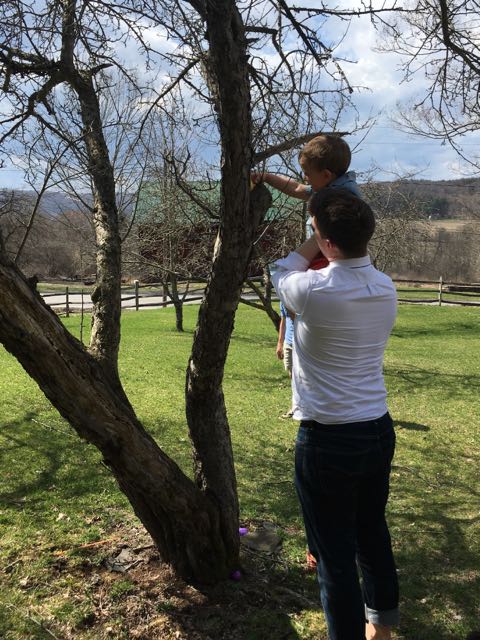
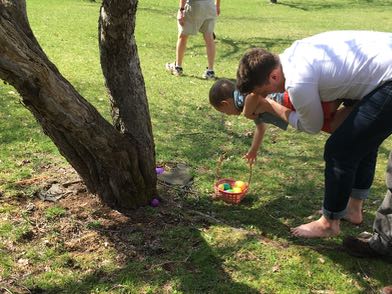
Of course, I couldn't find a picture of Jacob hanging on my leg -- they do exist! -- but this him, the youngest at the time, at about the right age.
Of course, I couldn’t find a picture of “Fred” hanging on my leg — they do exist! — but this is him, the youngest at the time, at about the right age.

So — leaning in. I decided in 2017 that I wouldn’t try to escape, but would rather lean in. Embrace.

Instead of escaping upstairs, I asked my father if I could help him write a letter. He had been saying that he wanted to write to a few people, but, beyond the struggle of gathering thoughts into words, he also struggles with the fine motor coordination of writing.

Yesterday, we sat to “write.”

It took him a long time to formulate his thoughts, but his words revealed how trapped he felt, too. He told his friend why he couldn’t travel to visit her —

 … I feel like I should accept the wisdom of the rest of my family that I should not drive a car.  I agreed to this reluctantly, but there’s no way out.

No way out. What a terrible feeling.

He got frustrated with the writing process and we put the letter aside.

So today, we’ll finish that letter and get it in the mail.

And I’ll take him out with me.

It’s a lot slower running errands with a person with a walker.

Not unlike a child hanging on a leg.


family

Explanation

“What’s something I say a lot?” I asked Mary.

I was reading another person’s post on Facebook that contained a list of questions parents can ask their children to get funny answers.

I knew I was in trouble when Mary answered, “I’ve suddenly forgotten everything you’ve ever said.”

“Really?” I asked.

“My mind just goes blank sometimes,” she said. “Once in geometry class, the teacher asked me a question and I told that I had just forgotten everything I ever knew about angles. She thought that was pretty funny.”

Mary’s answers revealed that she recognized my penchant for coffee.

      Q: What makes me happy?
      A: Coffee.
      Q: What makes me unhappy?
      A: Lack of coffee.
      Q: What’s my favorite food?
      A: Is coffee considered a food?

And that she understood how important home is to me

      Q: If I could go anywhere in the world, where would it be?
      A: Home

But one answer definitely needed more explanation.

      Q: What’s my favorite thing to do?
      A: Cut pictures out of children’s books

Yes, this is true. But it may not be exactly as it sounds.

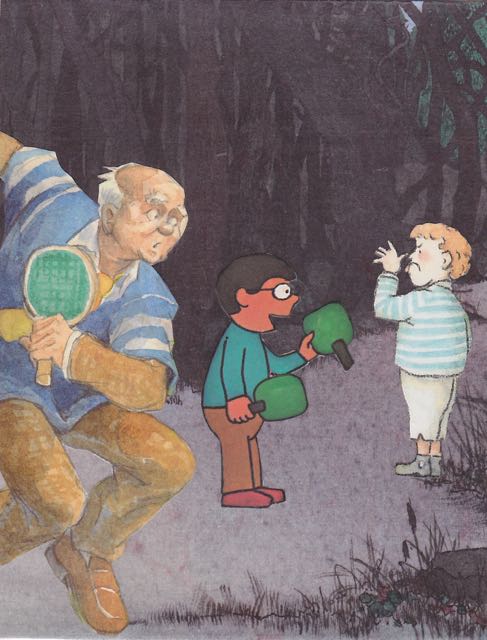
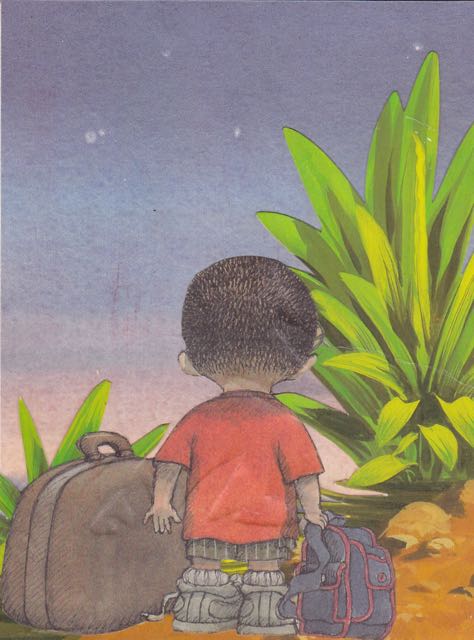
I’ve been playing with collage, and using old picture books — the ones with pages falling out, or colored on, or ripped — and cutting out the pictures to use in my collages.

For Christmas, our place holders didn’t have names on them, just pictures that made me think of that person. img_0899To make 20 place-cards required a lot of pictures. Mary watched me spend a lot of time snipping. And she saw me get excited whenever I found a beat-up copy of a favorite book.

Some of my cut-out pictures have made their way onto cards. Quirky cards, at best. The possibilities are infinite when combining children’s books.

A dear friend (and recipient of one of these strange cards) sent me a stamp so I can add my name to the back of the cards and make them official.img_1033

They are made with love.

And often while sipping a cup of coffee.

Mary can attest to that.