Faith · Travel

The Journey of Tuga and Aleluja — part three

(This is the conclusion of a presentation I gave — or tried to give — at our church on October 15, 2017)

Our work in Bosnia took place in Gradacac, a city about 3 hours north of Sarajevo.

Ostensibly, we were there to build a house.

Every morning we drove to the work site in two loads using a car lent to our group by a family for whom a house had been built by a previous team. We were a little cosy in the Peugeot station wagon but it got us back and forth on the narrow windy roads.

I asked Amy what the family who lent us their car would do for transportation that week.

“I don’t know,” she said. “Probably walk.”

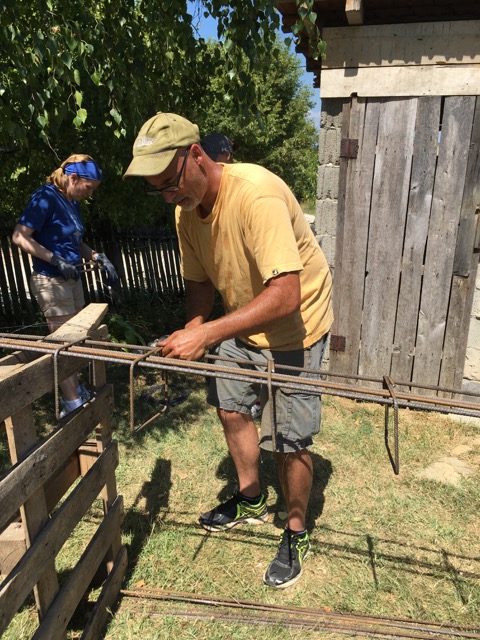
At the house, the work were directed by maestros, some older experienced builders.  Initially I’m not sure they trusted the skills of the Americans. Our men-folk were tested by wiring together lengths of rebar.
The women moved bricks.

Passing bricks

Eventually, we all got to try our hand at rebar-wiring.

Some got to do a little masonry.

Most of the time, though, while the skilled laborers worked, we waited for tasks we would be allowed to do.

We talked. 
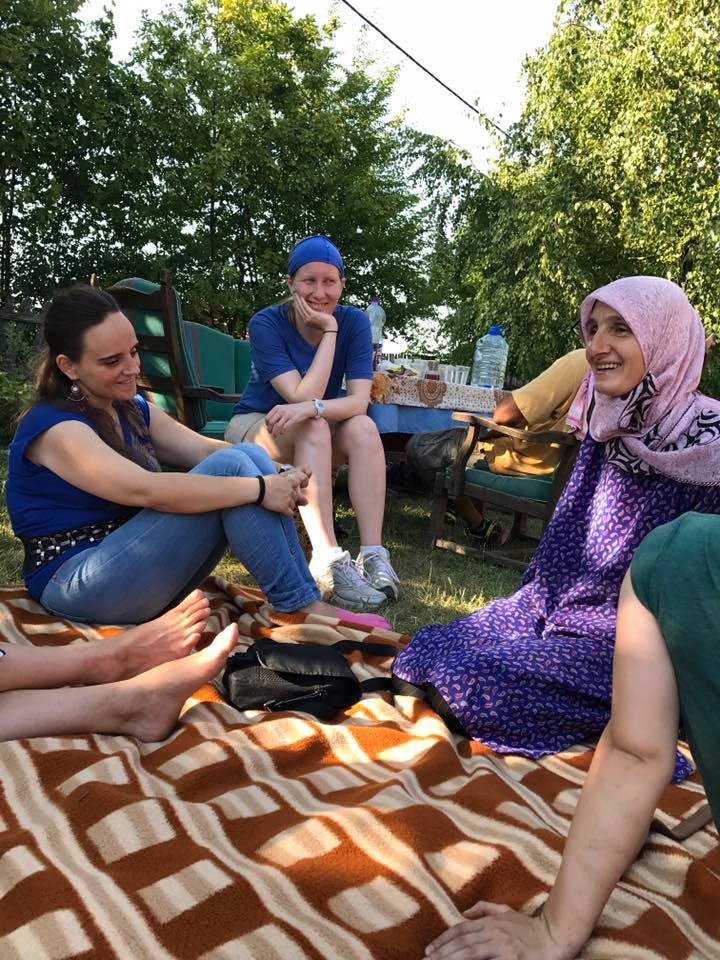
We told them about our families

and about our lives.
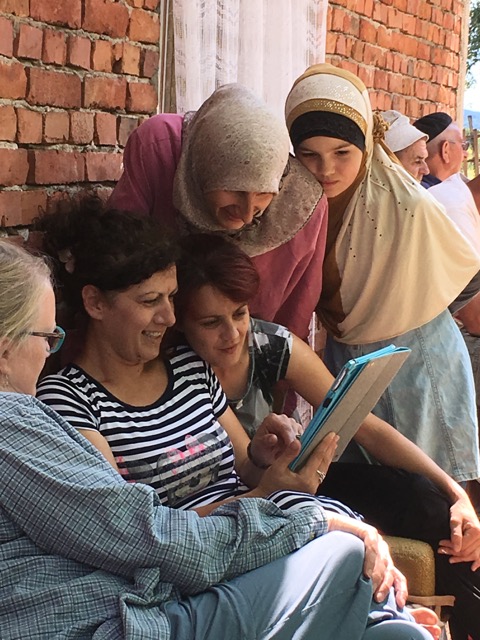
We tried to learn some words in Bosnian.And they practiced their English with us.
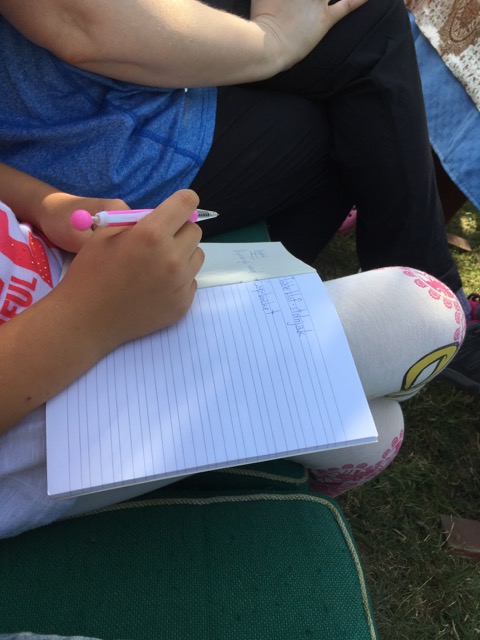
In the evenings we were regaled with music and food.

Significant progress was made on the house.
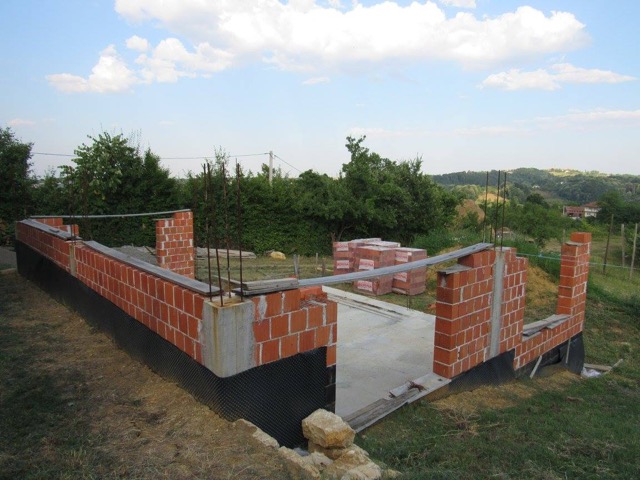
When we got there
Progress

But I’m convinced that the real mission work took place in the realm of relationship.

On our last day there, we went back to say our good-byes. The families had been so incredibly generous to us. I wanted to give them something in return.

I had brought some bracelets made by women in Haiti. When one of my friends had been raising money for an adoption I bought them from her.

These I gave to some of the women. I asked our translator explain that these were made by women from another part of the world who were looking for ways to provide for their families. I told her to tell them that women all over the world can support each other in small ways like this because we understand each other’s struggles.

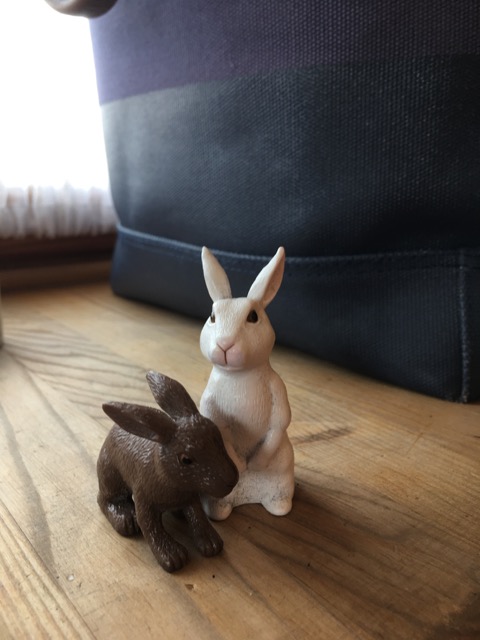
Then I took Tuga and Aleluja from my pocket. How could I possibly explain these little bunnies?

“In our religion,” I told the translator to tell Hanka, the woman I wanted to give them to — a woman who had shared her concerns about mental health in Bosnia, and how there was very little support for it, “we have a season called Lent. It’s a sad time. Jesus, who we believe to be the Son of God, knew He was going to die.”

I struggled to know how to express what I wanted to say — and, truth be told, I don’t remember exactly what came out of my mouth. I do, however, remember inwardly praying, as the lump rose in my throat, and I looked at the two rabbits sitting in the palm of my hand.

“I named these rabbits Tuga and Aleluja,” I said, and I looked at her to see that she recognized the words.

“Tuga means sorrow, right?” I asked, and she nodded. Her eyes were filling with tears, as were mine.

“Aleluja is a joyful word that we don’t say during Lent, so I hid this rabbit away.” I stuck the white rabbit behind my back. “But I put Tuga in my pocket and carried him with me everywhere, to remind myself that people all have sorrows hidden in the hearts.”

I looked at Hanka while the translator translated my words. I hoped it was making sense. Hanka kept nodding to show that she understood.

“All during Lent I carried Tuga and I thought about the deep sorrow of the world, but on Easter, the day that Lent ends because Jesus rose from the dead, I got Aleluja out from his hiding place and we were joyful again.”

I paused again, listening to the flow of Bosnian, hoping it was close to the essence of what I was trying to say.  When the translator was done, I handed the rabbits to Hanka.

“I want you to have these,” I said, “because you know that people carry sadness in their hearts. Tuga reminds you of that, but Aleluja also reminds you that there is joy in the world.”

She nodded and hugged me. We were both crying.

My friend Leah, who had followed the posts about Tuga during Lent and was also on this trip, saw what was going on. “Is that Tuga?” she asked, and then she offered to take a picture of us.

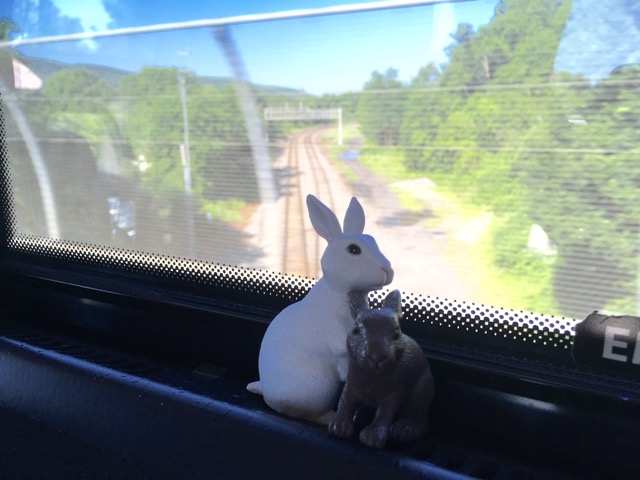
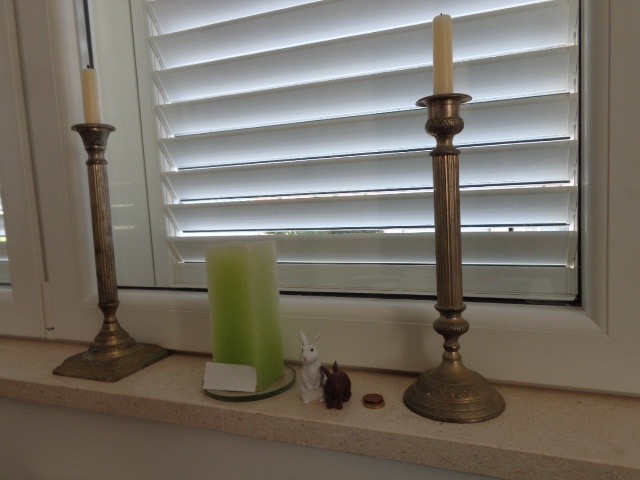
I like to picture Tuga and Aleluja sitting on a window ledge in Bosnia, doing whatever two rabbits can do to remind us of God and of tenderness and of compassion in this world.

It was an unplanned ending for my rabbits’ journey, but it seemed a fitting one.


Faith · Travel

The Journey of Tuga and Aleluja — part two

(This is a continuation of a presentation I gave  — or tried to give — at our church on October 15, 2017)

Tuga and Aleluja accompanied me to Bosnia this summer. At every place I stayed, I set them on the window ledge or my nightstand to remind me that every single person I would encounter on this trip has known both joys and sorrows..

Before traveling, I tried to read up on Bosnia, which turned out to be learning about Yugoslavia, which led to an attempt to understand the Ottoman Empire. The history of that land is layered and complex.

While the United States divides itself along racial lines, Bosnia and Herzegovina is divided along ethnic lines, and religion is often linked to ethnicity: most Bosniaks are Muslim, Serbs are Orthodox Christian, and Croats are Roman Catholic. Places of worship in Bosnia, though, have stood side by side for centuries.

Mosques and churches stood side by side

The wars that resulted in the break-up of Yugoslavia took place along those ethno-religious lines. The BBC documentary, The Death of Yugoslavia, begins its story with a rise in nationalism following the death of Tito.

The war in Bosnia was particularly horrible. Serbs slaughtered Bosniak men and boys, throwing their bodies into mass graves. The Bosniak women were systematically raped. Although it has been 25 years since their war, the scars are not fully healed. Fragments of bone are still being analyzed and those murdered are still being identified. In fact, we were in Bosnia for “Remembrance Day” — a day set aside to remember, to mourn, and to lay to rest those remains that have been found and identified in the previous year.

As we toured Sarajevo, we saw the site of the assassination of  Archduke Franz Ferdinand of Austria, the event that triggered World War 1.

We stood outside the library and I felt sick in my heart as I tried to understand what part of a war involved burning all the books and historic documents that had been housed there.

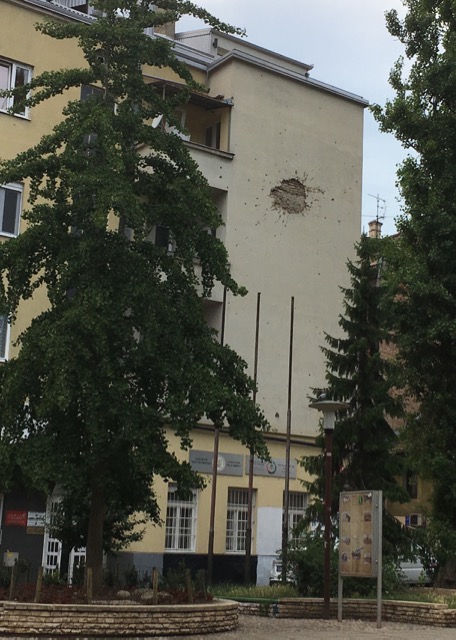
We saw buildings still pock-marked by mortar shells.

Sarajevo Roses dotted the streets. These commemorated places of fatal mortar strikes — red resin filling the scars left and plaques on nearby buildings with the names of those who died.

Parks became cemeteries because they had no other place to bury the bodies.

Just months before I had visited several cemeteries in Normandy. Any cemetery is a sobering place to visit, but these war cemeteries were especially heart-wrenching. The cemetery in Sarajevo stood out because these brave young men were my peers.

“In the midst of life, we are in death.” (Book of Common Prayer)

From the start, Amy, the pastor organizing the trip, had said this was a non-proselytizing trip. In the context of Bosnia’s history, it made sense that this trip would not involve talk of religion. We were to be the hands and feet of Christ, ministering to the people of a wounded country. Our actions were our words.

I had an advantage over the others on the trip. I had a little bunny to remind me of the sorrow.


Faith · Leaning In

The Journey of Tuga and Aleluja — part one

Part One of what I tried to say in church:

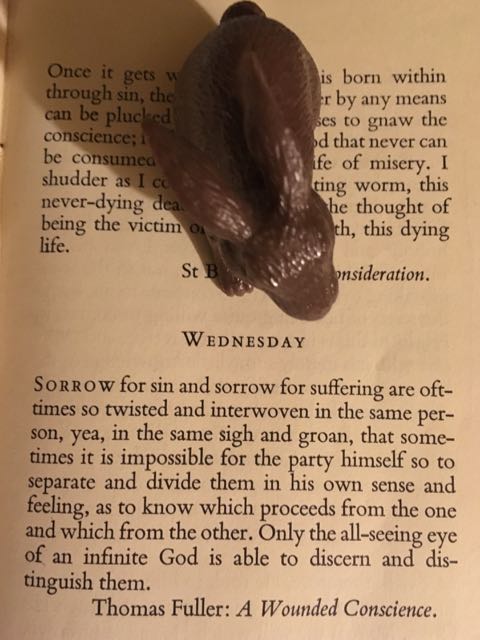
This past Lent I carried a little brown rabbit in my pocket every day.

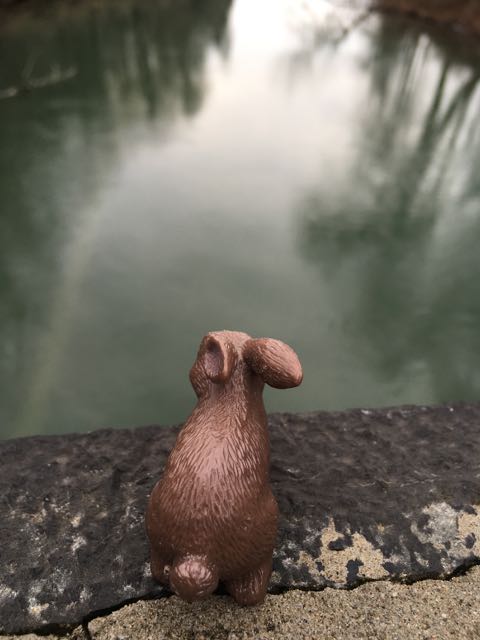
I named him Tuga, the Bosnian word for sorrow. His purpose was to remind me of the season, of the pain in this world, even when we can’t see it because it is hidden in a person’s heart — or in a pocket.

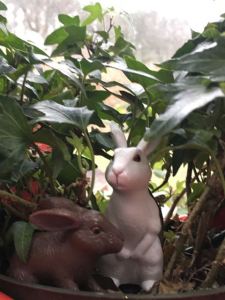
Tuga had come to me as part of a set. The other rabbit, a white one, I named Aleluja, a word we aren’t supposed to say during Lent. I hid Aleluja on Ash Wednesday, planning to bring him out again on Easter Sunday.

So Tuga was my companion for 40 days.

I carried him with me on my walks.

He was with me when I cooked, when I did laundry, when I read.

He went with me to swim meets, staying in my pocket while I officiated from the bulk head or along the deck.

Often I would reach down to pat my pocket and feel the hard corners of his ears, reminding myself that he was there — and why he was there. Or I would put my hand in my pocket and turn him over and over, like a fidget toy.

You see, in 2014, in the early hours of the morning on Ash Wednesday, my oldest brother, Stewart, died of a heart attack.  I went through the Lenten season that year feeling numb. Everywhere I went, I saw people talking and laughing, but I felt like my heart had, at least temporarily, turned to stone.

Stewart

For me, the anniversary of Stewart’s death isn’t a specific date. It’s Ash Wednesday.

Tuga, in 2017, reminded me of that Lent.

In fact, I had hidden Aleluja behind a picture of Stewart. Life hidden behind death. Sorrow in the midst of life.

When I was packing to go to Bosnia some months later, trying to choose only the barest of essentials because I needed to fit two weeks worth of stuff into one backpack, at the last minute, I grabbed Tuga and Aleluja off the shelf in my bedroom where they had been since Easter Sunday.

While some people worried that it would be risky to travel there, I wasn’t afraid. I was going to a place that had been scarred by war. Tuga would remind that the people I would meet bore scars — but those scars may be hidden in their hearts.

(Tune in for part two tomorrow.)

Hutchmoot · poetry

Godspeed

Taken 7:30 AM October 13, 2017

~~ Morning Prayer ~~
Thank you, God, for the beauty
Of the light upon the trees,
And though I see it every day,
Help me always see
The cloak upon the river
From the morning fog
And help me, Lord,
To always hear the mundane dialogue
Those simple common moments
That make up my day
To see,
To hear,
To taste,
Feel,
Smell —
To be present,
This I pray.
Amen


“You’re the Godspeed guy,” I said, when I finally recognized the man with whom I had been in conversation.

“That’s right,” he replied.

“That movie was life-changing for me,” I told him.

Godspeed, the movie.

Not the 2009 “intense, dramatic thriller set in the lingering light of the Alaskan midnight sun” (IMDB description).

No — I’m talking about the documentary subtitled “The Pace of Being Known.”

“Did it make you want to move to Scotland?” Matt Canlis asked, and he explained that that’s what some people got from it.

“Not at all,” I said. “It made me want to slow down.”

“Good,” he said.

Last year, after watching Matt’s film at Hutchmoot, I started taking long walks into town. My New Year’s Resolution for 2017 — to not use self-checkout at the grocery store — grew from the movie.

No, he didn’t talk about grocery stores in Godspeed. He talked about taking time to see people and the importance of community.

Then, there he was — in person.

Matt Canlis, the Godspeed guy, spoke at Hutchmoot this year. I wrote down more of his words than any other speaker.

Things like — “When God says, ‘Here I am,’ He’s always closer than you think, and in places you don’t expect Him.”

Or, “Our home is our greener grass.”

When I was at the grocery store yesterday, not using the self-checkout, waiting in line behind two other people, I marveled at the way the woman at the register knew not only me, because I go there every day, but the young man who refused the gas points — “Oh, that’s right. You walk everywhere.” — and the older man — “When are you retiring?” “The 28th.” “Of this month?!” After he nodded, she stopped counting out his change and turned to  grasp his hand in warm congratulations. “I’m so happy for you,” she said.

She was living at Godspeed, seeing the people who come through her line, and interacting with them. It’s so much better than a self-checkout.

I started a new job this week, lifeguarding for a couple of hours in the early morning before anyone at the house is awake. It was a way to help the new Aquatics Director. She was desperate for lifeguards, and I thought, I can do that.

“Lifeguarding is mind-numbing,” Philip said to me when I told him what he was doing.

He should know. I’m working a shift that he used to work as a teen. He did push-ups and walked laps around the pool to stay awake at 6AM, but that’s my time of day.

This morning, at the pool, one man struck up a conversation telling me about Native American artifacts he found in a field. After every dive, he would swim over to where I was standing to tell me a little more.

Another woman warned me that I may have to rescue her. “I haven’t swam in a while,” she said.

“That’s okay,” I told her. “I haven’t lifeguarded in a while.” We both laughed.

Lifeguarding is most definitely a Godspeed job.

My greener grass includes a pool. Not many people can say that.

Plus, the commute in the early morning is beautiful (check out the photograph at the top!).

And, I got to meet the Godspeed guy, which was one of the highlights of going to Hutchmoot.

poetry · Writing

Fraud

The writing wasn’t brilliant for Hot Dogs and Marmalade;
The draft folder overflowed with posts that were half-made.
Then when another prompt went by, a photo challenge, too —
The proprietress of the sorry blog wondered what to do.

Another day, another fail, another fruitless quest;
Yet still she clung to hope which springs eternal in the breast;
She thought, if only I could find a quote that tickled at the heart –
I think that I could pull it off, if I but had a start.

But Pascal obfuscated, as did Saint Benedict,
(the former was an intellect, the latter just too strict)
So upon that foggy brain grim melancholy sat,
For she had found no resonance, only quotes that fell quite flat.

From a few subscribers there rose a lusty yell;
It rumbled on the Macbook, it rattled in the Dell;
It knocked upon ol’ Facebook — well, that’s not really true.
It probably went unnoticed! It’s okay if I withdrew.

‘Cause life is very busy. I’ve got toilets to unclog,
Question-answering by the hour — and don’t forget the dog.
Grocery shopping, laundry washing and vacuuming to do;
Cook the dinner, wash the dishes. (Oh, yeah — the kids help too.)

Let me tell you there are days when I try to write some prose
But then my father needs some help, because he can’t get on his clothes.
And when my darling children ask for help with school,
I lose what patience I possess. Yes, I lose my cool.

Fraud!” cry the readers, and the echo answers fraud;
“You say you are a Christian. You say that you love God!
You say that you’re a writer. You think you’re super-Mom.
If you were any of those things, I think you’d keep your calm.”

pssst…. Please lean in closely. I’ve a secret I must tell:
Some days I feel quite zombie-ish when life’s not going well.
But feeling dead and being dead are two very different things
And I’ve a heart within which hope continually springs

Because, somewhere in this favored land the sun is shining bright;
The band is playing somewhere, and somewhere hearts are light,
And somewhere folks are laughing, men raise a glass and toast;
And there’s even joy on WordPress — I published a cheesy post.

friendship · Life

Small World

Bud found a piece of paper covered with words on the coffee table this morning. “What’s this?” he asked.

“Word Battle?” Mary guessed.

Yes, Word Battle.

I am addicted to play a game called Word Battle. Here’s what I like about it:

  • It’s fast. A game is completed in less than 5 minutes.
  • It’s challenging. You can have anywhere from 9 – 13 letters with which to make a word.
  • It’s a community.

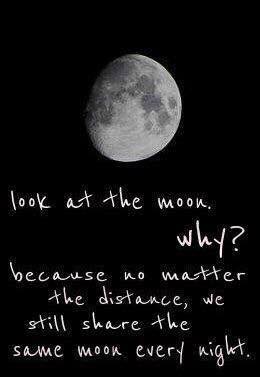
A fellow player posted this picture this morning.

She captioned it: For all my WB friends.

She lives in England — and there are quite a few British players.

But the circle of players is the circumference of the earth.

The best players seem to be from the Philippines and India. I asked another player once why that was.

He said, “Because we learn our native language before English.  But because we actually ‘learn’ English, we spell and write better than the native speakers!”

The more I play, the more I feel like I “know” the other players — well, as best anyone can know someone they will never meet in person and only chat with in short spurts while waiting for games or during games.

I know that one player is the process of publishing a book, another is applying to Brown, and another is confined to a wheelchair and has a therapy dog.

One player’s daughter died recently, at the age of 30. I watched the word spread through the other players. I think I was not alone in whispering a prayer for her in her grief.

We discuss the virtues of coffee and tea, as well as rum, vodka, and other drinks. The political discussions can get hairy — but I know far more world politics than I would have known otherwise.

In fact, that’s some of what was on the paper — Hindi phrases and politicians’ names.

Yes, sometimes they chat in Hindi — and it irks me not to know what’s being said. So I write it down and look it up.

I wrote “Feku” down the other day, thinking it was a who, but when I asked another player, she laughed.

“It’s Indian slang,” she said.

Then I worried that it was inappropriate, and asked her that.

“No, it’s a politician who lies,” she responded.

Ha — so that’s a worldwide problem.

The other day, all the players played the word COGIES while I came up with some insignificant, less point word. I’ve seen COGIES played, but it’s not a word I ever use, so I don’t usually think of it.

“What’s a cogie?” I asked.

“I don’t know, but I’ve seen it played lots of times,” one player responded.

“Never ask a woman her age, or a Scrabble player the meaning of a word,” another answered.

For the record, a cogie is a small bowl.

A pandit and a pundit are essentially the same thing.

Ecce is directly from the Latin — means, “Behold.”

And, in this crazy world, where virtual and real mix together in a jumble of letters, Word Battle can mean friends.

Life · poetry

Haiku

Frederick Buechner, in his book, The Remarkable Ordinary: How to Stop, Look, and Listen to Life, explained the haiku better than I have seen it explained before:

The whole genius of the haiku is that they don’t mean anything. People who try to figure out what a haiku means are beating up the wrong path… The haiku settles for doing, as I read it anyway, one very simple but very crucial thing — it tries to put a frame around the moment. It simply frames a moment.

Since I was a child, I can recall pausing and thinking, “If only I can remember everything about this moment forever.” My everythings ranged from listening to my mother cook in the kitchen, seeing the rainbow circles around the lights in the pool after swimming without goggles, the raucous cawing of crows for no apparent reason, the smell of freshly cut alfalfa, the toad in the garden that startled me when I was weeding, and so on. If I had known that the haiku served that purpose, I might have worked harder on my haiku-ing.

Today’s prompt, Planet, got me thinking about all the times I tried to see the planets as my brother pointed them out to me. He can read the night sky so well. (He even knows zombie and wolverine constellations that nobody else does.)

I would squint and try to follow his finger to the tiny red dot that he said was Mars. Sometimes I saw it, but often I didn’t.

How could I write a haiku about that time I didn’t see Mars?

Squinting in darkness
His finger pointing at stars
I couldn’t see Mars

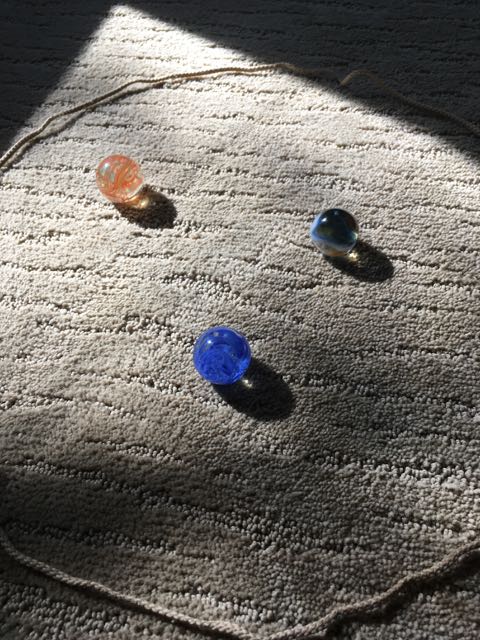
Then I remembered his favorite marble, a small blue glass orb that resembled planet Earth.

When we played marbles, I could barely balance the shooter marble on my thumb in order to plink it into the ring. If his Earth marble was in play, though, that was the target. Winning that one meant winning everything.

Pretty glass marbles
Inside a corral of string
(flick) – plink – Earth is out

Life · poetry

Glorious Country Life

I stopped at the Farmer’s Market
Early Saturday morn
Heard some vendor’s talking
(They both look tired and worn.)

“Went to the tractor pull,”
One guy said to his friend.
“Didn’t get home ’til 2 AM.
Helluva start to the weekend!”

“Damn rooster woke ME at 4 AM,”
His friend to him replied
And he passed him some maple syrup
To carry the jugs inside.

Oh, this glorious country life!
With tractors and roosters the only-est strife
Stars in the night, sun in the day
Cows in the field, newly mown hay
So thankful I live here every day

On Sunday at the Harvest Fest,
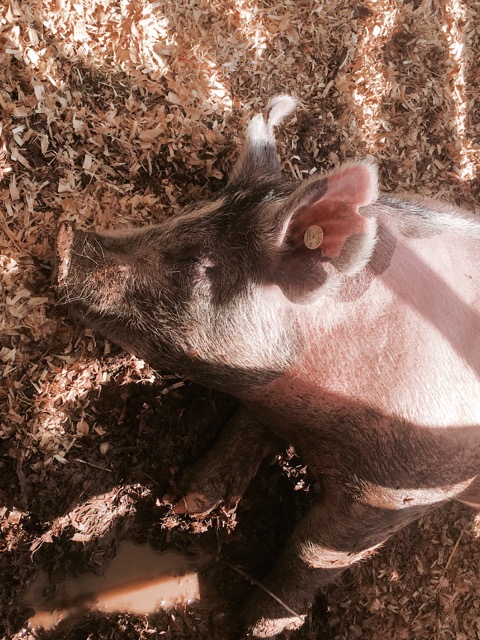
We visited the pig —
Half in wood shavings, half in mud
My goodness, the sow was big!

She had been the champion
At July’s livestock show
For this festival’s Parade of Champions
They wouldn’t let her go

So her owner brought a steer
To parade in her stead
While she wallowed – half sun, half shade
Mud on her snout and head

Oh, this glorious country life!
A parading steer lest the sow run rife
Stars in the night, sun in the day
Cows in the field, newly mown hay
So thankful I live here every day

Writing

Pronunciation

I found myself listening carefully not so much to what the young doctor was saying as how he was saying it.

“How is your appetite?” he asked, the first three words slightly higher in pitch than the one that preceded it.

But appetite —  I thought about finding a piece of scrap paper to write down the way he pronounced it so I could remember it properly and recreate it. I think it was ah-PET-it.

My father understood and answered appropriately. Well, almost. He looked at me, repeating the question as he did. “My appetite?”

I nodded a yes — yes, that was the question, and yes, his appetite is good.

“I have no problem with my appetite,” he said, and patted his stomach.

“How is your weight?” the doctor asked, but he pronounced the w as a v — like vayt.

My father looked at me, questioningly.

“Your vayt. Your vayt,” repeated the doctor.

“He’s asking about your weight, Dad,” I translated, a little surprised that my father had deciphered appetite but not weight.

“Oh! My weight is fine,” my father answered, and the exam went on.

The young doctor with jet-black hair, soft hands, and mostly perfect English was from Pakistan. Pah-ki-stahn, as he pronounced it.

There are times I wish I had an invisibility cloak, so I could listen, unnoticed, to the way people from different parts of the world talk.

In Bosnia, I didn’t pay close enough attention. I think I need to go back and try again.

Once I had an on-line discussion on the pronunciation of the word LABORATORY.  It turns out that laboratory can have anywhere from three to five syllables, depending on where the speaker is from.

It also turns out that there are dozens of videos on how to pronounce that one word. Crazy.

I watched some of the videos and found my favorite — partly because the video itself has nothing to do with the audio, and partly because I can picture one of my sons playing the semi-gory game shown.

For the record, I say LAB-ra-tor-ee.

And AP-a-tite.


Faith · family

Patience

“Quite frankly, God,” I said, “I’m getting a little tired of working on this patience thing. Could we move on to something else?”

Yesterday morning, I had been awakened by my father’s whistling. It’s happy whistling — “O Danny Boy” — evidence of his penchant for Irish music, that tells me he’s up and getting ready for the day.

Most days I listen for it. “Time to get to work,” I say to my girls as I get off the couch and head for the kitchen to fix his breakfast.

But yesterday, I heard it on the monitor in my room. It woke me up.

“O Danny Boy, the pipes, the pipes are calling…”

Sometimes he sings it. His singing reminds me of Lee Marvin in “Paint Your Wagon.”

I rolled over and looked at the time. 2:45 AM. Ugh.

When I went down to his room, he was laying out his clothes.

“What are you doing, Dad?” I asked.

“Well, I don’t know,” he said, turning to look at me.

“It’s not even 3 o’clock in the morning,” I told him.

“I know that,” he said — but I don’t think he did.

“Don’t you think you should be sleeping?” I asked.

“That sounds like a good idea,” he replied.

After helping him get back to bed, I went upstairs to my own. Laying there, looking at the ceiling, listening to the monitor, I could hear him rustling around for a few minutes, then quiet, then the heavy breathing of sleep.

I wished I could do that, but sleep never returned for me.

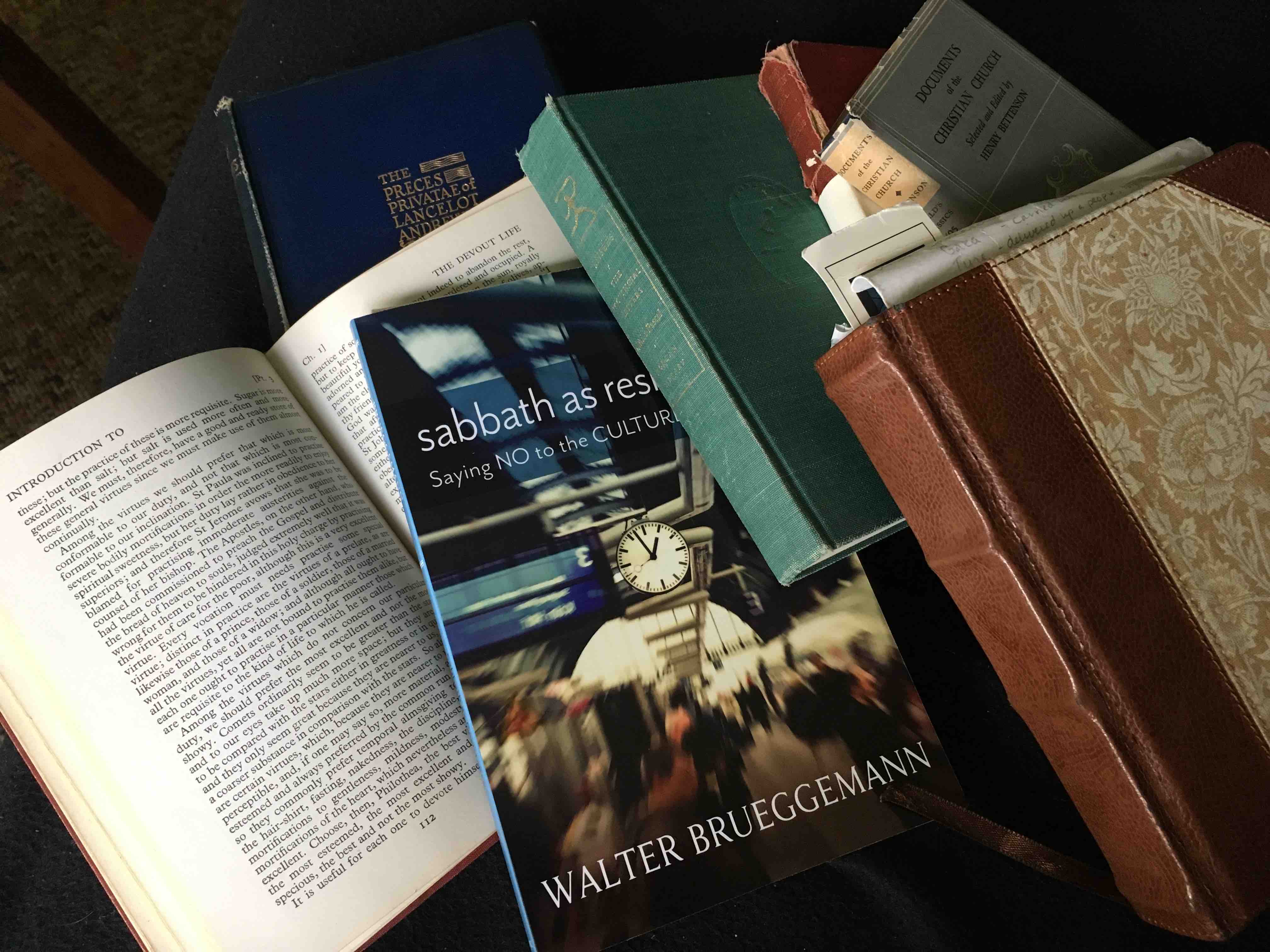
Some time after 4, I came downstairs again and made my coffee. My ever-growing pile of books that I’m working through beckoned me. In addition to daily Bible reading and time with Lancelot Andrewes,  my current morning reading consists of

  • Charles Williams’ The New Christian Year — a devotion a day.
  • Pascal’s Pensées — a pensée or two a day
  • Documents of the Christian Church (selected and edited by Henry Bettenson) — a document a day
  • Walter Brueggemann’s Sabbath as Resistance — a section a day
  • St. Francis de Sales’ Introduction to the Devout Life — a chapter a day

St. Francis irked me yesterday. He said,

Among the virtues we should prefer that which is most conformable to our duty, and not that which is most conformable to our inclination…

My inclination is not towards patience. Mercy, maybe, but not patience. I’d like to swoop in, do some little nice thing for someone who’s hurting, and leave.

This long haul of caregiving is the opposite.

And my patience is in short supply these days.

“Lord, can we move on?” I prayed — but I knew the answer.

I began a good work in you. I’m going to complete it, He replied.

So, when I heard “O Danny Boy” for the second time that morning, I made his breakfast, took his blood pressure, gave him his meds, found the puzzles in the newspaper for him, and tackled another day.