fiction · Writing

Probably

Probably Preston Jones quietly closed the door behind him. It was a new day, the start of a new week, in a new place.

The noise and hurry of a new city was a gamble. A faster pace, yes, and no familiar faces.

Except, of course, his girl friend.

“Probably,” she had said firmly, “no one will know.”

Ah, but they would. He knew that — and it made him tremble. He allowed the memories to crowd in again, then made a conscious choice to let go of the hurt.

He pressed the elevator button to take him to the sixth floor. The ambient music did nothing to calm his nerves.

When he got off the elevator, the receptionist greeted him. “Preston Jones?”

He nodded.

“Just a few formalities,” she said. “We need to verify your insurance.”

He saw the machine on her desk which he knew she would feed the card into. He hoped that she wouldn’t look at it carefully.

But she did.

She studied the card and looked back at him. She looked confused. “Mr. Jones, I need some further verfication that this is your card,” she said.

The elevator door opened again behind him. Another person entered the reception area. Probably grabbed the card out of her hand and ran to the open elevator, quickly pressing the button to go to the lobby again.

“You okay, man?” asked another person in the elevator, detecting the stress in the newest passenger.

“Yeah, yeah. I’m fine,” said Probably, starting down at his insurance card that read “Probably Preston Jones.” It matched his driver’s license.

Would he have to spend the rest of his life explaining that his mother named him Probably?


This is my response to MLMM’s Wordle challenge this week in which we are challenged to use these words in a post: machine, tremble, quietly, detect, firm, hurt, noise, hurry, pace, pressed, let, music.

Faith · Writing

The Bodyguards

Today’s Wordle (from MLMM) challenges us to use these words in a post of whatever kind we want: child, protect, solitude, anger, searching, haven, cost, frustration, why, judge, safety, notice

This is my contribution.


They were trying to protect him.

The crowd was thick. One of the bodyguards leaned in and whispered to another. “You know he needs some solitude, right?”

Another was searching the landscape for a haven to hustle him off to — for his own safety.

Then they began to notice — it wasn’t just people, a bunch of them were bringing their kids. The frustration continued to grow.

“We’re going to have to go elbows up,” one said, raising his elbows in a defensive stance.

“Nah — they aren’t that unruly,” said another.

“Yet,” said a third one. “But I don’t know why he doesn’t say something.”

One in particular was beginning to feel the twinges of anger rising in him. Doesn’t he realize the cost on all of us? he thought judgingly.

Then Jesus looked up at the crowd and his disciples trying to block the children from coming.

“Let the children come,” he said.


You can find the original story three times in the gospels: Matthew 19:13-15, Mark 10:13-16, and Luke 18:15-17

Faith · Writing

The Wedding

It wasn’t one of those smug sort of weddings. You know the kind, right? Over the top in lavishness. No expense spared. The kind where the bride and groom are ostensibly the center of attention, but really they aren’t, because it’s all about showing off perceived wealth.

No, it wasn’t that kind of wedding.

It was the kind where the whole town turns for the celebration because they’re so happy for the couple. Because they’d watched those kids grow up since they were little. Because both sets of parents were nice hard-working people who probably had, at one time or another, helped every single person in that town.

J’s mother went. She had been invited.

Well, so had J — and he went along with some other people who were with him.

Everyone was having a great time — until the wine ran out.

J’s mother scoured the crowd looking for him. She finally found him sitting in a corner, away from the noise, chatting with some people.

She went to him and gently placed her hand on his arm to get his attention. When he looked at her she whispered, “They have no wine.”

“Woman,” he said — (why DID he call her ‘woman’ like that?? I don’t think it was meant to be unkind) — “what does this have to do with me?”

They looked at each other quietly, each studying the other’s expression. They knew each other so well. She knew things about him that no one else knew. Finally, he spoke again, “It’s not my time.”

His mother thought for a quick second. She had assumed he would take action. Were his words an acknowledgment that he could do something if he felt the time was right? She seized the moment. She turned to the wait-staff. “Do whatever he tells you,” she said.

And the rest, you know, is history. J delivered.

Water became wine. People scratched their heads and marveled, surprised and amazed. Some guests were totally oblivious — as we all are at times — and simply thought that the host had reserved the best wine for the end.

But one day the story would be told and retold and written down, because it was a miracle, and miracles need to be remembered.


This is my contribution to the MLMM Monday Wordle where the challenge is to weave some or all of the prompt words into a bit of writing. I chose to rewrite another well-known story from the Bible. This one appears in John 2. Of course, it may have happened in a way that is nothing like what I have written — but it’s fun to imagine.

The prompt words are: smug, noise, celebration, assumed, gentle, quiet, reserved, delivered, surprised, guest, one, unkind

dreams · Life · Writing

A Pen Dream

Last night I had a dream in which a wild-eyed prophet appeared before me and told me this story:

Once there were two people in a hospital room.

One had drawers full of pens at home. Not the cheap ones that come 12 to a pack for $1.99, and not $200 fancy-schmancy pens, but nice ones, in assorted colors and point thicknesses and types. Her favorites were Pilot G-2 07 — and she owned at least 50 of them, keeping them in every room of her house, and multiples in her carrying bag.

The other worked at a low-paying hospital job. His employer purchased cheapy pens that came 12 to a pack for $1.99. The pens skipped and blurped out ink blobs and were entirely unreliable, so he saved up the loose change he found in the parking lot of the grocery store or on the sidewalks when he was walking home. Finally, he had enough to purchase one Pilot G-2 07.

She hadn’t expected to be in a hospital room that day. She didn’t have her bag. She didn’t have any pens with her. When she was asked to sign some papers, she needed a pen. Almost as if by magic, this Pilot G-2 07 was placed in her hand, and she signed the various papers on the proper lines beside the hastily scrawled red X’s.

When she finished, she looked for the person who had handed her the pen, but everyone was gone from the room. Everyone. The nurses were at the nursing station. The housekeeping person was dry-mopping the floor. The transporter person was pushing the pen-lady’s family member to radiology.

She looked at the pen in her hand. It was a nice one. Blue. Fairly new. Shiny.

And she thought, “I could just stick this pen in my pocket, in case I need to sign something else today. Nobody will really miss it. It will go very nicely with the dozens of other pens I have at home.”

When the housekeeping person came into the room looking for the pen, the pen-lady pretended not to notice because she had the pen tucked neatly in her pocket.

“Wait — ” I said — in my dream, of course. “That’s not what happened. I did NOT keep the pen.”

“You thought about it,” the wild-eyed prophet said accusingly, and his wild eyes grew even wilder as he stared at me.

“It was a FLIT,” I said. “The thought flitted through. I never seriously considered keeping the pen.”

“You did. You lusted after that pen,” he said.

How can anyone argue with a wild-eyed prophet in a dream?! I found myself going back to that moment, when I held the pen and didn’t know who the owner was. In the space of a firefly blink, I had thought about keeping it — but then I set it on the stand where the owner could easily find it.

The wild-eyed prophet interrupted my mental replay of the situation. “You have a pen problem,” he said, much more gently now. “You have more pens than a person needs — and you keep purchasing more. You go down the pen aisle at Target, Office Max, even the Family Dollar, and you look at pens. You buy pens. You don’t need any more pens.”

“But… but…” I stammered, “I like pens.”

“Give them away,” he said, his voice growing distant as he seemed to be being sucked into a far-off light. “Commit to sharing your pens…. Carry them in your bag …. and give them away.”

Then, he was gone.

I woke up in a cold sweat.

What does it all mean, I wondered?


This post was originally written in June 2017. I even posted it because it has two comments from that time — both from siblings! I’m insecure enough about my writing, though, that I moved it back to the draft folder, probably within 24 hours.

Today’s Word of the Day prompt is Parking Lot. This post came up in the draft folder. When I read it, it made me laugh — in part because I DO have dreams like that, and in part because I still have a pen problem.

fiction · Writing

The Duke, the Princess, and the Biscuits

The duke was worn out. All this walking was exhausting. He sat on a park bench while his companions went down the hill looking for a shop to purchase some food.

A young woman passed him and sat down at the picnic table across the dirt path. She pulled from her bag a biscuit which she began to eat.

The duke called over to her, “Give me a biscuit.”

He offered no pleasantries, no polite greeting, no polite asking, just ‘give me’.

Her head jerked up. She looked at him through narrowed eyes. Finally she said, “How is it that you, a man unknown to me and of a different people, ask me for a biscuit?”

He smiled at her. At that instant he knew exactly who she was, a disgraced princess from a neighboring kingdom. He replied, “If you knew the person asking you for a biscuit, you would have asked him instead for something you need desperately, because he has the means to give you what you need most.”

The pauses in their conversation were long and palpable. She studied his face, his clothing, his dusty shoes. Finally she spoke again, “Sir, I can see that you have nothing. You are alone. Do you have something more than the baker in the town who gave me these biscuits?”

“When you eat a biscuit,” he replied, “it sustains for a time. You have other needs as well. What I have is a forever resource.”

“Okay,” she replied, “I’ll take the bait. Give me some of whatever it is you have.”

“Call your husband and come back to me,” he said.

“I don’t have a husband,” she answered.

His mouth curved into a slight smile as he chuckled. “I know that. You have struggled in that area of your life. You’ve left your husband and the man you are with now is not your husband.”

Her eyes widened. She had been found out. She couldn’t identify the flurry of feelings causing her heart to race. Was it panic? Happiness at no longer having to hide? Fear of consequences?

“I am the Duke,” he said. “I know your whole story. Words of accusation on a sheet of paper only tell a small part of who you are. I will keep you safe.”


This is my response to today’s MindLoveMisery’s Menagerie & #Wordle where the challenge is to weave a bunch of prompt words into a post. Today’s words are: biscuit, passed, duke, found, slight, princess, curved, sheet, alone, downhill, happy, companion.

Some Bible stories haunt me. I’ve spent years thinking about the man who tells Jesus, “Sir, I have no one,” in response to Jesus asking him if he wants to be healed. (John 5)

Lately the woman at the well has been haunting my thoughts. (John 4) This is a (sort-of) retelling of that story.

fiction · nonsense · Writing

None of this is true

“There was this huge monkey, I tell you, HUGE,” said the old man. His rough unshaven face, the bit of spittle leaking down the left side of his mouth, the crust in the corners of his eyes all spoke of age and hardship.

The young man was busy writing. He glanced up at the old man as if giving him permission to continue.

“The monkey was in the back of the trailer. It had a shit-eatin’ grin on its face and a shovel in its hand,” the man continued, balling up his right fist as if demonstrating how the monkey held the shovel.

The young man continued to write.

“I was feared it was goin’ to grab the cash. Y’know, the cash was just sittin’ right out there by the birthday cake,” said the man, pointing to an imaginary table with a cake and cash.

The young man put his pen down and looked at the older man. “Mr. Smith,” he started to say, but the old man interrupted him.

“That damn monkey was gonna carry away MY birthday cash, MY birthday cake!” he shouted. “It was TOO MUCH!

He tried to get out of his chair, but the restraining belt held him in place. He struggled, his hands gripping and pressing against the arm of the chair.

His exertions were loud and drew attention from the others in the room. They had all been mildly watching the morning news on the communal television, and he was now far more interesting than that.

“Mr. Smith,” the young man said again, “it’s time for your meds.” He took out a hypodermic needle and called over his shoulder, “Nurse, I might need a little help today.”


This is my response to the Monday Wordle where we are invited to use a specific list of words in prose or poetry.

Today’s list: cash, huge, monkey, much, grin, shovel, birthday, carry, took, back, trailer, grab

I read the list. I saw the story. I wrote it down.

Life · Writing

A Trip to Maine

This is my response to this week’s Writer’s Workshop prompts

12 things I learned and/or grew to appreciate this month week (because I’ve been in Maine for the week):

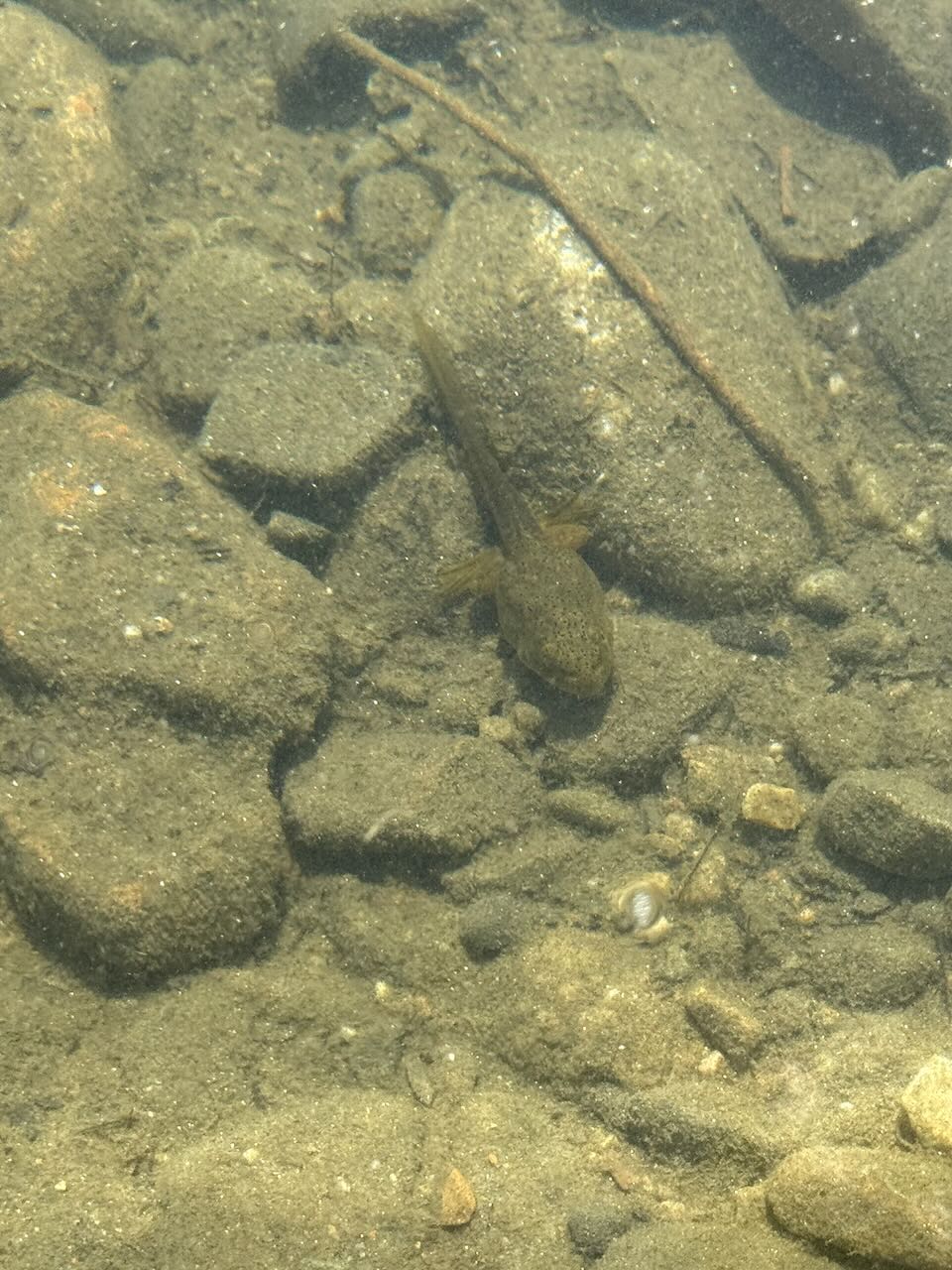
  1. I now know the difference between a tadpole, polywog, and froglet. This is a polywog:

          A tadpole doesn’t have any legs and a froglet has all four. This polywog, as you can see(maybe), only has two legs.

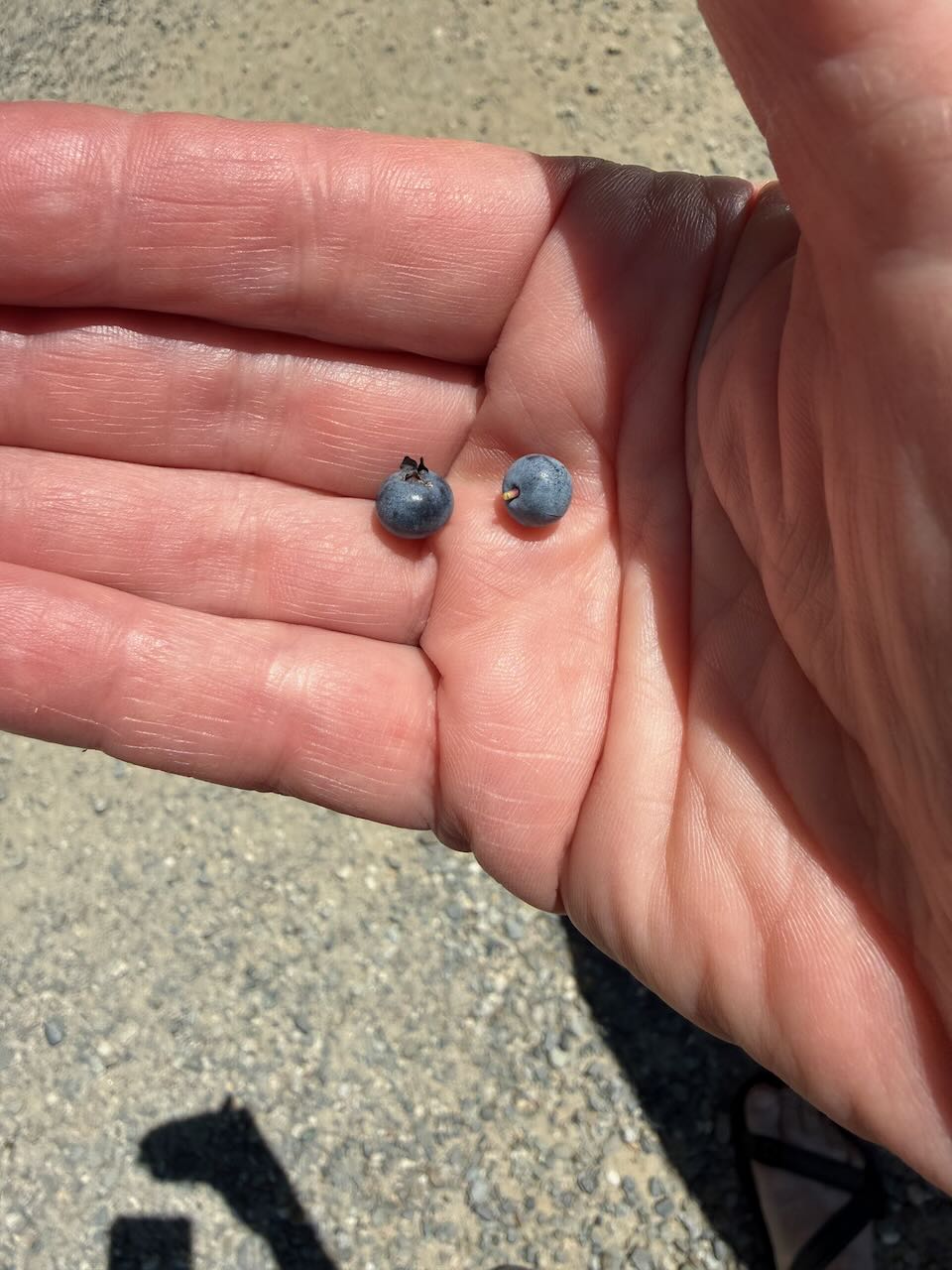
          2. Maine blueberries grow low to the ground and are tiny, compared to our New York blueberry bushes. They are harvested with special rakes. They have blueberry bushes in Maine, too, but those teeny berries from the ground plants are PACKED with flavor. Who knew?

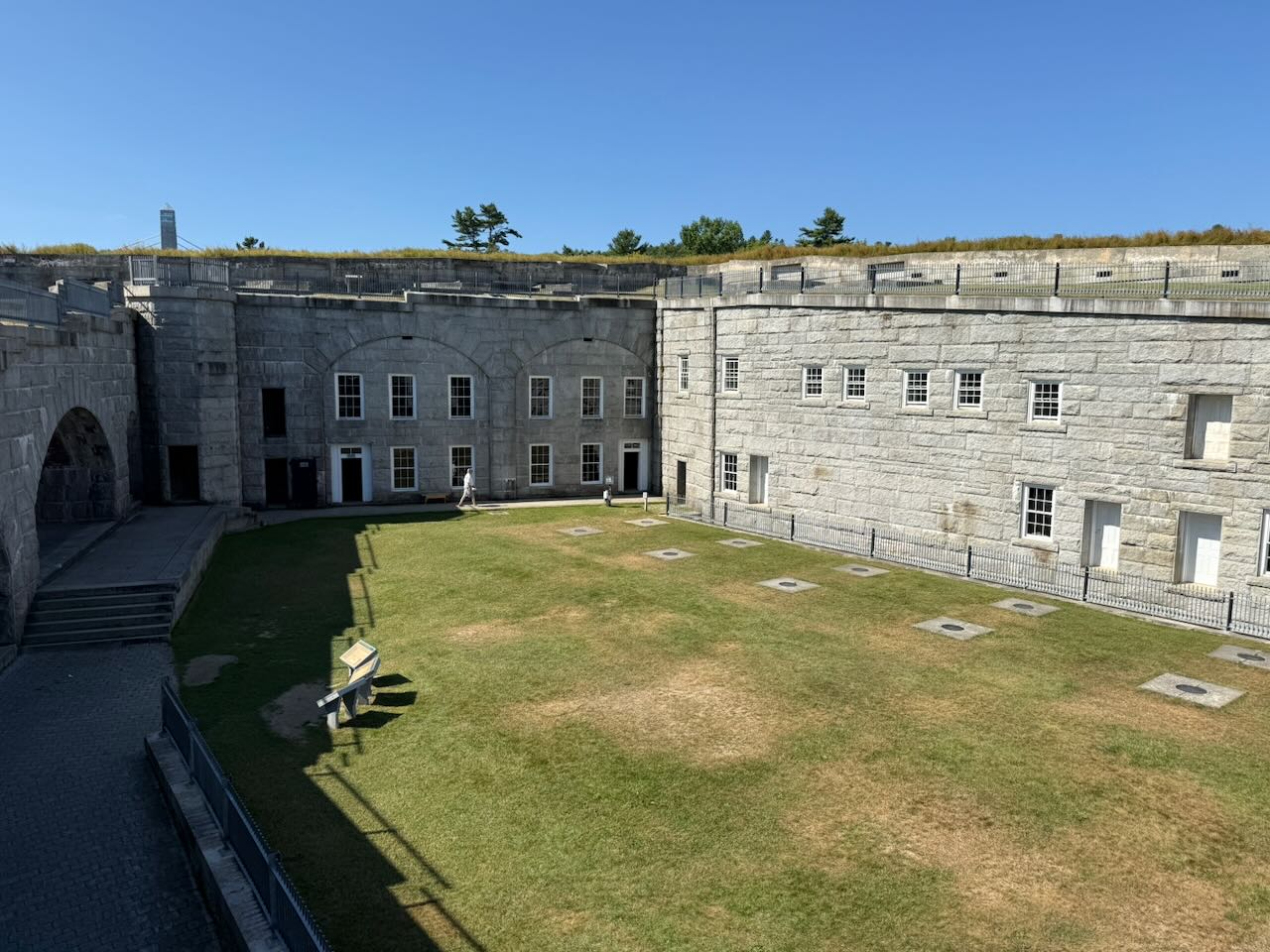
          3. There is more than one Fort Knox. My dad was stationed in Fort Knox, KY, and it’s known for all the gold there. But before that Fort Knox, there was a Fort Knox in Maine built in the mid-1800s. It’s a massive granite fortress built on the edge of the Penobscot River.

          Fort Knox outside wall
          Fort Knox — the inside compound

          4. Perspective is always important. When you’re looking from the outside, you can’t see in very well (see top Ft. Knox photo). But when you’re looking from the inside out, the world just seems to open up.

          From inside Ft. Knox.

          5. The Penobscot Narrows Bridge is one of only five bridge observatories in the world. The other four are in China, Thailand, Slovakia, and South Korea.

          Looking up at the Penobscot Observatory from our car.

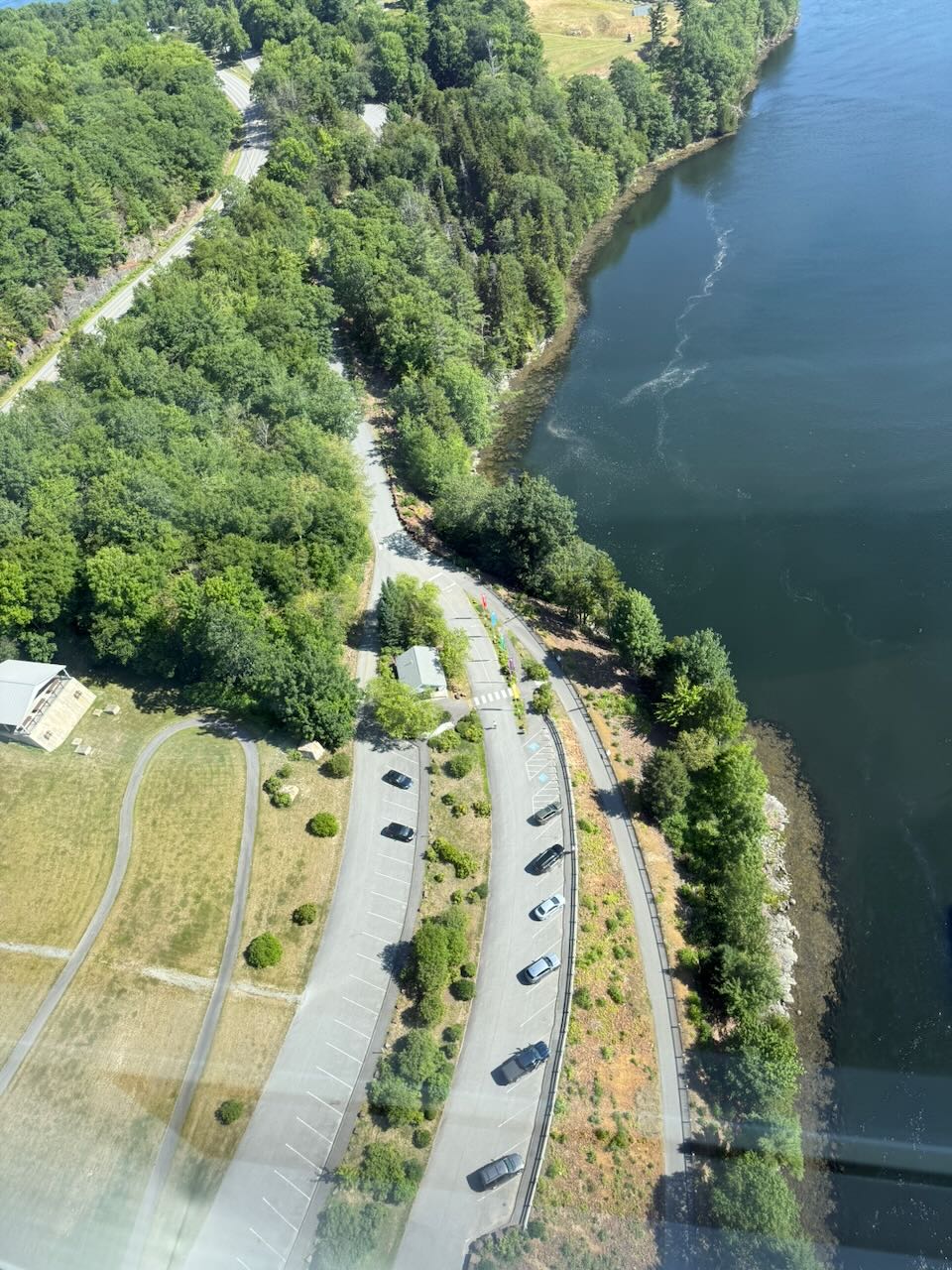
          6. Perspective is always important. (Yes, I already said that.) Looking down and looking up are totally different views.

          Looking down from the Penobscot Observatory at our car.

          7. Beaches hold amazing surprises.

          We found this crab shell on the beach full of… we didn’t know! It turns out they are Marine Springtails, a relative of the snow fleas I’ve seen at times in New York. They’re an important part of the beach ecosystem, part of nature’s clean-up crew.

          8. Museums are fun.

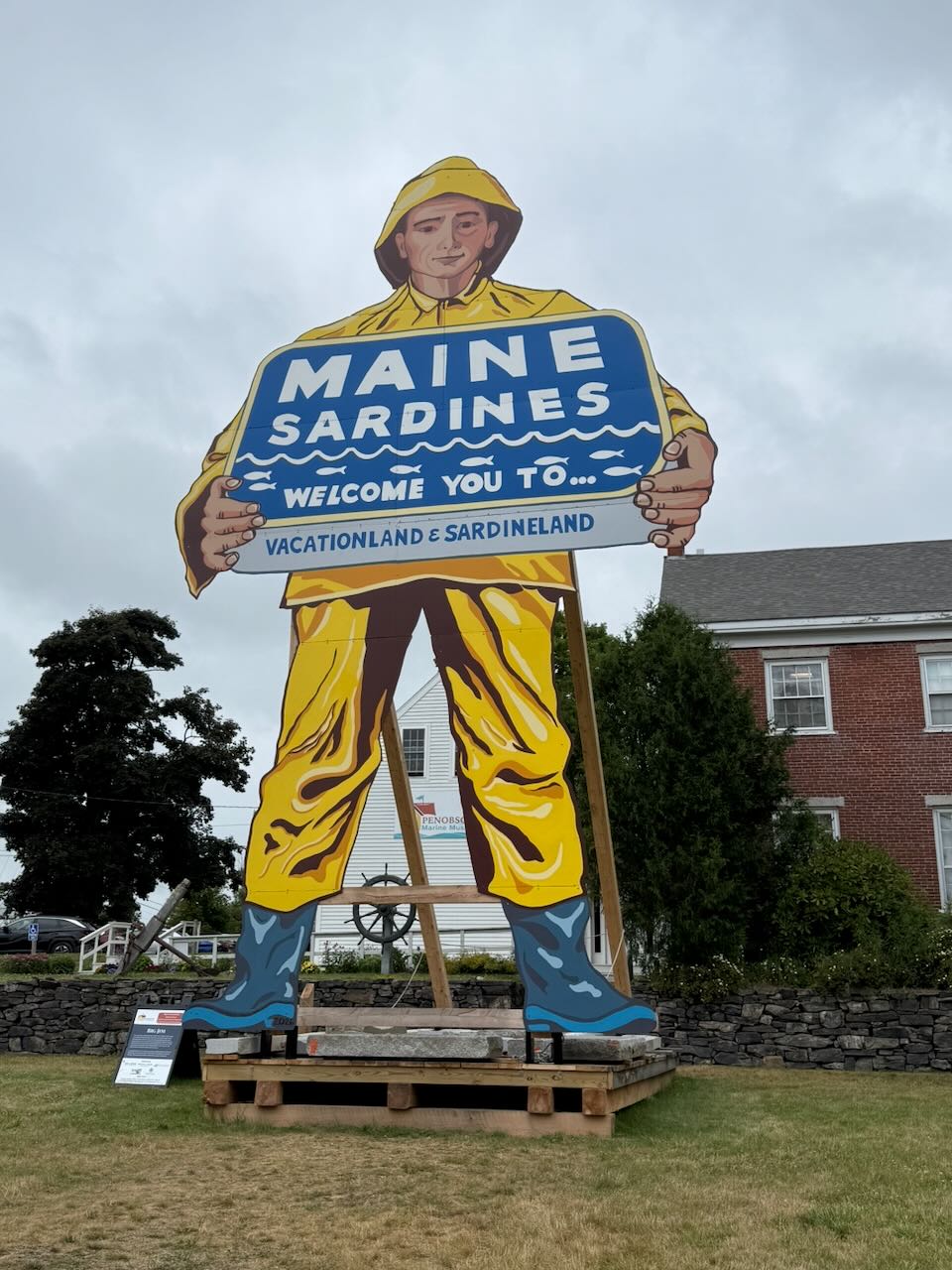
          We stopped at the Penobscot Maritime Museum, mostly because of this guy beckoning us in. I learned more about sardines than I thought possible.

          9. Sometimes kids don’t appreciate museums.

          “Boring who needs fishermen dont prezerve fishing”

          This was in a box of comments that I looked through. It made me laugh — and feel a little sad for the kid who wrote it.

          10. Museums can be very funny for kids (big and small) who engage with them.

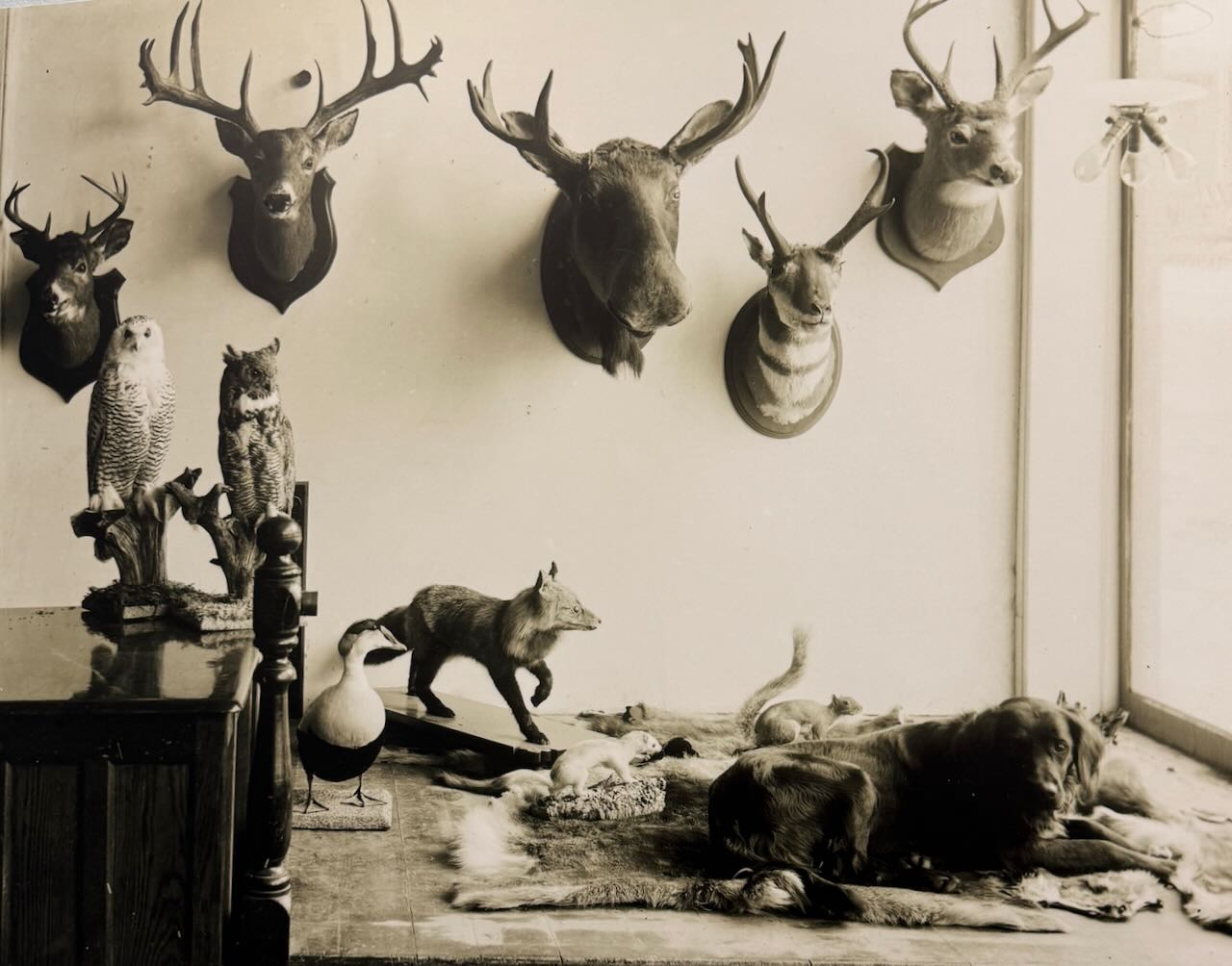
          Captioned: Which animal is not stuffed?

          This photograph was hanging in the ladies room at the Penobscot Maritime Museum. It was taken by a turn of the 20th century photographer, Charles Coombs, who was also an undertaker and taxidermist. The picture made me laugh.

          11. Floating classrooms can be massive.

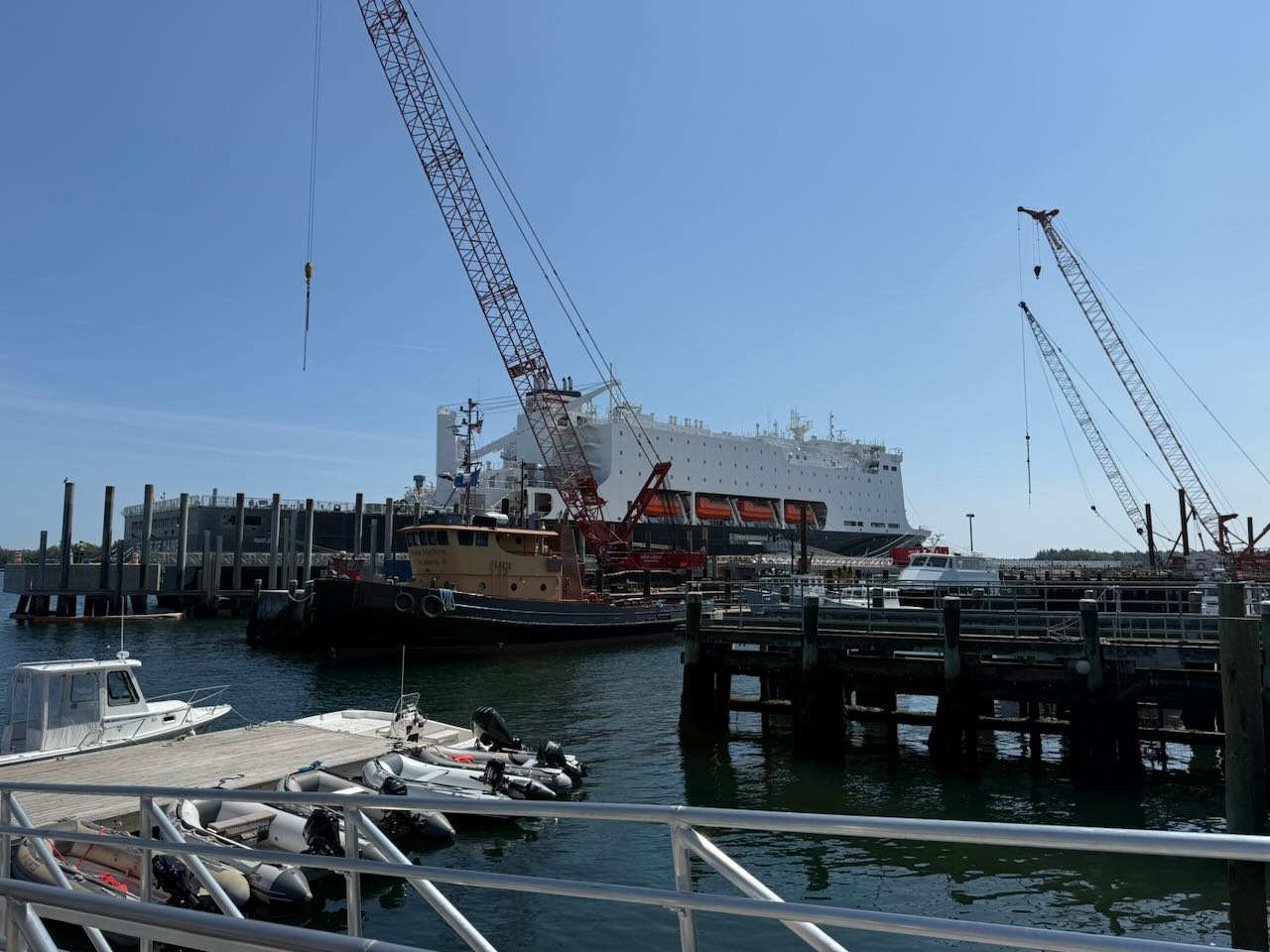
          The big ship in the back is called The State of Maine and recently came into Castine, home to the Maine Maritime Academy. Its primary purpose is for training Maine Maritime cadets while also being available for federal humanitarian assistance and disaster relief mission. We went to see it but couldn’t get any closer than this.

          12. Sunsets are beautiful everywhere.

          Alzheimer · Alzheimer's · dementia · elderly · family · Leaning In · Life · Writing

          The Feeder’s Table

          This is a draft written February 6, 2015, pulled from the draft folder because of the RDP prompt word: tame


          From across the room, I heard the man bellow, “NO!”

          I had no clue what this was in reference to — he was across the room, after all, and I was attending to my mother in the midst of her ritual folding and unfolding of her mealtime protector (aka – bib) while waiting for the food to arrive.

          A woman at his table shouted out, “SNOW!” It was snowing out.

          She laughed at her rhyme, a dry cackle-y laugh, not because she was a witch, although it did make me think of one, but because she was very old and shriveled, and even her laugh bore witness to that.

          “He said, ‘NO,’ and I said, ‘SNOW,'” she said gleefully, and it reminded me of the little “jokes” that first- or second-graders make, when the littlest thing sends them into gales of laughter.

          However, the jokesters were across the room, while my mother sat at the feeder’s table, a table set aside for residents who need assistance with eating. She dines with five other ladies with dementia.

          To my mother’s left is a dear lady that reminds me of a sparrow. Her voice is quiet and sing-songy. Sometimes she makes sense and sometimes she doesn’t, but I always have to listen very closely when she speaks. (Professor Trelawny)

          Next to Sparrow is a woman with a chiseled angular face. (Professor McGonigle) She never speaks. She sits erect and stern, like a statue of a school matron staring across her desk at a wayward student.  However, I had met her many years before, when she was an OB nurse. She had come into my room after I had given birth to somebody because she wanted to tell me about my father.

          “I remember your father’s first day at the hospital,” she said. “He came in toting a little black doctor’s bag. A little black bag!” She laughed when she told me the story, and her eyes twinkled with the delight of that memory. My father still has that black bag with its stethoscope, reflex hammer, otoscope, and other doctorly treasures.

          To her left sits a white-haired lady whose dementia has a Dr. Jekyll-Mr. Hyde effect on her.  (Quirinius Quirrell) One minute she is sweet and the next she is spewing venom.

          Next to Mrs. Hyde sits the newest diner at the feeder’s table. I’ll come back to her.

          To Newby’s left is Mrs. Tiggywinkle, so designated because of her hedgehog hairdo.  Teens pay a lot of money and use a lot of product to get hair like hers, sticking straight up all over her head. My father has to repeatedly request that my mother’s hair get combed. Some of us are just stuck with wayward hair that no amount of combing can tame, and I suspect that’s the case with Mrs. Tiggywinkle.


          The draft ended and I never finished it. I don’t remember who the person I called Newby is, so I can’t come back to her now. I don’t even remember the point of this story.

          My mother died 9 months later.

          Reading drafts and posts from that time in my life are interesting to me. I’m glad that I chronicled the journey.

          Advice to anyone going through a stressful time: Write down what you see and hear and feel. It’s a gift to your future self.

          nonsense · Writing

          Sometimes

          Sometimes I am lazy
          And use imprecise words
          Instead of wrens or robins
          I just refer to them as birds

          Sometimes I can catch myself —
          I know what I should do!
          But sometimes I say “sometimes”
          Instead of “yesterday at two”


          This is my stream-of-consciousness ditty brought to you by the prompt “sometimes.”