Sometimes I wish I knew what lay ahead —
What will each new tomorrow bring my way?
Why must I always feel so in the dark?
Or, at the very least, so in the gray?
But, if, one day walking, I should chance
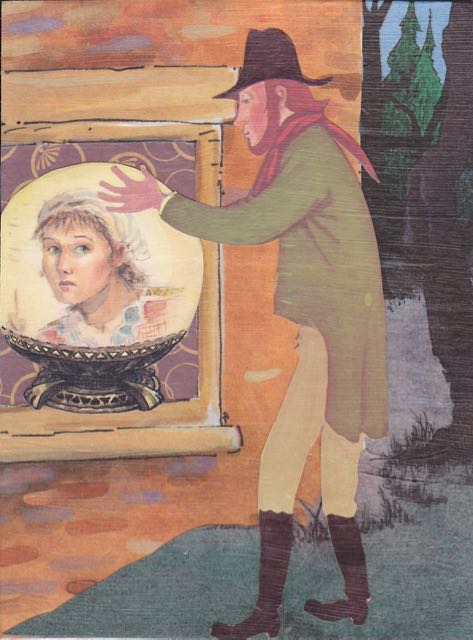
To find a crystal ball that could reveal
My future with one touch, one glance –
Would I dare to look, its prophesies unseal?
Indeed my trembling hand would rise, extend —
Heart-pounding in my breast – loud, hard, fast —
And yet a greater force would apprehend
And stop me seeking this, my own forecast.
For the newness of each day and its unknowns
Are gifts. Yes, they are treasures, don’t you see?
Every day is its own celebration
Full of presents* to be unwrapped by me.
*presence?
Man is from Ox-Cart Man by Donald Hall, illustrated by Barbara Cooney
Crystal ball from The Mapmaker’s Daughter by M. C. Helldorfer, illustrated by Jonathan Hunt
Background from The Little Old Lady Who Was Not Afraid of Anything by Linda William, illustrated by Megan Lloyd
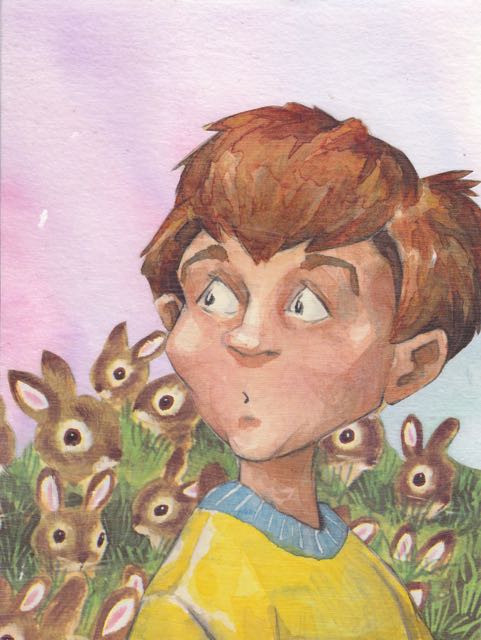
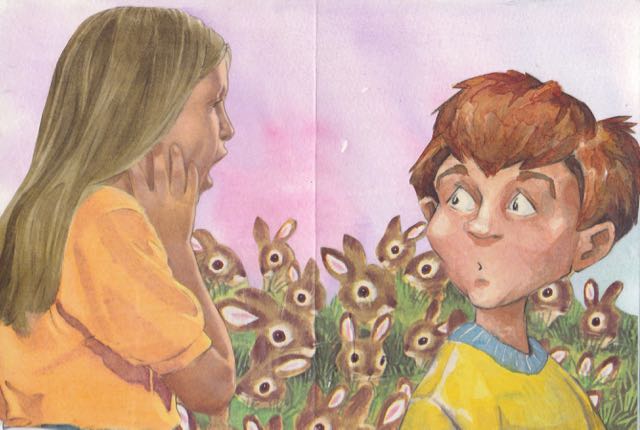
(1)Boy is from My Dad’s Job by Peter Glassman, illustrated by Timothy Bush
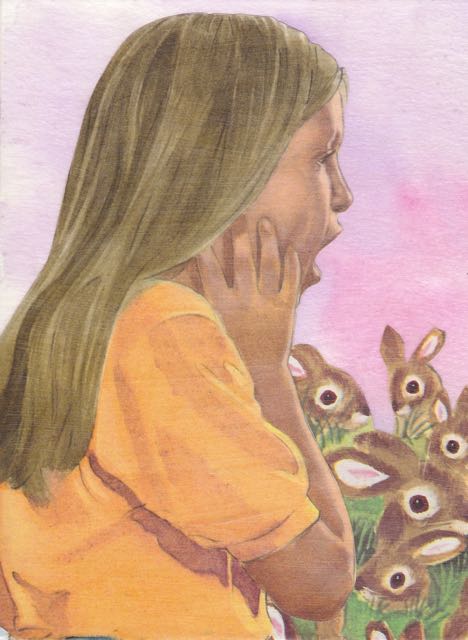
(2)Girl is from Misty: The Whirlpool (from Misty of Chincoteague by Marguerite Henry) excerpted and adapted by Joan Nichols, illustrated by Stephen Moore
(3)Rabbits are from The Bunny Book by Richard Scarry
“Rabbits have large families” (3)
“Maureen felt a stab of fear” (2)
“Dad talked about buying futures” (1)
In rabbits? That wasn’t clear…
Can three divergent books
Be joined in harmony?
Each must accept the others
— And a little absurdity.
Above is a partially “found” poem using lines from the pages from which I borrowed the pictures. Wikipedia says, “Found poetry is a type of poetry created by taking words, phrases, and sometimes whole passages from other sources and reframing them as poetry (a literary equivalent of a collage)…
I had such big plans at Christmas. I was going to make teeny collages for all my friends.
Anna loves cows so I made her a cow collage (a cow-lage?). It ended up being one of only two that I mailed out.
She sent me a picture of it on her refrigerator.
I love that it’s right beneath the note telling her that she is an amazing student teacher. I bet she is.
A while ago, while trying to work on using metaphor, I wrote a poem about cows, using Billy Collins’ poem, Litany, as a model.
Bovine
You are the map and the Atlas,
the Big Mac and the shake.
You are a javelin held aloft by a strong arm,
and a smooth wet stone in the hand of a little boy.
You are the fresh-mown grass after summer rain,
and the thunder that preceded the shower.
However, you are not the purr of a kitten,
the wag of a dog’s tail,
or kraa-coo-coo-coo of a mourning dove.
And you are certainly not the whisper of butterfly wings.
There is just no way that you are butterfly wings.
It is possible that you are the flock of sheep,
maybe even the laying hen,
but you are not even close
to being the eagle hang-gliding overhead.
And a quick look in the mirror will show
that you are neither the towering pine
nor the creeping myrtle.
It might interest you to know,
speaking of the plentiful imagery of the world,
that I am the garbled voice in the drive-through speaker.
I also happen to be the blistered toe in a new shoe,
the frayed pink leash on the dog,
and the unmailed letter waiting for a stamp.
I am also the fuzzy blanket tucked around a child
and the hand-thrown mug filled with coffee.
But don’t worry, I’m not the map and the Atlas.
You are still the map and the Atlas.
You will always be the map and the Atlas,
not to mention the Big Mac and–somehow–the shake.
I felt the need to apologize.
Dear Billy Collins,
I’m sorry that I ripped off your poem. It’s just that I don’t put enough metaphor into my poems and this little exercise is such good practice.
I was thinking about the cows down the road. Cows that aren’t cows because I know cows are female and I’m pretty sure these are male, although I haven’t ventured in to confirm my suspicions.
The chief “cow”, a cranky fellow, comes to the fence and shakes his horns at me when I pass. He wants me to know that he’s tough and armed and that I shouldn’t mess with him.
Years ago, when cows complete with udders grazed in that field, they would nibble grass out of my hand and I loved to feel their smooth wet noses.
So I was thinking about cows (that aren’t cows), and the things they are and aren’t, and wrote this.
Ah, Dr. Purple. Now they’ve got me thinking about him again.
Years ago, I wrote a lengthy poem about his life, thinking it would make a great children’s book. I sent it off to someone for feedback. When she didn’t like my first two lines, I thought I should just nix the whole thing.
And I did.
I tucked it away — and had a terrible time finding it this morning. But the prompt today is “elixir” and I thought I could squeeze it into this poem. I couldn’t.
Below is a portion of my poem, telling one story I learned through my research.
the Moore Memorial Library where I spent many happy hours researching Dr. Purple
Dr. Purple lived in Greene
Back when the years began 18–
…
To provide for his family, with children four,
Dr. Purple opened a store.
There he sold paper and books,
Yankee notions, latches and hooks.
Then, the Postmaster he was named,
And he held the mail ’til it was claimed.
…
Still he practiced medicine,
For he loved to help his fellow men,
And when an accident occurred,
From his store he strode assured
That he could help the injured one
With bandage, salve, or anodyne.*
In 1856, one February day,
Mr. Mansfield drove his sleigh
Over the canal bridge right in town,
But the horse got spooked
And wheeled around
And tipped the sleigh onto its side.
“Whoa there, Nellie!” Mr. Mansfield cried.
But to the reins he held on tight,
And helpless people watched his plight
While Nellie dragged him forty feet
To Darby’s shop on Genesee Street.
Dr. Purple heard the cries,
Left the Post Office,
Ran outside
To where the injured patient lay
Unconscious on the ground that day.
Dr. Purple got some men
Who carried Mansfield to Whittenhall’s Inn.
When Mr. Mansfield came around,
He was quite bruised,
But otherwise sound.
Mansfield went back home that day –
There was no hospital in which to stay,
And Dr. Purple went back to work,
Sorting mail, just like a clerk,
And selling books and other stuff.
For being a doctor wasn’t enough…
*anodyne – a pain-killing drug or medicine
The poem goes on with other stories of his life.
He was an interesting man — acting as scribe at a local trial for Joseph Smith, testifying in many trials, publishing articles in medical journals and speaking to medical societies, proposing mandatory small pox vaccinations for school children long before that became law, deputized as US Marshall at one point to catch a mail thief, and more.
The question to me is, would other people be interested in Dr. Purple?
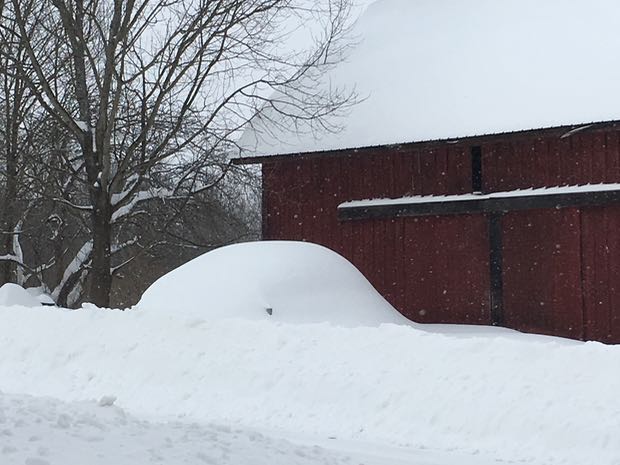
A baby brontosaurus is sleeping ‘cross the way
That would explain the humpy bump that’s been there all the day Pshaw, you say, don’t you know that dinosaurs are gone?
But how else can I justify the lump outside the barn?
It’s smoothly gently rounded like a brontosaurus spine
Long neck and tail wrapped near its feet in a curving line
Sleeping, hibernating — beneath that mound of snow
The thing I really wonder is where did its mother go?
Underneath the massive pile of snow is our minivan. Thank goodness, I don’t need it for the next few days.
Three years ago, Ash Wednesday began with an early phone call from my sister telling me that my brother had died unexpectedly. It brought a whole new depth to “Ashes to ashes, dust to dust.”
Now the two events are forever linked in my mind — Ash Wednesday and Stewart’s death. Somber and sad.
This morning I was looking for a Collect for Shrove Tuesday and stumbled across a website where I would like to spend more time: Liturgy It’s the work of Bosco Peters, an Anglican priest in New Zealand. On his Shrove Tuesday page, he said,
This is the last day of the “Alleluias” until Easter. This day may even involve the burying of the Alleluia.
I loved the idea of making today a day of Hallelujahs, the last day of Hallelujahs before Easter.
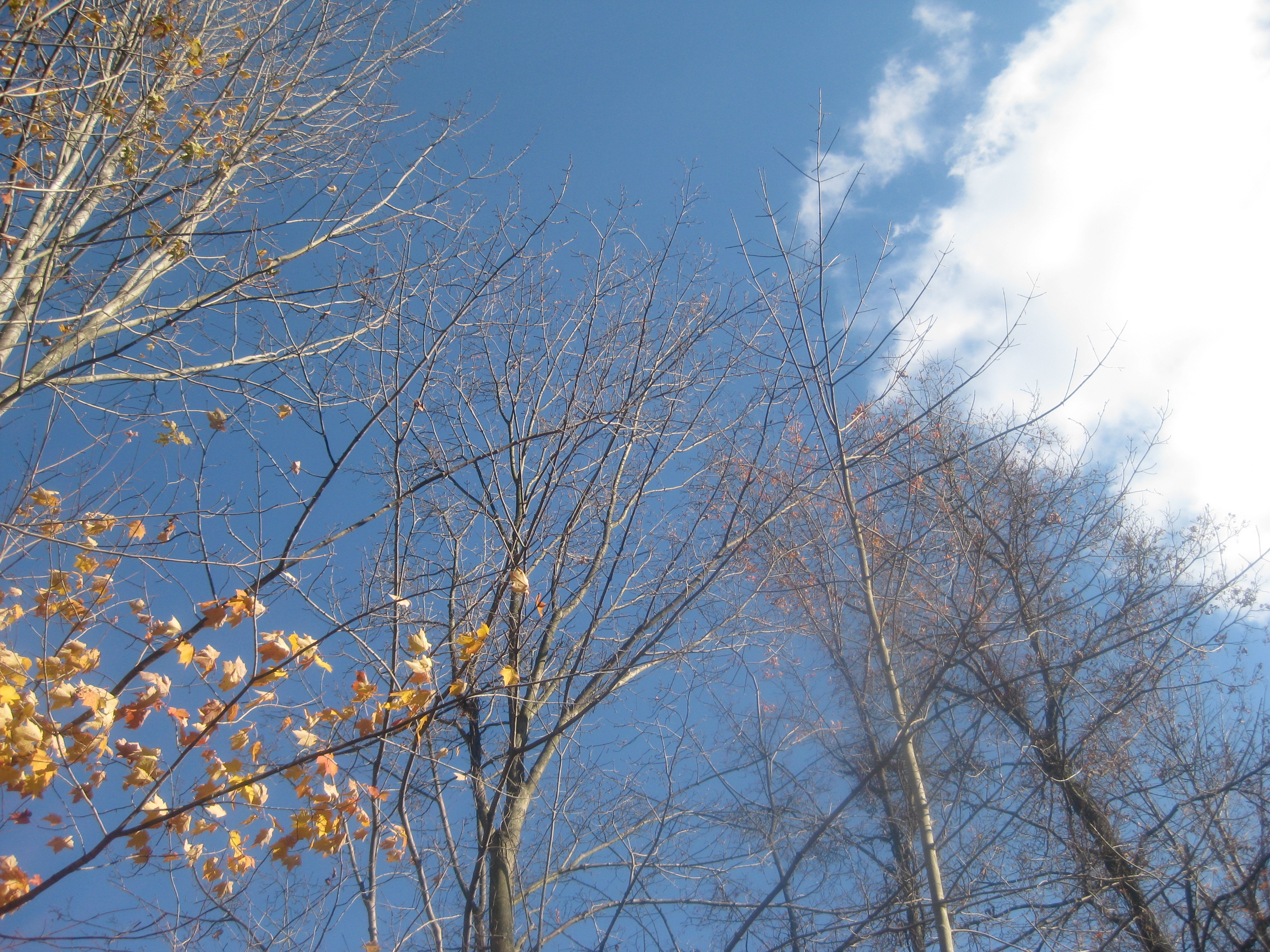
I looked out the window and saw a little chickadee hopping around on a tree and imagined it chirruping Hallelujah. I could hear the stream in the basement (not a good thing, but a sign of spring) and saw the clear blue sky with puffy white clouds. Before I knew it, I was writing a little Hallelujah poem.
My day will be filled with Hallelujahs. Will you join me?
The chickadee hops from twig, branch, to limb
Chick-chick-a-dee hallelujah
The gurgle of water as snow melts to spring
Burble-splish-splosh hallelujah
10X sugar piles on robin’s egg sky
Azurean cerulean hallelujah
Mud-luscious earth, spikes of green occupy
Plant-sprouting-spring-shouting hallelujah
Brisk breeze brushes cheek in a chilly embrace
Shiver and shudder hallelujah
Remembering the quickening, tender touches of grace
Life, light, and love — hallelujah
Tomorrow hallelujah dies from our lips
We walk with both Jesus and Judas
Today we rejoice, putting darkness aside —
Come sing! Come shout! Hallelujah!
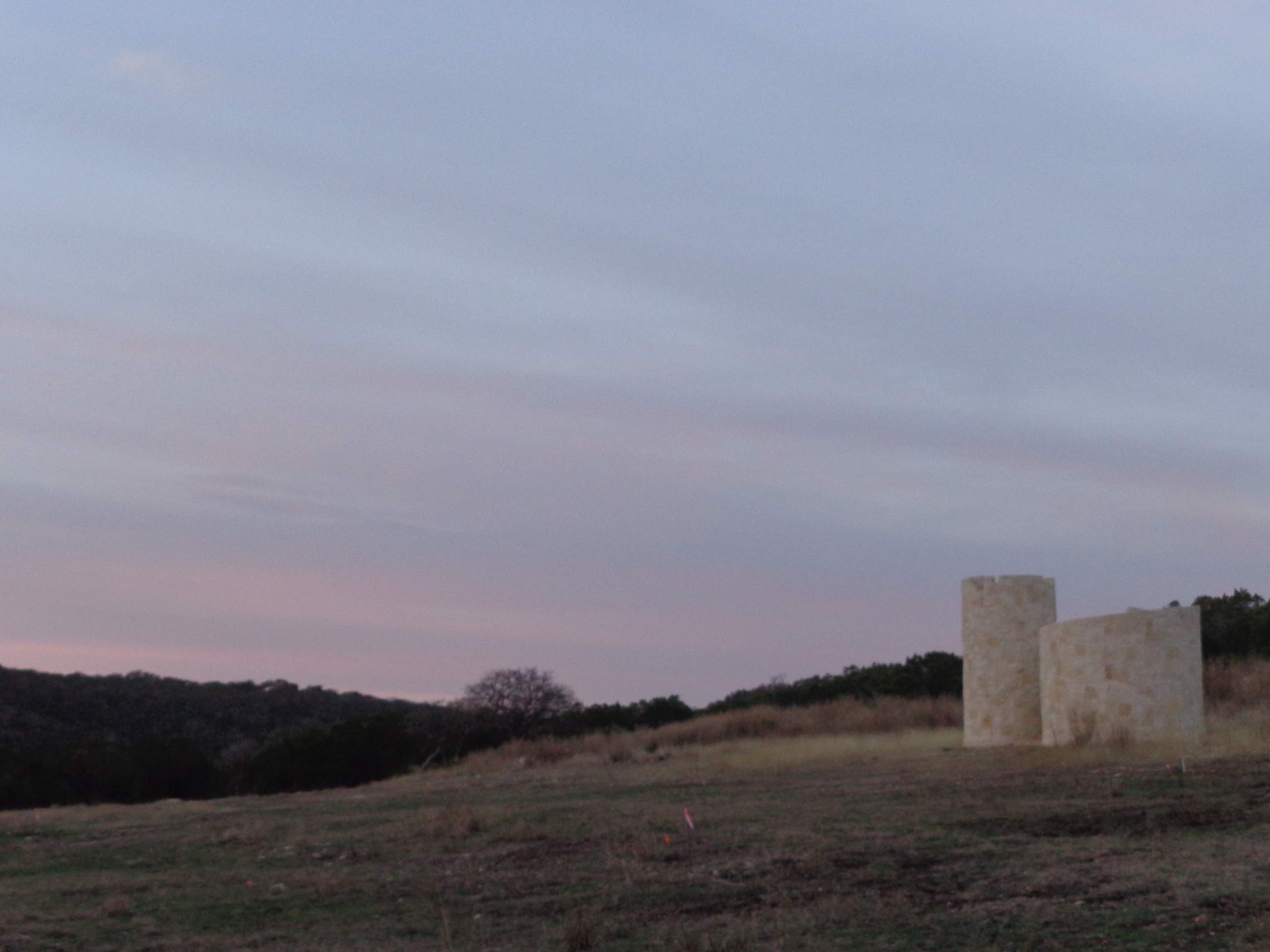
I’ve been there to watch the sun rise, and I’ve been there to watch the sun set — and I’ve been there at all hours in between.
It is peaceful and strong and restful and restorative. Who knew that a piece of art could do all that?
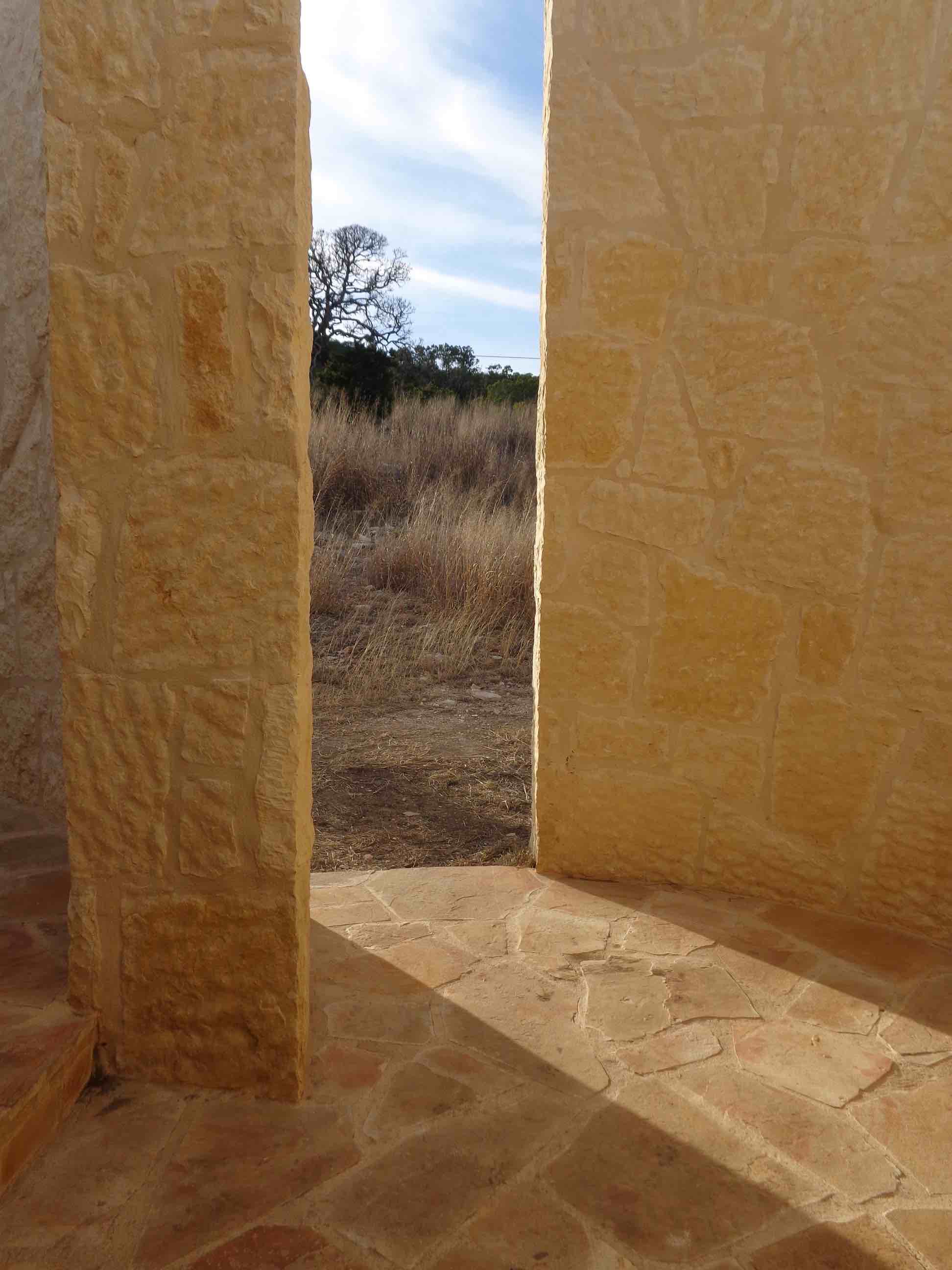
I probably have hundreds of photographs of Threshold — from close-ups of insects climbing on the limestone to all-encompassing shots taken from a distance as I walked around it to shots taken with her walls.
In Threshold, I recognize Psalm 48. I have numbered her towers – one – and considered well her ramparts. It’s not Zion, but it points me in that direction.
Looking out from Thresholdlooking up from inside ThresholdOne of my favorite people soaking in Threshold’s goodness
A friend who is helping care for an elderly relative told me about one evening when she went to visit her aunt and she found her wearing no pants. It reminded me of a poem I had written when my mother did something similar.
Here’s my poem:
My mother had no pants on
When she came down the stairs.
The funny thing about it was
It seemed she didn’t care.
The Emperor’s New Clothes became
The Grandmother’s New Pants –
Invisible clothes or missing –
I took another glance.
My children both politely
Turned their backs to her.
Modesty would dictate
Their behavior be demure.
“Mom, you need some pants on!”
“I know,” was all she said.
She settled in the kitchen,
Looking to be fed.
“Go put some pants on now,”
I commanded best I could.
“I will,” she said, but sat there,
So I didn’t think she would.
My father finally got her
To get up and find some pants.
I thought (but didn’t do)
A little happy dance.
Sometimes I let my toddlers
Run around with legs quite bare.
A child in only diapers
Would never get a stare.
But a grannie wearing panties,
Well, that’s a different sight.
Embarrassing for all involved —
It simply isn’t right.
So, help me, Lord, to understand
What is it I should do
When my mother comes down pantless
And doesn’t seem to have a clue.
It took some work for me to find the poem for my friend. I’ve started and stopped a number of blogs under various names.
Once I went through and started systematically deleting everything I had ever written — a self-inflicted devastation.
A lot of my writing is lost forever.
Meh.
Honestly, who cares? They’re just words.
I console myself with that fact that far more important words — words written by Jesus Himself in the dirt (John 8) — are forever gone.
Yesterday, on a forum, someone asked this question: “…what are the favorite blog posts you have written? Perhaps not the ones that have generated the most traffic, though it could be that, but the ones that reveal you.”
Believe it or not, I thought of this little poem. Actually, I thought of a few little poems I’ve written. I still can’t find one of them.
But when words and life are hard, poetry — dumb little rhyming poems — give a structure and a lightness to my thoughts.






 Hot Dogs and Marmalade