Life

The Fall

Bud told me that a woman at church had mentioned seeing me out for a run. “She doesn’t run,” he told her, “she just walks really fast.”

I was out for a walk the other day when I took a tumble. I do walk at a pretty fast clip, so when the toe of my sneaker caught on a bit of uneven sidewalk, I went down hard. Right onto my left knee.

I limped back to my car, about 3/4 of a mile away, stopping to rest on the stone bridge and take pictures of Tuga. On this day, no man was talking on his cell phone there so I didn’t feel self-conscious.

I kept reaching down to feel my knee through my jeans. I could barely touch it without severe pain, but I couldn’t see what the damage was. The wound was painful but, without seeing it, still abstract.

When I got home, I went into the bathroom to inspect my knee. The egg on my knee reminded me of the egg on Karl’s head the time “Fred” talked him into stepping into a spackle bucket with a rope on the handle that he had hanging over the edge of the cellar stairs.

“Let’s play Paul-in-a-basket and I’ll lower you down over the city wall,” he said.

It did not end well.

I iced my knee and put my leg up. Look up knee injury on the internet and the advice is nearly always the same — RICE: Rest – Ice – Compression – Elevation. I didn’t compress my knee though; I could barely touch it.

Mary and Laurel were a huge help, cleaning up the dinner stuff and fixing my father his nightly bowl of ice cream.

I took two ibuprofen and went to bed early. The injury knocked the wind out of me.

I really don’t have time for this, I told God as I fell asleep. He listened. In the morning, I felt completely better.

Not really — but the egg was gone from my patella. I could still see the redness and the abrasion where I had hit, but the real swelling was now in big circle around the patella.

It has now been three days since the fall. Bruising is settling in below my knee.

I find the whole thing fascinating — the way my patella absorbed a huge impact, then dispersed a cushion of fluid around the point of impact, and now even that is settling. The tenderness is minimal and only around the outskirts of my knee. Okay — I still can’t kneel, but I can do everything else.

The human body is a pretty amazing piece of self-healing machinery, don’t you think?

And that silly fall is not going to prevent me from walking today or tomorrow.

Snow may take care of that.

Life

The Rabbit in My Pocket

Stadiums fill up with rabbits to see what’s going to happen between the lines.

But life isn’t only about visible realities.
There are invisible and unseen nuances…
things that shape us into who we are.

Orel Hare-shiser

Like a rabbit in my pocket.


With apologies to Orel Hershiser.

Life

Weekend Coffee Share

If we were having coffee, I sure would like it to be a better cup of coffee than what I got at the hotel free breakfast this morning. It was hot, I’ll give it that, but it had no flavor. Lousy coffee is a small inconvenience, though, for spending the weekend with my daughter.

I guess I’ve gotten used to drinking good coffee made from freshly ground beans. I’ve turned into a coffee snob.

My mother drank instant coffee. Whenever I served her coffee from my drip coffee maker, she would wrinkle her nose and comment on how bitter it tasted. I never thought it was bitter, but maybe that’s because, in those days, I also added plenty of cream and sugar.

My mother drank her coffee black. Her Maxwell House or Folgers. Instant. Decaf. Yuck. I mean, what’s the point?

I’m still not a black coffee drinker, but I have stopped adding sugar. Freshly ground coffee bean coffee doesn’t need sugar.

I’m not sure sugar could have helped this morning’s coffee.

On my way to the pool for the swim meet this morning, I passed a Dunkin’ Donuts. That would be a step up from hotel coffee. Tomorrow, I’ll swing through there.

Today at the meet one of the other officials talked about how he had given up coffee for Lent.

“I don’t think I could do that,” said another official. “That would be too hard.”

The coffee-giver-upper said, “That’s the whole point. You’re not supposed to do something that’s easy.”

I touched my pocket where I could feel Tuga, my little plastic bunny. Had I taken the easy way out, I wondered.

Maybe.

Or maybe I’m not ready to tackle giving up coffee.

Besides, then I couldn’t participate in the weekend coffee share.

family · Life

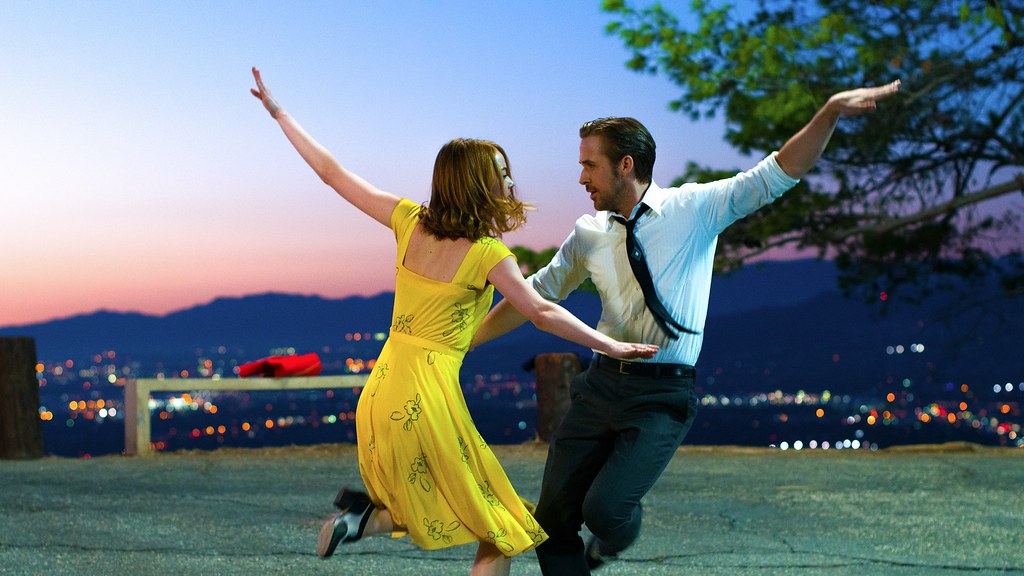
La La Land

Warning: this post may contain spoilers

On the way home from La La Land Mary asked me which song was my favorite. I didn’t have to think about it — “The Audition Song.”

“You’re a storyteller. Tell us a story,” the people behind the desk told Mia.  She stood for a moment, collected her thoughts, and then told a story about her aunt jumping into the Seine River.

In her audition she sang,

Here’s to the ones who dream
Foolish as they may seem
Here’s to the hearts that break
Here’s to the mess we make

I should have been forewarned by the lyrics that broken hearts were ahead.

I left La La Land feeling dissatisfied with the story.

Later, largely due to discussion about the movie over at the Rabbit Room, I realized that my problem was that I had been Hallmark-ized. The only ending I could consider happy was the one where the right guy and the right girl end up together.

Had that been its ending, La La Land would have fallen into the same category as so many of the movies I choose to watch. A feel-good moment soon forgotten. Hallmark movies that are simply background noise because I don’t need to pay attention to know what is going to happen. La La Land would have been, in so many ways, the same-old-same-old — good music, nice story, satisfying ending.

Like my father’s nightly bowl of vanilla ice cream.

A sweet way to end the day.

But La La Land left me unsettled.

The truth is the stories I love most leave me unsettled.

Fiddler on the Roof, Hunchback of Notre Dame, The Big Sky, A River Runs Through It, A Tale of Two Cities.

None have syrupy happy endings.

They all leave me with something to ponder. They take a long time to absorb.

I fear that I have gotten used to a jiggly jello diet — stuff that slides down easily and digests easily. I don’t know how to handle more substantial foodstuff.

On the way home from La La Land, Mary and I also talked about upcoming movies and what we’d like to see next. The ripples from the pebbles of La La Land may need to subside before I’m ready for another.


Life · poetry

My Mother’s Voice

I can’t remember
The sound of my mother’s voice
Fresh grief at this loss


The telephone at my father’s house doesn’t work terribly well, and I want to try a new one, but I don’t want to lose his voice on the answering machine. Is it silly — the things we hold onto?

I really couldn’t remember my mother’s voice this morning, try though I did.

The crappy phone will stay.


I looked through the videos on my computer. Surely I had one with her voice.  I found a couple from two years ago when she was in physical therapy. She spoke three words total in six videos. Monosyllabic. “Yes.” “No.” “Missed.” That’s not how I want to remember her.

Towards the end of the video below, where we are singing the blessing over a meal, I can pick out her voice. It’s a good place to end.

“Amen”

family · Life

Snow and Coffee

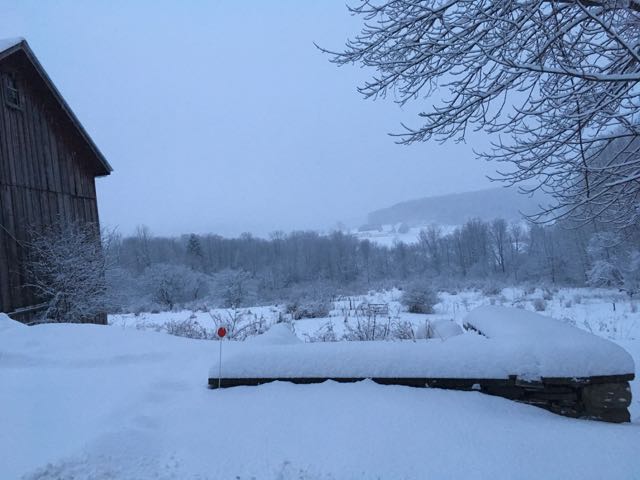
img_1165The snow started to fall exactly as predicated at 7 AM yesterday morning. It continued all day and was still falling when I went to bed.

The electricity went out at 12:40 this morning. I know because the monitor started beeping telling me that the base was off.  I have the base sitting unobtrusively under my father’s night stand so I can hear if he gets up or if he falls.

In the fog of sleep, I couldn’t figure out how to stop the beeping. The landline phone also beeped, telling me that the base was off. At least it gave me a message, but the baby monitor just kept beeping.

I pushed a few buttons on the side — one of them had to work. I sat on the edge of my bed holding the monitor and let the fog in my brain clear. Finally, I turned on the light to find the power button and turn the unit off.

Too awake to fall back asleep, I lay in bed thinking about the problems of no electricity.

img_8242❄ — No coffee.

❄ — No water. The well pump runs on electricity.

❄ — No flushing the toilet. I reminded myself that I needed to remind Mary and Laurel about this. No water means no flushing the toilet. Ugh.

❄ — No coffee. My mind came back to this fact indicating the seriousness of this situation.

❄ — No internet. The girls use the internet for their classes, but I could email their teachers on my phone. Or take them to the library, assuming that the library has electricity.

❄ — Where are the candles? It would still be dark when I got up for my morning coffee (dang — no coffee) and quiet time. I would have to use candles to read. I remembered that I had two candlesticks on the hutch in the dining room that we use (very) occasionally for dinners. Matches were in the cupboard by the sink in the kitchen.

❄ — Limit refrigerator usage. My mind was in the kitchen, getting the matches, and I noticed the refrigerator. It’s not as bad as in the summer when the electricity goes out because in February we have the free refrigeration of the snow outside. I could get my half-and-half out, but, darn it all….

❄ — No coffee. Coffee is an essential part of my morning routine.

My last thought as I drifted back to sleep was about calling my brother. He delivers newspapers in town and has gotten coffee for me other times at the convenience store when the electricity has been out.

I woke up at 5:13 AM. The electricity was on. Hallelujah.

I made my coffee and sat down to read.

The phone rang around 6 AM. It was my brother, checking to see if the electricity had come back on. He offered to get me coffee.

I’m not sure how much snow we got. A foot? A little more? It’s still falling.

And it really is quite pretty.

Until it starts to mess with my coffee.

Faith · Life

Blatherings about Birches and Flexibility

I drove into town this morning for a Bible study but the church was locked up. I felt a little irritated. No one had let me know that it was cancelled. Or postponed. Or whatever happened. Although I had only attended once before, I felt like someone should have told me.

Hmph.

I expected them to be flexible with me in my sporadic attendance, and yet I was not being flexible with them.

In my heart, I mean. This was all taking place at a heart level. I wasn’t really that upset. I was being stretched.

Bud and I used to get a little irritated at the Christian-ese expression of “being stretched.” When someone was undergoing a trial, the “Christian” response included glib statements like, “I guess the Lord is stretching you” or “me” or “him” or “her” or whoever.

I guess I’m growing up. And growing more flexible.

But there’s still so much more room for improvement. Will I ever reach a day when I’m not irritated by a small inconvenience?


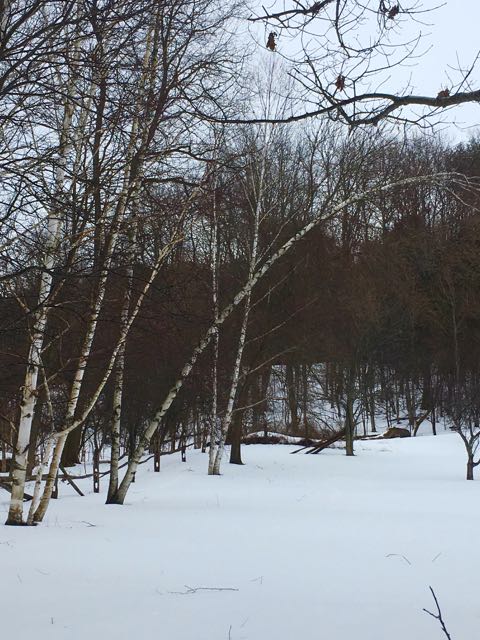
My father planted white birch trees along the north border of his lawn.

Over the years, some have grown quite tall. One bends quite low these days, showing the resiliency and flexibility that is its nature. My father comments on it every time he looks out the window.

IMG_5807[1]

Robert Frost says the birch is “the only native tree that dares to lean” — and lean it does. Its pliancy and resiliency are remarkable.


I’ve been going for long walks lately, and I feel the tightness in my legs. Yesterday I told myself that I need to start stretching again. As a coach, I’m aware of the different types of fitness: muscle strength, muscle endurance, cardio endurance, and flexibility. Flexibility takes the longest to gain, but it also is the slowest to lose.

In our muscles. In our lives.


img_1149


My friend, Alyssa, wrote about aspens, their frailty, their humility, the way their leaves tremble in community. I remember the day I first read that post. I wept because my brother’s death was still fresh and painful, and I knew she was telling me of a community weeping with me.

This morning I looked at the birch and knew that it had lessons for me, too.

To bend and not to break.

To keep working to develop that flexibility that will stay with me for a long time. The more I exercise it, the more flexible I will become.

I found myself grateful for a missed Bible study.


family · Life · poetry

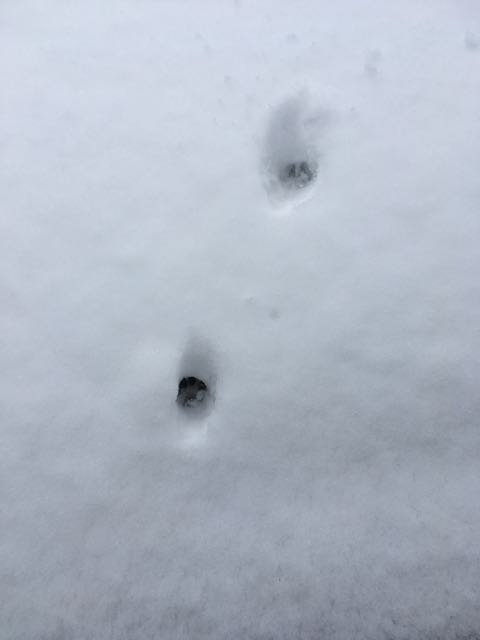
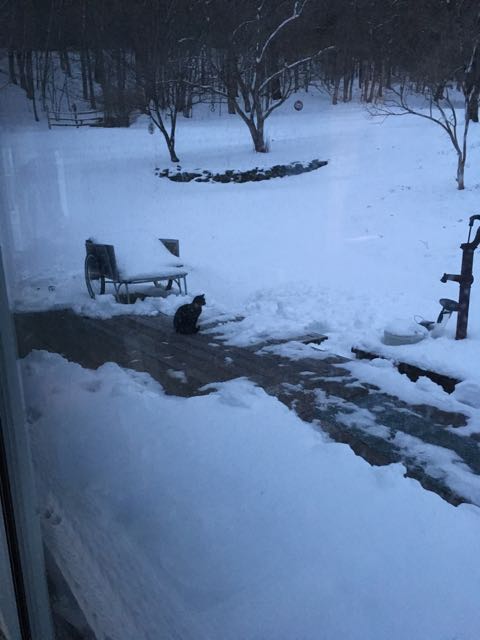
Footprints on the Deck on a Snowy Day

It all started when the cat wanted to go out — AGAIN — and then immediately wanted back in.

“It’s so simple,” I tell her. “Just make up your mind.”

But a cat’s brain doesn’t quite work that way.

So I wrote this — with apologies to Robert Frost.

Whose prints these are I think I know
She’s sitting by the window though
Her paws touched cold that made her veer
When out she ran into the snowimg_1109

My little cat must think it queer
Cold comes and goes this time of year
One day balmy, the next a flake
Falls — more fill the atmosphereimg_1118

Outside I watch her shiver, shake
Inside she mews her bellyache
To go outside where snow is deep
I wish in-out would take a breakimg_1115

Rough tongue wakes me from my sleep
Purring, padding, claws not deep
Outside she goes, then in she creeps

elderly · family · Life

10 Things To Do When Visiting an Elderly Person

I ran into someone who has been promising to visit my father. When I saw her at the Post Office and she asked, “What can we do to help you and your father?” my answer was easy. Visit him.

I was telling Mary about it later. “Visiting is so easy to put off.”

“Yeah,” she said, “I don’t think I’d be very comfortable with it either.”

Visiting isn’t hard, though.

I wrote a list of ten things to do when visiting an elderly person — to make visits easier, if you don’t know how.

1. Listen — Listening is a slow-paced skill that has gotten lost in our rush-rush society. My father struggles to find words. Finding the patience to listen is so good for me.

2. Ask questions — I once heard someone suggest asking elderly people to  talk about a time they got in trouble as a child. It brings out some funny stories. My father likes to talk about important days in history and the early days with my mother. Sometimes a question or two is all it takes to get a conversation rolling.

3. Look at photo albums — My mother always had a few small photo albums in her room at the nursing home.  My father has some by his chair. She worked at identifying the people. He recalls past adventures.

4. Read — Sometimes I read to my mother. I discovered that picture books worked especially well. Reading to someone with dementia, though, is not unlike reading to a toddler. Her attention span was sometimes short and we would skip pages to reach the end.

5. Listen to him (or her) read — My father reads to me. When he chooses books to read, he often chooses thick books with small print. “Why don’t you choose an easier book?” I asked him once.

“I like to challenge myself ,” he replied.

So he ends up reading passages out loud. I think it helps him process. He is not unlike a 3rd or 4th grader, following the words with his finger, moving his lips all the while, often whispering aloud — and then going back and reading it to me.

Right now he’s reading The Bounty Trilogy — a fat book containing all three of the Bounty books by Charles Nordhoff and James Norman Hall.

“Captain Bligh was a bad guy,” he told me about six times yesterday.

“Yes, that’s why the crew mutinied,” I replied. “Spoiler alert.”

We would repeat the conversation about an hour later.

Someone visiting him could easily ask about what he’s reading, and I’m sure my father would be happy to tell him and read to him.

6. Write a letter — My father has wanted to write a few letters but, in addition to the struggle for words, the fine motor skills required for writing are lacking. Recently I’ve taken dictation from him to try to help.

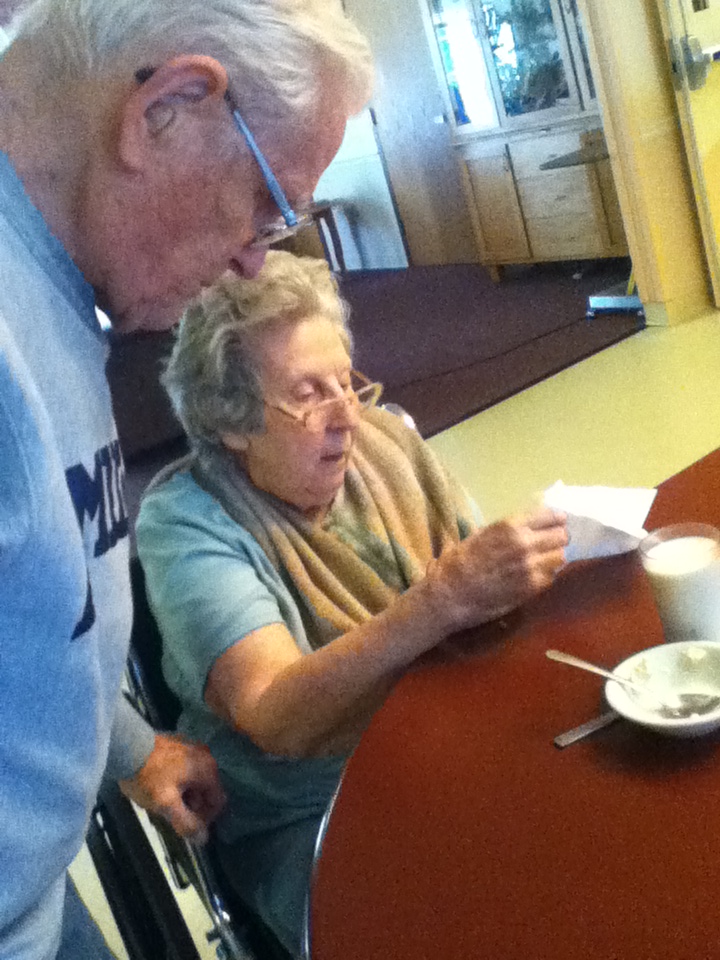
Helen and Fred
Helen and Fred

7. Do puzzles or play games — My father still does the daily jumble and crossword, but more and more he needs a little help. He transposes letters or gets the down and across mixed up. I usually help him with a few answers and then let him keep working on it.

Helen used to play rummy with an elderly man. He cheated constantly and accused her of cheating — and they both laughed about it. It was a great way for them to visit.

8. Walk — One person that came to visit my father asked about the house. He gave her a walking tour,  talking about the changes we had made to the house. It was a slow process because he stopped to talk about different pieces of artwork etc. He likes to walk outside, too, when the weather is nicer. But he needs someone with him.

IMG_6962
One of the twice daily visits which were always at mealtime.

9. Sit — For several years, I watched my father visit my mother every day twice a day. She couldn’t carry on a conversation toward the end so he just sat with her.

Now I sit with him most evenings while he watches television. Wheel of Fortune, Jeopardy, a baseball game, whatever.

10. Share a meal — My father could win prizes for being the world’s slowest eater, but we sit together every night to eat. I’m so thankful that my daughters patiently wait until he’s done. No devices. Just conversation. It is good.

The sad thing about a list like this is that the people involved in elder care will see it and nod in agreement, but most other people (myself included in years past) will just gloss over it.

But then, again, Karl applied for a job at a retirement home. Maybe this will be helpful…

family · Life · Writing

Success

The other day a friend posted on Facebook a rejection she had received for poetry submitted for publication.

She is a wonderful poet and writer, and I ached because a rejection feels like, well, a rejection — a failure — and she is not a failure.

How do we measure success? I asked myself — and, in a flash, I saw the scene that I wrote out below. It’s a totally made up story, kind of like a nightmare — but here it is for what it’s worth.

“Thank you for filling out the questionnaire,” the doctor said, studying the paper in front of him. He was checking off my answers with a pencil. I felt like it was more a quiz, than a get-to-know-you form for the first visit.

“You prefer to be called Sally?” he asked, looking up at me.

“Yes, I do,” I replied. I smiled at him, but he was already looking back down at the paper.

“Height, okay… Weight,” he looked up at me again. “You might want to lose a few pounds.”

“I know,” I said, “but things have been stressful lately, and I stress-eat…” My voice trailed off. I was hoping for a bye, but he just kept going down the list.

“You noted that you’re a writer,” he said, looking up again.

“I did?!” I said, questioningly because I didn’t remember putting that down.

He picked the paper up and turned it toward me, his finger pointing at a fill-in-the-blank mid-page. In my handwriting, next to the word “employment,” was the word “writer.”

“Oh,” I stammered, “I’m not really a writer. I don’t know why I wrote that.”

“Do you write?” he asked.

“I guess,” I said.

“Have you submitted pieces for publication?” he asked.

“A few, I guess, a long time ago.”

“How many times have you been rejected?” he asked. It was more of a demand.

I squirmed uncomfortably. What was this all about? I wondered.

“I don’t know,” I said. “I don’t understand. Why do you need to know this?”

He glared at me.

“Can I change my answer?” I asked.

“Real writers have a pile of rejections,” he said. “I think changing your answer would be wise.”

He picked up a pen and neatly crossed out my response, then sat with pen poised waiting for my new answer. “Employment?” he asked.

“Umm.. I’m mostly a mom,” I said.

“How many children do you have?” he asked.

“Eight,” I told him.  I found myself sitting a little straighter in the chair now. Surely this would impress the man.

“How many times have they broken your heart?” he asked.

“What?!” I asked.

“You know, how many times have they fallen, made bad choices, or failed?” he said.

“I thought you would want to hear about their successes. They’re doing pretty well,” I said.

“Real mothers have their hearts broken on a regular basis. They start off putting bandaids on skinned knees and move on to bruised egos and hurt feelings. They ache with their children. I’m trying to determine if you are a real mother,” he said, and then he repeated his question. “How many times have they broken your heart?”

I thought of the many emergency room visits, the hospitalizations, the times I stood outside a bedroom door and prayed for the child inside. I thought the listening and the insufficient advice I tried to give. I thought of skinned knees, skinned hands, stitches in the head, broken bones, tears, tears, tears, and more tears. I thought of driving when called for help and crying all the way, dropping kids off for college and crying all the way home, and watching them get married and crying for joy.

“How many times have they broken your heart?” he asked for the third time.

“None,” I said.