I climbed onto the bus and smiled. We don’t have buses like this where I come from. As a newby traveller, I was determined to make my way places using public transport.
I only spoke English. “Should I learn their language?” I asked my friends from home.
“Nah, everyone speaks English,” more than one person had said.
It turns out that not everyone speaks English, especially in the smaller, more isolated cities.
The bus was mostly empty. I rested my head against the window and closed my eyes listening to the rumble-hum of the bus, the psssssshh of the airbrakes at each stop, and the murmur of words I couldn’t understand.
Suddenly I recognized words whispered in English.
“Your job is to grab the old lady and tie her up,” said a male voice in a gravelly whisper.
“Hush,” replied another male whisperer.
“She’s the only one in earshot,” said the first voice, “and I doubt she speaks English. Besides she’s sleeping.”
As they reviewed their plans to rob a rich woman in her home, I listened in horror.
Quickly I came up with my own plan.
The bus stopped in a crowded market area. The men behind me got off. I followed.
“Excuse me,” I called. They turned, and I snapped a photo of them on my phone.
“I’m scheduling a ‘send’ of this photo to the police. Meet me here tomorrow at this time with my cut and I will cancel the send,” I said, and slipped away.
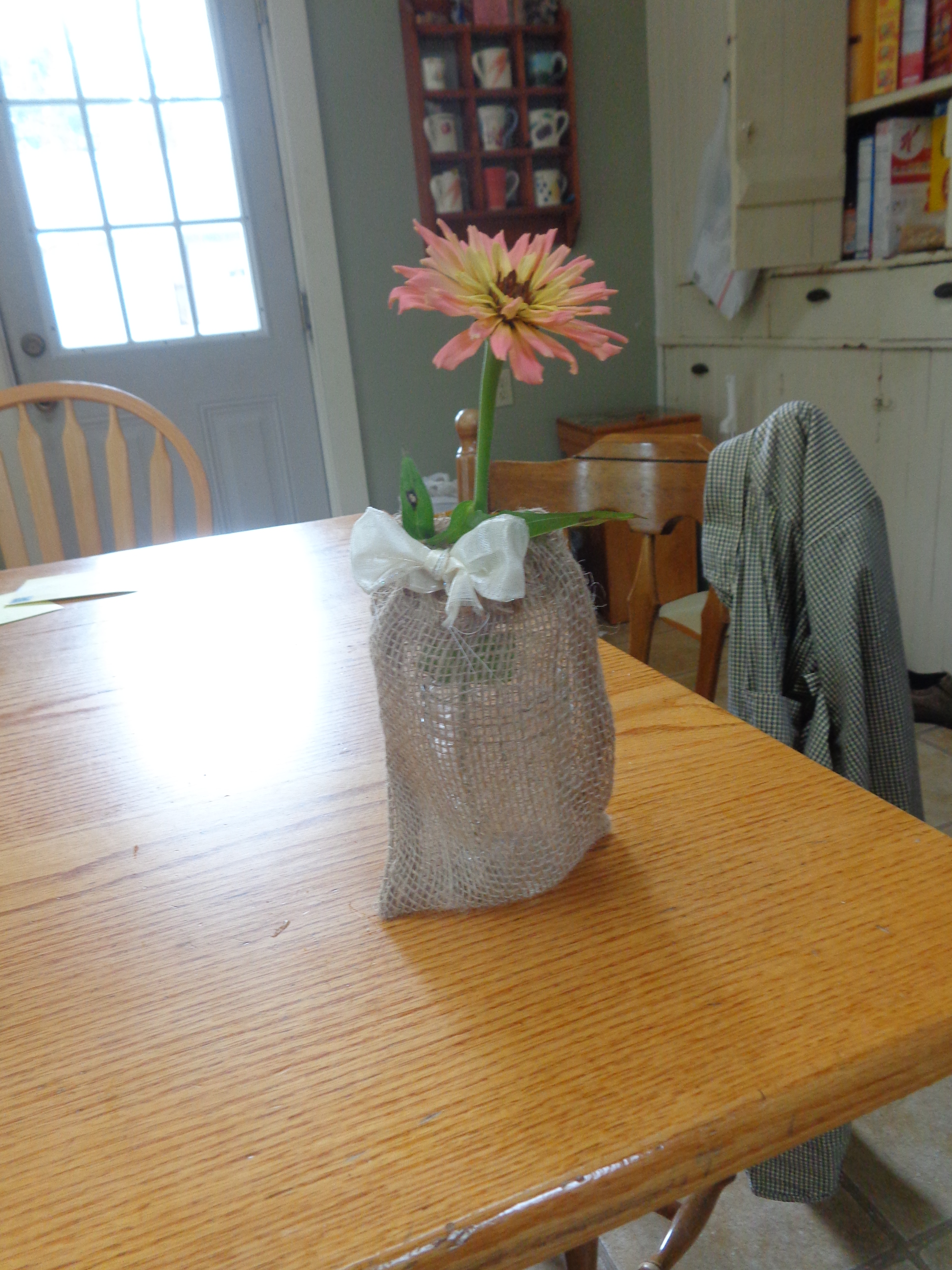
This is my contribution to the Unicorn Challenge. The rules are easy: 1. Use the photo for inspiration, and 2. No more than 250 words.
Sometimes Most of the time my ideas are bigger than 250 words. That’s the hardest thing. I don’t think I did this idea justice, but I did bring it in at 250 words!
Mom turned from the sink. This was the third time this week that Skeecher, a strange statue that Jeremy had unearthed in the garden, had gone missing.
Last week when she had sent Jeremy out to pick rocks from the newly-tilled soil of the garden, he moaned about the work like any normal 10-year-old. But when he came running in holding this dirt-covered statue of pot-bellied humanoid, he was anything but annoyed. He was delighted. Why Jeremy named it Skeecher was as much a mystery as the thing’s origins.
“Did you look on your dresser?” It sounded like an obvious place, but that’s where Skeecher was yesterday when they went to look.
“No! I looked there. AND the window sill. AND the closet,” Jeremy said, listing off Skeeter’s previous hiding places.
“I’ll help you find him” she said, drying her hands and heading down the hall. She opened the door to Jeremy’s room, and there was Skeecher standing in the middle of the floor.
“Is this a joke?” she asked.
Jeremy didn’t say anthing. He just scooped up the figure and hugged it.
The next day, while Jeremy was at his friend’s house, Mom heard noises in Jeremy’s room as she passed. She opened the door to see 6-foot tall Skeecher leap onto the desk and shrink to his normal size.
She ran in and grabbed the statue. His body still felt supple. His eyes blinked open and met hers.
This is my contribution to the Unicorn Challenge. It’s a challenge with only two rules: 1) no more than 250 words, and 2) inspired by the photo.
I know, I know — I’ve been MIA, but the creative tank has been low. Life.
And I realize this is an incomplete story. Again – life.
Don’t you think life is just one big incomplete story?
Ten things for which I have been thankful over this past week:
New Year’s Eve games — If you didn’t get to play games with 5 year old New Year’s Eve, you missed out. We played Magnetic, which involved magnets and strategy, Hurry Up Chicken Butt, which is like Hot Potato with a twist, and The Sneaky, Snacky Squirrel, which had game pieces shaped like acorns. Betcha I had more fun than the people who got rained on in Times Square.
Morning Reading — Here’s a quote from Art and Fear, By David Bayles — “…becoming an artist consists of learning to accept yourself, which makes your work personal, and in following your voice, which makes your work distinctive.”
Best comment/conversation on my blog — with Kristin (Finding Eliza) following my Unicorn Challenge story “The Big House” — Kristin: Did he get away with it? If so, then what? Me: Ah, but that is the fun of a 250 word limit. Your imagination has to take over now. Kristin: Grandad and grandson go on to become the robin hood jewel thieves of whatever country they’re in. Stealing from the wealthy and starting a string of food pantries and soup kitchens for the down and out. Eventually they expand and buy big houses to house the homeless. The well known ballad “They did it for us” was based on them.
New word learned: whinge. Whinge definition: British: to complain fretfully : whine (Thank you, CEAyr. I will TRY to stop whinging.)
Two roads diverged in a wood, and I (I should be telling this with a sigh) Stood at that fork and took it Hey Yogi! Hey Raffi! Look it! Look it! Look it! You know what came next? (What came next?) A knife and spoon! (clink, clink) So I kept on walking down the road With a fork-knife-spoon as my load
On Saturday I was supposed to go to a poetry reading. Mind you, I have done that only once before in my life and it was a terrifying experience. Thankfully an excuse presented itself and I bowed out. The friend who had invited me offered to read my poems for me. I gave her two — neither of which had been the poem I planned to read.
She messaged me later, telling me that the poems were well-received, that I was a rare talent.
To prove her wrong, I’m going to go ahead and publish last week’s tripe, my response to the W3 prompt. The POW gave a lovely challenge: to use 1-2 lines from Robert Frost’s “The Road Not Taken.”
Unfortunately Yogi Berra infiltrated my brain regarding that poem. Yogi once said, “When you come to a fork in the road, take it.” It’s one of many Yogi-isms for which he is famous. Like, “It ain’t over, ’til it’s over,” and “You can observe a lot by watching.”
Suddenly, too, while writing, I was doing battle with Raffi, who kept singing at me (in my head) about a time he went for a walk.
Sheesh.
Sometimes the muses either just aren’t there or are a couple of clowns.
Earlier today, I had had a conversation with someone who remarked how he still remembered and leaned on that rule.
“Kind of weird,” I said.
He didn’t get it.
Weird is such a great word — and it’s weird that it doesn’t follow the rule, even when the rhyme is completed — “or when sounded ay as in neighbor and weigh.” We don’t pronounce it wayrd. Weird.
I looked the rule up to make sure I was saying it right. There is funny stuff out in internetland.
How about this one: “I before E unless you leisurely deceive eight overweight heirs to forfeit their sovereign conceits.”
Weird, right?
Ooh, ooh! Here’s another: “I before E except when your foreign neighbors Keith and Heidi receive eight counterfeit beigh sleighs from feisty caffeinated weightlifters. Weird.”
I had to look up the word beigh: a provincial governor in the Ottoman empire. I suppose an alternate spelling to Bey.
Or maybe they meant beige.
Or maybe I misread it — I am, after all, trying to do stream-of-consciousness writing, not look-up-funny-things-and-copy-them writing.
Good golly, there are a lot of them. They refer to overweight reindeer and beige sleighs involved in heists.
I kind of stream-of-consciously wrote this last night and meant to post it, but I fell asleep.
“Please select Me!” She wanted to direct The gardener as he scanned, Hand
Already Full of flowers, gaze steady. He looked for one final bloom. Gloom
Just settled Over her. Her gold petaled Head drooped in an oh-so-sad Bad
Way. Downcast, Rejected, again outcast, Passed over. But then he stopped Dropped
His pruner “I wish I’d seen you sooner,” He said to her. “You are sweet! Meet
Your sidekicks.” [snip!] She joined the spray, transfixed By the beauty around her. “We’re
Delighted You can join us!” She sighted A welcoming rose and mum. “Come!”
This is for the W3 challenge this week. Heather (Sgeoil) challenged the participants to do a little personification. I had an idea for a flower being plucked from the garden for a bouquet (inspired in part by the bouquet that was on my bedside table when I stayed at my son’s house). My idea involved going in that sacrificial direction of losing life for the sake of something bigger. But, as you can see, it went in a totally different direction.
I wish I understood my own process.
AND — because I like Celtic forms, I went with a Deibide Baise Fri Toin, and Irish form with aabb rhyme scheme and syllable count of 3-7-7-1 for each stanza. The first two lines rhyme on a 2 syllable word and the last two lines rhyme on one syllable.
The other day a friend posted on Facebook a rejection she had received for poetry submitted for publication.
She is a wonderful poet and writer, and I ached because a rejection feels like, well, a rejection — a failure — and she is not a failure.
How do we measure success? I asked myself — and, in a flash, I saw the scene that I wrote out below. It’s a totally made up story, kind of like a nightmare — but here it is for what it’s worth.
“Thank you for filling out the questionnaire,” the doctor said, studying the paper in front of him. He was checking off my answers with a pencil. I felt like it was more a quiz, than a get-to-know-you form for the first visit.
“You prefer to be called Sally?” he asked, looking up at me.
“Yes, I do,” I replied. I smiled at him, but he was already looking back down at the paper.
“Height, okay… Weight,” he looked up at me again. “You might want to lose a few pounds.”
“I know,” I said, “but things have been stressful lately, and I stress-eat…” My voice trailed off. I was hoping for a bye, but he just kept going down the list.
“You noted that you’re a writer,” he said, looking up again.
“I did?!” I said, questioningly because I didn’t remember putting that down.
He picked the paper up and turned it toward me, his finger pointing at a fill-in-the-blank mid-page. In my handwriting, next to the word “employment,” was the word “writer.”
“Oh,” I stammered, “I’m not really a writer. I don’t know why I wrote that.”
“Do you write?” he asked.
“I guess,” I said.
“Have you submitted pieces for publication?” he asked.
“A few, I guess, a long time ago.”
“How many times have you been rejected?” he asked. It was more of a demand.
I squirmed uncomfortably. What was this all about? I wondered.
“I don’t know,” I said. “I don’t understand. Why do you need to know this?”
He glared at me.
“Can I change my answer?” I asked.
“Real writers have a pile of rejections,” he said. “I think changing your answer would be wise.”
He picked up a pen and neatly crossed out my response, then sat with pen poised waiting for my new answer. “Employment?” he asked.
“Umm.. I’m mostly a mom,” I said.
“How many children do you have?” he asked.
“Eight,” I told him. I found myself sitting a little straighter in the chair now. Surely this would impress the man.
“How many times have they broken your heart?” he asked.
“What?!” I asked.
“You know, how many times have they fallen, made bad choices, or failed?” he said.
“I thought you would want to hear about their successes. They’re doing pretty well,” I said.
“Real mothers have their hearts broken on a regular basis. They start off putting bandaids on skinned knees and move on to bruised egos and hurt feelings. They ache with their children. I’m trying to determine if you are a real mother,” he said, and then he repeated his question. “How many times have they broken your heart?”
I thought of the many emergency room visits, the hospitalizations, the times I stood outside a bedroom door and prayed for the child inside. I thought the listening and the insufficient advice I tried to give. I thought of skinned knees, skinned hands, stitches in the head, broken bones, tears, tears, tears, and more tears. I thought of driving when called for help and crying all the way, dropping kids off for college and crying all the way home, and watching them get married and crying for joy.
“How many times have they broken your heart?” he asked for the third time.
“He was my mentor,” she said to me as she gave me a hug. “If there’s anything — really anything — I can do, don’t hesitate to call.” She was a woman doctor, a little older than me, who had known my father for many, many years.
I couldn’t respond. My eyes well up with tears at the slightest provocation these days.
This past Sunday in church, I stood in the communion line behind an elderly couple, he supporting her down the aisle, waiting for her to dip her bread in the cup and get it into her mouth before he took his. I felt the tears.
Then it was my turn. “The body of Christ broken for you,” said the pastor as he extended a chunk of bread toward me. My friend held the cup. I think she said my name as I dipped the bread. I was too busy trying to blink back tears to really hear.
Christ’s ultimate sacrifice of Himself, remembered every time we eat the bread and drink the cup, is echoed in the smaller self-sacrifice of the couple in church and the multiple self-sacrifices I saw as my father cared for my mother over the last years of her life.
When she thought that he was her father and argued with him about waiting for her date to pick her up for the dance, he seem unfazed. It had to have hurt — his wife not recognizing him and waiting for another man.
When she wouldn’t sleep in the bed with him — she sat in a chair all night, because there was a strange man in her bed.
When she served him inedible foods.
He patiently coaxed her to do the right things and kept her safe from the wrong things.
He learned to do new things — laundry and cooking — that had been her domain.
He finally made the difficult decision to place her in a nursing home.
Then he visited her every day. Twice a day.
These days, I have so many people offering advice.
“Just march right in and stand there with your arms crossed,” one person said as I told him about a deplorable incident at the nursing home where my father is staying for rehab.
“You can’t bring him home yet,” another person said. “You need to take care of you and get some help set up.” And she is so right.
“Isn’t it time,” asked another friend, “to think about permanent placement?” No. No, it isn’t.
My father was my mentor, too. He taught me what it meant to care for the elderly. Partly through having me work at a nursing home when I was young, but mostly through his example, his constancy with my mother.
When I hit a roadblock these days, I try to think, how would he handle this?
I can’t ask him anymore. That hurts just to write it down. But his advice-giving days are past, and it’s up to me and my siblings to figure this out.
How do I care for an aging parent? One who argues and cajoles and insists that he’s fine. One who falls and faints and forgets how to shave. One who all his life has cared for other people.
I think that the answer is one day at a time.
Looking too far down the road is scary.
For now, I’ll work to get him home again, and then work to care for him. One day at a time.
At the Fenimore Art Museum this summer
I began this blog when I was helping to care for my mother. It was my formal extensive education in elder-care, given by the best teacher, my father.
Now, I’ve taken the fallen mantle. My role has shifted to becoming the primary care-giver.
And I need to set Hot Dogs and Marmalade to rest. Over the summer, I have felt this blog hanging there, waiting, waiting.
Rolheiser talks about “The Martyrdom of Obscurity”, saying that ordinary life is enough.
The human heart is full of longings — but Rolheiser says that longing is our spiritual lot.
Today we are called as Christians to the martyrdom of obscurity. Christianity always invites its adherents to martyrdom. To be a follower of Christ demands that one lay down one’s life. But this takes various forms. … In our culture meaningful self-expression is everything; lack of it is death. Yet it is this death that paschally we must enter.
Whoa.
That stops me every time I read it.
Ordinary life is enough.
Yes, enough.
To live in a small town and attend a small church.
To grow green beans in my garden.
To color pictures with crayons with my children.
To watch a high school tennis match or an age-group swim meet.
To make macaroni and cheese for dinner — again.
To fold towels and clean toilets and wash dishes and sweep up the dog hair on the floor.
To be Niggle, in Leaf by Niggle, and have one leaf to show at the end of my life, because I helped my neighbor and put aside my longings for more.
N is for Niggle, the main character in Leaf by Niggle, a short story by J. R. R. Tolkien.
Recommended reading for the retreat at Laity Lodge, I read it on my way there. At LaGuardia.
I’ve always loved the word “niggle”. Niggles are those gentle proddings — not nagging, just nudging. They are the post-it notes hanging in the back of your mind to remind you of something you should do.
And such is the main character of the story. Niggle is an artist so caught up in his work that he doesn’t always want to do the things he should, like preparing for his journey, because he would rather finish the tree he is painting.
But he stops to help his neighbor, albeit a little begrudgingly, because
He was kindhearted, in a way. You know the sort of kind heart: it made him uncomfortable more often than it made him do anything; and even when he did anything, it did not prevent him from grumbling, losing his temper and swearing (mostly to himself).
Ralph Wood, in one of his talks on Tolkien at Laity Lodge, said this, “It is extremely difficult to be an artist and a parent.”
How well I know that! For years whenever I would sit down to write, or even think, and I would be interrupted to tend to someone else. Most of my children are grown now, so it happens rarely — and, truth be told, long ago I learned to embrace Henri Nouwen’s sentiment that my interruptions are my work.
Niggle, though, represents that tension — between creating and tending to the mundane, between painting and fixing the roof, between art and helping a neighbor in need.
The most important job I have ever been given was being a parent. If I had to choose between writing and parenting, parenting would win easily.
These days, it’s the writing part that niggles at me.