Music

Night on Bald Mountain

Today’s SoC prompt is Bald, BalledBawled. I fell asleep last night trying to think about the last time I bawled so I could write about it. When was it? I couldn’t remember.

When I sat down to write this morning, bawled was out the window and bald was in. This is what came out —


A few weeks I was in Maine. On one of the days, we hiked and reached an overlook that had one of those pictures that identified the mountains we were seeing. One of them was called Bald Mountain — and immediately I was transported to my childhood.

We had a vinyl record that I listened to often. On one side was The Sorcerer’s Apprentice – Fantasia, and, because of that, Mickey Mouse was on the album sleeve. On the other side was Mussorgsky’s Night on Bald Mountain.

I started singing Night on Bald Mountain to my friend — DAH DAH Da-Da-Da-DAH DA-DA da-da-da-DAH DAH! He looked at my like I had two heads. How does one sing a piece of classical music?

Truth be told, the Mickey Mouse side — The Sorcerer’s Apprentice was too scary for me, so I preferred the foreboding music of Bald Mountain.

And the day we were on the hike, the weather kept thinking about raining, although not a thunderstorm. Still the vista was cloudy and gave me the sense of potential storm, as on Bald Mountain.

This may or may not be the vista that identified Bald Mountain, but it was from that same day.

If you’re not familiar with the music, take a few minutes and listen to the Mussorgsky piece. Picture a little girl putting it on the record player in her room and falling asleep to it. That may explain a lot about me.

Music

Song Lyric Sunday: Richard Shindell

Born August 3, 1960

I cheered when I saw that he was born in August — because that’s the challenge for this week’s Song Lyric Sunday. This week the theme is to find a song that was written or performed by someone who was born in the month of August. It proved not to be an easy task.

Richard Shindell is an American folk singer. He wrote a response song to The Beatles’ song She’s Leaving Home. I’ll put both songs below. If you’re not familiar with The Beatles’ song, skip down and listen to that first. Without it, Shindell’s song, Bye Bye, may not make sense. Somewhere I remember reading that Shindell had written his song as a song-writing exercise, trying to imagine what life would have been like for the parents of the girl who left home and just left a note behind.

Ten years to the day her father’s in the garden
He’s kept it as it was the day she went away
On every life some rain must fall
It doesn’t mean we let the roses go

Ten years to the day her mother’s in the kitchen
She’s standing at the backdoor, “Come, love, have some tea.”
It took a bit of getting used to
Only setting out two places

I could bring her back to them
With a few strokes of this fountain pen
All’s forgiven, start again

I could put her in a taxi idling at the corner
Working up her nerve and wondering what she’ll say
Remembering how she left that morning
Recalling how they both were snoring

I could bring her back to them
With a few strokes of this fountain pen
All’s forgiven, start again

That man from the motor trade
Ran off with a meter maid

Roses, wild, have spilled into the alley
Backdoor off its hinges, the grass grown high
Ten years to the day and counting
That little note she wrote? That’s all she wrote

I could bring her back to them
With a few strokes of this fountain pen
All’s forgiven, start again

But I can’t bring her back to them
That’s not how this story ends
As is written so it ends
Bye-bye


Wednesday morning at five o’clock
As the day begins
Silently closing her bedroom door
Leaving the note that she hoped would say more

She goes down the stairs to the kitchen
Clutching her handkerchief
Quietly turning the backdoor key
Stepping outside, she is free

She, … (we gave her most of our lives)
Is leaving (sacrified most of our lives)
Home (we gave her everything money could buy)

Father snores as his wife gets into her dressing gown
Picks up the letter that’s lying there
Standing alone at the top of the stairs
She breaks down and cries to her husband
Daddy, our baby’s gone.
Why would she treat us so thoughtlessly?
How could she do this to me?

She (we never thought of ourselves)
Is leaving (never a thought for ourselves)
Home (we struggled hard all our lives to get by)
She’s leaving home, after living alone, for so many years

Friday morning, at nine o’clock
She is far away
Waiting to keep the appointment she made
Greeting a man from the Motortrade

She (what did we do that was wrong)
Is Having (we didn’t know it was wrong)
Fun (fun is the one thing that money can’t buy)

Something inside, that was always denied,
for so many years, .
She’s leaving home

Source: Musixmatch
Songwriters: Paul Mccartney / John Lennon
She’s Leaving Home lyrics © Sony/atv Tunes Llc, Mpl Communications Inc

Life · Writing

A Trip to Maine

This is my response to this week’s Writer’s Workshop prompts

12 things I learned and/or grew to appreciate this month week (because I’ve been in Maine for the week):

  1. I now know the difference between a tadpole, polywog, and froglet. This is a polywog:

          A tadpole doesn’t have any legs and a froglet has all four. This polywog, as you can see(maybe), only has two legs.

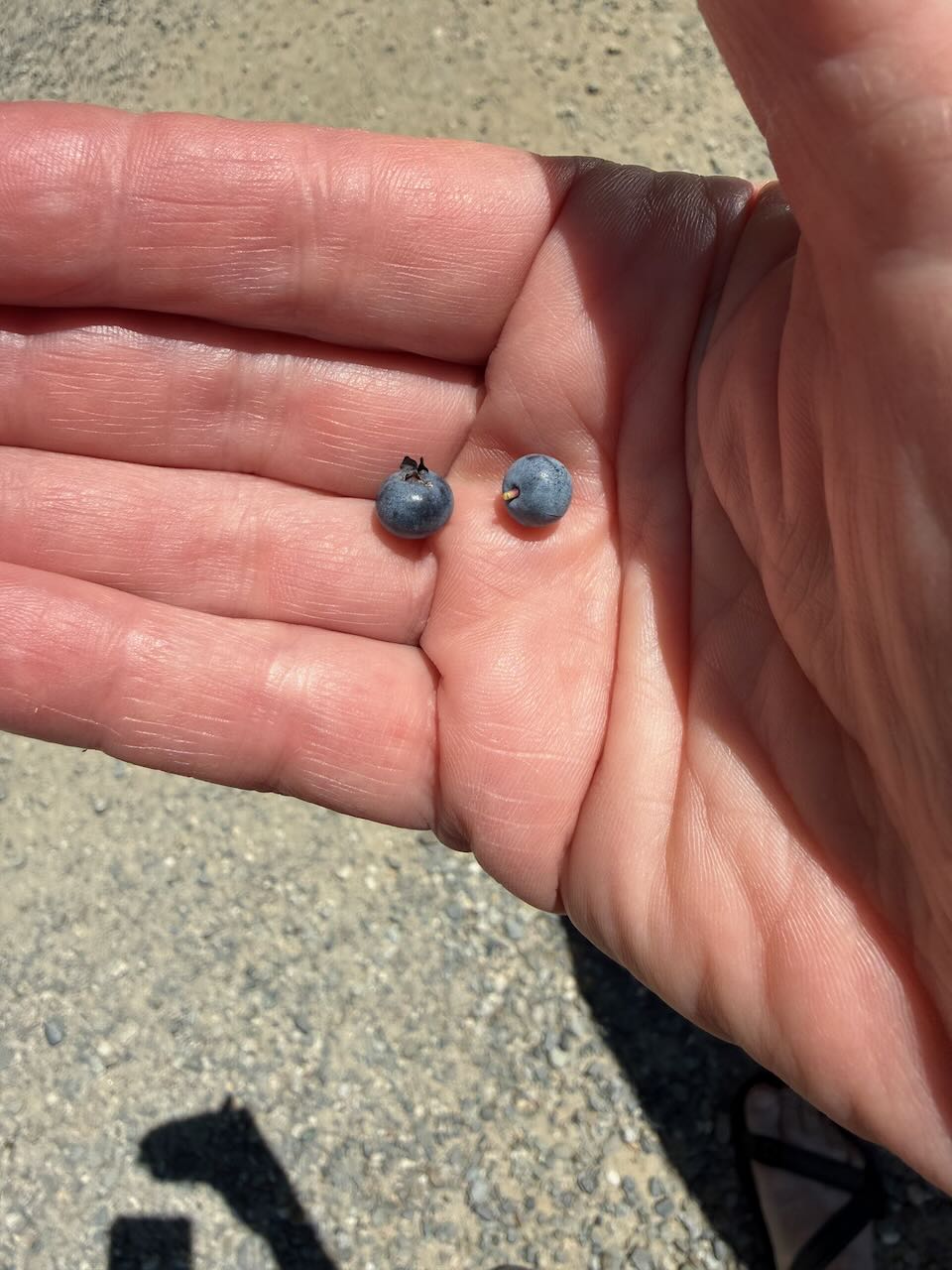
          2. Maine blueberries grow low to the ground and are tiny, compared to our New York blueberry bushes. They are harvested with special rakes. They have blueberry bushes in Maine, too, but those teeny berries from the ground plants are PACKED with flavor. Who knew?

          3. There is more than one Fort Knox. My dad was stationed in Fort Knox, KY, and it’s known for all the gold there. But before that Fort Knox, there was a Fort Knox in Maine built in the mid-1800s. It’s a massive granite fortress built on the edge of the Penobscot River.

          Fort Knox outside wall
          Fort Knox — the inside compound

          4. Perspective is always important. When you’re looking from the outside, you can’t see in very well (see top Ft. Knox photo). But when you’re looking from the inside out, the world just seems to open up.

          From inside Ft. Knox.

          5. The Penobscot Narrows Bridge is one of only five bridge observatories in the world. The other four are in China, Thailand, Slovakia, and South Korea.

          Looking up at the Penobscot Observatory from our car.

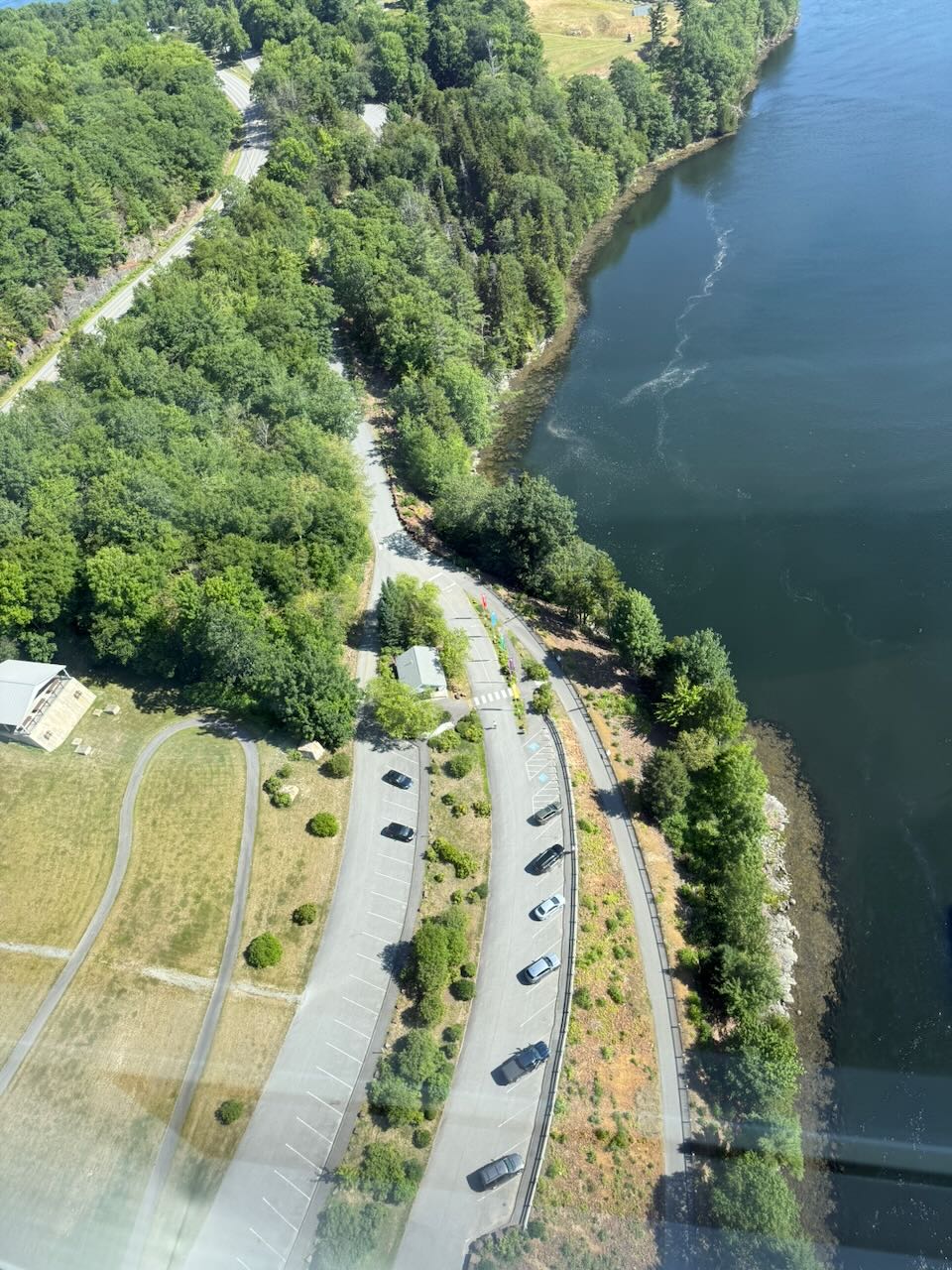
          6. Perspective is always important. (Yes, I already said that.) Looking down and looking up are totally different views.

          Looking down from the Penobscot Observatory at our car.

          7. Beaches hold amazing surprises.

          We found this crab shell on the beach full of… we didn’t know! It turns out they are Marine Springtails, a relative of the snow fleas I’ve seen at times in New York. They’re an important part of the beach ecosystem, part of nature’s clean-up crew.

          8. Museums are fun.

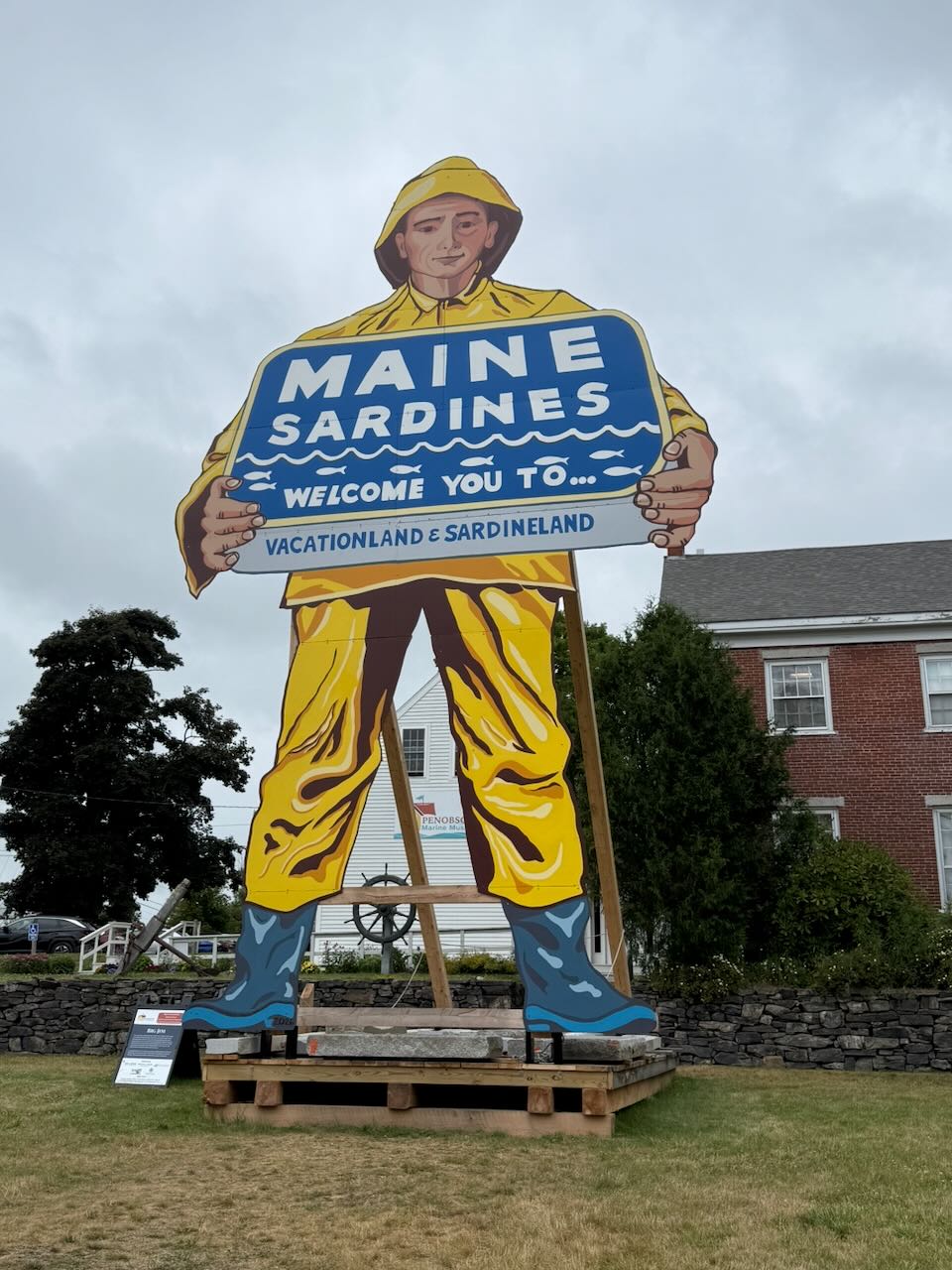
          We stopped at the Penobscot Maritime Museum, mostly because of this guy beckoning us in. I learned more about sardines than I thought possible.

          9. Sometimes kids don’t appreciate museums.

          “Boring who needs fishermen dont prezerve fishing”

          This was in a box of comments that I looked through. It made me laugh — and feel a little sad for the kid who wrote it.

          10. Museums can be very funny for kids (big and small) who engage with them.

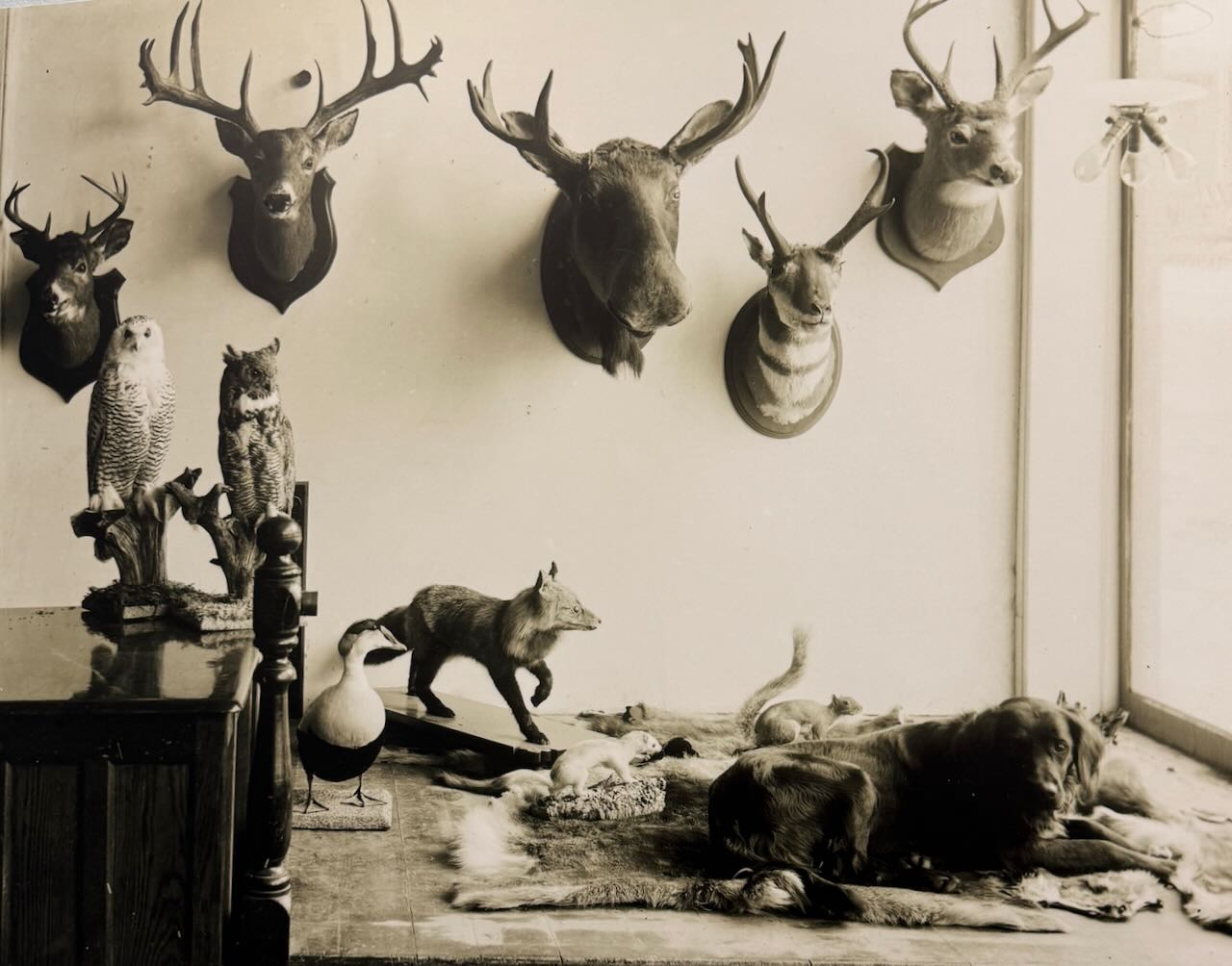
          Captioned: Which animal is not stuffed?

          This photograph was hanging in the ladies room at the Penobscot Maritime Museum. It was taken by a turn of the 20th century photographer, Charles Coombs, who was also an undertaker and taxidermist. The picture made me laugh.

          11. Floating classrooms can be massive.

          The big ship in the back is called The State of Maine and recently came into Castine, home to the Maine Maritime Academy. Its primary purpose is for training Maine Maritime cadets while also being available for federal humanitarian assistance and disaster relief mission. We went to see it but couldn’t get any closer than this.

          12. Sunsets are beautiful everywhere.

          Life

          Just A Trip to Walmart

          This post was originally written August 5, 2017 and has languished in my draft folder since then.


          The father bellowing at the little boy in the Walmart parking lot was a bad start.

          “JOHNNY,” he roared, “GIT YER A$$ OVER HERE.”

          The open tailgate made me think that the father had been putting his purchases into the car. The boy skulking back from the cart corral looked to be about 8 or 9 years old. He was scowling. I would scowl, too, if someone spoke to me like that.

          Walmart. I felt a snobbish “ugh” rising inside me.

          Inside, the store was a disorderly mess.

          “You can always tell when the students start coming back,” commented a woman looking at the same merchandise as me. “They trash the place.”

          “It is a mess in here,” I agreed.

          “I shop here every week,” she said. “Today is the worst I’ve seen it.”

          I gathered my items and found the shortest line to check out.

          The shortest line was not short.  When the elderly couple ahead of me finally got up to the register and the cashier was nearly finished scanning, their package of chicken needed a price-check.

          “I’m sorry,” the man said, turning to me. I could barely see his eyes under the brim of Carhartt cap.

          “No worries,” I said. “I’m not in a hurry.”

          “Me and my wife got a carful of groceries already,” he said, nodding toward a hunched-over woman with blue-gray hair. “Frozen stuff prolly meltin’ in the car… but she forgot a few things so we come back in.”

          A few things meant a cartful.

          “I hope you aren’t far from home,” I said.

          “Blenheim,” he said.

          I knew that was about an hour away. In the middle of nowhere. Near Breakabeen.

          “I’m sorry,” I told him.

          The Walmart supervisor came to check on the chicken. She called on the radio to the meat department. “Anyone there gimme a price on some chicken?” she asked. I couldn’t hear the response because of her earpiece, but I didn’t need to — she announced it. “I gotta walk this over to the chicken department to get a price,” and off she walked.

          I turned to the man behind me. “I’m sorry,” I said, even though I knew I had nothing to be sorry for.

          “No problem,” he said. “I just moved here from Long Island. You should see the lines in their stores.”

          So we waited.

          “You could move over to a different line,” said the Carhartt man.

          I looked at the line next to ours. It was moving faster, but I’m not one to jump ship. A burly man helped unload an elderly woman’s cart on the belt, but when he left with his bag, I realized they weren’t together. It was just a nice move.

          The chicken department was on the far side of the store. I kept watching that direction to see if I saw the supervisor heading back.

          The blue-haired wife mouthed “I’m sorry” to me. I smiled at her.

          I made eye contact again with the man behind me. “I was in Europe this summer,” I told him. “Time doesn’t seem to matter as much there.”

          “I know,” he said. “We could learn a lesson or two from them.”

          The chicken was still MIA.

          In the line next to me, a man holding a plant — his only purchase — was let ahead of a customer with a full cart. “Thank you SO much,” he said, enthusiastically. The woman who had let him pass just smiled.

          I smiled, too.

          There were nice people all around me.

          In Walmart.

          Finally chicken lady returned.

          I told Long Island man, “Here she comes!”

          “Hooray!” he said.

          I felt like we should clap or something.

          By the time I got to the parking lot, I had nearly forgot the unpleasant father-son interaction because I had seen and talked to so many nice people in the store that day.


           I could guess why I never posted this — too wordy. It’s a problem I have.

          But the message to look for the nice people? Yes, I needed that today.

          Be not conformed to the impatience and nastiness of the world, but be transformed by the goodness that’s right in front of you if you look for it. (a bastardization of Romans 12:2, but nonetheless true.)

          Alzheimer · Alzheimer's · dementia · elderly · family · Leaning In · Life · Writing

          The Feeder’s Table

          This is a draft written February 6, 2015, pulled from the draft folder because of the RDP prompt word: tame


          From across the room, I heard the man bellow, “NO!”

          I had no clue what this was in reference to — he was across the room, after all, and I was attending to my mother in the midst of her ritual folding and unfolding of her mealtime protector (aka – bib) while waiting for the food to arrive.

          A woman at his table shouted out, “SNOW!” It was snowing out.

          She laughed at her rhyme, a dry cackle-y laugh, not because she was a witch, although it did make me think of one, but because she was very old and shriveled, and even her laugh bore witness to that.

          “He said, ‘NO,’ and I said, ‘SNOW,'” she said gleefully, and it reminded me of the little “jokes” that first- or second-graders make, when the littlest thing sends them into gales of laughter.

          However, the jokesters were across the room, while my mother sat at the feeder’s table, a table set aside for residents who need assistance with eating. She dines with five other ladies with dementia.

          To my mother’s left is a dear lady that reminds me of a sparrow. Her voice is quiet and sing-songy. Sometimes she makes sense and sometimes she doesn’t, but I always have to listen very closely when she speaks. (Professor Trelawny)

          Next to Sparrow is a woman with a chiseled angular face. (Professor McGonigle) She never speaks. She sits erect and stern, like a statue of a school matron staring across her desk at a wayward student.  However, I had met her many years before, when she was an OB nurse. She had come into my room after I had given birth to somebody because she wanted to tell me about my father.

          “I remember your father’s first day at the hospital,” she said. “He came in toting a little black doctor’s bag. A little black bag!” She laughed when she told me the story, and her eyes twinkled with the delight of that memory. My father still has that black bag with its stethoscope, reflex hammer, otoscope, and other doctorly treasures.

          To her left sits a white-haired lady whose dementia has a Dr. Jekyll-Mr. Hyde effect on her.  (Quirinius Quirrell) One minute she is sweet and the next she is spewing venom.

          Next to Mrs. Hyde sits the newest diner at the feeder’s table. I’ll come back to her.

          To Newby’s left is Mrs. Tiggywinkle, so designated because of her hedgehog hairdo.  Teens pay a lot of money and use a lot of product to get hair like hers, sticking straight up all over her head. My father has to repeatedly request that my mother’s hair get combed. Some of us are just stuck with wayward hair that no amount of combing can tame, and I suspect that’s the case with Mrs. Tiggywinkle.


          The draft ended and I never finished it. I don’t remember who the person I called Newby is, so I can’t come back to her now. I don’t even remember the point of this story.

          My mother died 9 months later.

          Reading drafts and posts from that time in my life are interesting to me. I’m glad that I chronicled the journey.

          Advice to anyone going through a stressful time: Write down what you see and hear and feel. It’s a gift to your future self.

          Life

          Temptation

          This post was in the draft folder and dated: 2016/05/06 at 1:14 pm. It came up when I searched my Draft Folder for the word “timing” — RDP’s prompt today.


          I got a phone call yesterday that has been rattling around inside.

          In a good way.

          Kind of also in a bad way.

          “Hi, Sally,” the voice said, “Do you have a minute to talk?”

          “Sure,” I said. I was just washing dishes. They could wait.

          It was the AD (Athletic Director) at Greene. I knew him. I had worked for him before, and, at one point, lived two doors away.

          “We’re looking for a varsity swim coach for both the boys and girls next year. Our contract requires that we do an internal search to fill coaching positions which we’ve done, but your name keeps coming up. We would love it if you would come back to coach,” he said.

          He went on to do some salesmanship, telling me how they’ve updated the timing system, put in a new heating system, refurbished the diving boards. “We’d really like you to come back. You did a great job before, and we’d love to have you as part of our swim program again.”

          Oh my goodness.

          The dangling carrot was so appealing.

          I love coaching. Oh, not every minute of it, as my children could tell you. But the overall reward of being involved with young people, especially of the teenage variety, is incredible.

          Several years ago I wrote a post during a time when I thought I was done coaching called “MomSwimCoach.”  It’s now up at Laura Brown’s Makes You Mom site [no longer active], and is about a one of the greatest gifts I ever received — a quilt with squares made by one team of swimmers.

          But this temptation — to have the whole swim program and run with it — so so tempting.

          I knew the answer.

          “Thank you so much for thinking of me,” I told the AD, “but my mother died in November and I’ve been taking care of my father since. I couldn’t commit to you the time needed.”

          We finished our conversation with pleasantries, but, as I said, it rattled around.

          I went for a walk, mulling it over.

          Temptation comes when something


          And there ends the draft.

          If my draft had shoulders, I would grab hold of them and shake them. “When something WHAT?” I would demand.

          It’s funny that the prompt word — timing — was triggered by my reference to timing systems for swim meets, but the bigger broader story has to do with the timing of an opportunity. I’m in the same boat today. I have an opportunity, and it’s a great opportunity — but I have to weigh it all out. The timing is questionable. I should write the details in a blog post and save it in the draft folder for 8 – 10 years.

          For the record, I have zero regret about not pursuing the swim coach job. In fact, I had totally forgotten about it until this showed up after searching my draft folder. I made the right choice back then. Now for a repeat performance.

          Faith · family · Life

          Growing Pains

          The RDP prompt for today is kindness. I searched my draft folder and found this incomplete post that had been written in October 2011.

          When I read it this morning, I remembered some of the difficult circumstances of that time. It was years before my brother died, years before I was helping care for my mother, years and years before my father died.

          Just because I wasn’t dealing with death, it doesn’t mean life was easy. I had my hands full in other ways. My children at that point ranged in age from 7 to 26. I was homeschooling two, had one in public school, some in college, some working, one married.

          Without further ado, here is the unnamed post which I will call “Growing Pains.” If it feels incomplete, maybe it is.


          One of the most profound things I heard Andrew Peterson say was not at Hutchmoot, but at a concert in Cortland.  He was talking about his books, the Wingfeather Saga. (Note: he was still in the process of writing the series. The final book wasn’t published until 2014.)  I didn’t write this down or record it so it may not be verbatim, but I think it’s fairly close.  He said,

          The main character in these stories is a boy named Janner.  When I started writing, I saw the man he would become, but I knew that he would have to go through many trials and difficult situations to become that man.  I knew that he would have to suffer some terrible things…

          I have been thinking about some of the difficulties my own children have had to endure.  They are rather small in comparison to Janner’s battles with Fangs and Gnag the Nameless, but they shape my children nonetheless.

          And then I started thinking about that whole idea conversely.  If my children didn’t suffer anything, how would they turn out?

          For instance, in order to develop perseverance, they need to stick with difficult situations and work them out.  If I allow them to quit every time the going was hard or not fun or required something of them, they would become the kind of adults who always take the easy path, who quit, who are unreliable.

          In order for them to develop compassion, they need experience some hard times and also experience unwarranted kindness to them.  I imagine that the guy in the Good Samaritan story who had been attacked by robbers didn’t later cross to the other side of the road to avoid helping someone who was different from him, although without his experience, he may very well have looked the other way instead of helping.

          To develop patience, they need some annoyances.

          To develop peace, they need some turmoil.

          Life

          Sewing With Burlap

          The good thing about burlap is that it is inexpensive.

          The bad thing about burlap is — oh, where to begin?!

          Burlap wears its flaws on its proverbial shirtsleeve, although I shudder to think how uncomfortable a burlap shirt would be.

          It is coarse and crotchety, like an old man who has worked hard his whole life and never been been appreciated for a single thing he has done.

          It frays easily and often.

          It does not like to be straightened.  Lesson #1 in 4-H sewing decades ago included straightening the fabric.  Burlap is just ornery enough to say no.  It sort of looks like it is willing to comply, and then, BAM, an in-your-face refusal when the cutting begins.

          Despite all that, burlap is quite lovable — especially if you’re partial to cantankerous types.

          I’m sitting here, staring at various burlaps, trying to think how I can get along with them.  How can I coax this rough piece of fabric into something beautiful?

          IMG_4499[1]

          In my first attempt, I lined it with a cheery cotton print.  The burlap lost its burlap-ness.  It was like taking a hobo and dressing him in a business suit.  What makes a hobo appealing is his relatively carefree life, hopping trains, bumming food, answering to no one, but a businessman has to present himself just so, and answer to all sorts of people.

          No, I was glad the lined burlap cone was nixed. It was too incongruous.

          DSC02204

          My next attempt was a simple burlap sack.  Simple. Hah!  To make a casing for a ribbon to go through was nearly impossible. And then, I didn’t cut a long enough piece of ribbon.  And then I kept wondering if jute would be better than ribbon.  And then I just got mad at the whole darn thing because it refused to look like what I had pictured in my head.

          I had an idea for my next attempt.  I would work with the fray-happy fabric. I saw it on Pinterest.

          Except… I’m pretty sure all those wonderful Pinterest ideas require fingers, and, as it turns out, I’m only equipped with thumbs. Ugh.

          The more I fuddled around with the burlap, the more I saw this as life.  Things don’t always turn out the way we hope.  Plan A becomes Plan B becomes Plan C.

          And still we remain hopeful. Still we try again.


          [I decided to started searching the Ragtag Daily Prompt word in my draft folder so I could relook at some of the things written years ago. Today’s word was HOPEFUL — and this post came upThis post was originally written in August 2014 as we were getting ready for son #2’s wedding.]

          fiction

          A Fractured Fairy Tale

          1Once upon a time there was a king who had a magic mirror that spoke only the truth.

          2Every day, he would stand in front of the magic mirror and say,
          “Mirror, mirror on the wall,
          who’s the richest king of all.”

          3Every day, the mirror would respond,
          “Oh mighty king, you know your brand —
          you are richest in the land.”

          4One day, the king, after hearing a story about a king named Midas, changed his question and asked,
          “Mirror, mirror, may I be bold
          and ask who has the mostest gold?”

          5The mirror responded,
          “Your riches lie in resources many,
          but Midas has gold more plenty.”

          6The king frowned because this was not the answer he wanted to hear and he demanded that mirror grant him some magic so that he could have more gold than Midas.

          7When he woke up the next morning, he reached over to shut off the alarm clock and it turned to gold when he touched it — in fact, everything he touched turned immediately to gold, including all the clothes in his closet when he went to get dressed.

          8So he said to the mirror,
          “Mirror, mirror, tell me true,
          what I am supposed to do?
          I have no clothes and a parade to march in.
          Is there something you can put some starch in?”

          9The mirror, for the first time in her existence, told a little white lie,
          “Oh king, it’s not what you suppose —
          When I look at you, I see fine clothes.
          March in what you now are wearing —
          People will cheer as they are staring.”


          This is my response to The Writer’s Workshop Prompt: Write a post in exactly 9 sentences. Clearly, I have trouble counting. Forgive me.

          Also, there needs to be a final line. What do you suggest?

          Writing

          Football

          Just to be clear, this post has nothing to do with altruism.

          Altruism is the prompt for JusJoJan.

          True story: I don’t follow American football. Not even a little. Honestly, I’ve never really understood the game. It looks like one people-pile after another. They talk about downs, which are different from people-piles, although it sure does look like a lot of people go down in a people-pile. Then there’s the whole scoring thing: some things earn 6 points, other things earn 3, and still others earn 1, or is it 2. I don’t know.

          I coached swimming. The first person to touch the wall won.

          My kids played soccer. If they kicked the ball in the goal, they got one point.

          Easy and straight-forward, right?

          I knew my son and his family were watching some Buffalo Bills game on Saturday night, so I half-watched about 5 minutes of it. Some guy caught the ball, but another guy ripped the ball right out of his arms. The whole thing didn’t look fair. I later told my brother about it, saying (again) that I really don’t understand football and wondered why people watch it.

          “You need to watch this,” he said, and he directed me to a video of a guy running back-back-back, pushed by a bunch of guys from the other team, and he throws the ball — a long long pass to a guy waiting in the endzone and they scored.

          Running backwards AND throwing accurately impresses me.

          All this goes to show that an impressive bit of athleticism impresses me.

          Is it altruistic?

          No. The fact that I can’t easily find a video that shows this shows how UNaltruistic American sports are.

          It’s all about the money, right?

          These things happen in a vacuum accesible only to those who sell their souls to something.

          I did. I watched some inane advertisement to see that video.

          So now the fact remains that I am NOT a football fan, and it has nothing to do with understanding the sport. It has more to do with the $$-wall around the whole thing.