swimming

Streamline

I repeat the word “streamline” at least a dozen times every I’m on the deck.  I probably say it in my sleep.

What I mean by streamline is what Michael Phelps is doing in this picture:
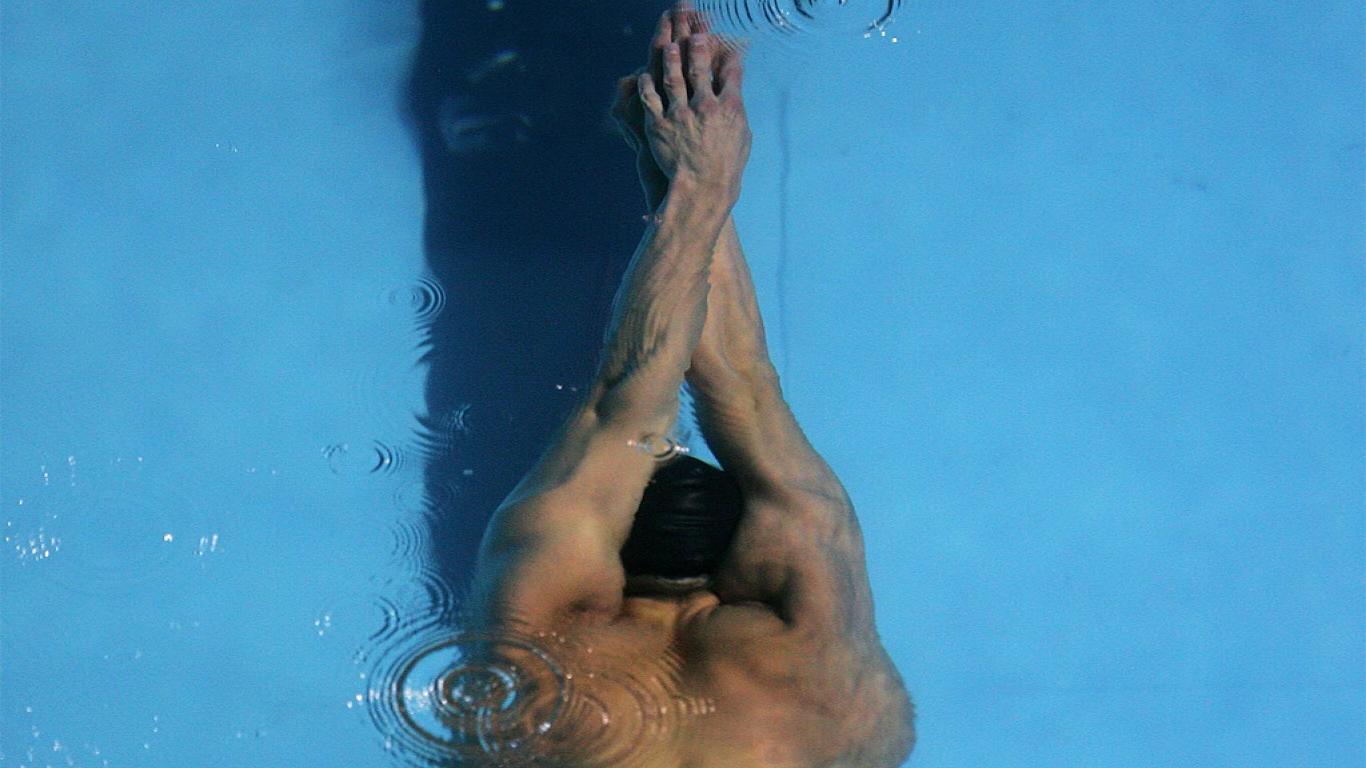
It’s pretty straightforward (no pun intended).

A couple of seasons ago I showed my swimmers the Michael Phelps picture, and then photographed them imitating it. I got quite a few variations on the streamline theme.
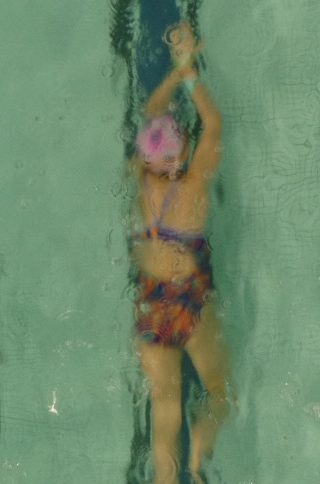
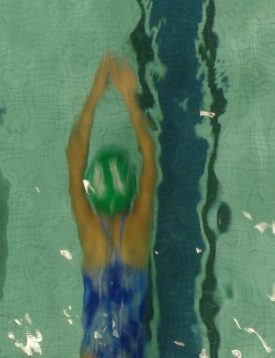
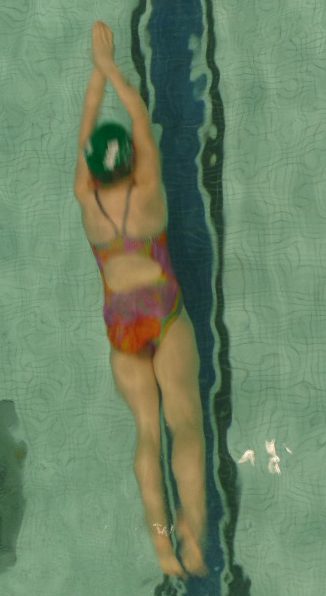
We work on streamline at every single practice.

I demonstrate while standing on the deck. I show them pictures. I stand behind them on deck and squeeze their little arms against their head, holding them in the correct position. I have them watch other swimmers in the pool who are doing it correctly. Still, streamline is a struggle and ends up in conversations like this:

Me (speaking to Cute Little Swimmer –or CLS — after watching her forget to streamline): Hey, CLS — when you leave the wall for backstroke, I want you to hold your streamline.

CLS: I do.

I watched her again, and then tried different words to explain it to her.

Me: When you leave the wall for backstroke, you’re doing a good job getting those arms up into streamline, but what you’re doing immediately after is pulling them to your side.

CLS: No, I don’t.

Me (pretending I didn’t hear that): This time really think about holding your arms above your head until you’re ready to take that first stroke.

The next time, I took pictures. Here she is, leaving the wall. Her arms were heading towards streamline.But then she disappeared under the water, and I couldn’t see what was happening.
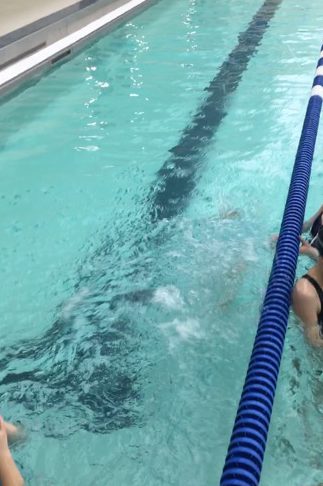
When I saw her right arm, it was out to the side. Not in streamline.

Then both arms were at her side.
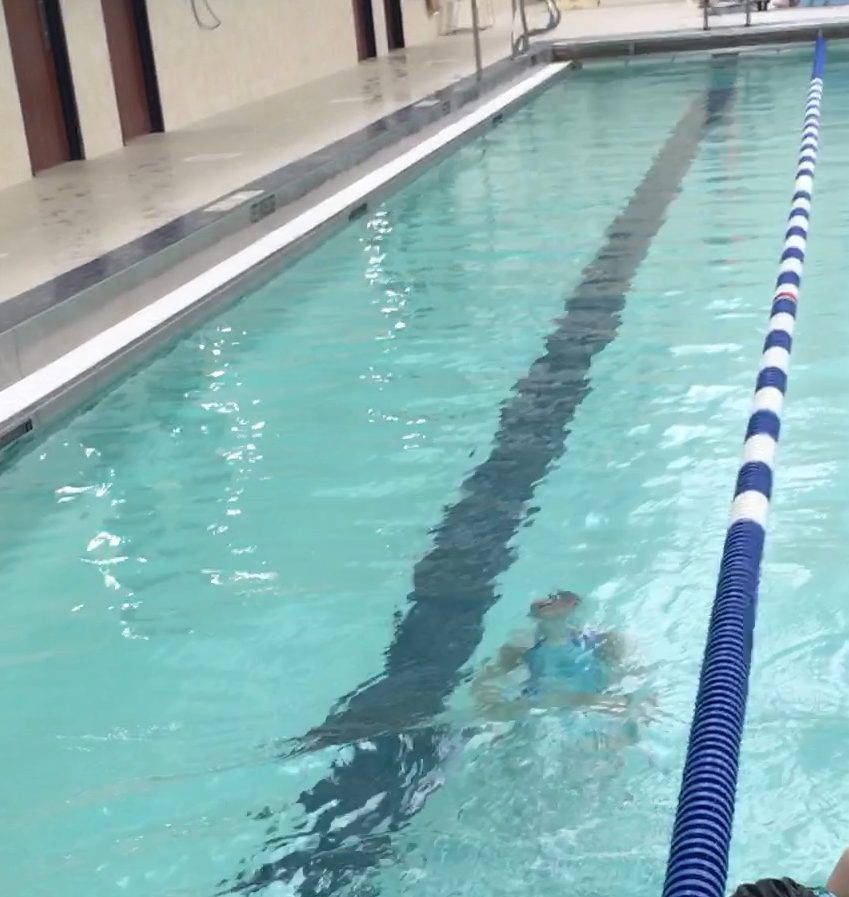
She tried to get them back up into streamline.
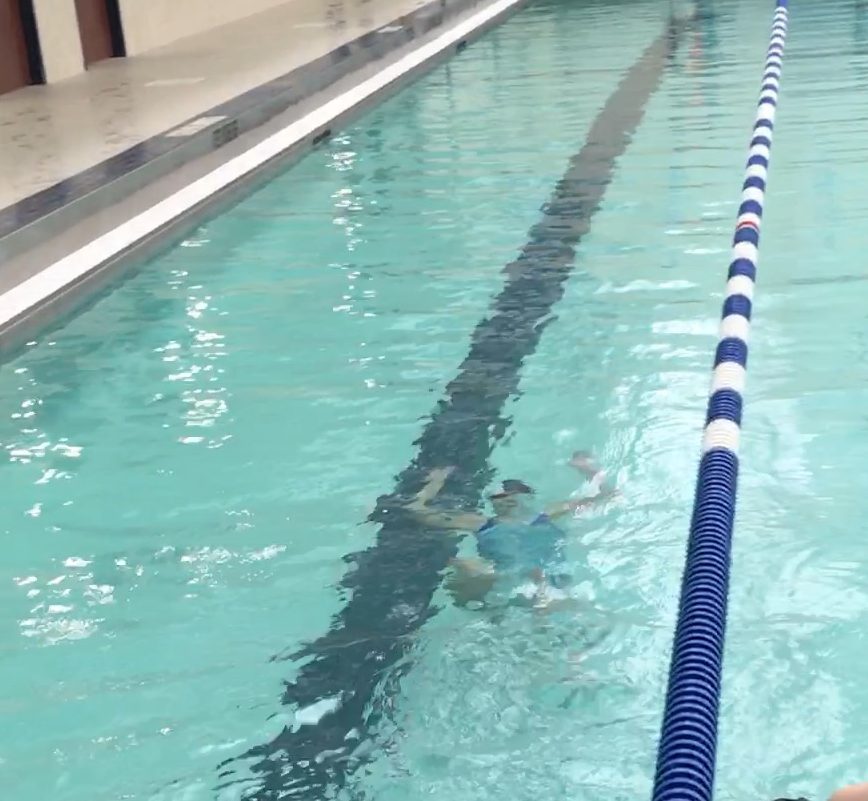
But she pulled them down again.
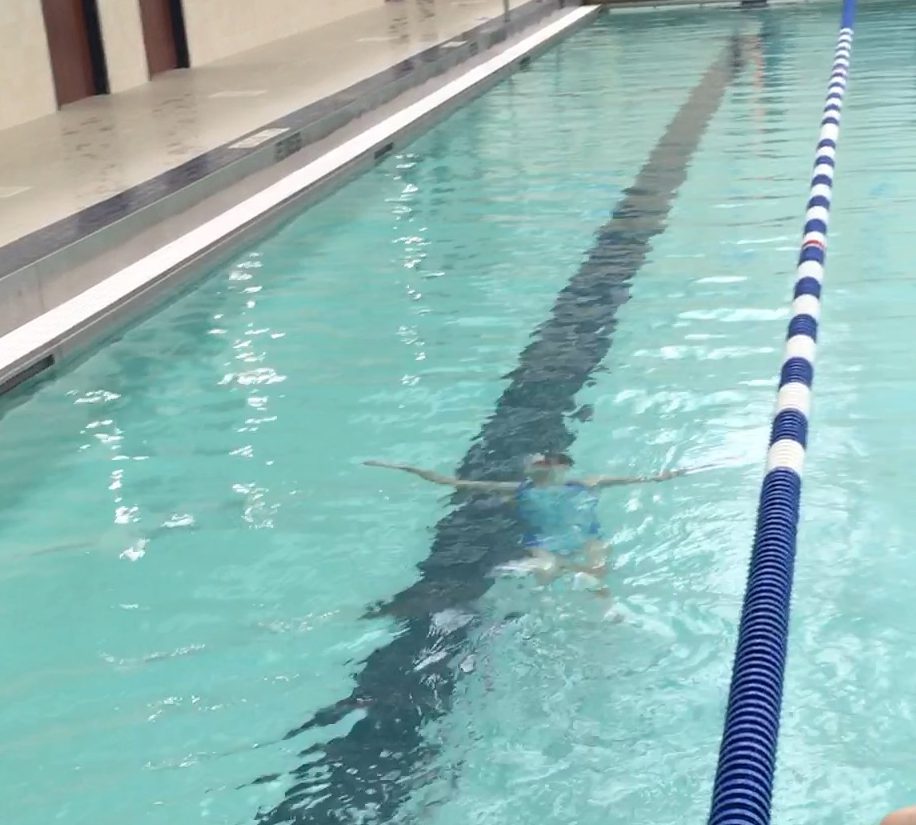
When she came back to the wall, I showed her the pictures.

She looked at them, rather disbelievingly.

“I can’t do it,” she finally said to me. “I have asthma.”

It was my turn for disbelief.

Once I had a swimmer tell me she couldn’t kick at practice because she had gotten new boots. “My feet are still getting used to them,” she said. But she obviously wasn’t wearing her boots in the pool. And her feet looked fine.

I’ll keep working on streamline with my group.

At every practice.

Some day maybe CLS will get it.

family · photography

Best of 2017

Every year is filled with ups and downs, unexpected trials and undeserved mercies.

My favorite time in 2017, was the week in May when my brother, my sister and her husband, and my husband and I all traveled with my father to tour Normandy and Paris. The picture is of Bud and me in the Eiffel Tower. Our time together is so limited. Having a whole week together was amazing.

My second favorite time was this, learning to shred cabbage the Bosnian way.

I love my home, but traveling sure was fun. I may have to do it again in 50 years.

Merry Christmas everyone. Looking forward to the adventures of 2018.

photography · swimming

The Perfect Job

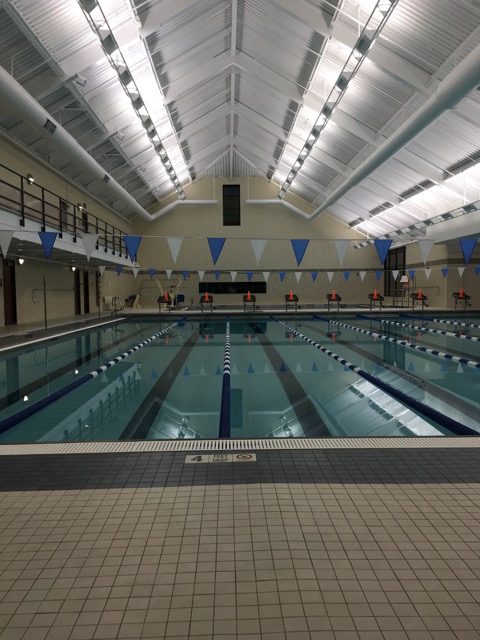
My home away from home. At 5:30 AM, so serene.

“It must be boring,” said one of the swimmers this morning, “just watching people swim back and forth.”

No. It really isn’t. Something about the rhythmic splash-splash-splash of a single person swimming down the pool is very Zen — and I say that in the most Christian way possible.

It’s meditative. Contemplative.

Add in a few more swimmers, each with their own rhythm of splashes, and it’s a trio, a quartet, a quintet.

Musical.

Quiet.

Calming.

I also love my co-workers. I hadn’t realized how much I missed people, until I was spending time in quiet conversation with another lifeguard every weekday morning.

When I go back later in the day to coach, the atmosphere is totally different.

Confusion. Cacophony. Unbridled energy.

Forty to fifty swimmers fill the lanes. The youngest group splashes with their coach in the shallow teaching pool working on skills, or playing a game, or both. A couple of other swimmers practice a specific skill or do a late warm-up in the diving pool. Young swimmers are everywhere.

This, too, is perfect for me. The hustle-bustle-excitement of coaching. Both frustrating and rewarding. A puzzle to solve as I try to figure out what makes each child tick. I watch to see what skills they need to develop, and I fall asleep thinking about how to help one swimmer learn to dive, and another master the breaststroke kick.

Three hours a day. That’s all I work at a paying job.

Don’t tell them — but I think I would do it for free.

Two hours of quiet. One hour of craziness.

A perfect ratio.

And the perfect change of pace to balance out my time as a caregiver.

How did I get so lucky?


photography · poetry

Just an Old Green Pillow

I remember when Mom,
With needle and yarn,
The fabric in her lap,
Chain-stitched the outline of an owl
And satin-stitched the eyes and beak

It may look like
A lumpy green pillow,
But now I see
That it is,
In fact,
July’s Hydrangeas in November
A reminder of a summer past

It is an acorn cap
From which some squirrel has stolen the acorn
Or an apple left to wither on the tree

I think of Mom
When I see it
Flopped on the chair
Loose threads dangling
The carefully stitched outline
Frayed away

It is but a memory-keeper

The tangible
is
always
temporary

family · Travel

A Visit to the New York Public Library (and a Broadway show)

Dear Mary Zaengle,

I didn’t know yesterday was going to be such a great day and here’s why —

In preparation, I had focused on the tired parts of the day: the getting up before 4 AM and the getting home after 1 AM.

I was worried about the city, all those people crowded together and the tall buildings holding them in, a barricade between city and country, urban and rural, not home and my home — and I was spending a day on the wrong side of the barricade.

I braced myself against the day instead of leaning into it.

I felt like you, who had never been to the city before, should be going with someone who loves the city and that’s not me — but you wanted me to go so I figured I’d better make a good effort.

“What do you want to do?” I had asked you. We had several hours to kill on either side of Dear Evan Hansen.

“I dunno,” you replied, in that helpful way you have.

So I worried about that, too, and finally decided we should go to the New York Public Library. You love books. I knew that if it turned out to be just a bunch of books you would be thrilled. You would pull the oldest book you could find off the shelves so you could hold it in your hands, feel the paper, and smell the old book smell. I’ve seen you do that.

The library was the right choice. You reached up to touch one of the stone lions that guarded the main entrance.

Inside, I touched the Lego lion that guarded the entrance to the children’s room.

“Mom!” you said, aghast. “The sign says ‘Please do not touch.'”

Oops. My bad.

But what a magnificent place! You wished you could climb up the ladder to the second tier of books that ran the circumference of the study room. I wished I could have seen the original card catalog where now tables of computers sit, the card catalog’s modern replacement.

We walked the long hallways, climbed the marble stairs and admired the art work that was everywhere.

a long hallway
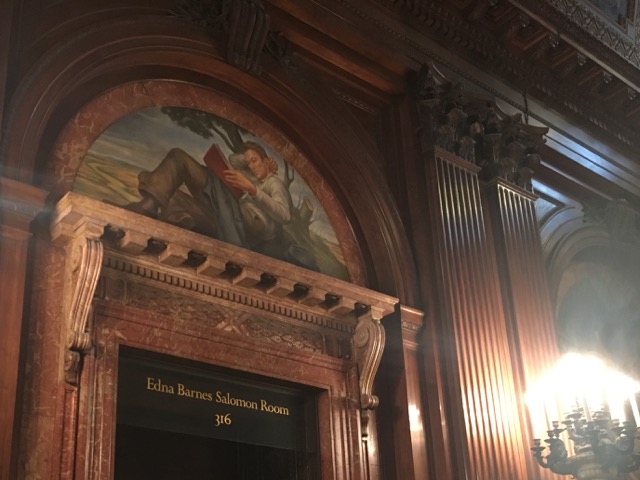
Artwork — a man reading
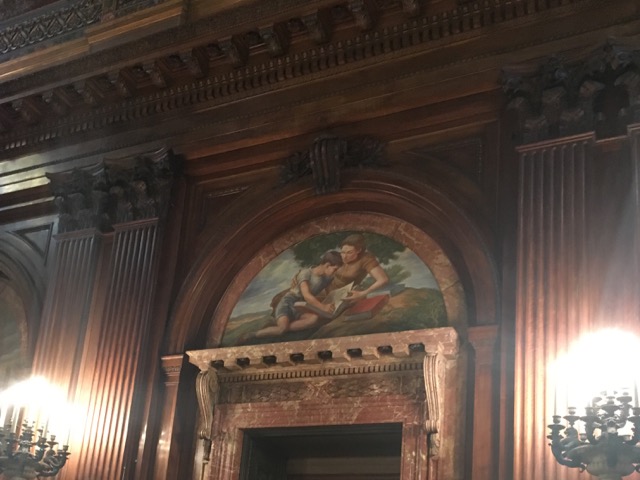
Artwork — mother and child reading
ceiling in the McGraw Rotunda

As we were leaving, we noticed a sign for tours of the library. Our 2 hour visit served as a peek — there’s so much more, I’m sure. Next time we’ll have to take the tour.

Did I just say next time? Next time?

After spending some time there, I kind of want to go back. We should do that, don’t you think?

Sincerely,

Me


Life · photography

Math

Laurel brought a math problem to me the other day.

I looked at it and looked at it, but years of only doing grocery store math or tip calculations have eroded away much of the math soil in my brain. I found myself asking the question Mary, my non-mathy daughter, asked all the time — why do we need to know this stuff?

Back in the day, I loved math. A math sheet was a page full of puzzles to be solved, and they all had answers.

Now the variables and exponents and coefficients and fractions jumble together and refuse to tell me the story they’re supposed to tell.

In real life, when is a-cubed-minus-three going to be a denominator in any equation?

I decided to go for a walk to think about the problem.

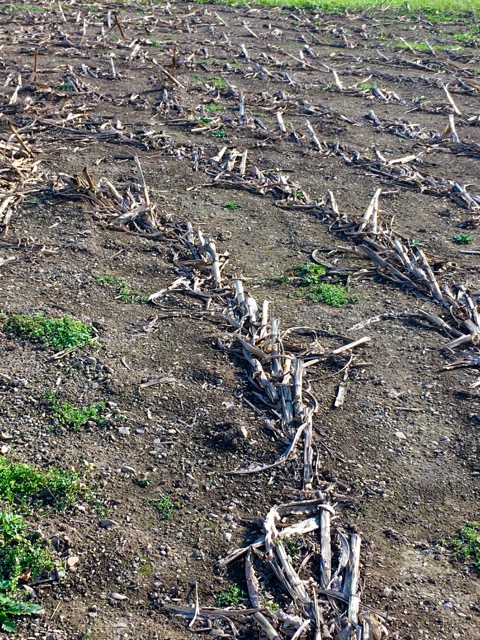
The corn has been harvested in the fields down the road which makes them nice places to walk the dog. Our road has minimal shoulders and most of the drivers don’t care about the speed limit on it. It can be a little scary walking on it.

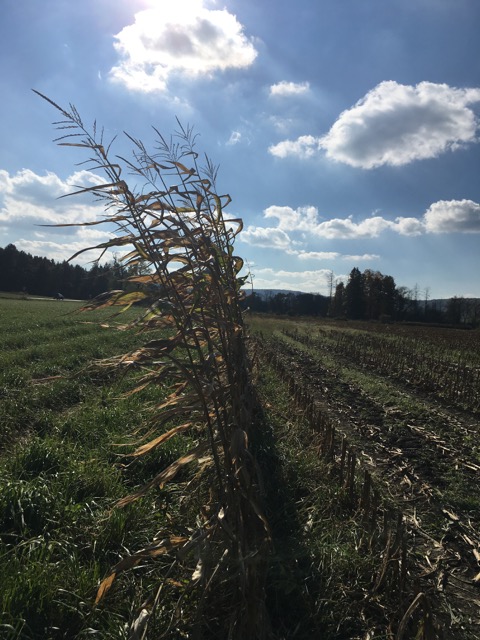
In the closest field, the harvesters missed a bit of a row on the edge. 

The stalks stand as sentinels — guarding nothing.

Nothing but a safe place to walk.

Sometimes in the summer, I would walk through the rows of tall corn to escape the sun and heat for a short leg of my walk. I would think about the time the farmer escaped from the nursing home that used to be down the road and wandered into the corn field. The state police had to bring helicopters to help find him.

But in the fall, the mowed rows are straight lines of what once was.

The shadows of the stalk stubs combined with the dried fragments of corn leaves made pretty patterns on the ground.

Maggie ran on ahead, and when I looked at her waiting for me down the field, I noticed where the planter had veered months ago — maybe because of an obstacle or maybe he was just distracted. The nice straight lines were not so nice and straight — like a math problem where the answer isn’t a sensible whole number, but full of exponents and variables.

By the time I reached the end of the row, I had figured out Laurel’s math problem. My brother had called me because I had sent it to him, and he confirmed what I suspected was the solution. It wasn’t a nice neat answer.

The end of the row was rounded. I could see where the tractor had turned.

The math erosion in my brain probably looks something like it.

Harvested — all that stuff I learned so many years ago gone now.

And rounded, like nearly every mental calculation I do.

Nary an exponent or variable in sight.


Faith · photography

New Every Morning

“I hurried over so you could take a picture,” said Matt, the lifeguard who was taking over for me so I could home.

Two weeks of working together and he’s got me figured out. How many times has he heard me say, “I need to get a picture of that!” Or, how many times has he seen me grab my phone out of the office so I could snap a shot of the sunrise.

I told someone at Hutchmoot that I was practically giddy over the prospect of working at this job, and that hasn’t changed since it started.

Leaving the house at 5 AM to lifeguard for two hours every morning has been fun.

And stimulating. Adult conversation is such a treat.

The sunrises aren’t bad either.

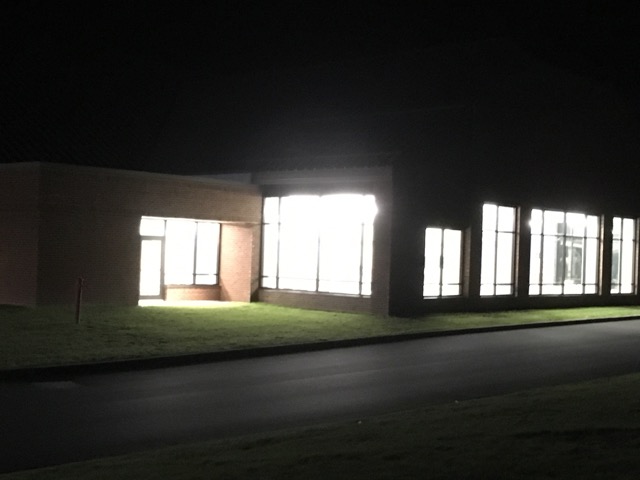
I arrive in the dark. This morning I stood, looking out from near the pool, and snapped a grainy picture. The white dot in the distance is a lighted lamppost.

Since the pool was redone, it has a wall of windows facing east. The lights are always on in there. In the darkness, the pool area fairly glows when I arrive.

Of course, when working as a lifeguard, I’m not staring out the windows. I’m scanning the pool, in case any of those early morning lap swimmers need help. So far the only help anyone has needed is turning the music down or alerting maintenance that the hot water isn’t working in the showers.

But I love my co-workers. They are such interesting people. And we converse in complete sentences.

I’ve tried explaining to people how being a caregiver for someone with dementia is like taking care of a toddler. Anyone who has had children knows the stage of incomplete conversation. That’s how it is with my father these days. That, or trying to guess what he’s trying to say, or trying to follow the tangents that his mind travels down.

Right around the time I’m getting ready to go home — I can only really afford two hours when I know he’ll be sleeping — the sky is changing.

One day last week, I tried to take a picture of it, but the pool reflected back off the glass and gave me this shot.

So this morning I went from window bay to window bay trying to find a place that didn’t reflect the pool.

“Just step outside,” said one of the other guards, so I did.

Golly, it was pretty.

I stopped again just beyond the pool on my way home.

I wondered if there was a liturgy in Every Moment Holy for the sight of a beautiful sunrise.

Then I realized I already knew one, and recited on my way home —

But this one thing I bear in mind,
and therefore I have hope:
The steadfast love of the Lord never ceases;
His mercies never come to an end;
They are new every morning;
Great is thy faithfulness.

Lamentations 3:21-23

Life · photography · poetry

At the Window

At a Window
by Carl Sandburg

Give me hunger,
O you gods that sit and give
The world its orders.
Give me hunger, pain and want,
Shut me out with shame and failure
From your doors of gold and fame,
Give me your shabbiest, weariest hunger!

But leave me a little love,
A voice to speak to me in the day end,
A hand to touch me in the dark room
Breaking the long loneliness.
In the dusk of day-shapes
Blurring the sunset,
One little wandering, western star
Thrust out from the changing shores of shadow.
Let me go to the window,
Watch there the day-shapes of dusk
And wait and know the coming
Of a little love.

(Public domain)


I’ve written and deleted so much blather about windows these past few days.

It’s hard to gather all the loose ends of my thoughts into something — anything, really — that makes sense.

I love this picture I took two summers ago when the milk house was being torn down. One window remained of the broken down building. It had the prettiest view over the valley.

Roger Bacon said,

Prosperity is the blessing of the Old Testament; adversity is the blessing of the New, which carrieth the greater benediction, and the clearer revelation of God’s favor.

The world is so broken.

Yet somehow, in the midst of it, or over it all, a great benediction is being whispered — and it’s that little bit of love. That hand that reaches in to touch me in my dark room, breaking my loneliness.


Now I look through a dirty pane
Where cobwebs
and
The dust of the world
Blur my view

I rub at it
With my fingers
And though my hands
Come away dirty
The grime on the glass remains

If I but drop my eyes
No glass obscures my view

And to my right
A larger scene awaits

Overhead
The sun
(so bright I dassn’t look)
Shines
and
Brightens the whole world:
The valley
The river
The barn on the horizon

Yet I squint
At my dirty pane
Wishing I could see more

family · Life · photography

Family Picnic

We had a family picnic a few weeks ago.

Actually, that’s kind of a generous description.

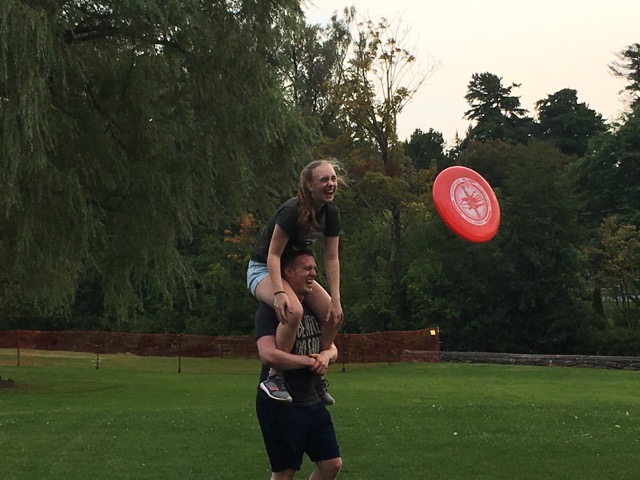
It was a partial family get-together that involved food, frisbee, and talking.

Five out of eight children — that’s more than half the family.

A kind of weird conglomeration of food that included deli meat (but no bread), watermelon, fresh mozzarella salad, chips, and blueberry pie — I suppose that constitutes a picnic. We were eating at a picnic table.

A huge caterpillar.

Future luna moth

Frisbee.

That became layered frisbee.

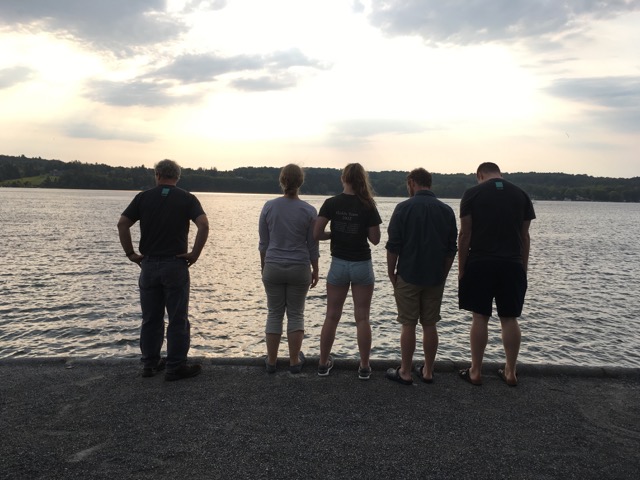
A walk by the lake.

And lots of sitting around, talking.

The best of life is made up of so many simple moments.

They may not be perfect, but the sum of them is.


photography

People

Cee’s Fun Foto Challenge — Alphabet with a Twist — needs to have two E’s in the topic — peopl(I bolded all the 2 E words.)

When my father was in the army, our family was sent to Kagnew Station, Eritrea, in Ethiopia.  I was very young at the time and my memories are few, but my parents took a lot of pictures. I especially love the photographs of the people.

in a town?
On a country road
Look at her smile!
Clay jar backpacks
In the river
Outside a school?

I have vague memories of children materializing whenever we were out and about in Ethiopia. Those memories came flooding back when we first went to visit our work site in Bosnia. The car pulled in, and a small passel of girls came running out, excited to see “the Americans.”

The smile of a child is medicine for any soul.