family · poetry

Rain

I’m beginning to anticipate
What his response might be —
My mother blamed “the others”
For things we didn’t see,
But my father’s not a blamer
So, when he can’t explain
“It fell down from the sky,” he says,
Like some mysterious rain.

I crawled around the other day
With flashlight in my hand.
Half his hearing aid was missing
And I tried to understand
How these darn things fall apart so much
Half in one room, half another
I would have blamed “the others”
Had I been my mother.

Then Laurel called me from the kitchen
“Wha-T?” I said, but I
Emphasized the “T” too much —
And I can tell you why —
I was getting irritated
At the time that it had cost
Looking for a hearing aid
Half of which was lost.

“Grampa wants you,” she said timidly
And so I went to see
What it was he wanted now
From irritated me
“I found it!” he was saying.
I was surprised at what I saw
The missing piece of hearing aid
Resting in his paw.

“Where’d you find it?” I demanded.
I knew I should happy
But, you know, I wanted answers
And he’d better make them snappy.
“Can you fix it?” he was asking —
Not answering my question
It’s a skill he has in conversation –
Changing the direction

But I was dogged — “Where’d you find it?”
“It fell out of the sky,”
He said, as if that answer
Would satisfy my cry.
He told me again yesterday
When I asked about a pin
He had fastened to his sweatshirt
And I asked where it had been —

Apparently the sky inside
Varies precipitation.
Outside I see it raining rain
Inside, to my frustration,
It yields an odd assortment
Of hearing aids and stuff
That I couldn’t have imagined.
I should be thankful; it’s enough —

The lost hearing aid was found
I’m not still crawling on the ground

Rain

For Peter:

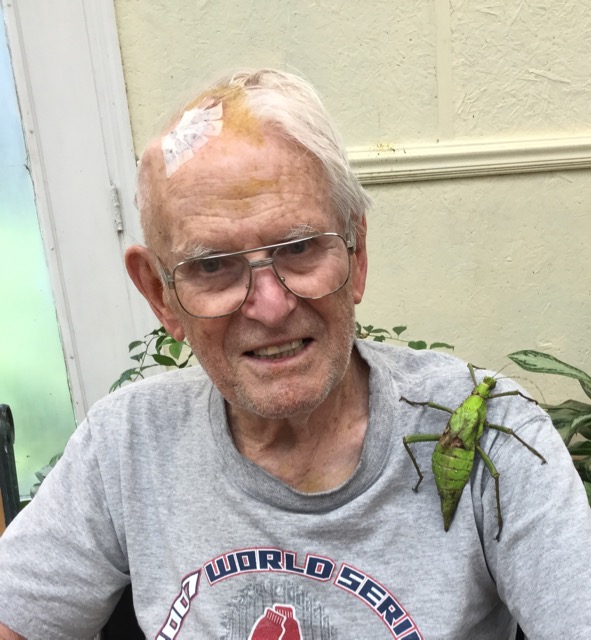
Perhaps another explanation is that a wolverine
Creeps into the house at night, stealthily, unseen
And hides my father’s hearing aids
Tapes them to the ceiling
Whence they fall on Dad, while I am searching, kneeling.

photography

Cows


My like-affair with cows probably began when my parents bought an old farmhouse next door to a working dairy farm.

When little-girl-me pulled up a handful of grass and held it out to a friendly cow, my new bovine friend would take from my hand, drawing my fingers close enough that I could feel her smooth wet nose. There’s nothing quite like a cow’s muzzle.

Teenage me spent a week one year at the county fair, helping with the 4-H dairy judging. Not judging them, of course, but distributing ribbons. I watched, and listened, and plodded around the ring, stepping over fresh cow-pies, handing ribbons to my peers dressed in showman white.

“I really like the dairy-ness of this cow,” the judge said about an exceptional animal, and, to this day, I have no idea what he meant. It was a cow. A dairy cow.

When adult me traveled to Bosnia this year, I put together a little photo album of my family to show the family we were helping. Since I had a few empty pages at the end, I stuck in a view looking across the valley from our front door, and a picture of the cows down the road. The Bosnian women loved looking at the photos of my children. One of the Bosnian men got very excited about the picture of the cows. He pointed to the picture, then pointed to me, then back to the picture, obviously asking, “Are these yours?”

I shook my head. “No, they live down the road from my house,” I said. When it was translated to him. he looked sad. Maybe he was hoping to talk dairy.

I don’t know much about dairy, but I do appreciate cows’ wet muzzles, sorrowful eyes, and the clunky gait they have when they run.

Cee’s Fun Foto Challenge for this week, part of her Alphabet with a Twist series, is the letter C – The C word needs to be at least 4 letters in length. C-O-W-S — yep, that works.

Below is a series taken from a junior livestock show near us.

On the way to the show
Saying hello
Waiting to enter the ring
Refusing to enter the ring
Walking the perimeter of the show-ring while the judge watches
Posing — so the judge can get a good look
The judge asking a few questions
Relief


poetry · Writing

Tell Me Something Good

A friend said, “Write a poem,” to help me start writing again.

So I pulled up a poem that had been sitting in my draft folder and tried to finish it. It’s not perfect but Brené Brown says that we should have the courage to be imperfect. With a little courage, I give you this —


“Tell me something good,” she said
“Please tell me something cheery.”
The corners of her mouth turned down;
Her eyes were slightly teary.
Teenage girling is the worst —
Well, that’s my working theory.

My mind returned to dark things thought
When I was still a teen
Of feeling that I just don’t fit
Of watching pretties preen
Of wishing I were different
Of people being mean

She said, “Tell me a good story —
A princess-dragon tale
With a female superhero
Who tries so hard and fails
Then with grit and perseverance
She finally prevails.”

I remembered watching her go out
And on our lawn just lie
Watching jet trails drawing lines
Across a summer sky;
I imagined an adventure
Where she’s a secret spy

Who, by studying that one small thing —
The white smoke on the blue —
She deciphered secret messages
Most people wouldn’t view
Because they’re too busy doing stuff —
Do I do that? Do you?

The world is sometimes cold and cruel
And difficult to beat
But through stories we see bravery,
Learn ways we can defeat
The demon dogs who hound us
And the challenges we meet

“Tell me something good,” she said.
I thought, and then replied,
“Let’s look at something little —
Autumn leaves or dragonflies —
Let’s find the beauty, make a story.”
And so we walked outside.

family · photography · poetry

Blonde

Me — about 3

My hair was blonde when I was small
But it grew dark as I grew tall
My mother had the same thing too —
Blonde that darkened as she grew

’tis a funny thing — this natural blonde —
Some maintain, and don’t respond
To aging with six shades of brown
But old age gives its hoary crown

To all in silvery grayish white
Tresses giving up the fight
To stay the hue of summer sun
And let winter overrun

Vanity, you try my hair
But you won’t win ’cause I don’t care


In response to Daily Prompt: Rhyme

Cee’s Fun Foto Challenge: Alphabet with a Twist – B

elderly · family

At the Corner

At the corner of Grove and Spring Streets, I paused. Maggie dropped her fish and panted while I stepped back to survey the building from a different angle.

It’s a lovely setting surrounded by trees. Porches and patios invite the residents to enjoy the fresh air and sunshine. Quiet and serene, the building stands removed just far enough from the hubbub of busy our tourist town. Expanses of lawn buffer it even more.

When I’m inside, I’m all yes.

When I leave, I wonder.

Maggie picked up her fish and we continued walking past the building.

I looked at the porch with its flower box. To the left was the dining room. I had eaten there a couple of weeks ago with my father.  We were just visiting, but I was impressed. Tables for six or eight, set with white linen table cloths and real china. Real food, not institutional. Servers who were both pleasant and competent. A little jazz played in the background.

“They take turns choosing what kind of music to play,” the administrator told me. “Also, people sit at the same table for about two months, but then we rearrange the seating plan so cliques don’t form and they all get to know each other.”

Every resident’s room is unique in configuration. Some have window seats. All have walk-in closets, high ceilings, and private bathrooms that include showers with seats and grab-bars. The rooms are spacious and cheerful.

I just never wanted to see my father leave his home.

But this isn’t an institution. It’s almost more like a sanctuary.

“We have lots of activities for the residents,” the administrator said. “We get tickets to the Hall of Fame Classic baseball game and sit in the grandstand so they are shaded from the sun.”

Dad would really enjoy that.

“Next week we’re going on a boat ride on the lake and maybe having a picnic on one of the beaches.”

I would like that.

I reached the end of the block with Maggie and looked back at the building.

From this corner, it still looked lovely.

I guess it’s time to finish the application for him.

dementia · elderly · family

Barefoot Girl

“Oh, I see you’re a barefoot girl this morning,” my father said, looking at my feet.

I was indeed barefoot, as is often the case when I’m still in my pajamas.

“A barefoot girl with shoes on,” he continued, smiling as he said it.

My daughters are often barefoot in the summer — and he says the same thing to them.

A barefoot girl

“What’s he talking about?” one of them asked once.

“It’s a poem he memorized,” I told them.

I asked him about it — and he dutifully recited two verses:

‘Twas midnight on the ocean,
Not a streetcar was in sight,
The sun was shining brightly
For it had rained all night.

‘Twas a summer’s day in winter
The rain was snowing fast,
As a barefoot girl with shoes on,
Stood sitting on the grass.

More verses are available on the internet, all unattributed, but those are the two he remembers.

Poetry and music get stored in a different part of the brain, I think — one that survives longer unscathed by dementia. It’s fascinating to think about.

Yesterday, he said something about Laurel going to the skating rink when I was taking her to the pool. He pulls up the wrong word often.

I also had a tough time convincing him that R2D2 wasn’t a radar unit. He was working on a crossword puzzle. R2D2 was the clue and he needed a 5-letter word beginning with R.

“R2D2 is a robot, Dad,” I told him.

“Why doesn’t radar work?” he asked, in all seriousness.

“Because it’s a robot. Robot will work there,” I said.

He made his if-you-say-so face and went back to the crossword.

Maybe if I made up a poem about it and had him memorize it, he would remember.

elderly · family

Sights and Sounds

Yesterday my father told me that he was have vision problems.

“Everything is blurry,” he said, “and I feel like I’m seeing double.”

My heart sank. A stroke — the word ran through my mind, a leering devil of a word that filled me with fear.

He looked fine. He was standing, leaning gently on his walker. His speech was fine. He had walked from the porch to the kitchen with his walker and stood in the doorway talking to me.

“Let me wash your glasses for you,” I said, gently lifting them off his face. “Maybe that’s the problem.”

I carried them to the sink and ran water over the lenses, carefully washing first one lens and then the… oh my goodness — a lens was missing.

“You’re missing a lens, Dad,” I told him, and  showed him by poking my finger through the frame. We both laughed because this was a much better explanation for the double vision than some of the alternatives.

I began searching and quickly found it where it had fallen on the floor. It’s not hard to pop back in. I’ve done it many times. Within a few minutes, everything looked normal again.

This morning, when he came out, he said, “I’m having a devil of a time.”

“What’s going on, Dad?” I asked.

“WHAT?! I can’t hear you! I can’t find this hearing aid,” he said, pointing to his right ear.

“I’ll find it for you,” I told him, and went to his bedroom where I usually could locate things like missing hearing aids in pretty short order.

I looked.

And looked.

And looked.

I knew he was waiting for breakfast so I left the looking and went back to the kitchen.

“I can’t find it, Dad, but I’m sure we will,” I told him.

“What did you say?” he asked.

Later, when the home health aide came, we searched and searched. We stripped the bed, looked under every piece of furniture in his room, the garbage, pockets of clothes in the laundry, everywhere.

“My mother used to say, ‘It’s always the last place you look,'” I told the home health aide.

She laughed. My kids just get annoyed when I say that these days.

Finally, we gave up. “I guess I’ll have to call audiology,” I told her.

“Don’t call yet. It’s got to be here somewhere,” she said.

“I’ll wait until next week,” I said, hoping it would appear magically over the weekend.

We shouted the not-good news to my father while he sat reading the paper with his solitary hearing aid. Then I left to pick up Laurel at the pool.

No sooner was Laurel in the car than my phone rang. I handed it to her, asking to answer and put it on speaker phone.

“Sally?” crackled the voice of the home health aide. “Sally? You’re not going to believe this, but I found it. It was on the floor of the side deck right by that purple chair he sits in. It got rained on, but it still works.”

Hallelujah!

The real mystery is how it got there.

I had walked my father into his bedroom at 10:00 the night before, and I’m 95% sure he had it in his ear then. Some time during the night, it mysteriously made its way outside.

I don’t want to think about it.

photography · Travel · Writing

Fun With Google Translate

I have a word problem. I really, really like words. A lot.

It should come as a surprise to nobody that on my trip to the Balkans I took pictures of words to look up later.

Nor should it come as a surprise that I can spend hours playing with Google Translate.

Forget squirrels or shiny things — these are the rabbit trails I follow for amusement.

For instance, this photograph was taken of the tray back on my Croatian Air flight.

I recognized molimo vas from the language app I used before the trip. It means please. However, I wanted to figure out the rest of the words even though the translation was right below it.

Vežite se dok sjedite means Sit while you are sitting. (Google Translate: Croatian to English) But vežite, by itself, get translated tiePerhaps the literal translation is something about tying yourself in your seat?


The one time I was brave enough to use Croatian was in the Franciscan monastery in the Old City Dubrovnik. “Dvije,” I said to the man at the ticket table, indicating that I wanted two tickets.

“For that you get in free,” he said, in perfect English. He was delighted that I attempted Croatian.

Inside, we visited a beautiful garden and an art gallery. A war scar was framed on the wall.

Udar granate means A missile shot according to the sign below.  Google Translate (GT) says it means grenade attack. Close, I guess, but different.


This one is a mystery.

GT translates ĆIVU FRANA CUNDULIĆA NAROD means THE LIVING OF FRANCA CUNDULIĆA NAROD so maybe it’s a person’s name.

But if I drop the capitalization, the same words mean  a living shroud of crowds of people.

If I drop the “narod” because it’s on a separate line, and just look at the first line in all small letters, it means (according to GT) some cranium brake or the black break crank.

I kind of thought our guide said it was a music hall, but who knows?


I used the public restroom at The Tunnel of Hope Museum outside Sarajevo. There I encountered my first squatty potty. It caught me by surprise, especially when my phone fell out of my pocket. Ew. Thank goodness it didn’t fall in. I took a picture of the toilet itself to show my children, and then this one of the sign on the tank to see how it translated out.

Molimo ne bacajte papir u wc šolju, već u kantu za smeće translates to Please do not throw paper in the toilet, already in a garbage can (GT: Bosnian to English) Not bad, really.


Last, a tee shirt.

I have no idea what the guy thought when I snapped this picture. This was after the soccer game (fudbalski) — and it looked like one of those “I’m with Stupid” shirts.

GT defaulted to German for Er heiratet, translating them he marries.

We were in Bosnia at the time, so I tried to force a Bosnian translation — but GT said it meant Er hieratet.

The other team was from Croatia, so I checked the Croatian translation, and GT said, That’s a heir. I thought GT would know that it should be an, not a. But I’ll forgive GT because the words were, after all, German.

GT couldn’t translate Wir sind nur sum saufen hier from Bosnian or Croatian. In German, however, the words meant we’re just drinking here.

A groomsmen shirt. Wedding humor.

When words are playthings, and Google Translate is available, fun is all around. I found that on my trip.

photography · Writing

A is for Appetite (Or, 5 Things About Zombies)

Please forgive this post. I blame it on my brother and the fact that I’ve been struggling to write.

“Why don’t you write ’10 Things About Zombies’?” my brother suggested.

“I don’t know ten things about zombies,” I said.

“Make them up,” he said, but I couldn’t think of anything.

“Zombies are dead,” I told him.

“You need to come up with something more interesting,” he replied.

Exactly.

So I tried.

I came up with five facts, but the first one is really a correction.

Zombie Fact #1: Zombies are not dead; they are undead.

Cee Neuner is starting a weekly photo challenge called “Alphabet with a Twist.”  For the next 26 weeks, she’ll feature a different letter ~~ with a twist ~~ for her Fun Foto Challenge.

Maybe it’s because I’m a little twisted myself — but, I felt like I could commit to this challenge.

A (with a twist) is Ap. The photo needs to feature something that begins with the letters “Ap.”

I’m adding my own second requirement for this challenge. I’m going to use old family pictures.

Zombie Fact #2: Zombies don’t like to be photographed. Most zombie photos are staged and not real.

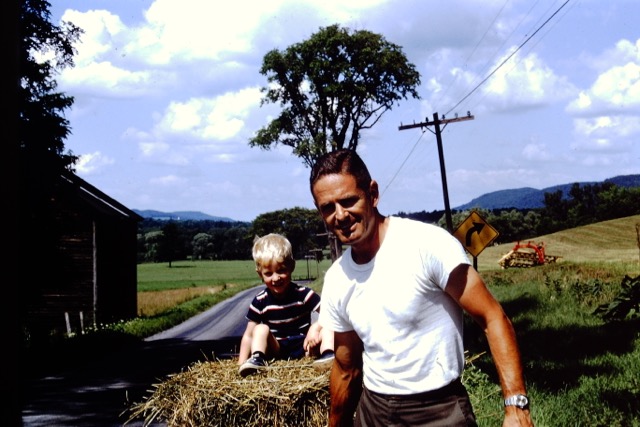
A few years ago, I started scanning my father’s slides to get them into a digital format. All of the photographs in this post were taken by my father before I was even born. Not staged. 100% real. No zombies.

So…. A is for Appetite.

Zombie Fact #3: Zombies like watermelon.

Watermelon is red and juicy. If you look at zombie pictures (which I know are staged) they often have red juicy stuff running down their chin. Watermelon, while not the consistency of brains or flesh, looks appetizing enough to fool your average zombie.

My mother told me that watermelon was sometimes soothing for a child that was teething. I like to think that’s why she was feeding it to Stewart in this picture, but she may have kept watermelon on hand in case of zombie attack.

Stewart eating watermelon

Zombie Fact #4: Zombies are delighted when they see a baby with food on his or her face.

Zombies really aren’t so different from the rest of us. What parent hasn’t taken a picture of junior with spaghetti on his head or chocolate ice cream smeared all over his face?

For zombies, though, they find it attractive because they identify with it. Most zombies have lost their swallow reflex. Remember the zombie pictures with red liquid dripping down their chin? Well, they can’t help it. Their swallow reflex died with them and didn’t come back to life. That’s why they talk the way they do. That’s why they eat the way they do. When they see a baby with food all over his face, they think he’s one of them. They feel a kinship.

Stewart with food on his face

This can actually be used to a family’s advantage when under attack. Hold the food-covered baby in plain view while the rest of the family slowly backs out of a room invaded by zombies. The zombies will be so enamored that they won’t attack. Once everyone is out the room. Shut the door and run.

This is a picture of my mother feeding Stewart.

He doesn’t have anywhere near enough food on his face to distract zombies. It’s okay. He lived his whole life without a single zombie attack.

My mother and my oldest brother have both passed away but they will never be zombies, because —

Zombie Fact #5: A person who lives a life of service to others can never become a zombie.

My mother and my brother both gave freely and generously of themselves. It’s like a zombie vaccine.

This should serve as a reminder to all.

We should be kind.

We should be generous.

We should put others first.

— if for no other reason than it will keep us from being zombies.