My mother had cancer:
Skin, breast, bladder.
My brother had cancer:
Skin and tonsil.
Humor also runs in the family.
I’d rather that.
Salty like hot dogs (and tears). Sweet like marmalade (and life).

My mother had cancer:
Skin, breast, bladder.
My brother had cancer:
Skin and tonsil.
Humor also runs in the family.
I’d rather that.
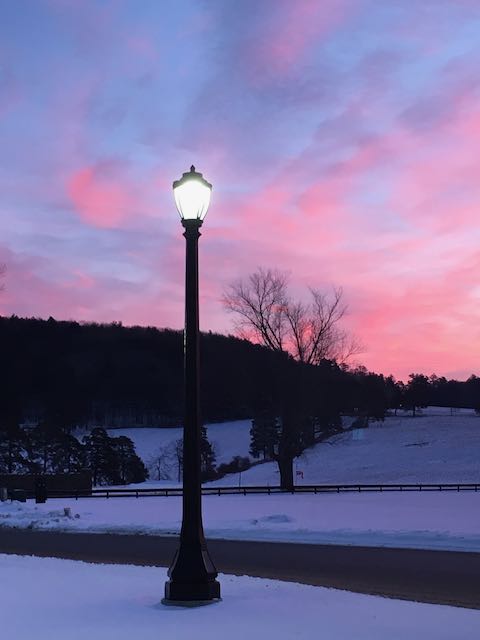
There is more besides a fair morning required to make a fair day.
Thomas Fuller
So…. what makes a fair day for you?
Ironic to listen to a book set in deaf culture — however, I saw anew your bravery in going solo to Hutchmoot* 2012

*thatfamouslyhardtodescribecreativeconferenceinNashville
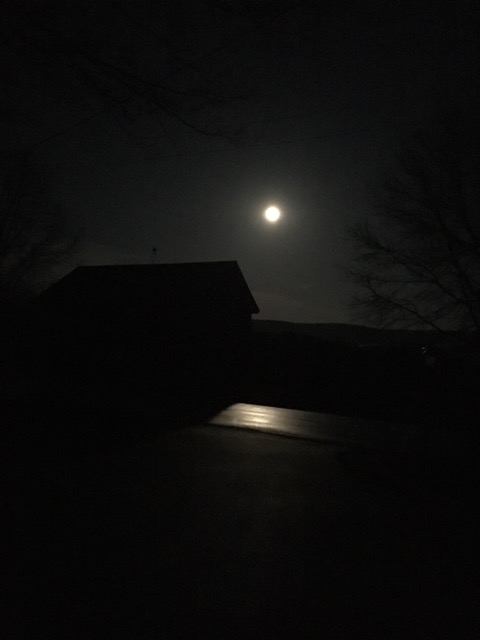
Moon
Stars, planets
Those constellations
So much beauty in the night
Sky
Resolution to be a positive influence in 2023
I will:

I figured I had better take advantage of this, the last day before my self-imposed challenge for 2023: writing only 23 words a day.
I started practicing 23 word cohesive writing in my new journal from my granddaughter — well, technically it’s from my son who drew my name in our family gift exchange. He knows what I like, though, so he made her a part of it. (That’s a cat that she drew on the cover of the journal.)

Today I give myself permission to write more words — like this rambling explanation.
I’m using the ever-so-original tag: 23 words or 23words. (Do I need a hashtag?) If you write 23 words and want me to read it, tag your post and I’ll check it out.
Here are 23 words as a look-back at 2022:
People I knew
In 2022
Who had a positive impact
On my life:
Eadaoin
KevinandMary
Andrew
Sherlee
Bob
Marleny
Dayrelis
Carole
Thank you
Honestly, my list could be much longer. And I admittedly cheated with Kevin and Mary, but they are kind of a dynamic duo. They made a cardinal for me — a female cardinal who proudly stands where I can see her often.

Tomorrow my wordiness problem will altogether disappear. 🙂
“Hey, Sally, you’re a writer, aren’t you?”
A guy asked me this at the front desk the other morning. I’m not exactly sure what he had heard about me or where. I hesitated.
“Umm… I’ve done some writing,” I said.
“Do you have a blog? Do you have followers?” he asked.
Is that what makes a person a writer? A blog? Followers?
“I used to write every day,” I told him, “but once I dropped the habit, it was really hard to pick it back up.”
Is that true, or what? I don’t care what the habit is, but once you give yourself permission to break it, it’s all downhill.
Every diet I have ever tried has fallen prey to just-this-once permission.
Habits.
“I have a plan for writing next year,” I told the man. “I’m going to write 23 words every day.”
He looked at me like I had just said I was going to hop on one foot barefoot in the snow every single day. Problem #1: there’s no snow here in July therefore I couldn’t possibly do THAT every day.
“23?” he repeated back to me.
“Yes! I can write 23 words,” I said.
He looked puzzled. “But why 23? Is that like the 23rd Psalm or something?”
I laughed. “No, because it’s 2023. And 23 well-chosen words sounds like a good challenge, and one I can do.”
“Just 23?”
“That’s the challenge — don’t you see? To choose 23 words — just 23 — no more, no less,” I replied.
“What are you going to do with them?” he asked, clearly still bewildered.
“I’ll post them on my blog,” I said.
“You know, some people just write in a journal,” he said.
I sighed.
I DO write in a journal. Every day. Journalling is, for me, a form of remembering and processing. It’s not writing.
Not like 23 words.
Hopefully this will go better for me than my last personal challenge.
Anyone care to join me?
A sample —
23 words I wrote today after a busy, busy day at the gym where I work:
So many visitors!
In that sea of unfamiliar faces
it is nice
to see a familiar one
a smile
a wave
a friend
❤
The other day I asked my Canadian daughter-in-law, “Do little kids learn the ABC song in school?”
“Yes,” she replied, “and I know where you’re going with this.”
Indeed. I was heading for Zed.
“We sing ‘zee’,” she continued. “Zed wouldn’t rhyme.”
Here I am today, sitting by a cozy wood stove, while the weather outside is indeed frightful. Windy. -1°F.
And I’m at the end of the alphabet in this way-too-long self-inflicted alphabet challenge.
The Greek alphabet ends with omega. The Hebrew alphabet ends with tav. The Cyrillic alphabet ends with Я. We get zee, apparently even in Canada.
I like endings — good endings. You know the kind when you put the book down and are satisfied, like Max coming home from his voyage to where the Wild Things are and finds his supper still hot.
Z, I suppose, is a good ending. It’s as good an ending as I’m going to get.
But I love beginnings. 2023 — I can’t wait.
OR: A Letter to My Children
Dear Kids,
I am so proud of you. Each of you has pursued something that you love. Some of you have found a career. Some of you are still searching, but I feel like you are on the right path and that’s the biggest part of the struggle.
Remember when you were growing up and I was doing a pretty crappy job of homeschooling? Sometimes I look back on that and am amazed at how far you’ve gone in spite of me.
Did I check your workbooks? Once in a blue moon.
Did I make sure that you wrote those book reports? Not nearly often enough.
Did I follow through on those papers you were supposed to write? Sometimes. (Epic fail in that department was that time I bet one of you that some contestant would not win on Survivor. “If they win,” I said, “you don’t have to do finish that paper.” What an idiot bet. Of course, they won.)
When you complained that something was too hard or that you couldn’t do it because you thought you weren’t smart enough, did I tell you that it’s not how smart you are, it’s how you’re smart? Yes — often enough that it elicited eye-rolls whenever I said it.
But I truly believe that with all my heart. Each one of you has a unique set of gifts and talents. If you can learn to put those to work, you will feel fulfilled with whatever your career choice is.
The first time I heard the expression “You do you” I didn’t like it. I thought it was said in a condescending way, with a hint of a sneer.
Of course that was years ago and I don’t remember the exact words leading up to that expression, but here’s the gist of what I remember — That thing that you’re talking about doing is the kind of thing I can’t picture any sane or normal person even dreaming about. It’s absolutely nuts. But, you do you.
Yesterday, I sat in the lobby of the gym and was telling someone about you. “I’m so proud of them all,” I told her. You’ve started your own business, pursued higher education, settled in new areas, changed career focus a few times as you hone what you really want to pursue, studied and studied some more, overcome difficult life circumstances, found delight in new areas, and followed your dreams.
I am so very very proud of you. You’ve all done a really good job being you.
Love,
Mom
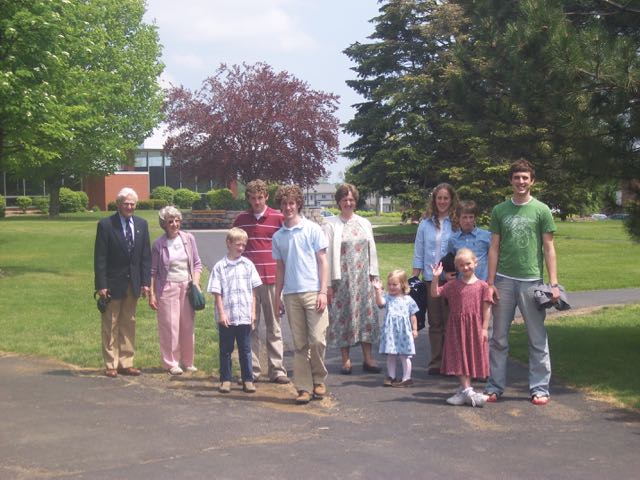
We’ve come a long way, haven’t we?
Advent sidenote: The ultimate you-do-you is seen at Christmas and at Easter. Jesus’ life is bookended with chapters that don’t make sense. I know this didn’t actually happen, but can you picture the eye-rolls in heaven when the plan was revealed — a virgin mother, traveling near her due-date, turned away from the inn, and the Son of God bing born in a stable. That thing that You’re talking about doing is the kind of thing I can’t picture any sane Son of God even dreaming about. It’s absolutely nuts. But, You do You. And He did.
[a momentary pause before I finish my alphabet challenge]
The other day I got a call from a friend that I hadn’t heard from in a while.
“I’m gong to visit my brother and thought I would reach out to some of my friends while I was driving,” she said.
I was so honored. We hadn’t talked in a long time. At one point we were going to try going for walks together wherever we were and talk on the phone, but it only happened once or twice before it fell by the wayside.
Life has a way of pulling us away from the very best of ideas.
The truth is I need more perseverance, more stick-to-itiveness, in my own life.
The other night I was so frustrated with my job that I went for a walk afterwards and mentally drafted my resignation letter. I thought through the commitments I had made there and when would be an appropriate time for me to give as my last day. I came up with a plan and was heading home to write the letter when I made a quick stop at the grocery store.
After I had picked up my bananas and bread, I headed to the checkout. Lately I’ve been using the self-checkout because I am peopled out by the end of the day, but I recognized one of the check-out people and went straight to her line. It was not the shortest or the fastest, but she was someone I knew from my job at the gym.
During the summer, she and her friend had been part of the early morning crowd. I loved the way they spurred each other on, sometimes only coming because the other was expecting them. M and D were both from Cuba and worked in housekeeping at a large hotel in town.
One day in the fall, M didn’t come, but D did. “Where’s M?” I asked.
“She’s packing and repacking her suitcase with food because she’s going to visit her family in Cuba,” D told me. “She wants to fit as much in as she can but she can’t go over the weight limit.”
“When does she leave?” I asked.
“In the middle of next week,” D said, “but she gets very anxious about her trips so that’s why she didn’t come this morning.”
All week I would ask D how M was doing. She was anxious. The next week, the day before she was to leave, when I asked D, she said, “Everything has changed. M heard from immigration and can apply to bring her children back with her.”
To make a long story short, M came back to Cooperstown with her children several weeks later. Despite hurricanes and glitches with visas, they made their way through the process incredibly quickly. I met her daughter in October, a beautiful girl who didn’t yet know any English.
That night that I was ready to quit my job and had stopped at the store, I saw M working the checkout line, her second job to make ends meet. She looked exhausted, but she brightened when she saw me.
“How are you?” I asked as she was scanning the groceries of the person ahead of me.
“So tired,” she replied.
“How are the kids doing?” I asked.
“We went to the gym Saturday and went ….” I could see her searching for the word. She paused and made an arm movement to show me.
“Pickleball? Racquetball?” I guessed. Pickleball is so popular these days that my mind immediately went there.
She shook her head and did the gesture again.
“I think it’s bowling,” said the woman ahead me.
M nodded vigorously. “Yes! We had so much fun. We want to do it again!”
When it was my turn, we talked a few minutes. It was so nice to hear her enthusiasm for having her family together. “Next week I take my citizenship exam,” she said. “That would be so wonderful to be a citizen.”
I wished her well and went home with a lighter spirit.
My petty complaints about my job seemed just that — petty — in comparison with all that M had gone through and was still going through.
I told a co-worker the next day, “M saved my job. Seeing her last night put everything in perspective.”
I’ve made a list of people that I see at work for whom I am thankful. M is near the top of that list.
She’s teaching me about perseverance, hard work, and joy.
 Hot Dogs and Marmalade