Holy God,
Replace in me
My conceit with humility.
My envy with mercy
My anger with patience
My overindulgence with self-control
My coarseness with decency
My distractions with contentment
My lukewarmness with readiness
Amen
Adapted from The Private Prayers of Lancelot Andrewes
She only had one sitting per day — which made me a little nervous.
How long would I have to be there? What would we do?
Lady Ostapeck lived out in Fly Creek, in a run-downish sort of house, with an English sort of garden in front.
I knew her from auctions. She often bought the $1 or $2 lots of junk that the auctioneers threw together toward the end. I had heard that she got her camera that way, but it turns out she bought it at the Utica Salvation Army store.
I also knew her from the photographs she had done of my oldest brother and sister, though I never heard much about their sittings.
And from her reputation as odd and artistic. The two go hand-in-hand, don’t you think?
She welcomed me into her home and we walked through a cluttered kitchen.
She paused in a doorway and looked up. “I need to find some spray paint,” she said, ” and paint that.” She was looking at a spider web in the corner of the door frame. “Gold or silver. I can’t decide.” We moved on.
In that moment, I knew I was in the presence of someone who was far more aware of the beauty of her surroundings than anyone I had met before. My mother would have grabbed her lambswool duster and whisked the web away, but Lady Ostapeck saw something lovely.
We sat on a couch and looked through books.
“What time period do you see yourself in?” she asked.
“I don’t know,” I told her honestly. Nobody had every asked me that before.
We flipped through pictures in the books. She was watching me. I paused on a picture of a French woman circa 1600.
“I think this is where you belong,” she said finally, after showing me some other pictures from that time.
The next step was the costume. She led me into a room that seemed to be overflowing with clothes. In that small dimly-lit room, she seemed to know exactly what she was looking for. A blouse. A hat. A sash. A skirt. A petticoat.
I put them on and then she set to work creating the scene.
She wanted my sleeves to look puffy, so she slid some rubber bands up my arm and fluffed out the sleeve above and below them. She found a limp fabric rose that she pinned at my bosom.
She pulled the neck lower — “We need to show more,” she said, revealing a little cleavage. As soon as she turned her back to go to her camera, I pulled the dress up a little.
As she crouched beneath the black cloth behind the camera, I could hear her muttering to herself. She bustled back around and arranged my hands just so. “Just relax,” she said, “and let your fingers be long and languid.” Before she went back to the camera, she pulled the neck lower and rearranged the droopy rose.
Her back turned and I pulled it up again.
More muttering behind the camera and she came out again. She turned my head ever so slightly to look out the window. She lifted my chin. She pressed down slightly on my shoulders. “Relax,” she said again, and pulled the neckline down.
Of course I pulled it up as soon as she wasn’t looking.
“Part your lips,” she said.
“Breath out slowly,” she said.
“Think about the one you love,” she said.
The result was the picture you see above.
Lady Ostapeck died on February 2, 2017.
I felt intensely sad when I read it in the newspaper. She left her mark on me. I’m so thankful for the day I spent with her.
In the selfishness of my heart, I could picture it — somebody taking care of me.
Fixing all my meals.
Bringing me the foods I like.
Tending to my needs.
Like a cruise ship — without the cruise or all the people.
Being a mom and a caregiver is exhausting at times.
I suppose it doesn’t seem like anything too difficult. How hard is it to fix tomato soup and a grilled cheese sandwich every day?
Or to do laundry.
Or take out the garbage.
The monotony of it could tend towards boredom. Kathleen Norris, in her must-read book Acedia & Me, said,
Might we consider boredom as not only necessary for our life but also as one of its greatest blessings? A gift, pure and simple, a precious chance to be alone with our thoughts and alone with God?
She reminded me of why I am so suited for this job.
While washing the dishes, most of the time I am quite alone with my thoughts and with God. I am running through the scripture I’m memorizing or praying for family and friends. When a family member joins me to dry the dishes, it is a special delight.
The truth is — a cruise has never appealed to me. All that basking in the sun and eating rich foods and drinking fancy drinks.
Yes, I find satisfaction in dragging the big garbage can to the end of the driveway for the garbage man to pick up. Today, I’ll clear a swathe of snow as I do it and walk back to the house in the path cleared by the can. Later, I’ll carry the much lighter can back to the house and put a fresh clean bag in it for the new week.
The other day though, in the grumblings of my heart, I wished someone would take care of me. In a flash I saw it — lying in a bed in a nursing home, having to be turned to prevent bed-sores, having someone spoon the food into my mouth all the while talking with a co-worker about the weekend past or the weekend ahead, having someone choose what I was to wear and dressing me in it.
I shuddered.
Nope.
I take it all back. I don’t want someone to take care of me.
I’m fine, thank you.
And so very thankful to be able-bodied and independent.
I rotated the ivy the other day. It was reaching for the window and had turned all its leaves to the sun.
Sometimes I think we’re like plants — craving light, seeking light, pursuing light.
The shadows are okay, though. I’m learning to lean in.
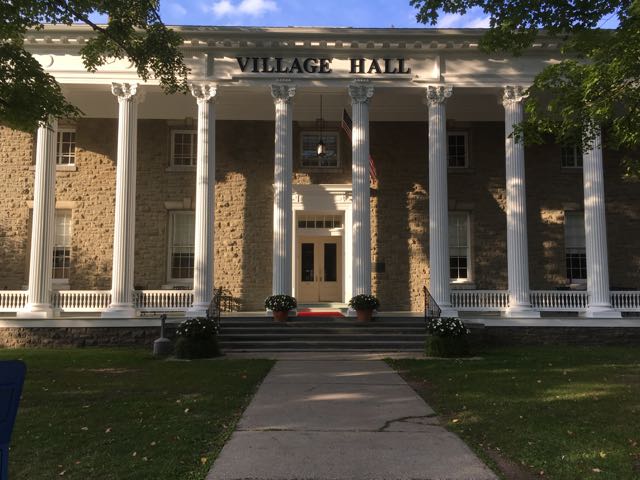
I looked through old pictures for shadow shots. This one caught my eye. The shadow tells us something the shot otherwise wouldn’t reveal.
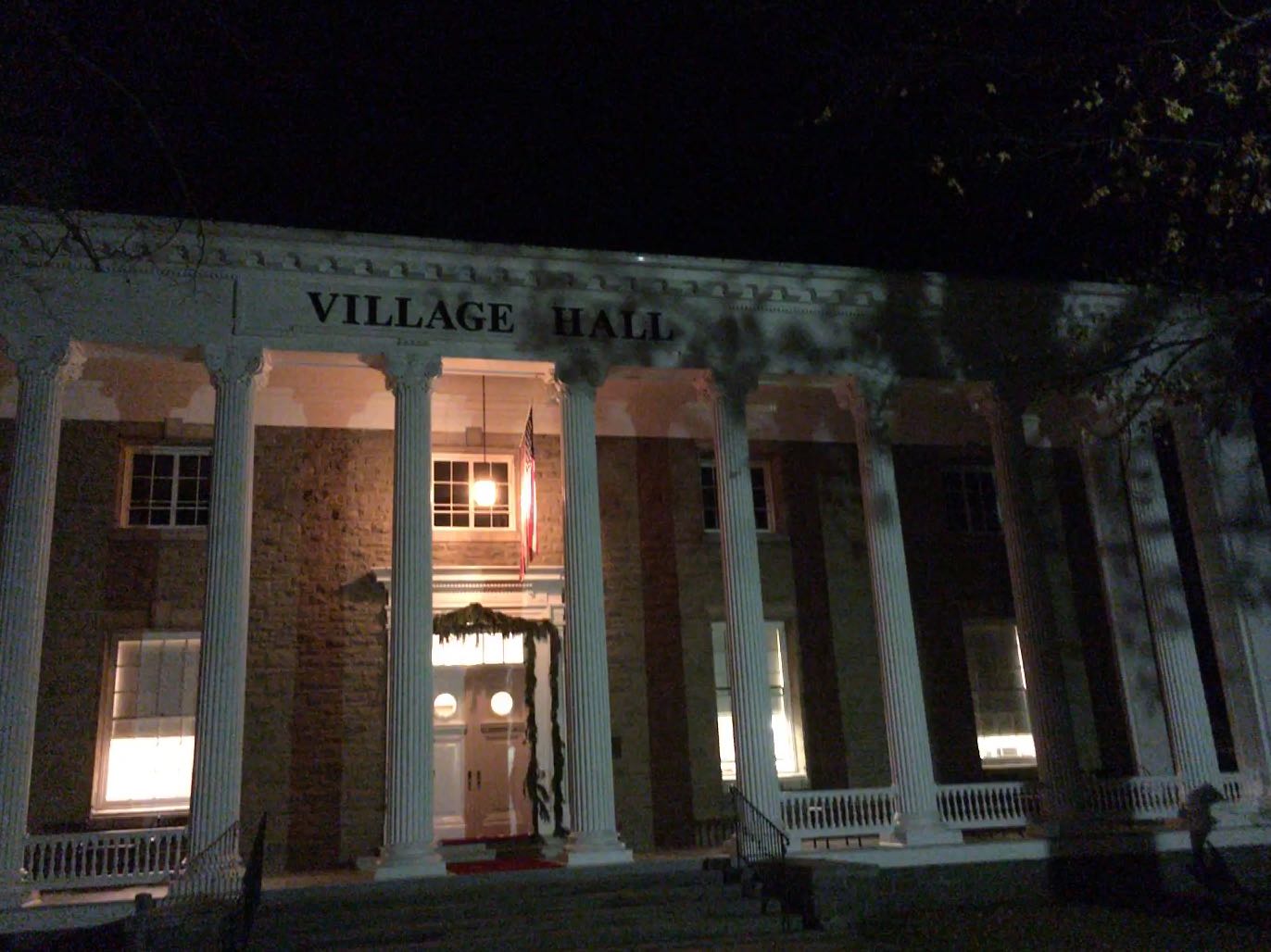
These simply accentuate the beauty of the building, especially its columns.
Summer dayWinter evening
I liked the shadows from the old bridge.
And the long leg shadows in a late afternoon sun.
I was happily looking through lots of old pictures. Then, I stopped.
In the pictures below, you won’t see the shadows, but I do.
On New Year’s Eve 2004, we played a family game of Scattergories. My brother, Stewart, was there. I could hear his voice, his laugh. He always loved games.
Stewart
I felt a lump in my throat looking at Stewart’s picture. We’ll never play games with him again.
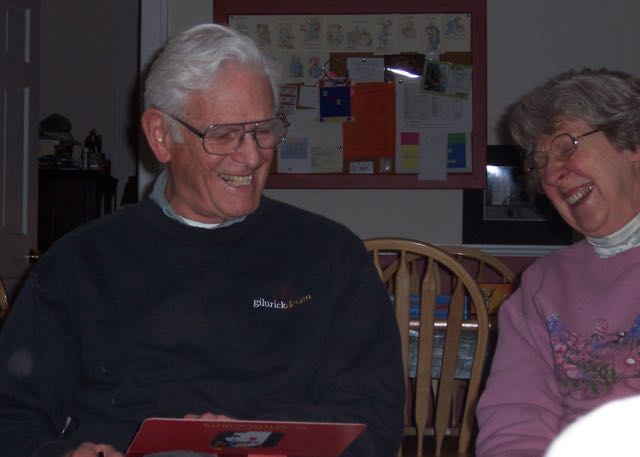
Then I saw this — my mother and father consulting on Scattergories.
Owen told me about Krista Tippett and her podcast, On Being. The other day I was listening to an episode called, “Silence and the Presence of Everything.” Gordon Hempton, her guest for that episode, said,
… sight is such an affordable luxury that eyelids evolved. We can close our eyes. OK, that’s enough of that. I’m just going to close my eyes and take a break. But not once in the fossil record do we have any evidence that a species evolved earlids. That would be far too dangerous. Animals must listen to survive.
I immediately thought of my deaf friends, and how lack of hearing must be a real safety issue.
I also thought of how I sleep — listening, listening, always listening.
Listening during sleep begins with motherhood. The new mom can’t help but listen for baby to wake up. In that half-awake/mostly-asleep state (yes, I know that mathematically that doesn’t add up), she must decide whether the noises heard require attention or not.
Now I listen for my father. After he took a bad fall, I put a baby monitor in his room so I could hear him when he gets up at night.
It was helpful when he wandered in the middle of the night — something that (thankfully) has only happened twice. It has helped when he has fallen, another rare occurrence. And it has helped for little things, like his light not working.
But I listen. In my sleep.
My mind filters through what I hear.
Safe. Safe. Safe. All is well.
The other night I jumped out of bed. Mostly asleep had become fully awake. I can’t tell you what I heard, but I knew it was something out of the ordinary. I thought it was a cry of pain. I ran downstairs and found my father sitting up on the edge of his bed with the lamp beside his bed turned on.
“Are you okay?” I asked.
He looked at me, confused. “What?” he asked. “What did you say?”
And he put his hand up to monkey with his hearing aid. He forgets to take them out at night, but he doesn’t forget to turn them off.
“Are you okay?” I repeated.
“Yeah, I’m fine,” he said.
I glanced around the room to see if anything was amiss, but it all looked okay.
“Did anything happen?” I asked.
“What? No, everything’s fine,” he said again. “You can go back to bed.”
I looked at the time. 1:38 AM.
I lay in bed listening for a long time. His deep steady breathing told me that he had gone back to sleep. That luxury didn’t come to me immediately.
I never figured out what the sound was — and I probably never will.
Some things remain a mystery.
Like earlids. I can’t even imagine what they would look like.
I drove into town this morning for a Bible study but the church was locked up. I felt a little irritated. No one had let me know that it was cancelled. Or postponed. Or whatever happened. Although I had only attended once before, I felt like someone should have told me.
Hmph.
I expected them to be flexible with me in my sporadic attendance, and yet I was not being flexible with them.
In my heart, I mean. This was all taking place at a heart level. I wasn’t really that upset. I was being stretched.
Bud and I used to get a little irritated at the Christian-ese expression of “being stretched.” When someone was undergoing a trial, the “Christian” response included glib statements like, “I guess the Lord is stretching you” or “me” or “him” or “her” or whoever.
I guess I’m growing up. And growing more flexible.
But there’s still so much more room for improvement. Will I ever reach a day when I’m not irritated by a small inconvenience?
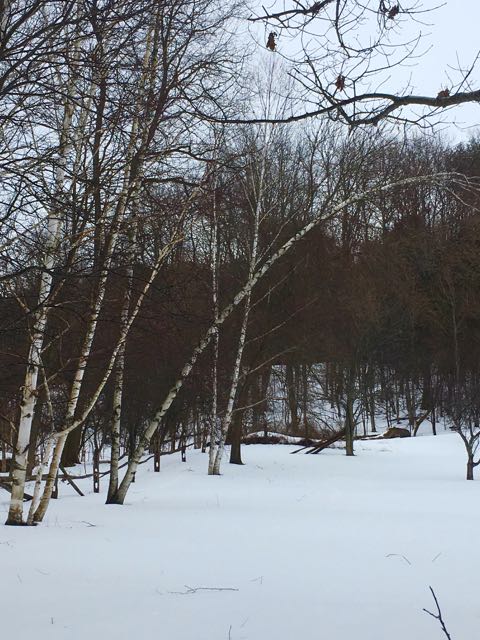
My father planted white birch trees along the north border of his lawn.
Over the years, some have grown quite tall. One bends quite low these days, showing the resiliency and flexibility that is its nature. My father comments on it every time he looks out the window.
Robert Frost says the birch is “the only native tree that dares to lean” — and lean it does. Its pliancy and resiliency are remarkable.
I’ve been going for long walks lately, and I feel the tightness in my legs. Yesterday I told myself that I need to start stretching again. As a coach, I’m aware of the different types of fitness: muscle strength, muscle endurance, cardio endurance, and flexibility. Flexibility takes the longest to gain, but it also is the slowest to lose.
In our muscles. In our lives.
My friend, Alyssa, wrote about aspens, their frailty, their humility, the way their leaves tremble in community. I remember the day I first read that post. I wept because my brother’s death was still fresh and painful, and I knew she was telling me of a community weeping with me.
This morning I looked at the birch and knew that it had lessons for me, too.
To bend and not to break.
To keep working to develop that flexibility that will stay with me for a long time. The more I exercise it, the more flexible I will become.
I love aspen trees. When I was a child, my dad often traveled on business and came home with gifts for us. I have abalone jewelry from New Zealand, traditional clothing from India, and coins and pottery from Guatemala. But one of my favorite keepsakes came from a place much less exotic.
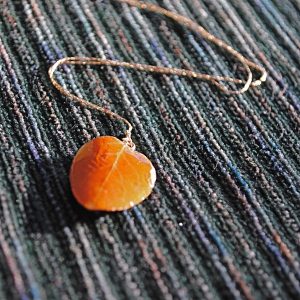
When I was eight or nine, my dad came home from Colorado with an aspen leaf pendant for me and each of my sisters. Nothing flashy, just little rust-colored leaves preserved inside a clear coating and dangling from golden chains.
The necklace my dad gave me
I had never seen an aspen tree, so the gift didn’t initially hold any particular significance for me. It was pretty, and it was from my father. I liked it.
But it came to mean something altogether different to me when I was 11, and my father took us to the aspens.
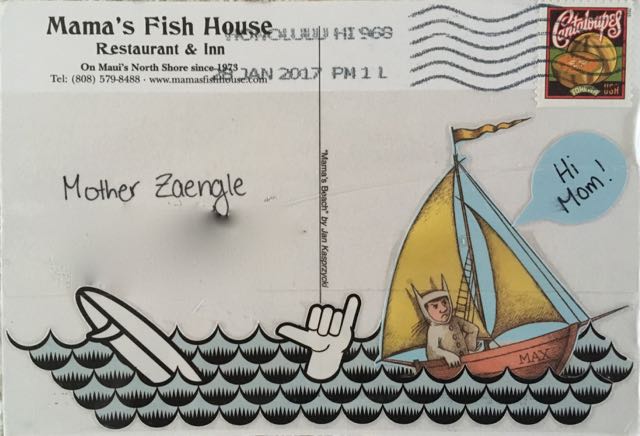
Partly because Sam just sent me this awesome collage postcard from Hawaii:
Is that me waving from the surf?
And partly because the Fenimore Art Museum recently announced that in April they are opening an exhibit called: 50 Years, 50 Works, 50 Reasons. Maurice Sendak: The Memorial Exhibition
And partly because the word of the day is “lovingly” and this post has that word in it —
I’m reposting something I wrote in May 2012.
As a side note — I DO do New York City now, very sparingly. By bus.
When I stopped to see my mother on Tuesday, she was in New York City. Well, not literally, but, they were having another travelogue for the residents. Instead of Hawaii, however, this week’s destination was New York City.
I don’t do New York City. Every time I’ve driven someone to JFK, I’ve gotten lost, not getting there, but getting out. I’ve ended up in downtown Manhattan on more occasions that I care to think about. I am a country bumpkin through and through. I don’t do big roads. I don’t do big cities.
But my mother was in New York City in the safety and comfort of The Manor. Maybe I could handle that.
Anyway, I didn’t get to see her. My kids said, “She won’t know the difference anyway.”
Maybe that’s true, but I know the difference.
Since Maurice Sendak died, I’ve been thinking about Where the Wild Things Are. Little Max is so naughty that his mother calls him a wild thing. He’s not even remotely contrite about his naughtiness, yelling at his mother, “I’ll eat you up!” So she sends him to his room.
And off he goes, not only to his room, but to where the wild things are, and where he’s king, and where there are wild rumpuses and such. But he wants to be where someone loves him best of all.
Can you picture his mother tiptoeing into his room, after all his naughtiness? No, wait, backtrack even further. Can you picture his mother lovingly preparing a tray of food for him, things that smell good and are good to eat, making sure they are both delicious and hot?
She tiptoes into his room, but he’s not aware of it because he’s off where the wild things are. She leaves him a tray of food, a tray that says I’ll always love you.
She didn’t do all that so that Max would see the tray and say, “Wow, my mother loves me.” She did it because she loved him.
That’s what I want my children to know. I don’t go visit my mother because she’ll understand. I go because I understand, and because I love her.
So I stopped in to see my mother the other day, but she was off where the wild things are — New York City. I should have left her a tray of food.
I found myself looking through old pictures on this blog and trying to decide: Is it Art? Or, is it Craft?
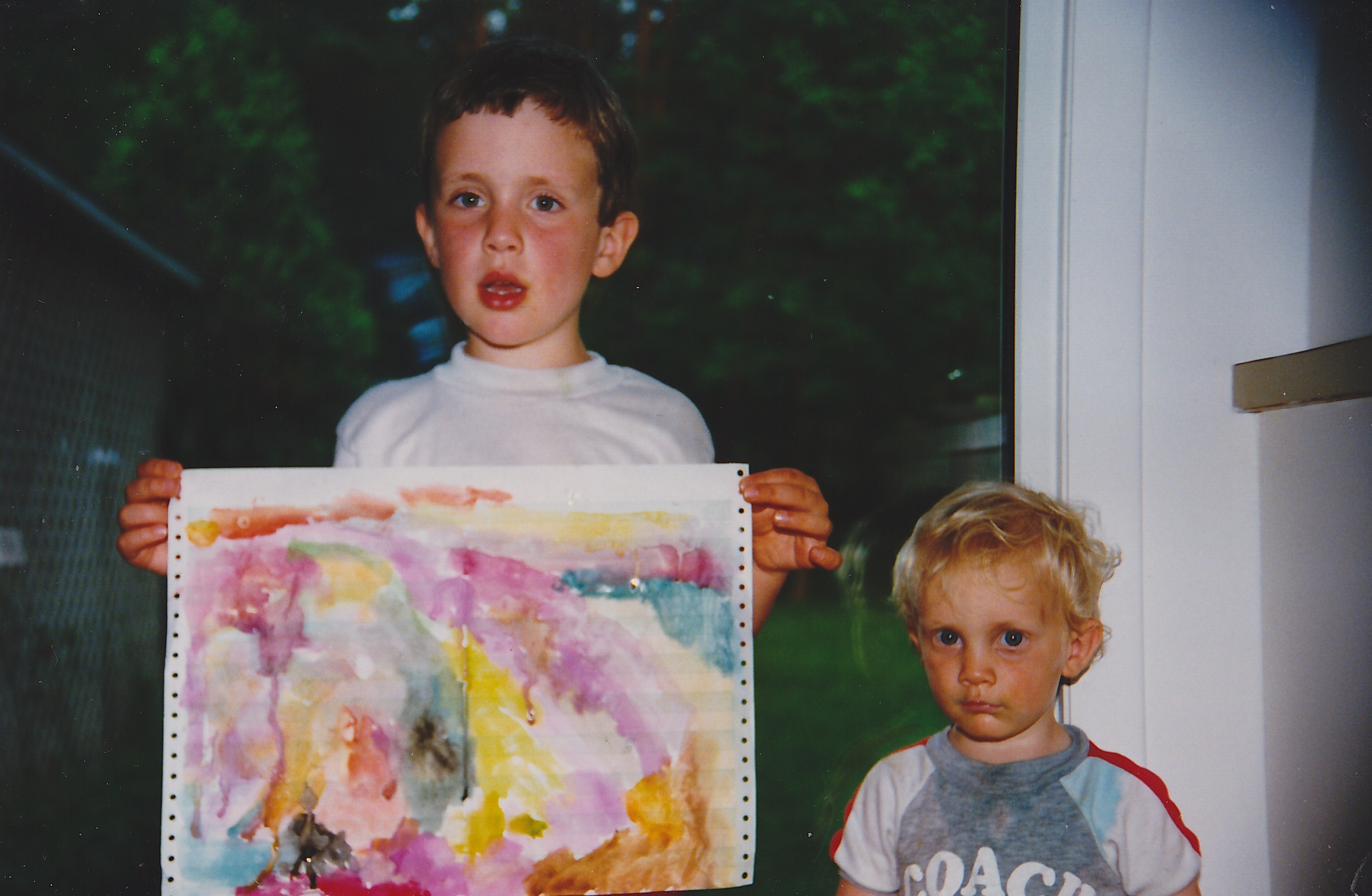
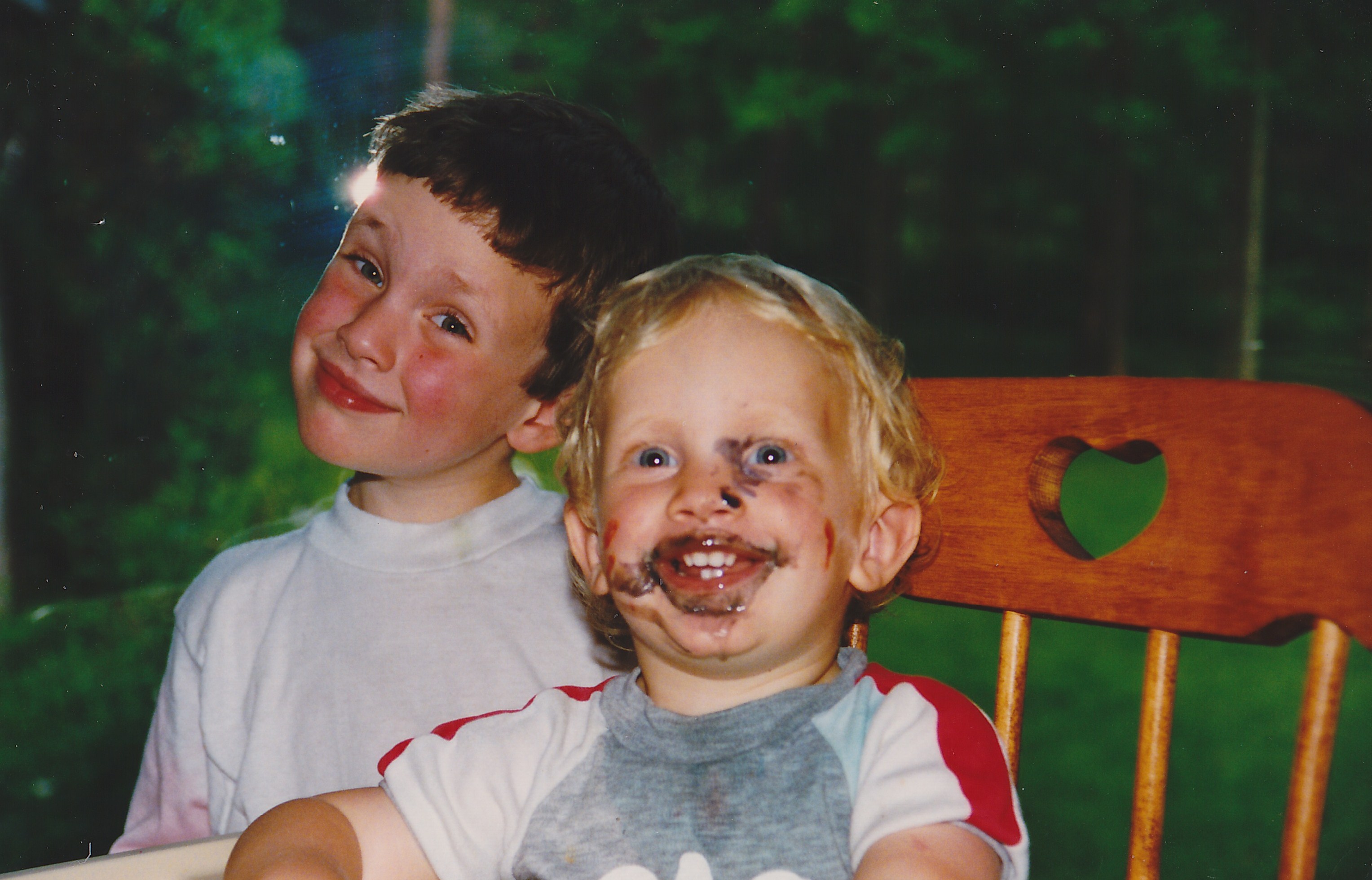
Philip scribbling on a coloring placemat, about age 2.
I’d guess at art, although craft is certainly an element of coloring pages.
Philip water-colored a picture.Owen water-colored himself.Two artists
Or should I have captioned it “Two craftsmen”?
No — I think art is the right choice here.
Quilted pillow Mary made for me.Mary’s quilted purse
Is quilting an art or a craft? So much artistry goes into quilted objects, but it’s probably a craft because it’s a functional object and reproducible.
A baby picture of Laurel that I tried to paint.
I dabble with watercoloring for a while — obviously never got very proficient. I shudder to call this art.
Hand carved stamp thingy
Made at Laity Lodge. I drew the daffodil, copying from a picture, and carved it, making lots of mistakes. Craft?
Teenage boy activity in church. Definitely art.
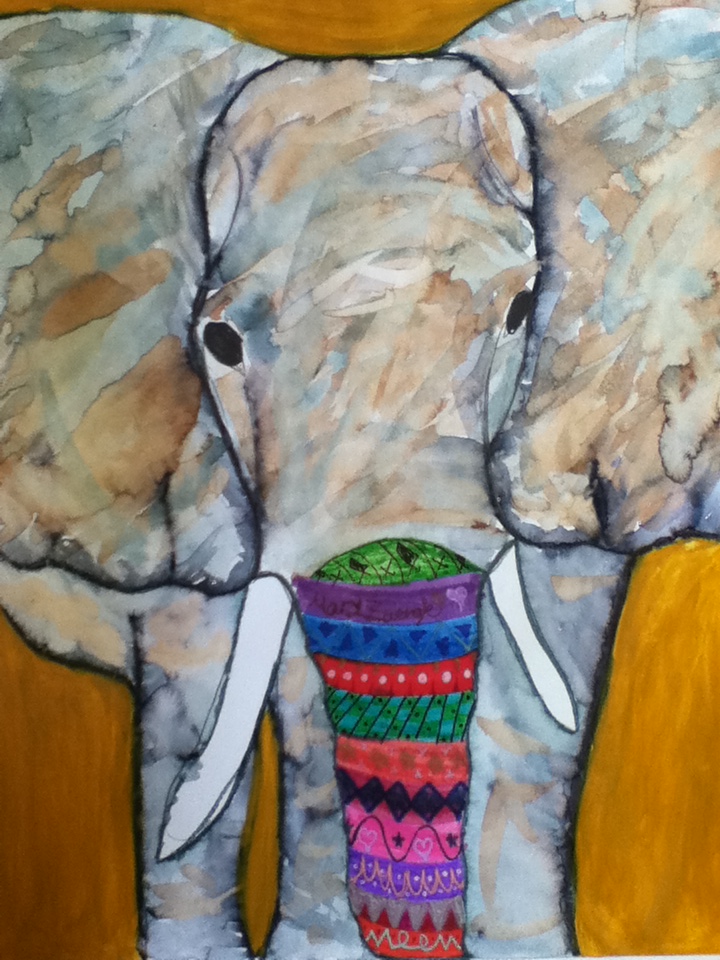
Mary’s elephantLaurel’s elephantMy painting — mama Elephant and her baby
Elephants painted in art class. We’re copying Eli Halpin’s style — but still art, I think.
My place-cards. I loved making these. Craft. And Art. I put my mind into these, but also some heart.
There probably isn’t a clear delineation most of the time between art and craft.
The artists exercise craft, and the craftsmen use art.
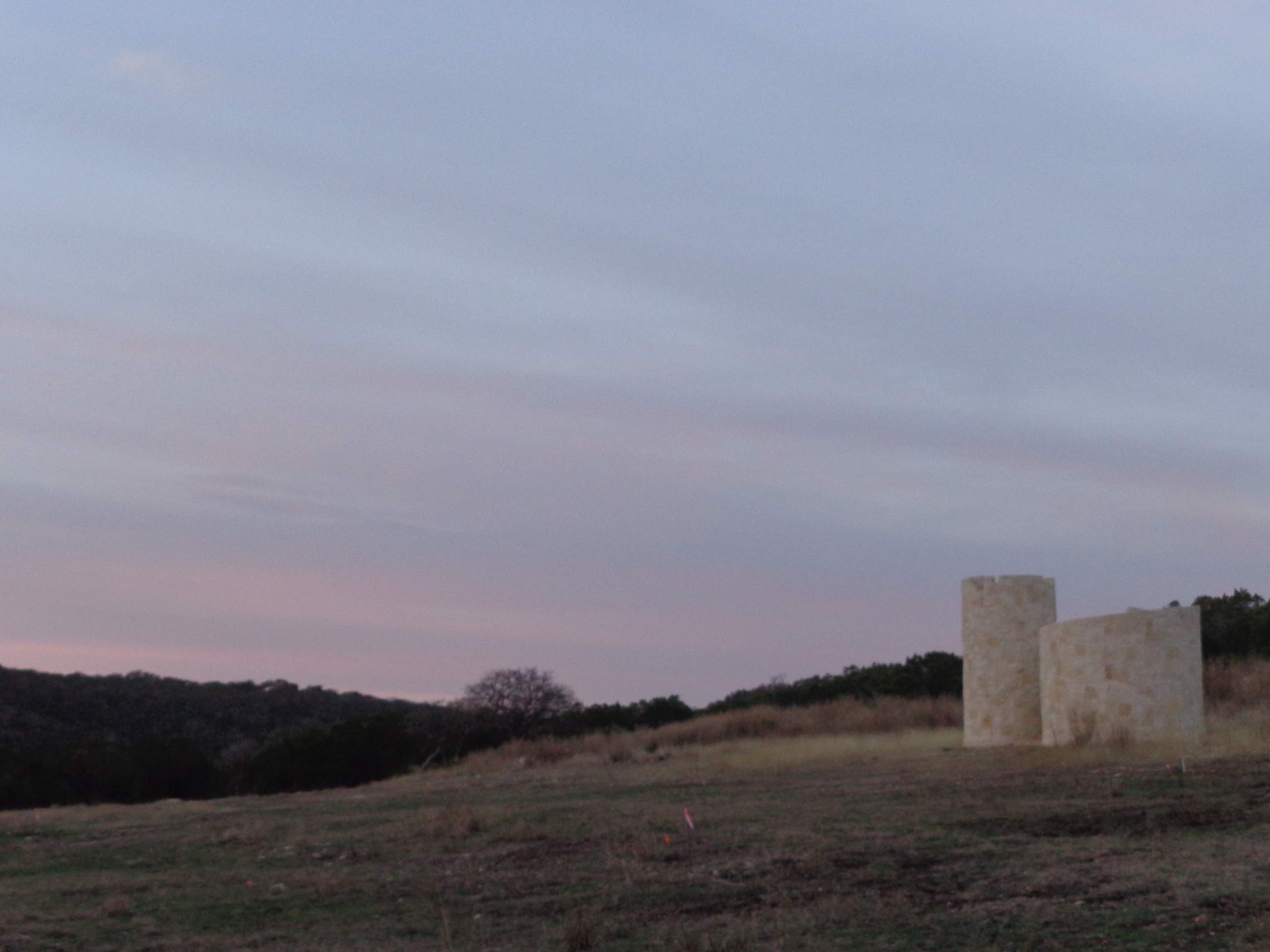
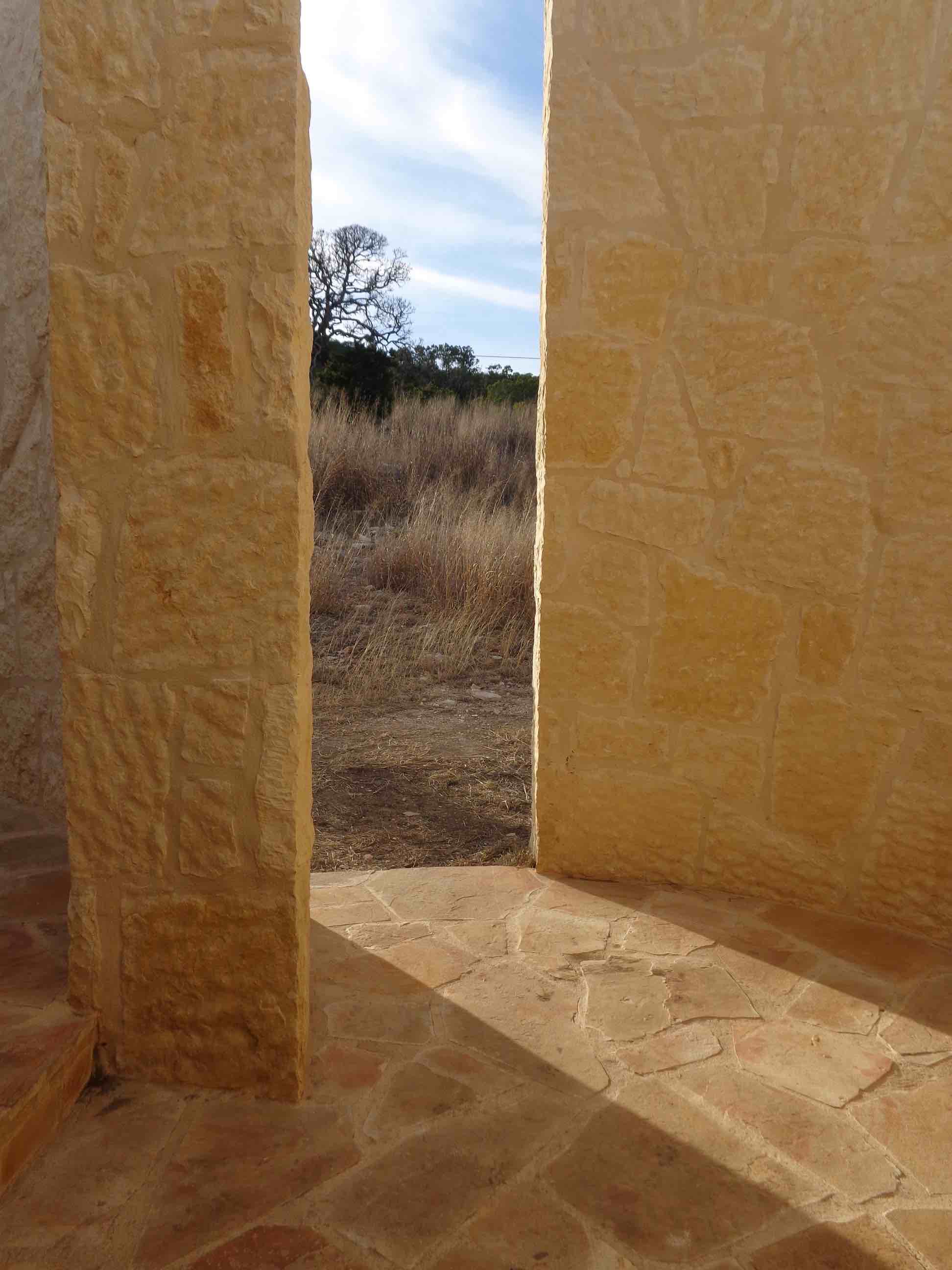
I’ve been there to watch the sun rise, and I’ve been there to watch the sun set — and I’ve been there at all hours in between.
It is peaceful and strong and restful and restorative. Who knew that a piece of art could do all that?
I probably have hundreds of photographs of Threshold — from close-ups of insects climbing on the limestone to all-encompassing shots taken from a distance as I walked around it to shots taken with her walls.
In Threshold, I recognize Psalm 48. I have numbered her towers – one – and considered well her ramparts. It’s not Zion, but it points me in that direction.
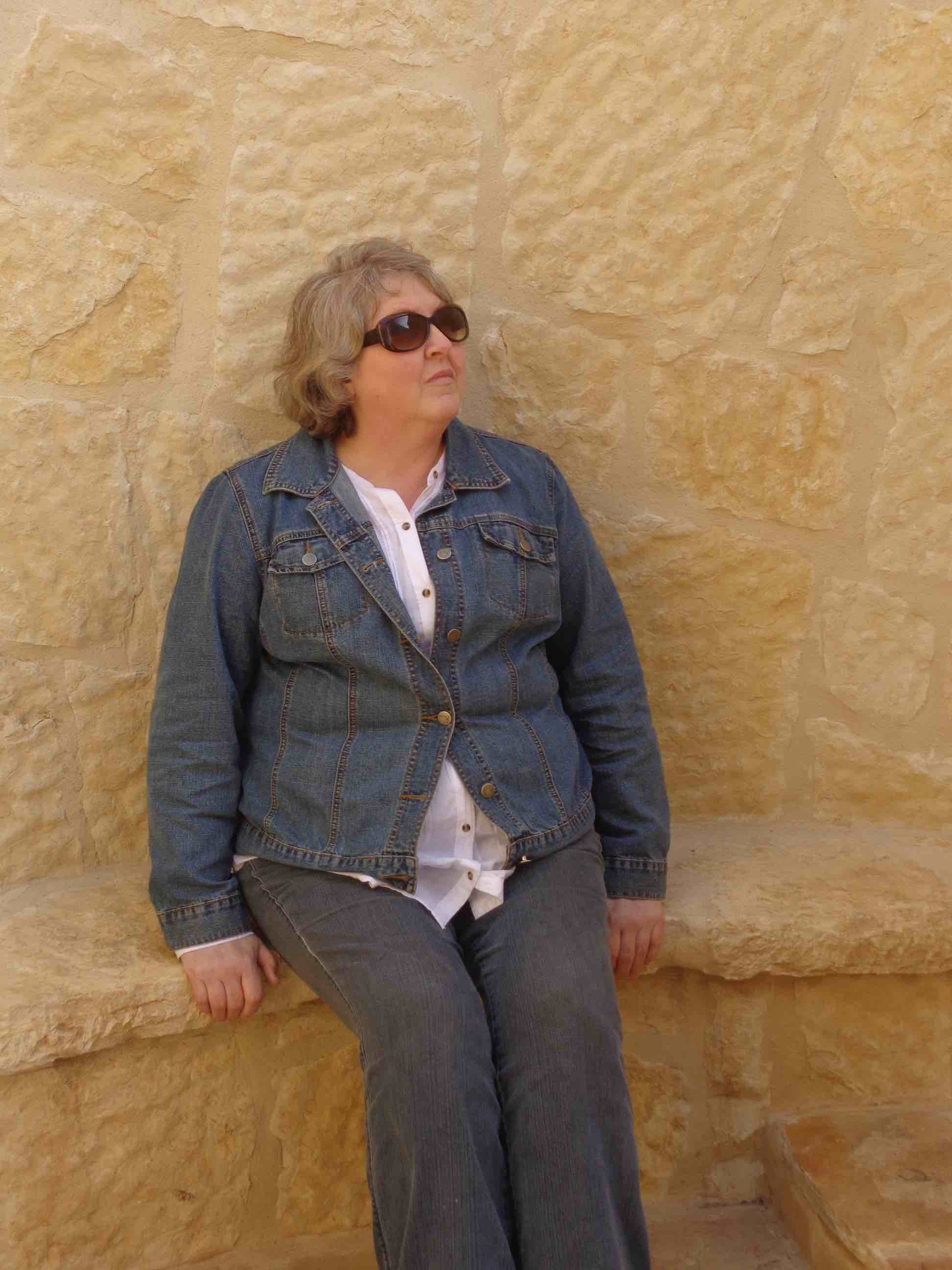
Looking out from Thresholdlooking up from inside ThresholdOne of my favorite people soaking in Threshold’s goodness




![IMG_5807[1]](https://hotdogsandmarmalade.com/wp-content/uploads/2015/02/img_58071.jpg)










 Hot Dogs and Marmalade