Grief · Life

Mr. Hanson

Image from ALLOTSEGO.com from Veteran’s day 2016 — Mr. Hanson on the right

I don’t think he was there the first time we visited the Methodist Church a few  years ago, but he was the second or third time we went back.

“Sally,” he said to me in his strong deep voice. I was flattered that he remembered me. It had been 40-some years since I sat in his 7th grade math class.

“Hi, Mr. Hanson,” I replied.

“You can call me Dick, you know,” he said, smiling. “You’re an adult now.”

“I don’t think I can,” I said to him.

Teachers, especially good ones, have a special status. When I hear kids today calling teachers by their first name, or, worse, just their last name, I cringe a little inside.

Sunday after Sunday he would engulf my hand in his while he greeted me. If I called him Mr. Hanson, he would give me a look and then say, “Dick, please,” so I took to calling him nothing.

“Good morning!” “Good to see you today!” “Merry Christmas!” I avoided the naming, and he allowed me to, until one Sunday, he said, “C’mon. You can say it.” He held my hand and waited.

I took a deep breath, and said, “Dick?” in the smallest of voices, and quickly followed it with “I don’t think I can.”

He looked at me a long time, then let go of my hand. “Okay,” he said, and he smiled at me but never mentioned the name thing again.

Mr. Hanson was one of those larger than life teachers. A former marine. Physically a big guy. A booming voice. A great smile.

I said something to another woman at church who had had him as a teacher. “I just can’t call him anything but Mr. Hanson,” I told her.

“I know,” she said, ” but let me tell you something about him. Do you remember when I was in the hospital?”

I did. When we were in school, she had been in a tobogganing accident that resulted in a broken neck, broken jaw, and months in the hospital. I spent many afternoons sitting in her room with her. Her jaw was wired shut. A device that resembled tongs attached to her skull and held her neck in traction via weights that hung down over the end of the bed.

“My mother was taking a mandatory First Aid class for teachers on Monday nights,” she said, “and she must have mentioned something about it to Mr. Hanson because he started showing up in my hospital room on Monday nights to visit. He never said anything to her about it, and it took me a long time to figure it out, but on the one night she couldn’t be with me, he came by.”

I wondered how many other Mr. Hanson stories are out there.

Therein is greatness.

Not doing big things that draw attention and bring accolades, but in doing the small things, unnoticed and unseen, but not unimportant.

Mr. Hanson died last week.

I’m sorry (not sorry) that I could never bring myself to call him Dick. I’ll miss his strong handshake, resonant voice, and warm smile. I’ll miss his presence.

Rest in peace, sir.
Life

A Wedding and a Funeral

My brother called yesterday morning. His voice caught as he asked, “Can Bud and Karl come help me dig a hole?”

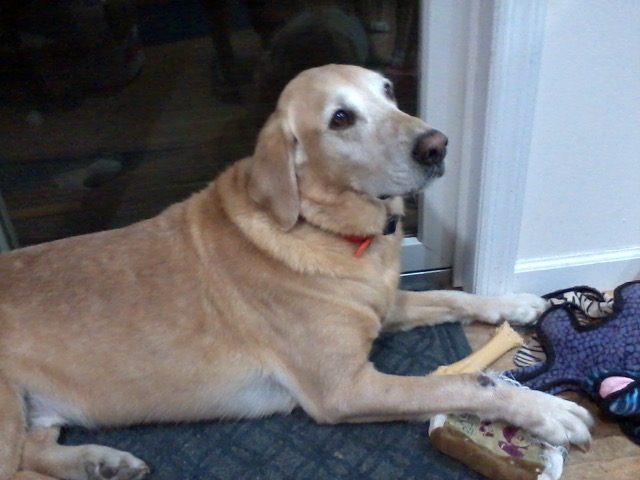
His dog was dying. Hudson wasn’t any old dog, he was beloved. A gentle soul — fun, funny, with a sweet disposition. I knew he would be sorely missed.

Bud and Karl went up mid-morning to help dig the deep hole. Peter had chosen a spot along the trail he used to walk every day with Hudson.

Earlier in the week, when Peter had learned about Hudson’s cancer, he had asked Karl to come play soccer with Hudson, one of the dog’s favorite activities. Then, another day, Laurel and Karl had gone to try to play with him, but Hudson didn’t have the energy to get up, so they lay on the floor beside him, resting their hands on his golden coat, and told him stories of fun times they had had with him.

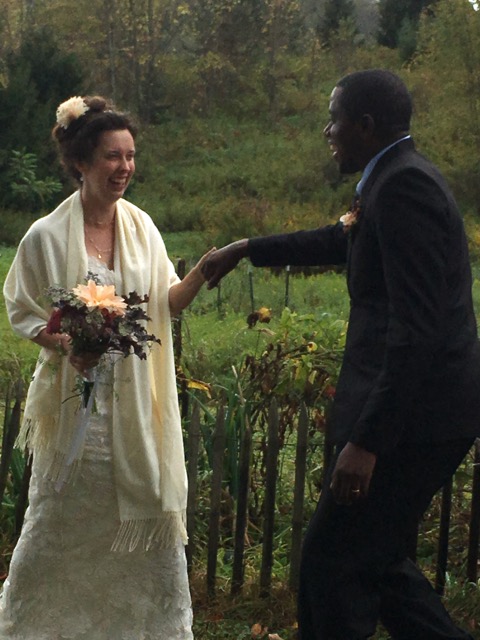
When Bud got home from digging the grave, he showered and we headed out to a wedding.

I had never been to a Quaker wedding before, but it was lovely. Lots of silence. At the beginning of the service a man explained the proceedings. We would sit in silence until the bride and groom were ready to say their vows. Then, they would stand and say their vows to each other — no minister. More silence would follow, but friends and family were invited to share any words they wanted with the bride and groom. The service would end when we all held hands, an act initiated by one designated person, the person who was explaining it all to us.

Then, he said something like, “Please allow some silence between sharing your words to allow the words of the previous person to settle.” I pictured watering my plants and how the water sometimes waits at the surface before seeping into the soil.

His final pre-service words were, “Also, at Quaker services, children are always welcome.”

That’s how it should be at every service, I thought.

Lots of children were present. Little Augie, a few rows ahead of us, blew kisses at us, and said, “Da-da-da-da.” I think it was his new word. The little girl behind us identified pictures in a board book. Across the aisle, a baby cried, was soothed, and fell asleep.

Yet, in the midst of all that, there was silence.

Katie and Adrian

When the bride and groom stood to say their vows to each other, each one’s voice started quietly. We strained our ears to hear, but, as their words went on, they became stronger, clearer. It was obvious that they believed deeply in these vows, a proclamation of their love and commitment to each other.

I could go on and on — about the wedding, the reception, and visiting with dear friends. We had a wonderful time.

But, back at my brother’s house, the vet tech came to euthanize Hudson.

When we got home from the wedding, Bud headed back to my brother’s. He told me later how tenderly my brother and his wife had laid Hudson in the hole, covering him with a blanket. They put some of his favorite toys in with him. Bud told them that he would finish filling the grave with dirt for them and that he would do it gently.

Hudson

Although my heart was full from the wedding, it ached for my brother.

This past week, for the third time in little over three years, I held a box with the cremains of a family member. My brother-in-law’s ashes arrived in a cardboard box that I kept briefly here before passing them on to another family member.

In the midst of life, we are in death. In the midst of death, we are in life.

I’m thankful for the wedding — a shiny bit of joy to balance the darkness.

I’m thankful that my brother-in-law is finally at peace.

And I’m thankful for a dog, who did everything a dog is supposed to do for his master, serving as a trusted friend and companion.

Amen.

friendship · Life

Small World

Bud found a piece of paper covered with words on the coffee table this morning. “What’s this?” he asked.

“Word Battle?” Mary guessed.

Yes, Word Battle.

I am addicted to play a game called Word Battle. Here’s what I like about it:

  • It’s fast. A game is completed in less than 5 minutes.
  • It’s challenging. You can have anywhere from 9 – 13 letters with which to make a word.
  • It’s a community.

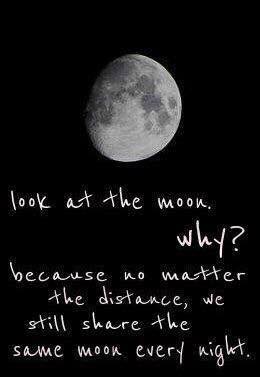
A fellow player posted this picture this morning.

She captioned it: For all my WB friends.

She lives in England — and there are quite a few British players.

But the circle of players is the circumference of the earth.

The best players seem to be from the Philippines and India. I asked another player once why that was.

He said, “Because we learn our native language before English.  But because we actually ‘learn’ English, we spell and write better than the native speakers!”

The more I play, the more I feel like I “know” the other players — well, as best anyone can know someone they will never meet in person and only chat with in short spurts while waiting for games or during games.

I know that one player is the process of publishing a book, another is applying to Brown, and another is confined to a wheelchair and has a therapy dog.

One player’s daughter died recently, at the age of 30. I watched the word spread through the other players. I think I was not alone in whispering a prayer for her in her grief.

We discuss the virtues of coffee and tea, as well as rum, vodka, and other drinks. The political discussions can get hairy — but I know far more world politics than I would have known otherwise.

In fact, that’s some of what was on the paper — Hindi phrases and politicians’ names.

Yes, sometimes they chat in Hindi — and it irks me not to know what’s being said. So I write it down and look it up.

I wrote “Feku” down the other day, thinking it was a who, but when I asked another player, she laughed.

“It’s Indian slang,” she said.

Then I worried that it was inappropriate, and asked her that.

“No, it’s a politician who lies,” she responded.

Ha — so that’s a worldwide problem.

The other day, all the players played the word COGIES while I came up with some insignificant, less point word. I’ve seen COGIES played, but it’s not a word I ever use, so I don’t usually think of it.

“What’s a cogie?” I asked.

“I don’t know, but I’ve seen it played lots of times,” one player responded.

“Never ask a woman her age, or a Scrabble player the meaning of a word,” another answered.

For the record, a cogie is a small bowl.

A pandit and a pundit are essentially the same thing.

Ecce is directly from the Latin — means, “Behold.”

And, in this crazy world, where virtual and real mix together in a jumble of letters, Word Battle can mean friends.

elderly · family · Life

Shouting

Laurel said the other day, “We should all learn another language. As a family, you know?”

“Why?” I asked.

“Well, then if we’re someplace all together and we want to say to something to someone in the family but we don’t really want everyone else to know, we can just say it in that other language,” she said.

I think she was thinking along the lines of a let’s-get-out-of-here signal.

“Like Swedish,” she said. “We could all learn Swedish and nobody would know what we’re saying.”

“Ummm… you’d be surprised,” I told her. “I’m pretty sure Amy knows Swedish.”

Amy — former pastor, dear friend.

“Oh, well…” Laurel said. “You know what I mean.”

Personally, I think we should all learn sign language. Not as a secret language — because there are a lot of people in the world who know sign — but as a quieter way of communicating.

I can always tell when my father’s hearing aids aren’t working.

“What?” he’ll ask.

Frequently.

“I’m having trouble hearing you,” he’ll say.

I’ll check to see if his hearing aids are in, and, if they are, if he has turned them on. Often these days he forgets the latter.

The other day Mary had a dentist appointment. As she and I headed out the door, I stopped to check my father’s hearing aids — and turned them both on. He was on his way to sit in the living room with the Daily Jumble.

An hour later when we got home, he was standing at the kitchen table.

“What’s going on, Dad?” I asked.

“I need to put this in my…” and his voice trailed off as he searched for the word. He was holding a hearing battery in his hand.

“You need to put a new battery in your hearing aid?” I asked.

“Yes,” he said, and he pointed to his right ear — where there was no hearing aid.

“Okay, I can help with that,”I said. “Where’s the hearing aid?”

“That’s the problem,” he said.

“Did you set it on the table here?” I asked, and began moving papers and looking.

“I don’t know,” he replied — and that became his reply to every question.

“Where were you when you took it out?”

“I don’t know.”

“Were you sitting in your chair in the living room?”

“I don’t know.”

“Did you go in your bedroom?”

“I don’t know.”

I began looking everywhere — the bedroom, the bathroom, the living room, the dining room, the kitchen, the sun porch. I crawled around on the floor, looking under furniture, putting my cheek to the floor because that made it easier to see the incongruity of the hearing aid.

“Is it in your pocket?” I asked.

“I don’t think so,” he replied, but he dutifully emptied his pockets for me.

All this conversation was taking place at a high volume — because of the missing hearing aid. That, alone, is exhausting.

Twenty minutes into the search and I was ready to give it a rest. My neck hurt from sleeping in a bad position the night before and this cheek-to-the-floor business wasn’t helping. I sat down.

“We’ve got to find it!” my father said when he saw me sitting. He was looking through some papers that hadn’t been moved in a year. The hearing aid would surely not be among them.

“Criminy,” I muttered under my breath. My neck ache was quickly becoming a headache.

“Keep looking,” he said urgently. “We can’t stop looking!”

I got back to my feet and went back over the same places I had been looking. Finally, in his bedroom, I spotted it poking out from the back edge of a chair cushion.

I could see the relief on his face when I brought it to him.

“Where did you find it?” he asked.

“On the chair in your room,” I replied, while trying to put the new battery in.

“Where?” he asked again.

“On the chair in your room,” I replied, while trying to put the hearing aid in his ear.

“That’s better,” he said, once it was in place. “Where did you find it?”

Something in me snapped. “ON THE CHAIR IN YOUR ROOM,” I shouted — not in a nice way.

I left in search of Advil.

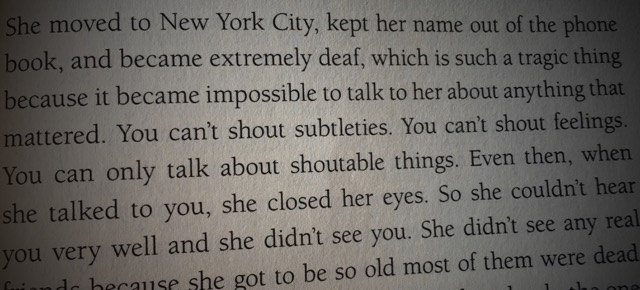
Frederick Buechner, in his new book The Remarkable Ordinary, talks about his mother’s hearing loss and the difficulty of shouting conversations.

from “The Remarkable Ordinary” by Frederick Buechner

I thought about my deaf friends who read lips so well — and appreciated that I don’t have to shout at all with them.

When Laurel said she wanted to learn Swedish, all I could think is that I’d rather learn sign language.

That way maybe I could communicate better with my friends who use it.

And when I’m old and hard-of-hearing, my family can converse with me without shouting.

Life · photography · poetry

At the Window

At a Window
by Carl Sandburg

Give me hunger,
O you gods that sit and give
The world its orders.
Give me hunger, pain and want,
Shut me out with shame and failure
From your doors of gold and fame,
Give me your shabbiest, weariest hunger!

But leave me a little love,
A voice to speak to me in the day end,
A hand to touch me in the dark room
Breaking the long loneliness.
In the dusk of day-shapes
Blurring the sunset,
One little wandering, western star
Thrust out from the changing shores of shadow.
Let me go to the window,
Watch there the day-shapes of dusk
And wait and know the coming
Of a little love.

(Public domain)


I’ve written and deleted so much blather about windows these past few days.

It’s hard to gather all the loose ends of my thoughts into something — anything, really — that makes sense.

I love this picture I took two summers ago when the milk house was being torn down. One window remained of the broken down building. It had the prettiest view over the valley.

Roger Bacon said,

Prosperity is the blessing of the Old Testament; adversity is the blessing of the New, which carrieth the greater benediction, and the clearer revelation of God’s favor.

The world is so broken.

Yet somehow, in the midst of it, or over it all, a great benediction is being whispered — and it’s that little bit of love. That hand that reaches in to touch me in my dark room, breaking my loneliness.


Now I look through a dirty pane
Where cobwebs
and
The dust of the world
Blur my view

I rub at it
With my fingers
And though my hands
Come away dirty
The grime on the glass remains

If I but drop my eyes
No glass obscures my view

And to my right
A larger scene awaits

Overhead
The sun
(so bright I dassn’t look)
Shines
and
Brightens the whole world:
The valley
The river
The barn on the horizon

Yet I squint
At my dirty pane
Wishing I could see more

Life · poetry

Haiku

Frederick Buechner, in his book, The Remarkable Ordinary: How to Stop, Look, and Listen to Life, explained the haiku better than I have seen it explained before:

The whole genius of the haiku is that they don’t mean anything. People who try to figure out what a haiku means are beating up the wrong path… The haiku settles for doing, as I read it anyway, one very simple but very crucial thing — it tries to put a frame around the moment. It simply frames a moment.

Since I was a child, I can recall pausing and thinking, “If only I can remember everything about this moment forever.” My everythings ranged from listening to my mother cook in the kitchen, seeing the rainbow circles around the lights in the pool after swimming without goggles, the raucous cawing of crows for no apparent reason, the smell of freshly cut alfalfa, the toad in the garden that startled me when I was weeding, and so on. If I had known that the haiku served that purpose, I might have worked harder on my haiku-ing.

Today’s prompt, Planet, got me thinking about all the times I tried to see the planets as my brother pointed them out to me. He can read the night sky so well. (He even knows zombie and wolverine constellations that nobody else does.)

I would squint and try to follow his finger to the tiny red dot that he said was Mars. Sometimes I saw it, but often I didn’t.

How could I write a haiku about that time I didn’t see Mars?

Squinting in darkness
His finger pointing at stars
I couldn’t see Mars

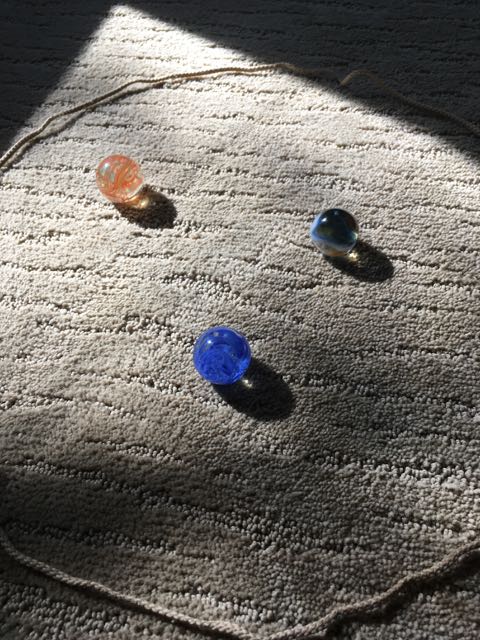
Then I remembered his favorite marble, a small blue glass orb that resembled planet Earth.

When we played marbles, I could barely balance the shooter marble on my thumb in order to plink it into the ring. If his Earth marble was in play, though, that was the target. Winning that one meant winning everything.

Pretty glass marbles
Inside a corral of string
(flick) – plink – Earth is out

family · Life · photography

Family Picnic

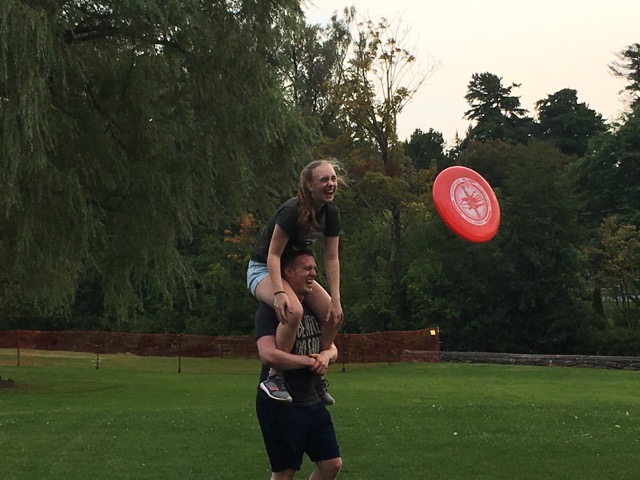
We had a family picnic a few weeks ago.

Actually, that’s kind of a generous description.

It was a partial family get-together that involved food, frisbee, and talking.

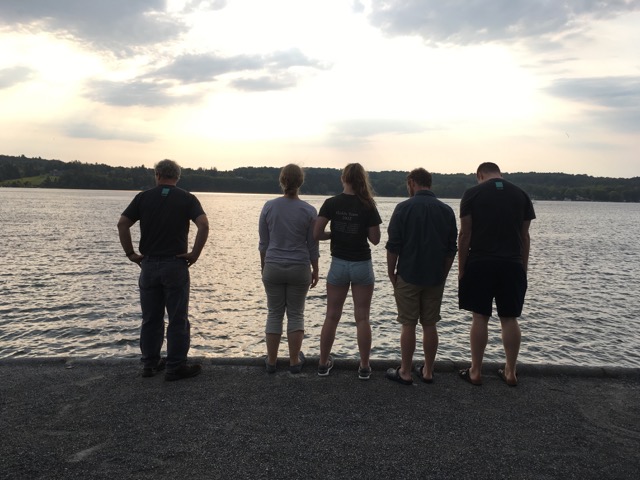
Five out of eight children — that’s more than half the family.

A kind of weird conglomeration of food that included deli meat (but no bread), watermelon, fresh mozzarella salad, chips, and blueberry pie — I suppose that constitutes a picnic. We were eating at a picnic table.

A huge caterpillar.

Future luna moth

Frisbee.

That became layered frisbee.

A walk by the lake.

And lots of sitting around, talking.

The best of life is made up of so many simple moments.

They may not be perfect, but the sum of them is.


Life · poetry

Glorious Country Life

I stopped at the Farmer’s Market
Early Saturday morn
Heard some vendor’s talking
(They both look tired and worn.)

“Went to the tractor pull,”
One guy said to his friend.
“Didn’t get home ’til 2 AM.
Helluva start to the weekend!”

“Damn rooster woke ME at 4 AM,”
His friend to him replied
And he passed him some maple syrup
To carry the jugs inside.

Oh, this glorious country life!
With tractors and roosters the only-est strife
Stars in the night, sun in the day
Cows in the field, newly mown hay
So thankful I live here every day

On Sunday at the Harvest Fest,
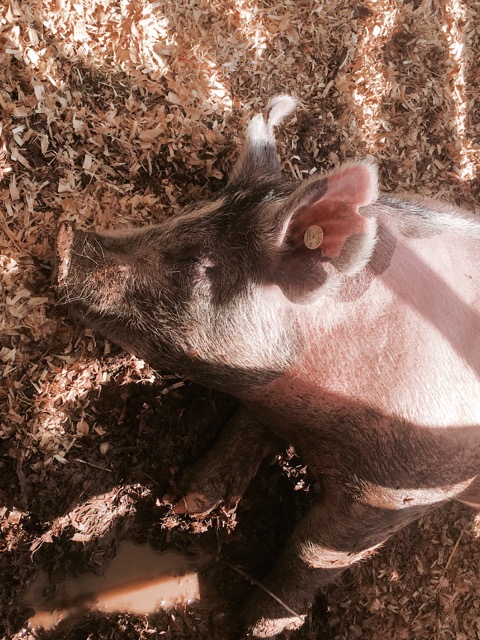
We visited the pig —
Half in wood shavings, half in mud
My goodness, the sow was big!

She had been the champion
At July’s livestock show
For this festival’s Parade of Champions
They wouldn’t let her go

So her owner brought a steer
To parade in her stead
While she wallowed – half sun, half shade
Mud on her snout and head

Oh, this glorious country life!
A parading steer lest the sow run rife
Stars in the night, sun in the day
Cows in the field, newly mown hay
So thankful I live here every day

family · Life

Coffee

I sat in an exam room with a new health care provider last week. As she worked her way through the list of get-to-know-you questions, she came to medications. The form had said, “List all medications,” but I left it blank.

“Do you take any medications?” she asked.

“Nope,” I said.

“Vitamins or supplements?”

“Nope.”

“Anything over-the-counter that you regularly take?”

“Nope.”

“Nothing at all?” she asked one last time, looking up at me.

“Do you count coffee?” I asked.

“No,” she replied. “That’s a food group. Coffee and chocolate — both are food groups.”

I knew then that we would get along famously.

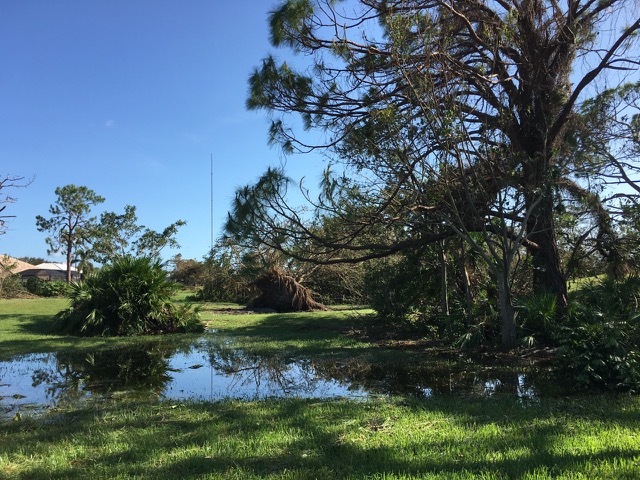
My sister survived Irma. The morning after the storm, she reported that they were fine but didn’t have electricity. To the best of my knowledge, they are still without electricity. She texted me pictures of trees down and debris in the road, then added,

The real problem: NO COFFEE 😬😱😡

I read a joke that made me think of her and her situation.

Q: How do you feel when there is no coffee?
A: Depresso

The other day when I made my coffee, the filter folded over and the coffee didn’t drain properly into the pot. When I went to pour my first cup, I got watery grounds and a mess in my coffee maker. I read that spilling a cup of coffee is the adult equivalent of letting go of a balloon. My situation was the equivalent of multiple balloons disappearing into the sunrise. I felt like crying.

Thankfully, I live in a land of plenty — plenty more beans to grind, plenty more filters, plenty of water.

And plenty of electricity.

Still, I hope my sister’s electric comes back soon — if for no other reason than for the sake of coffee.

(And air-conditioning.)


Life · Travel

Learning a New Language

Ayla’s English was impeccable. Well, nearly impeccable.

When we first met, someone asked her how old she was.

“Twenty,” she said, without batting an eye.

“Twenty?” someone else questioned.

She flushed and giggled a little, realizing her mistake.  “No, twelve.”

I turned to Amina, our official translator. “Are twelve and twenty similar in Bosnian?” I asked. It would make sense, because they’re pretty similar in English.

“Yes,” she replied.

It reminded me of words that I hesitated to use in Croatia. I had learned over 350 Croatian words using an app before I traveled. Some words, however, I consistently confused.

For instance — zabranjen, which means forbidden, and začinjen, which means spicy.  It would have been kind of funny if I pointed to a food asked “Zabranjen?”

apricots(?) and plums

It turns out that Bosnian food really isn’t terribly spicy, just delicious.  Everything is fresh. The bread was baked fresh for us every day. We had fresh plums, apricots, watermelon. A salad made with fresh tomatoes and cabbage, lightly seasoned with salt, oil, and vinegar was served at several meals (I even got to help make it once.)

They made a most delicious soup called čorba.  The secret ingredient, I learned, was okra. Not fried okra like one would find in the south, but okra that had been cut into little pieces and dried and strung. I’d like to make it here, but I’m not where to find the okra.

Yes, that’s me slicing tomatoes, but Anna, next to me, is eating čorba

Back to Ayla — as I said, her English was excellent. When Amina wasn’t available, I would ask Ajla for help communicating and she was fantastic.

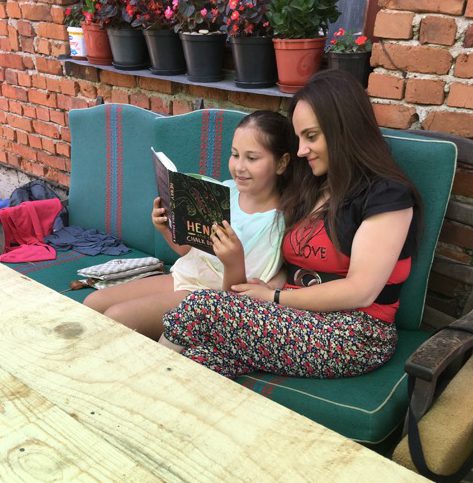
I had brought along a friend’s book to read, a children’s book called Henry and the Chalk Dragon, and finished it on my flight to Dubrovnik. I quickly realized that Ajla had the language skills to read the book — if she was interested. She was.

Ajla and Amina

Some things get lost in translation, though. Mary and I were talking yesterday about the time when Mary was telling a  story she made up with talking and flying animals, Ajla said, “You are a great storyteller  — in the lies.

How could we explain the difference between imagination and lies?

Henry and the Chalk Dragon is a very imaginative book, with chalk creatures coming to life — but it’s also full of truths. I hope Ajla can see them.

She wants to be an artist, and here’s one truth  from Henry that she needs to understand:

You have to be brave to be an artist…. It takes a fearless knight to imagine something and then let it out into the world.

Jennifer Trafton Peterson, Henry and the Chalk Dragon