family · Grief · Life

An Essay about a House

I know, I know — there is a world of difference between HOUSE and HOME, but this house is almost a friend. I’ve known this house since I was 7 years old when my father pulled in the dirt driveway declaring it our new home.

Oh, there were out-buildings: the chicken coop, the spring house (not really much of a building), the hop barn, the milk house, the stable, the middle barn, and the 3rd barn. I could probably write essays about each building, but today I will focus on the house.

It was already over 100 years old when we moved in. It had one closet — a chimney closet in my parents room. My room was a real room (with a cardboard closet), my youngest brother’s room was a former walk-in linen closet, my oldest brother and middle brother each had smallish rooms, and my sister’s room was hallway that my father walled off.

Of course, I could have this all wrong. I was, after all, only 7 years old at the time, and my main focus was my room, in the front north corner of the house. As I mentioned, it had a cardboard closet, a dresser, a bookshelf and a double bed — yes, a DOUBLE BED for lil’ol me. I could hear the mice in the walls while I fell asleep at night, scritch-scratching so close to my head that it almost felt as if they were in the same room.

My middle brother had a door into the attic in his room. It was a small door that’s still there, although now it leads to nothing. (I suppose that now makes it a magical door to another world, right?) Then, it led into an attic space which still had a few things in it, one of them being a trunk with clothes in it. Old clothes. Fancy clothes. We played and played dress-up with those clothes — dressing up in them, and then standing by the road and waving at passing cars. I’m sure some of those drivers did a double-take at the 10 year old boy wearing a long dress waving at them.

Such memories.

The kitchen was blue, the color of watery mouthwash. We could see the pipes in the ceiling leading to… the bathroom? It must be. I don’t remember. My excuse is still 7.

Anyhoo, my parents put in a dropped ceiling in the kitchen. It gave the mice another place to run. My mother loved wallpaper and chose a 70’s-ish green floral paper that is still there.

Their china closet went into the dining room, where it rattled if we ran past. It still rattles.

The room directly below my bedroom was called The Study. It was where my parents played bridge with their friends. The heat to my room was a single vent from the study up. On bridge nights, I heard every conversation through that vent. Also, when I was trying to fall asleep, the mice in the walls were drowned out by the sound of laughter when someone playing bridge told a funny story. That made me jump more than once!

So many memories!

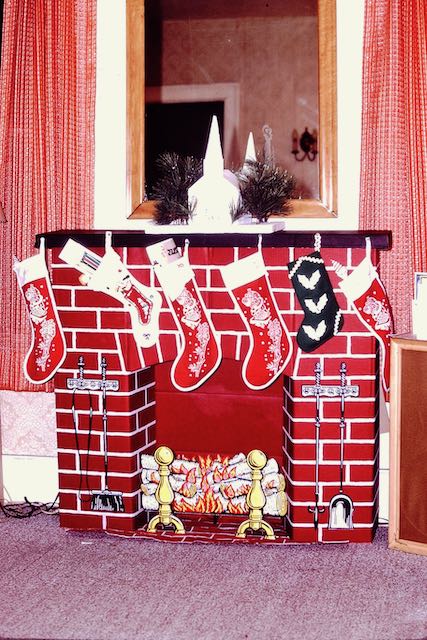
The cardboard fireplace so we would have a place to hang our stockings:
The upright piano that came with the house:

The summer kitchen off the back:

I could keep going and going — how it was, how it is today…

Ah, how it is today.

I live here alone now. It’s full of stuff and memories. I’m not sure which there is more of.

It’s that much older, too. I mean, I’m no longer 7, and the house is now more like 160 years old.

Of late, I’m realizing that I really can’t take care of it. A few weeks ago, I had to call an electrician because of some issues.

“It needs major work,” he told me. “It’ll be expensive.”

Ugh.

I was the one who took care of our parents in the final years. I believe the grief process is easier for those who have been closest to a person’s demise through aging.

What’s true with people may also be true with houses.

I love this house. I can’t even tell you how much I love this house.

But it’s time to step away.

Faith · Grief · poetry · Random Photo Monday

When he died

When he died,
Oh, I tried
To decide

What came next —
So perplexed.
The subtext

Of my grief,
My belief,
Brought relief


This is my submission for the W3 Challenge this week:

  • Theme: The bittersweet, painful, or unsettling aspects of the past and its hold on the present;
    • Optional Challenge: Use imagery of shadows, cracks, or reflections to add depth to the theme;
  • Form: A “square” (e.g., 2×2, 3×3, 4×4, or any other pattern you choose);
    • “Rows” represent stanzas;
    • “Columns” represent the number of lines in each stanza;
      • For example: 3×3 = 3 stanzas of 3 lines each; and 4×4 = 4 stanzas of 4 lines each.

The idea of a “square” poem intrigued me. I wrote 3 stanzas of 3 lines each. I went a step further, though, and made each line 3 syllables — does that make it a cube?

fiction · Grief

Reminders

It made her sad. That shoe in the gutter.

When she saw it, she thought of that other shoe in the gutter.

The shoe after the accident.

When her sister had been killed.

Of course, this shoe looked nothing like her sister’s shoe.

Her sister’s was an old Nike. It sat in the gutter long after they had cleared the car parts and broken glass, like an unclaimed prop from Cinderella.

At times, it had been covered with leaves and granola bar wrappers and the detritus of city living. Then, one day, it was gone.

Had it been reclaimed as evidence from her accident? Or, had the street cleaners finally picked it up and tossed it in the garbage.

The shoe was still there when she walked home from work.

No, this wasn’t left from an accident. No skid marks. No police tape or traffic cones marking off the area like there had been back then. It had probably fallen out of a gym bag or something, she decided.

It was there the next morning and she started to cry.

She had been too angry to cry after her sister’s death. Now the sadness was overwhelming her.

On her way home in the evening, she stopped to pick up the shoe. She started to cry again. She wept through the task of digging a hole in the garden.

“Thank you for your service,” she whispered, channeling Marie Kondo.

Still weeping, she placed it in the hole and buried it.


This is my response to this week’s Unicorn Challenge. The Unicorn Challenge’s rules are so simple: no more than 250 words based on the photo prompt.

For the record, I have yet to read a single Marie Kondo book. She is the queen of decluttering, so I really should.

However, when I throw things away these days, I do thank them for their service, a Marie Kondo concept. It involves gratitude and acknowledgement of the purpose an object has served.

Grief · poetry

Of Memories Gone

The W3 prompt for this week is to write a villanelle on the cycle of life and death.

I love villanelles (in theory). I especially love when other people write good villanelles. I’ve decided, though, that I don’t like writing them.

I wish I was Dylan Thomas and knew how to not go gentle. Instead I found myself monkeying around with a ton of bricks. Such an overused cliche.

My father died in 2019 and my memory is so blurred. I have very few clear recollections of that day.

I went for a walk. I DO remember doing that — more, I remember my own NEED to do that. There were too many people in that one room and one of them was dead. I needed to get out.

Now, when I look back at that time, there’s a pandemic in the way. It’s like a wall that I can’t see over.

Something significant happened in September 2019. I have vague memories of it.

In my attempt at villanelle-ing, I ended up with two, neither of which I’m terribly happy with —


Here’s the first:

My father’s death hit me like a ton of bricks
It happened late September but the day’s a blur
And then we had a pandemic thrown into the mix

I was his care-giver, but I couldn’t fix
The inevitable. Yes, we knew it would occur!
My father’s death hit me like a ton of bricks

A gastric bleed that would totally eclipse
The dementia to which I had begun to defer
And then we had a pandemic thrown into the mix

When I look back on that time, nothing sticks
Nothing stays in order, no memories pure
My father’s death hit me like a ton of bricks

I went for a walk — yes, that clicks
But after that? I fear it’s all a whirr
And then we had a pandemic thrown into the mix

I know I have good reason for the memory skips
How did I make it through? I am not sure
My father’s death hit me like a ton of bricks
And then we had a pandemic thrown into the mix


And here’s attempt number two:

Enough with all this talk
Words are a garbled mess
I need to go for a walk

The night we hear death’s knock
We gather to pray, witness, bless
— Enough with all this talk

The hospice nurse notes the clock
Done? Begun? Your guess —
I need to go for a walk

To walk and walk — the shock
— I can’t express —
Enough with all this talk

Dear God, I need sound blocked
I need so so much less
I need to go for a walk

Trite, kind, angry words interlock
Into some noisy distress
Enough with all this talk
I need to go for a walk

Blather · Grief · Leaning In · Life · poetry

Mom’s Wedding Dress

Man, it has been a week. I’ve had a cold (not COVID) and, for whatever reason, struggled to write much.

Kudos to those of you who crank out quality posts every single day, sometimes multiple in one day. I spew forth something occasionally, nonsense most of the time, but this week the well has been fairly dry.

The W3 prompt this week was a quote:

Stephen Chbosky, The Perks of Being a Wallflower

Honestly, I had no idea. When have I ever felt infinite? Pretty much never.

I tried writing something about swimming, because there’s something about stretching out in the water, and reaching towards the far wall that’s very Zen, but not infinite. That poem went into the trash.

On one of the days when I was home sick, I decided to tackle some of the sorting that needs to happen in this house. I live in my parents’ house, the house I grew up in, and it is chock FULL of stuff.

I found the remnants of my mother’s wedding dress. She had given it to me so the lace could be used for my wedding dress. For whatever reason, those remnants were saved. In a box. Under a bed.

The remaining lace was quite yellowed. The heavy satin that the lace had been layered over was spotted and almost brown.

“I should throw this away,” I said out loud. I resolved to do just that.

But I couldn’t.

Kudos to those of you who can or could.

It’s just beyond me.

I closed the box.

But I went back to it multiple times, wrestling internally with what should be done.

That’s when I decided that I would ask one of my sons to help me bury it. Somehow, allowing that satin and lace to become one with the earth again seemed fitting for my mother’s dress.

She always loved a garden.

Finite? Infinite? I’m not sure.

But I did crank out a poem if you care to read it at the bottom.

My mother on her wedding day
Me on mine — Dad, me, Mom

My mother gave her wedding dress
To me so I
Could use the lace for my gown.
I frown, I sigh

As I find the remains of that
Dress so many
Years later. A wreck of a thing –
Fitting, any

Joy I might have had now replaced
With a heartache.
The box holds scraps of what once was –
I pause – head-shake —

What do I do? “Throw it away,”
Says one voice in
My mind. “It’s just garbage now.”
Somehow the bin

Is not the proper place for it.
It is a wreck –
Like my life – but I simply will
Not kill that speck

Of what – Love? Hope? Truth? Connection?
It is a dress!
Nothing more and yet so much more –
But for my yes

My own promise — oh, how I grieve!
I will bury
The scraps. My heart is still not free
To be merry


Grief · Life

Some Years Ago

“Some years ago” — the first three words of the first full sentence on page 146 of Brian Doyle’s book, Hoop. That was the prompt for this week’s Stream of Consciousness Saturday — to choose the first three words of the first full sentence of a randomly chosen book near you. Here’s the shelf within reach:

In the words of David (ben Alexander)Okie dokie ~ Let’s do this thing!


Some years ago I made choices. I mean, don’t we all? We make choices that seem right at the time — and then we go with them.

And they take us all sorts of places — up hills and down, around sharp bends with unexpected trials and encounters.

They take us through dark valleys.

They take us on hikes up steep hills where bramble scratch at our legs and bugs bite leaving itchy welts. But the view at the top can be amazing.

Or disappointing.

We don’t know until we get there, right?

And we can’t change the decision, we can only press on.

Some years ago I made a decision, or rather, a series of decisions — and those decisions impacted my family.

I became the primary caregiver for my father in his final years.

Last weekend, almost four years after his passing, we finally placed his ashes in the columbarium niche next to my mother’s ashes. Both of them were in the plastic boxes, provided for free by the funeral home or the crematory. They would have been pleased with that — no frivolous expenditure there.

I still wish I had saved a Cool Whip container to put my mom in. She would have loved that.

We were raised in the most unfrivolous way, but with a great sense of humor, if that makes sense. The Cool Whip container would have encapsulated that. That — and my mother’s thriftiness.

The Columbarium

Each of their surviving children went forward to the columbarium to spend a private moment or two with the ashes before they sealed up the niche. A bagpiper played Amazing Grace while we did that.

I went forward alone — a consequence of my choices — and placed my father’s college ring in with him.

He always wore it. After he passed, I carried it in my pocket every day, as a reminder of all the life lessons he had taught me. He was a good man.

Now I’m ready to move on.

Alone in some ways, but not alone in so many others.

Some years ago I made choices — and I continue to make choices.

Honestly, I don’t make frivolous choices.

But…. some years ago brought me to today.

And now there’s tomorrow.

family · Grief · Life

I Remember Mama

I’ve had times when I wanted to throw in the towel. One tiny bit of advice carried me through those better than any other.

Children are a lot of work. Large families have a unique set of challenges.

For instance, when a family grows from two to three children, mom doesn’t have enough hands when walking to the library with the children. She can hold the hand of one child on her right and the other on her left, but where does the third child go?

When a family grows from three children to four children, they can’t all ride in one car, unless, I suppose, they have a bench seat in the front, which we didn’t.

When a family grows from five children to six children, they can’t fit into a mini-van. Driving a 15-passenger van is overkill, but there aren’t many choices or 12 passenger vans out there.

I had eight children. My mother-in-law had thirteen. Thirteen!

One of the first times I went to their house, she took me by the hand and we walked to their large vegetable garden. I still remember the feel of her hands, calloused and strong. She worked so hard. She earned those hands.

She was a hugger. My own mother was not a hugger. Sometimes huggy people feel awkward to those of us who haven’t always had those outward displays of affection. But it seemed such a natural extension of who she was.

Basically, she was amazing and made everything look easy.

One day I asked her when I was struggling with my two or three or six children — “How do you do it?”

In her sweet, sweet way, she said, “Oh, Sally, you just do.”

You just do. Those are hefty words to live by.

And honestly, I have failed at just doing sometimes too many times.

Still, that simple exchange was one of the most unforgettable conversations in my life.

She passed away this week.

But I remember Mama.

Mama (R) with her mother (center) and brother (L)
Grief · poetry · Writing

Ordinarily, I Just Blather

I lied
I promised a poem and blather
I may just blather
I won’t give you a poem
Not today
I can do this thing
Next Saturday


Yesterday, the prompt was “reversal” and, like an idiot, I all-too-quickly decided I would write a reverse poem. I used the word reversal instead of reverse because it actually shows up that way in the interwebs.

Last night I sketched out my idea — two opposing thoughts to put at each end with a few middle-ish words. This morning, I filled that page with words and arrows and crossing-things-out and carets to insert new words. It was a mess. It definitely needs more work.

So I got out my computer and stream-of-consciously wrote the intro to this post — which CAN be read forward and backwards, but it’s not really two opposing ideas.

Next Saturday, I hope to have a worthy poem to accompany my blather.

If we were having coffee this morning, I would bore you with all the new words and concepts I learned this week.

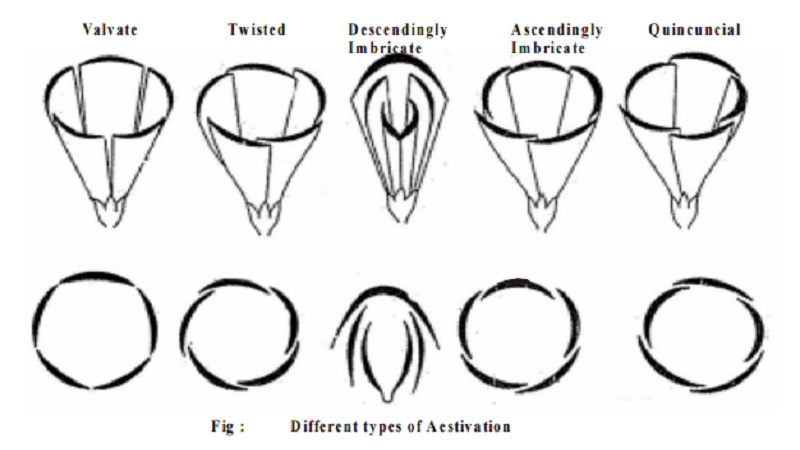
Check out this one: AESTIVATION. It has two definitions. In zoology, it’s a state of dormancy during hot weather, as compared with hibernation, which is that dormant state in cold weather. Snakes in the desert aestivate.

But the second definition is the one I fell in love with. In botany, aestivation is the arrangement of petals and sepals in a bud before it opens.

I love flowers

We have words for the coolest things.

I also learned the concept “Homo Faber” which means “Man the Maker.” One definition I found talked about man making tools to “control” their environment. I prefer to think about it more along the lines of Dorothy Sayers in her book The Mind of the Maker. There she talks about us being made in the image of God and the only thing we really knew about God at that point in the scriptures is that He created. We were made to be creative.

After my father passed away in 2019, I had some pretty serious struggles. In the spring of 2020, I found myself going for frequent walks to think — but more and more my thoughts were dark and morbid. Finally, I reached out for help and found a mental health counselor. We talked A LOT — and we still talk. I also admitted my struggles to my primary care provider who prescribed an anti-depressant. It helped, too.

There were a few times that I tried to wean myself off the anti-depressant, but quickly saw the dark road again. Then, this past fall, I found that I was forgetting to take it. I tried a bunch of different systems to help me remember, but none of them worked.

And the truth was that this time I was not seeing the darkness. Instead, I found myself feeling creative again. I mean, look at me! I’m writing here again!

I talked to my counselor about it. “I think I’m doing really well,” I told her. I showed her some of the Christmas gifts I had made — MADE — for my co-workers. “Do you think it’s okay if I just stop the anti-depressant? I promise to start again if I see the darkness or feel the darkness or have those dark, dark thoughts. I just refilled the prescription so I have a supply ready.”

She gave me her blessing — with a thousand caveats, of course, as I presume she must. She confirmed that the anti-depressant could also stifle creativity. I would have talked to my primary care provider, too, but she has since moved on to another city.

I say all this not to give my own blessing to anyone who stops taking a prescribed medication. Always have someone else in your loop who can monitor you and keep an eye on you!

I say all this because I feel alive again. Grief threw me into a period of aestivation. Now I’m ready for my petals to start opening.

This post has been brought to you by true Stream-of-Consciousness writing (thanks, Linda Hill). 49% of me says that I still have time to delete, but the 51% wins. I’m leaving the blather in the hopes it will be what someone else today needs to hear.

A to Z Blogging Challenge · Grief

Vulnerable

V is for vulnerable — something I like and don’t like, if you know what I mean.

Try to follow me on this meandering story.

Last week, I had a couple of swimmers stop at the front desk and ask me if there was something wrong with the pool. It felt colder than usual.

One of my co-workers thinks that swimmers are the biggest complainers. “It’s always something with them,” she said to me one day. “How can they tell if it’s a degree or two off?”

They can. I know this because I swim in the pool, too.

Anyway — cold pool last week. I asked the Aquatics Director about it. Yes, it had been colder. A clogged duct or something.

“Some swimmers always complain,” she said, “but when the ones who don’t usually say anything tell me that the pool is cold, I pay a little more attention.”

I understood this, too. Maybe my front desk co-worker wasn’t totally wrong. Swimmers complain, but not all of them. Just like people in general complain, but not all of them.

Anyway — clogged duct. One clogged duct caused the temperature of this whole big pool to drop. Clogs can be huge issues. Clogged sinuses lead to sinus infections. Clogged bowels lead to … issues. Let’s just say that a family member recently had that problem and leave it at that. The clog eventually cleared.

Anyway — clogs. Bad. I’ve been struggling with a major clog for years now. Clogged emotions.

It’s not like calling a plumber to clear a duct, or taking laxatives to clear the bowels. I have a counselor who has been slowly chipping away this blockage of mine. She’s great.

We both agree that some of it may have to do with never being able to properly grieve my father’s death.

Last week was the anniversary of his passing. I planned out what I wanted to do. I found a bagpiper who would come and play at the cemetery in the evening. I picked up my father’s ashes from the funeral home. (He still hasn’t been interred.) I gathered poems and photos and blankets (it’s cold here now in the evenings) and a notebook and pen, and went to the columbarium where my mom’s and my brother’s ashes both now rest. I cleaned the bird poop off the marble bench there before spreading a blanket on it and setting out my other stuff. I wanted to sit alone with my dad and my thoughts and a bagpiper.

The bagpiper arrived a little before 6, dressed in black. He had asked me beforehand if it was important to me that he wear a kilt — it wasn’t. He brought his border pipes, which are smaller, quieter, and played with a little bellows that fits under the arm. We found a chair where he could sit.

He began to play.

A couple I see at the gym were out for a walk. They paused behind me.

“You’re welcome to stay,” I said, and started to clear some space on the bench.

“We’ll stand,” he said. They listened for a few minutes and then continued their walk.

The bagpiper played and played. I read the poems and looked at the photographs. He played. I wrote in my little notebook. He played. I walked to the corner of the columbarium where my mom and brother rest and cleared off the pine needles. I whispered to them both. He played.

I guess I could go on and on describing this whole scene and the songs played on the border pipes and then the ones he played on a low whistle. I wanted so badly to cry because I thought that tears would clear the clog inside.

I never cried.

Fast forward to the next morning at the gym. The man who had stopped to listen with his wife came in.

“What did you think of the bagpiper?” I asked.

“It was very nice,” he said, “but what was the occasion?”

“It was the anniversary of my father’s passing,” I said. I didn’t tell him about the clog.

“He must have been a remarkable man for you to do that for him,” he said.

“Yes,” I agreed. “He was.”

“Tell me about your father,” he said.

Immediately I could feel the tears. I swallowed, forcing everything back down, and babbled for a few minutes about my dad. He listened patiently.

“Tell me about your father.” That may be the unclogging agent.

Now to find a safe person and a safe place and a safe time to allow myself to be vulnerable enough to share all those thoughts and feelings.

And to cry.

Vulnerability is scary, but it’s pretty important, I think.

The Columbarium