I’m beginning to anticipate
What his response might be —
My mother blamed “the others”
For things we didn’t see,
But my father’s not a blamer
So, when he can’t explain
“It fell down from the sky,” he says,
Like some mysterious rain.
I crawled around the other day
With flashlight in my hand.
Half his hearing aid was missing
And I tried to understand
How these darn things fall apart so much
Half in one room, half another
I would have blamed “the others”
Had I been my mother.
Then Laurel called me from the kitchen
“Wha-T?” I said, but I
Emphasized the “T” too much —
And I can tell you why —
I was getting irritated
At the time that it had cost
Looking for a hearing aid
Half of which was lost.
“Grampa wants you,” she said timidly
And so I went to see
What it was he wanted now
From irritated me
“I found it!” he was saying.
I was surprised at what I saw
The missing piece of hearing aid
Resting in his paw.
“Where’d you find it?” I demanded.
I knew I should happy
But, you know, I wanted answers
And he’d better make them snappy.
“Can you fix it?” he was asking —
Not answering my question
It’s a skill he has in conversation –
Changing the direction
But I was dogged — “Where’d you find it?”
“It fell out of the sky,”
He said, as if that answer
Would satisfy my cry.
He told me again yesterday
When I asked about a pin
He had fastened to his sweatshirt
And I asked where it had been —
Apparently the sky inside
Varies precipitation.
Outside I see it raining rain
Inside, to my frustration,
It yields an odd assortment
Of hearing aids and stuff
That I couldn’t have imagined.
I should be thankful; it’s enough —
The lost hearing aid was found
I’m not still crawling on the ground
Rain
For Peter:
Perhaps another explanation is that a wolverine
Creeps into the house at night, stealthily, unseen
And hides my father’s hearing aids
Tapes them to the ceiling
Whence they fall on Dad, while I am searching, kneeling.
I confess — I had to look up the meaning of evanescent, this week’s photography challenge. It means “soon passing out of sight, memory, or existence; quickly fading or disappearing.”
That’s describes my trip to France, I thought.
Life is already crowding out the moments I thought I would savor for a long time.
To hold onto the memories a little longer, I put together a two picture per day summary.
May 13 — Travel day
British Airways took very good care of us. At the urging of a friend, I upgraded both my father and my brother to each have a “Biz Bed”. Because we were traveling with someone who needed assistance (my father was in a wheelchair), we also got special treatment. I’m not exactly sure what all the little dots meant, but they were good. My brother and father got to eat in the British Airways lounge before the flight, while Bud and I had a quiet dinner in a little airport restaurant.
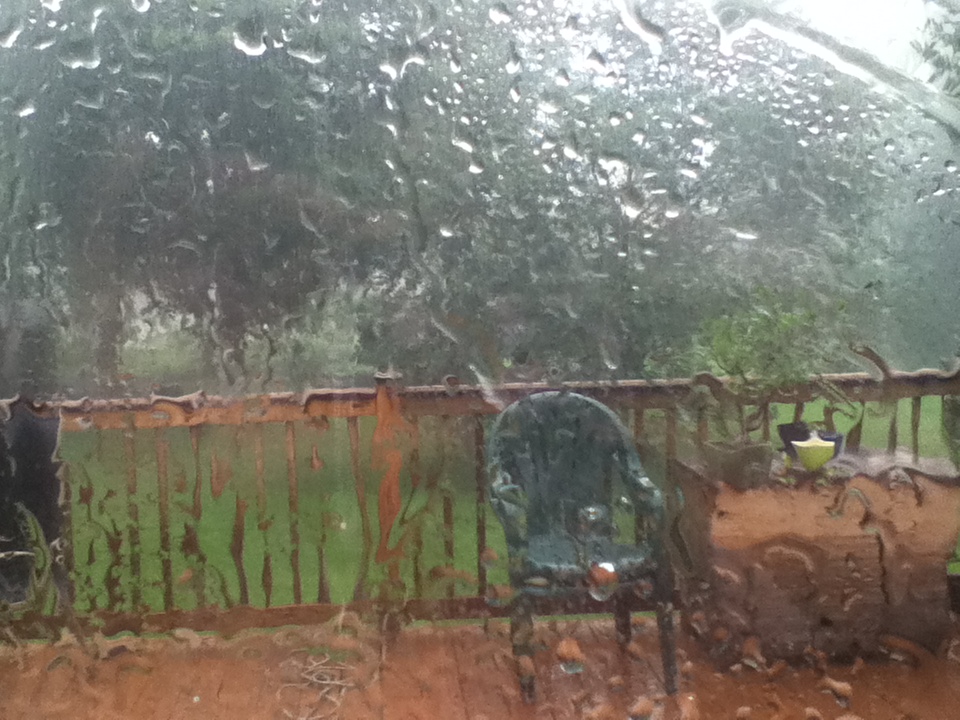
It was pouring when we left Newark. This was my view out the window.
May 14 Arrive in France, make our way to Normandy
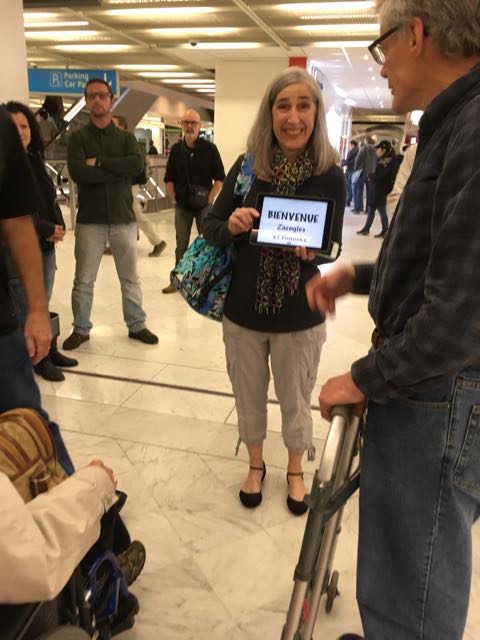
My sister and her husband met us at the airport.
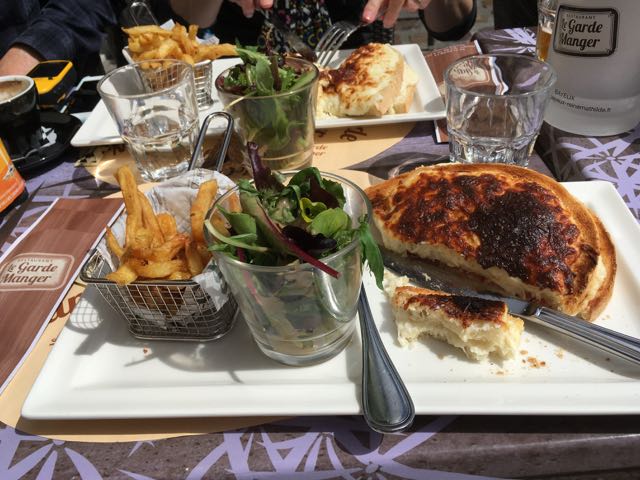
When we finally arrived at Bayeux, we were tired and hungry. I had Croque Monsieur for the first time in my life at a little cafe a stone’s throw from our hotel.
May 15 Normandy
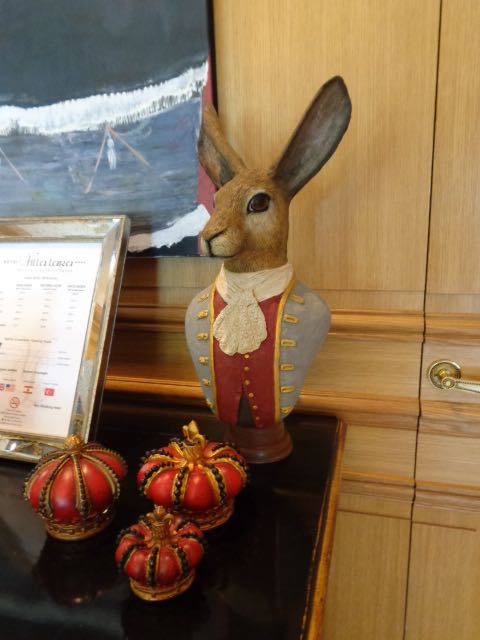
We loved everything about our hotel in Bayeux, the Villa Lara. This rabbit guarded the stairway door.
For our first day with our guide, he brought us to the Pegasus Bridge and the Canadian cemetery. Colin had so many stories to tell, but I think my favorite of all of them was here, of the bagpiper who played for the British troops.
May 16 Normandy
We had coffee every morning in a little sitting area off my sister’s room. I loved seeing the cathedral.
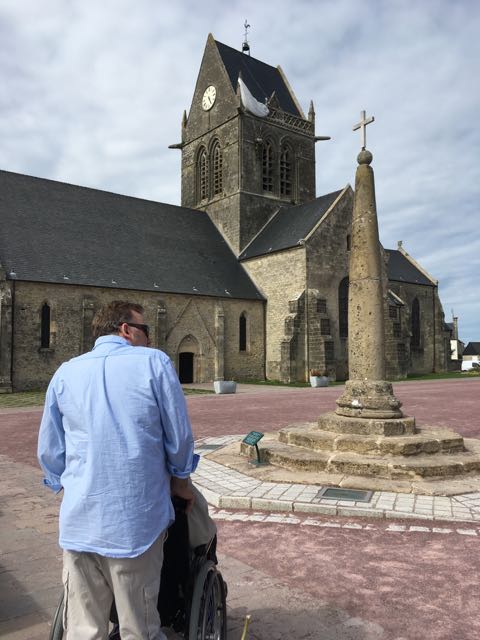
Among the places we visited this day was Sainte-Mère-Église where a paratrooper had gotten caught on the church steeple.
May 17 Normandy — then travel to Paris
The craters from the shelling at Omaha Beach were very impressive.
The view from a German bunker at Omaha Beach.
Then we drove to Paris.
May 18 Paris
We walked around Paris. Old and new stand side by side.
Dinner cruise on the Seine. The Eiffel Tower is pretty spectacular.
May 19 Paris
LaDuree — the macaroons are amazing.
Impressive art at the Petit Palais.
May 20 Travel day
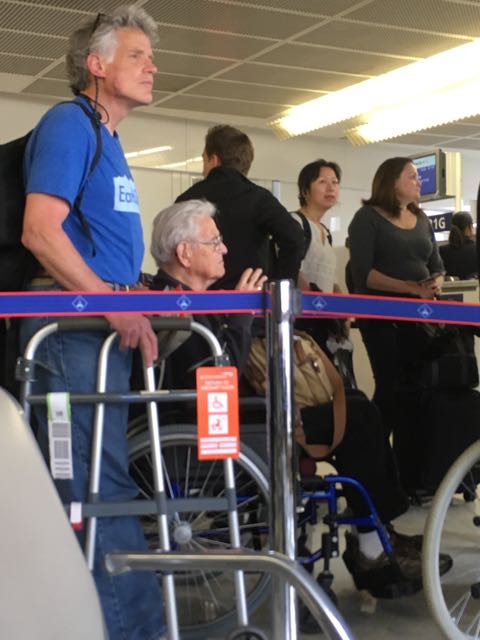
The return trip. Waiting at the airport.
I’m easily amused. I thought “Salad Sauce” was funny. The flight home felt a thousand times longer — I looked for entertainment where I could find it.
I wrote this back in November 2013. I had been sorely disappointed with a concert I had gone to with Mary. Too much glitz, not enough real.
To be honest, I had forgotten a lot of the details of that evening until I reread this post.
Spoiler alert: The bottom line is that expectation sometimes leads to disappointment, and disappointment sometimes leads to ice cream — so in the end, it’s all good, right?
From November 2013 —
The fact that Sonic was already closed on the way home was the icing on the cake of disappointments. Or, should I say – the ice cream. I was so sure that a one dollar vanilla cone from Sonic would ease my pain.
Then, when Wendy’s didn’t have a vanilla Frosty milkshake, I was, like, “What do you mean you don’t have it? I’m looking at it on the sign!”
The polite night-shift server at Wendy’s explained. “Nobody ever ordered those, so they took it off the menu.”
“Well, they need to take it off their drive-thru menu as well,” I grumbled to myself.
So I drove across a four lane highway to get to Burger King. Good thing it was 11:17 PM, and nobody else was on the road.
And at least they were open and had a Hershey’s Sundae Pie.
The things we do for our comfort foods.
It wasn’t the ice cream, though, that brought me back to reality. It was riding home in the car with my dear, sweet 13-year old daughter, and thinking how precious it was that I could spend an evening with her.
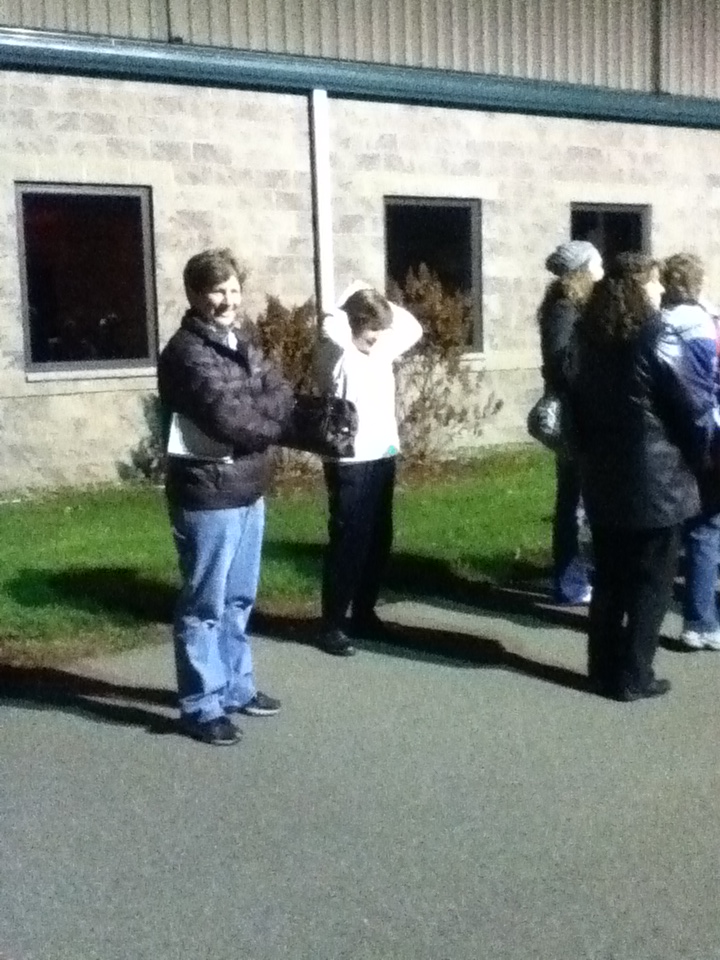
Waiting in line. It was cold.
It was remembering our laughter as we waited in line in the cold and sang Smothers Brothers songs to each other.
It was reflecting on the fact that she didn’t seem disappointed with the evening. My own expectations had probably been too high.
I know people who try not to get excited over upcoming events. “That way I won’t be disappointed,” they say.
Would I trade all the anticipation, all the eagerness, the thrill of imagining what was to come for a blasé attitude?
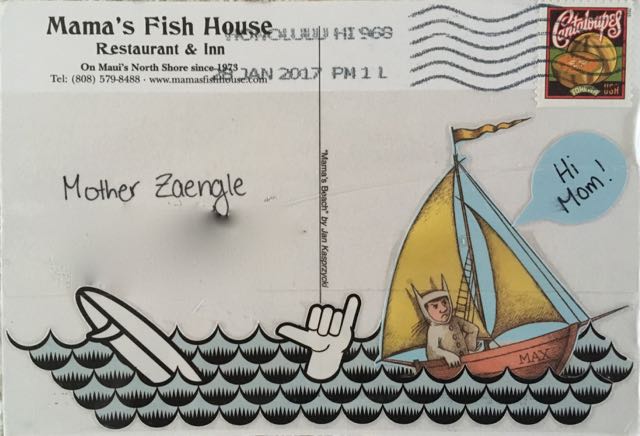
Partly because Sam just sent me this awesome collage postcard from Hawaii:
Is that me waving from the surf?
And partly because the Fenimore Art Museum recently announced that in April they are opening an exhibit called: 50 Years, 50 Works, 50 Reasons. Maurice Sendak: The Memorial Exhibition
And partly because the word of the day is “lovingly” and this post has that word in it —
I’m reposting something I wrote in May 2012.
As a side note — I DO do New York City now, very sparingly. By bus.
When I stopped to see my mother on Tuesday, she was in New York City. Well, not literally, but, they were having another travelogue for the residents. Instead of Hawaii, however, this week’s destination was New York City.
I don’t do New York City. Every time I’ve driven someone to JFK, I’ve gotten lost, not getting there, but getting out. I’ve ended up in downtown Manhattan on more occasions that I care to think about. I am a country bumpkin through and through. I don’t do big roads. I don’t do big cities.
But my mother was in New York City in the safety and comfort of The Manor. Maybe I could handle that.
Anyway, I didn’t get to see her. My kids said, “She won’t know the difference anyway.”
Maybe that’s true, but I know the difference.
Since Maurice Sendak died, I’ve been thinking about Where the Wild Things Are. Little Max is so naughty that his mother calls him a wild thing. He’s not even remotely contrite about his naughtiness, yelling at his mother, “I’ll eat you up!” So she sends him to his room.
And off he goes, not only to his room, but to where the wild things are, and where he’s king, and where there are wild rumpuses and such. But he wants to be where someone loves him best of all.
Can you picture his mother tiptoeing into his room, after all his naughtiness? No, wait, backtrack even further. Can you picture his mother lovingly preparing a tray of food for him, things that smell good and are good to eat, making sure they are both delicious and hot?
She tiptoes into his room, but he’s not aware of it because he’s off where the wild things are. She leaves him a tray of food, a tray that says I’ll always love you.
She didn’t do all that so that Max would see the tray and say, “Wow, my mother loves me.” She did it because she loved him.
That’s what I want my children to know. I don’t go visit my mother because she’ll understand. I go because I understand, and because I love her.
So I stopped in to see my mother the other day, but she was off where the wild things are — New York City. I should have left her a tray of food.
Cleaning off the shelves in my father’s study reminded me of the things he loves to read about — history and baseball. The older I’ve grown, the more I’ve loved reading about those things as well.
I’ve always loved reading about baseball. Not modern baseball, but the old days. Like the deadball days in The Glory of their Times by Lawrence Ritter, one of my favorite baseball books ever. Or the Brooklyn Dodgers. Or the Negro Leagues, both awful and beautiful.
So I grabbed a book on my dad’s bookshelf called The Teammates by David Halberstam. It’s a story about the enduring friendship between four ballplayers: Ted Williams, Bobby Doerr, Dom DiMaggio, and Johnny Pesky.
Ted Williams was one of my father’s heroes. An unlikely hero, in my mind, because he was a hero with baggage. He was foul-mouthed and arrogant. Loud. He wasn’t gracious, wouldn’t tip his cap to the crowd, even in his last game, at his last at-bat, where he nailed his last home run.
John Updike, in Hub Fans Bid Kid Adieu, said about Ted Williams, “Gods do not answer letters.”
But Ted Williams could hit the ball. Lou Boudreau came up with the Williams Shift for a reason. Why Ted Williams, in that instance, didn’t follow Wee Willy Keeler’s motto — “Hit ’em where they ain’t” — is a mystery to me.
The Teammates softened my thoughts on Ted Williams. It showed a more human side to him. One Ted Williams story lingers with me. In the words of Bobby Doerr —
“… and when lunch was over Ted turned to us and said he wanted to take and show his dad’s photography shop. And so we went across the street from the hotel, and there was a building there, all the offices empty now, nothing there but an empty building. Then he began talking about his father, who had not been successful, was out of work a lot, and had been drinking a lot. And as he talked you could just see it roll out, this little kid in this terrible world, all the unhappiness, all the things which had never gone away, and which had been stored up for so long. It was clear that his dad had never been there for him. And then when we came out he took us to this nearby corner, and he said, ‘This is where my mother made me march with the Salvation Army, and I would try and hide behind the bass drum.’ As he talked I could see it all, the little boy back then, the shame, and the pain, and the broken home, and how much he hated all of it. As we were walking around, and he was letting us into his childhood, I was thinking to myself, ‘This is where it all started.’ I’ll never forget that day when he took us around because all you could feel was the sadness of it. The sadness of that little boy, and the sense that it had weighed on him so heavily for so long.”
As I read that story i understood better how baseball is a game of grace. The very best players fail two-thirds of the time when they get up to bat. A batter is allowed three strikes. A pitcher is allowed four balls. A team three outs.
Baseball is not like the pure athleticism of a race, where the first one to finish wins. It’s a game of trying and trying again. Perseverance. Moving on past a failure. And another failure. And another failure. Grace.
The whole game is grace. There’s always another pitch, another at-bat, another game, another season.
It’s why the battle cry of the Red Sox — “Wait till next year” — rings true.
Hope is a cornerstone in baseball. It exists at every single base.
*****
Today my daughter Mary follows in my footsteps (and her aunt’s) by starting a job at the Baseball Hall of Fame.
When combined with the Daily Prompt: “Childhood”, and the fact that this post turned up when I did a draft folder search of that word, you can understand why I’m posting this today.
Originally written last October. Never posted till now.
I began at the end, with my mother’s dementia. Now I’ll end at the beginning of my mother’s life.
Actually, the pre-beginning.
The zero before the one-two-three.
That space the game token rests on before the first roll of the dice.
The Beforeward.
Whatever it’s called.
My grandmother gave the family a great gift when she wrote her autobiography. Through that, I know the following:
My great-great grandfather was a chimney sweep.
I’m practically related to Dick van Dyke
My great-grandfather was a bushelling tailor who, “did not make suits, but refitted and repaired them.” He came from Denmark in 1892, found a tailoring job, and then sent for his family.
My great-grandmother came over steerage with four children. She couldn’t speak any English. My grandmother still remembered the name of the woman who taught her mother English. Lydia Buxton, may your descendants be blessed.
My grandmother and her brother were born in a tiny house in an alleyway in Beverly, Massachusetts.
My great-grandfather took in dry cleaning for extra money. My grandmother and her brother delivered clothes for him. One of her sisters worked for him every afternoon and sometimes all day Saturday. Still, they struggled to make ends meet. My grandmother wrote, “My father sometimes had to wait weeks for his money from wealthy people who would not take the time to write a check. My father would have to ask the coal dealer to wait until he received pay for his work.”
But they made sure the children went to church and to school. They had music in their lives. Piano. Violin. Choir.
My grandmother had wanted to become a teacher, but there was no money for “Normal School,” where high school graduates could be trained to become teachers. So she took a job as a switchboard operator for the Woodbury Shoe Co. and earned $6 a week, two of which went to her father for room and board.
She met my grandfather at church. A church group gave her a surprise 16th birthday party, and my grandfather and his twin brother argued over who would get to take her home. She couldn’t tell them apart at the time.
He had stopped school in the 11th grade to take a bank job.
They married and had four children. My mother was the youngest.
She was a little girl who loved to catch snakes and would stand up to bullies.
When she grew up, the bully she held off wasn’t named Normie, but was named Alzheimer’s.
Doing this A-to-Z Challenge in her honor has been fun.
“Fred” made the mistake of saying the words “crew cut” within hearing of the man with the clippers.
“Everybody has a bad haircut story,” I told him. “Now you have yours.”
What made the whole thing ironic is that “Fred” had just been to a conference from which he took away the importance of vulnerability.
“Failure is an event, not a person,” he told me, repeating a Zig Ziglar quote one of the speakers had used.
“Exactly,” I said, pointing to his head.
Every disaster, whether large or small, brings us to a crossroads. One path pretends the problem never happened and hides the challenge from all the other travelers. The other path is vulnerability and sharing the struggle.
My mother taught me the importance of vulnerability. I remember watching her after her breast cancer surgery. She had a full radical mastectomy back in the days when the plastic surgeons weren’t inserting inflatable boobs even before the radiation treatments.
Her prosthesis was external, a little mass of weighted jell that fit into her bra.
Which she got tired of and did without after some years.
My mother was not defined by her breasts.
Or her breast cancer.
She went to visit women who had had mastectomies before they left the hospital and faced the world.
“This does not define you,” she told them.
And she lived, a walking testament to life after breast cancer.
That open-ness, that vulnerability, helped me to start writing about her and her Alzheimer’s.
I think if she had fully understood, if her brain had not been fogged by dementia, she would freely given her blessing to the whole thing.
“Write about the incontinence,” she would have said. “Maybe it will help somebody else going through the same thing.”
She would laugh and say, “Write about that time when I tried to walk the two miles into town because no one would believe me that I needed to go to a meeting.” I walked with her, and Helen came to pick us up.
“Write about the funny things I said. And how you had to show me that underwear went on first, before the pants. Write about the marmalade.”
It’s not dishonoring to use tough situations so that others know they are not alone in what they are experiencing.
My father has told me a number of times, “You’re one of the richest people I know.”
I respond with, “Yeah, and maybe someday I’ll have money.”
Not this year, though. The money part, that is.
When I filed our taxes our income had gone down. It was the first time in many years that I didn’t have to file a Schedule C or SE for my swim officiating pay. Scholastic swim officials are paid, and I had been working for a number years at the modified, high school, and college level.
But, in the late fall of 2014, at the end of the girls’ season, I realized that I couldn’t commit to officiating during the boys’ season which runs November to February. I contacted the assigner and let her know. She emailed me for the next season, fall 2015, and again, sadly, I told her that I couldn’t do it.
Both times, I knew it was the right choice. As much as I love officiating swimming, it doesn’t compare with how much I love my family.
And, as it turned out, instead of scoring dives or disqualifying breaststrokers, during each of the seasons I have missed, I have had the privilege of caring for aging parents. No one can put a price tag on that.
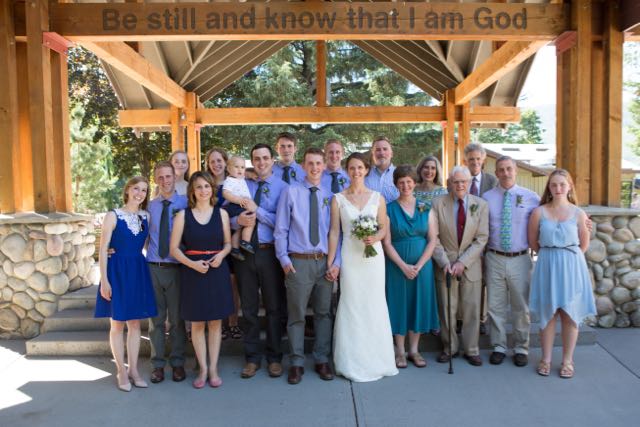
Here is an partial list picture of my assets.
Family at Sam & Donna’s wedding
I wish I had photographs, too, of the circle of friends who do such a good job caring me.
Patrick Meagher said, “Some people are so poor, all they have is money.”
Clearly I’m doing this A-to-Z Challenge all wrong.
I feel angry.
And not kind.
I hung up on Time-Warner yesterday. Told them we were switching to Direct TV.
I’m not happy with them.
I posted a rant yesterday and almost immediately the person I ranted about contacted me. I was in the midst of a conversation with a different friend.
“I should have said something to her before I posted it,” I told my friend about my other friend — are you following this? Too many unnamed friends, I know.
But I knew the right way to handle the situation — and I didn’t do it. I posted a stupid blog post. (It has since been edited.)
This is how not to do things, kids. Talk to people who upset you. Don’t rant on your blog. Do as I say, not as I do.
I believe in handling things the right way and in kindness. Sometimes belief isn’t enough. We have to actually do it.
I’m working to memorize Isaiah 58, a chapter where God is dealing with a people who are oblivious to their sin.
“Look at me fasting,” they say to God. “Look at my sackcloth and ashes. Look how humble I am. Why aren’t you noticing any of this?”
And God says to them, “I really want you to be nice to each other. Don’t be grumpy. Don’t strike out at people. I want you to fast from your meanness. Put that aside instead of food. Undo someone’s yoke. Feed a hungry person. Invite a homeless person into your home. Sheesh!”
He didn’t really say the “sheesh” part. I added that.
But you get the point.
Can I just say here, in the depths of this post where few people will probably read, that life is hard right now? My father is struggling — and he doesn’t even know he’s struggling.
“You’re not thinking clearly,” my brother and I told him, ganging up on him to persuade him to have a medical test which may put us on a path to improvement.
“That’s what they keep telling me,” he said, in a tone that showed that he clearly didn’t believe a word of it.
It reminded me of a post that I had long since taken down. The post, from April 2011, had been called “Four Questions.”
It ends with kindness — which works for “K”.
****
Four Questions
Mom — April 2011
Question #1
I asked my mother this question one day when we were in the car, “Mom, do you know what Alzheimer’s is?”
She knew the answer. “It’s a condition where people can’t think sensibly,” she responded.
Yes, it is. It’s not a condition where someone doesn’t think sensibly. They can’t. And yet, sometimes, they can. Like being able to answer that question with a pretty concise response shows some sensible thinking.
Question #2
Yesterday my mother handed me a sheet of address labels that had come in the mail to her.
“These are for you,” she said.
“I can’t use these, Mom,” I told her. “They have your name and address on them.” I tried handing them back to her, but she pushed them over to me again.
“That way you won’t forget me,” she replied.
I felt a little ache in my heart at those words. “Mom, I won’t forget you,” I reassured. “Will you forget me?” I asked it, even though I already knew the answer.
“Oh, no,” she said. “I’ll never forget you.”
But moments later, she forgot that she had even given me the address labels and took them back to her pile of things. She removed one and stuck at the bottom of a note she had written herself about dinner with a friend. It was a dinner with a friend that had taken place months or years ago. She had forgotten. But she stuck the address label on the bottom of the note.
“This will help me remember,” she said. Oh, if only it were that easy.
Question #3
Alzheimer’s is a condition where people can’t think sensibly. The varying pieces of information that are constantly coming at us are no longer being filtered correctly in the mind of someone with Alzheimer’s. It’s impossible to make sense of it all.
When my parents were going through some of the clutter that had accumulated at their house, my father picked up a kitschy dog made out of golf balls. “We could probably get rid of this,” he said.
“Are you going to get rid of me?” she asked. With the filters missing, that was what she heard.
“You’re too valuable,” he told her. “We’re not going to get rid of you.” She still has value. She needed to hear that.
Question #4
In difficult situations, so many people show little kindnesses. With my mother’s Alzheimer’s, people have been so kind. Total strangers, long-time friends and family members have all pitched in to keep my mother safe and to make life easier for my father. I know my father appreciates it, but I often wonder if my mother is even aware.
Yesterday, she answered the unasked question I have had for a long time. Are you aware of all the things people do for you?
She was looking for my brother. “He’s up at his house, Mom, right next door,” I told her.
“That’s right,” she said. “He has been so nice. Every night he brings dinner right down to us so I don’t have to fix anything.”
Yes, he does. And his wife does. And I’m so glad you recognize that. Even if you don’t always recognize me. I know it’s because you can’t think sensibly.

 British Airways took very good care of us. At the urging of a friend, I upgraded both my father and my brother to each have a “Biz Bed”. Because we were traveling with someone who needed assistance (my father was in a wheelchair), we also got special treatment. I’m not exactly sure what all the little dots meant, but they were good. My brother and father got to eat in the British Airways lounge before the flight, while Bud and I had a quiet dinner in a little airport restaurant.








 She was a little girl who loved to catch snakes and would stand up to bullies.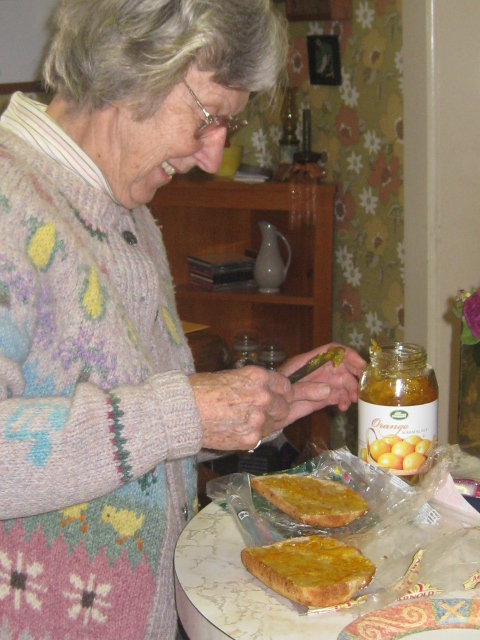






 Hot Dogs and Marmalade