Below is a(nother) dusted-off post from 2011. In 2011 my mother was still alive and living at home. She clearly had dementia and her body was slowly failing on her. My father was her main care-provider, but that summer was hard on him, too. With all that was going on, I helped out as best I could.
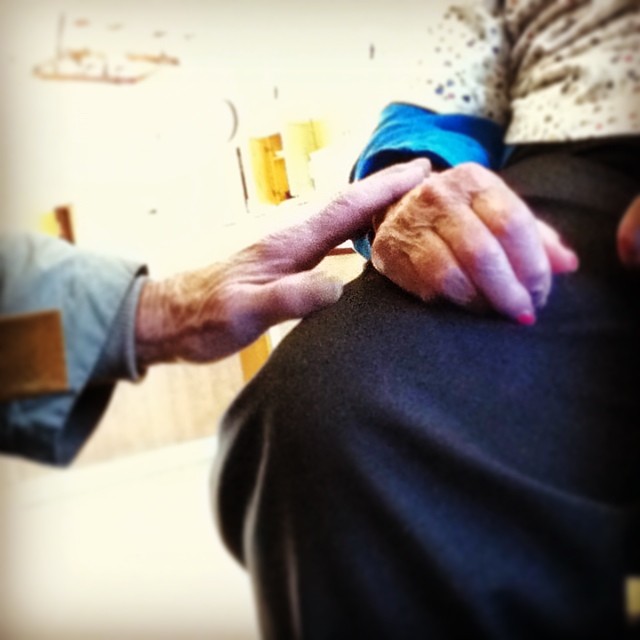
Mom and Dad — summer of 2011
Last Thursday we went for the follow-up visit for my mother’s bladder biopsy.
The baby-faced doctor handed my father the pathology report. “It’s bladder cancer, just as I suspected,” he said.
He continued speaking, “It’s high-grade papillary urothelial carcinoma.” I could see the words on the path report in my father’s hands. “The cancer hasn’t spread past the lining of the bladder. There is no invasion into the muscle or the subepithelial tissue.”
When he began discussing the treatment options, it was truly a discussion. He listened to our concerns, answered questions, explained, and listened some more.
We finally reached the point in the process that I was anticipating (and dreading).
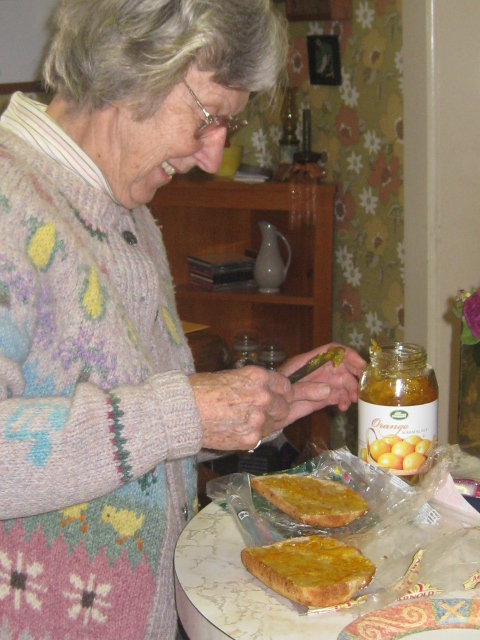
My mother is now incapable of making decisions, especially decisions like this. She can decide what she wants for lunch — usually something involving marmalade. She can decide what she wants to wear — usually the same thing she has been wearing for the past three days. She can decide when she wants to take a nap — often. She cannot make an informed decision about her health care.
My father has always shown the utmost respect for people and guarded their dignity. I knew my father would want to include my mother in the decision-making process. When the moment came, my father turned to my mother and said, “I suppose we need to ask the patient what she would like to do.”
I started to pipe up, “Dad, I think we’re at the point when you need to make these decisions for Mom,” but my mother interrupted.
My mother, with the utmost clarity, said, “I don’t think I understand what’s going on. I trust whatever you decide.”
Hallelujah! If the angels weren’t singing in heaven, they were singing in my heart!
I hadn’t known to pray for this, but this was an answer to prayer.
The rest of the visit was a piece of cake. We made the decision to simply wait. At 83, any treatment may have been worse than the disease itself….
I had forgotten so much about that time period. The bladder cancer turned out to be a red herring. So many other things made that season hard. Had I know what lay ahead, I would have said that I was not capable of any of it.
But I was.
God makes our path a little windy so we can’t see what’s around the next bend. Perhaps if we knew, we wouldn’t want to go on.
Today, January 13, 2017, I can look back and say, Thank you, God, for getting me through those years. It makes it easier to trust You on the road I’m traveling now.
She even wrote a cheat sheet for my husband’s siblings. He has eight brothers and four sisters, so she wrote out their names and little reminders to help her keep them straight. I should have been so smart.
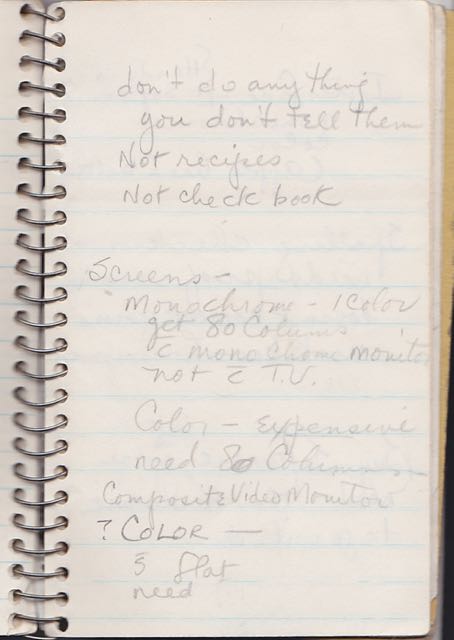
One note bothered me – partly because I couldn’t figure it out what she was trying to say, and partly because I have anxiety about doing things right for my father.
don’t do anything
you don’t tell them
Not recipes
Not checkbook
Helping elderly parents involves walking a fine line. On the one hand, I have a tremendous amount of respect, appreciation, and love for them, but on the other I sometimes need to take the reins.
The other day I took my father to get his haircut. When he was done, he fished his wallet out of his back pocket. He rifled through it with his fingers, pausing on a five dollar bill before looking at me questioningly.
“What do I need here?” he asked, and he pushed the wallet into my hands.
I handed the woman a twenty — the haircut cost $10 — and she gave back a five and five ones. I handed these to my father. “You need to decide how much you want to tip her,” I said.
It was awkward. She picked up the broom to start sweeping. He fanned out the money in his hand and fiddled around with the bills.
“What are you doing to me?” he said. Clearly he couldn’t think through the next step.
I felt terrible. I took some of the ones and handed them to the stylist.
But I wasn’t doing anything to him. I was trying to allow him some autonomy.
At home I’ve started paying some of his bills without discussing them with him. The bills are confusing for him, but cutting him out of the process feels wrong to me too.
don’t do anything
you don’t tell them
Not recipes
Not checkbook
The words in the notebook stung. I’m trying so hard to do right by him.
I have a futile hope that someday he’ll be able to do it all again. Will he understand why I took over?
I pulled out Mom’s notebook again and studied the rest of what was written on that page.
Screens –
monochrome – 1 color
get 80 columns
c/ monochrome monitor
not c/ T.V.
Color – expensive…
The next page had more computer-buying advice. Were these notes from an introductory computer seminar?
first
Buy Software ^ you
need — then Hardware
to go with it
Seriously?
But maybe those first lines, “don’t do anything you don’t tell them” refer to computers, and the fact that they are just machines.
Remember when I said I would be rusty trying to write again? I was feeling that rust this morning as it seized up my writing gears.
Today I wrote a whole post, deleted half of it, wrote a little more, made a meme, considered dropping the whole thing in the trash, and then decided to just stick it in a draft folder. Here’s the meme, though —
Then I looked back to see what else I had written on this day in history.
Five years ago, I had written a book-review-ish post for a fellow blogger, Christine Grote. We had started blogging about the same time and visited each other’s blogs fairly often. Each of us was dealing with Alzheimer’s — me with my mother and her with her father.
We cross paths with so many people, especially in the blogging world. When I visited her blog today, I felt like I was visiting a long-lost friend.
Here’s part of what I published 5 years ago —
Dancing in Heaven — a sister’s memoir is a tender story of growing up with a severely handicapped family member. Christine’s sister, Annie, was so developmentally handicapped that doctors predicted she wouldn’t live past the age of eight. Through the love, devotion and tireless care from the whole family, Annie lived to be 51.
Christine weaves into the story the onset of her father’s Alzheimer’s. That’s what I had been following on her blog. Before Alzheimer’s, however, she had interviewed her parents about life with Annie. When she asked her father if he had any regrets, he said,
“The biggest regret I’ve got of the whole thing is that she cannot speak. Everything else I can deal with pretty much as it comes along.”
As I read that part, I felt a catch in my throat. His Alzheimer’s has taken away his ability to speak.
Alzheimer’s seems to affect people in very different ways. Some symptoms are universal — the loss of memory, for example. But my mother has not lost her ability to verbally communicate. She can be sharp-tongued and nasty. She can definitely communicate.
2017 note: My mother did eventually lose the ability to communicate. She rarely spoke near the end, and when she did, it made little sense.
Christine’s father has fallen into a silent world. He doesn’t speak often. As I read his quote about regrets in Dancing in Heaven, I remembered one of Christine’s posts about a communication break-through they had experienced using a whiteboard, Resolving a Quandary. How much more meaningful that post became knowing how precious that ability to communicate was to him!
Thank you, Christine, for your beautiful memoir. It is sweet, gentle, and encouraging.
In the intervening five years, Christine’s father passed away as has my mother. Today, when I visited her site, I saw that she had completed her book about her father, Where Memories Meet.
I guess rust can sometimes be a good part of the adventure. It made me slow down and help me reconnect.
“He was my mentor,” she said to me as she gave me a hug. “If there’s anything — really anything — I can do, don’t hesitate to call.” She was a woman doctor, a little older than me, who had known my father for many, many years.
I couldn’t respond. My eyes well up with tears at the slightest provocation these days.
This past Sunday in church, I stood in the communion line behind an elderly couple, he supporting her down the aisle, waiting for her to dip her bread in the cup and get it into her mouth before he took his. I felt the tears.
Then it was my turn. “The body of Christ broken for you,” said the pastor as he extended a chunk of bread toward me. My friend held the cup. I think she said my name as I dipped the bread. I was too busy trying to blink back tears to really hear.
Christ’s ultimate sacrifice of Himself, remembered every time we eat the bread and drink the cup, is echoed in the smaller self-sacrifice of the couple in church and the multiple self-sacrifices I saw as my father cared for my mother over the last years of her life.
When she thought that he was her father and argued with him about waiting for her date to pick her up for the dance, he seem unfazed. It had to have hurt — his wife not recognizing him and waiting for another man.
When she wouldn’t sleep in the bed with him — she sat in a chair all night, because there was a strange man in her bed.
When she served him inedible foods.
He patiently coaxed her to do the right things and kept her safe from the wrong things.
He learned to do new things — laundry and cooking — that had been her domain.
He finally made the difficult decision to place her in a nursing home.
Then he visited her every day. Twice a day.
These days, I have so many people offering advice.
“Just march right in and stand there with your arms crossed,” one person said as I told him about a deplorable incident at the nursing home where my father is staying for rehab.
“You can’t bring him home yet,” another person said. “You need to take care of you and get some help set up.” And she is so right.
“Isn’t it time,” asked another friend, “to think about permanent placement?” No. No, it isn’t.
My father was my mentor, too. He taught me what it meant to care for the elderly. Partly through having me work at a nursing home when I was young, but mostly through his example, his constancy with my mother.
When I hit a roadblock these days, I try to think, how would he handle this?
I can’t ask him anymore. That hurts just to write it down. But his advice-giving days are past, and it’s up to me and my siblings to figure this out.
How do I care for an aging parent? One who argues and cajoles and insists that he’s fine. One who falls and faints and forgets how to shave. One who all his life has cared for other people.
I think that the answer is one day at a time.
Looking too far down the road is scary.
For now, I’ll work to get him home again, and then work to care for him. One day at a time.
At the Fenimore Art Museum this summer
I began this blog when I was helping to care for my mother. It was my formal extensive education in elder-care, given by the best teacher, my father.
Now, I’ve taken the fallen mantle. My role has shifted to becoming the primary care-giver.
And I need to set Hot Dogs and Marmalade to rest. Over the summer, I have felt this blog hanging there, waiting, waiting.
“I wish your mother could see those windchimes,”
my father said,
looking at the green butterflies
and brass bells.
Their gentle tinkle
was beyond his hearing
like my mother was beyond …
I don’t know.
Beyond the day
when he could repay
for late nights
and house calls
and meetings
and reserve duty
and patients calling
and dinner waiting
and waiting
and waiting
for him to be home
She always had to share him
with the sick
the poor
the destitute
and with other physicians
and administrators
and nurses
and important folk
who received the same courtesy
as the unimportant
My mother may have felt
that she came last
So he bought the windchimes
last summer
and hung them
in the myrtle
where the gentlest breeze
could flutter through
and make
a plinkle-chinkle-tinkle
barely audible
wings brushing bells
My mother closed her eyes
from weariness
a few miles
and lifetimes
away
At the end
she had to know
that she was
always
first
as he spooned
the ice cream
into her mouth
and told her
that he loved her
time
and
again
“Fred” made the mistake of saying the words “crew cut” within hearing of the man with the clippers.
“Everybody has a bad haircut story,” I told him. “Now you have yours.”
What made the whole thing ironic is that “Fred” had just been to a conference from which he took away the importance of vulnerability.
“Failure is an event, not a person,” he told me, repeating a Zig Ziglar quote one of the speakers had used.
“Exactly,” I said, pointing to his head.
Every disaster, whether large or small, brings us to a crossroads. One path pretends the problem never happened and hides the challenge from all the other travelers. The other path is vulnerability and sharing the struggle.
My mother taught me the importance of vulnerability. I remember watching her after her breast cancer surgery. She had a full radical mastectomy back in the days when the plastic surgeons weren’t inserting inflatable boobs even before the radiation treatments.
Her prosthesis was external, a little mass of weighted jell that fit into her bra.
Which she got tired of and did without after some years.
My mother was not defined by her breasts.
Or her breast cancer.
She went to visit women who had had mastectomies before they left the hospital and faced the world.
“This does not define you,” she told them.
And she lived, a walking testament to life after breast cancer.
That open-ness, that vulnerability, helped me to start writing about her and her Alzheimer’s.
I think if she had fully understood, if her brain had not been fogged by dementia, she would freely given her blessing to the whole thing.
“Write about the incontinence,” she would have said. “Maybe it will help somebody else going through the same thing.”
She would laugh and say, “Write about that time when I tried to walk the two miles into town because no one would believe me that I needed to go to a meeting.” I walked with her, and Helen came to pick us up.
“Write about the funny things I said. And how you had to show me that underwear went on first, before the pants. Write about the marmalade.”
It’s not dishonoring to use tough situations so that others know they are not alone in what they are experiencing.
That morning, I had taken my father to a doctor’s appointment.
When we got back to the house, the answering machine was flashing. The message was from the nursing home. “Please call.”
My mother had had an incident. She was being taken to the emergency room.
In retrospect, that day was the beginning of the end.
After my mother passed away, my father wanted to unravel the incident. The information given us was vague. The diagnostician side of my father needed to categorize. The husband side needed to understand.
We walked down the long corridor to the nurses’ station on my mother’s unit. So many people offered their condolences. My mother would be missed.
The head nurse on the unit told us her story, but it was a CNA (Certified Nursing Assistant) who had been with my mother when it happened.
We tracked down the CNA.
CNAs are the unsung heroes of nursing homes. A good CNA is worth a thousand administrators. I was relieved to see that the CNA who had been caring for my mother that morning was one of the best.
I still remember the first time that I met her. I had come down to feed my mother while my father was away.
“Mom, you look really nice today,” I had commented. Her hair was brushed. Her shirt was a pretty one that fit well. Her glasses were around her neck on a chain.
“I got her dressed this morning,” chimed a voice from the other side of the dining room. A petite 50-ish woman was smiling at me, pleased that I had noticed.
“Thank you,” I told her.
Over the next several months, I recognized this CNA, not only when I ran into her in the dining area, but I could often tell when she had been the one to care for my mother. She always paid attention to the details.
This was the CNA who was with my mother when she had her “incident.”
the flowered shirt
“I had laid out her clothes for the day,” she told us, “the brown slacks and the flowered shirt.”
I knew the ones.
“I was rubbing lotion on her legs and feet. She always seemed to enjoy that,” she said.
Yes, I could picture the whole thing.
“Suddenly, she gasped and drew her arms up like this,” she said, demonstrating by clenching her fists and bringing them towards her chin.
“I summoned help immediately,” she said, “but your mom was unresponsive.”
“I’m so, so sorry for your loss,” she said multiple times.
And I know she meant it.
So many times I have looked back on that day and whispered a prayer of thanks that she was the one. My mother was in the best earthly hands while on her way into the best heavenly hands
Every time I hear about the proposed wage of $15/hour for fast food workers, I bristle inside.
I’ve occasionally wondered what was in the guy’s trailer by the time he got home.
He started off with an empty trailer and some debts he needed to collect.
At the first stop, he got a dirt bike because the guy didn’t have any money to pay him.
At the next, he traded the dirt bike for a horse.
When he arrived at our house, it wasn’t to collect a debt, it was to look at a pregnant heifer that my dad had advertised in the Pennysaver (<— Craig’s List of 1970). To make the story of the pregnant cow short and tasteful, my brother had been given a Holstein calf which we named Sock-It-To-Me Sunshine.
Peter and Sock-It-To-Me Sunshine, with Shetland pony, Rosie, in the background
It grew up.
Clearly we were not sure what to do with a calf.
The dairy farm next door had a bull instead of an artificial inseminator. The bull and the heifer had a surreptitious rendezvous, and voila.
So the guy showed up with a horse in his trailer. He left with Sock-It-To-Me Sunshine (in the family way) in it instead.
Goldie
Peter got the short end of that trade. He lost his cow and I got a horse, a large Palomino named Goldie. (I think, at the time, we also had a cat named Gray Kitty and another named Black Kitty. I would say that we weren’t skilled in naming animals, but I’m not sure if a cow named Sock-It-To-Me Sunshine makes my point or disproves it.)
Goldie was large and docile. I usually rode her bareback because getting a saddle on her and then getting the girth tight enough so that it didn’t slip was beyond my strength. Sometimes I didn’t even put the bridle on but just looped a rope around her halter. She was so patient with me.
I never knew how old she was. I asked my father, but he didn’t know. He also told me, “Don’t look a gift horse in the mouth,” and I had to look up the meaning of that saying. It turns out that a horse’s age can be determined by their teeth.
I also learned the saying, “Long in the tooth,” because a horse’s gums recede as they get older so their teeth appear longer.
Goldie was not long in the tooth when we got her. She was young and healthy and brought me great joy. When I grew too busy with school activities, she went on to bring another family great joy.
My mother was long-in-the-tooth by the time she died. Not literally.
But she was 87.
I’ll never forget the young doctor meeting with us and beginning with the words, “Mom is very sick.”
Here she paused and looked slowly around the room at the gathered family members. She wanted her words to sink in.
“And she has been sick for quite a while,” she continued.
She boldly laid all the cards on the table, face up, so we could all see the hand that had been dealt.
Long in the tooth, when it comes to elderly dementia, means a deteriorating brain.
She wasn’t just losing memory. She was losing the capacity to live.
Hours. We spent hours talking about my mother’s condition. I grew longer in the tooth in those few hours than I had in my whole life.
Weight piled upon weight piled upon weight.
I felt that I would never be able to stand under all of it.
When the meeting was over, we had acknowledged a trade.
Not a horse for a cow, but a new existence by letting go of this old one.
When we got home, my sister found the health directive my mother had written years before. We had followed my mother’s wishes, and that brought peace.
In trading, sometimes you win, sometimes you lose. I think both happened that day.
Clearly I’m doing this A-to-Z Challenge all wrong.
I feel angry.
And not kind.
I hung up on Time-Warner yesterday. Told them we were switching to Direct TV.
I’m not happy with them.
I posted a rant yesterday and almost immediately the person I ranted about contacted me. I was in the midst of a conversation with a different friend.
“I should have said something to her before I posted it,” I told my friend about my other friend — are you following this? Too many unnamed friends, I know.
But I knew the right way to handle the situation — and I didn’t do it. I posted a stupid blog post. (It has since been edited.)
This is how not to do things, kids. Talk to people who upset you. Don’t rant on your blog. Do as I say, not as I do.
I believe in handling things the right way and in kindness. Sometimes belief isn’t enough. We have to actually do it.
I’m working to memorize Isaiah 58, a chapter where God is dealing with a people who are oblivious to their sin.
“Look at me fasting,” they say to God. “Look at my sackcloth and ashes. Look how humble I am. Why aren’t you noticing any of this?”
And God says to them, “I really want you to be nice to each other. Don’t be grumpy. Don’t strike out at people. I want you to fast from your meanness. Put that aside instead of food. Undo someone’s yoke. Feed a hungry person. Invite a homeless person into your home. Sheesh!”
He didn’t really say the “sheesh” part. I added that.
But you get the point.
Can I just say here, in the depths of this post where few people will probably read, that life is hard right now? My father is struggling — and he doesn’t even know he’s struggling.
“You’re not thinking clearly,” my brother and I told him, ganging up on him to persuade him to have a medical test which may put us on a path to improvement.
“That’s what they keep telling me,” he said, in a tone that showed that he clearly didn’t believe a word of it.
It reminded me of a post that I had long since taken down. The post, from April 2011, had been called “Four Questions.”
It ends with kindness — which works for “K”.
****
Four Questions
Mom — April 2011
Question #1
I asked my mother this question one day when we were in the car, “Mom, do you know what Alzheimer’s is?”
She knew the answer. “It’s a condition where people can’t think sensibly,” she responded.
Yes, it is. It’s not a condition where someone doesn’t think sensibly. They can’t. And yet, sometimes, they can. Like being able to answer that question with a pretty concise response shows some sensible thinking.
Question #2
Yesterday my mother handed me a sheet of address labels that had come in the mail to her.
“These are for you,” she said.
“I can’t use these, Mom,” I told her. “They have your name and address on them.” I tried handing them back to her, but she pushed them over to me again.
“That way you won’t forget me,” she replied.
I felt a little ache in my heart at those words. “Mom, I won’t forget you,” I reassured. “Will you forget me?” I asked it, even though I already knew the answer.
“Oh, no,” she said. “I’ll never forget you.”
But moments later, she forgot that she had even given me the address labels and took them back to her pile of things. She removed one and stuck at the bottom of a note she had written herself about dinner with a friend. It was a dinner with a friend that had taken place months or years ago. She had forgotten. But she stuck the address label on the bottom of the note.
“This will help me remember,” she said. Oh, if only it were that easy.
Question #3
Alzheimer’s is a condition where people can’t think sensibly. The varying pieces of information that are constantly coming at us are no longer being filtered correctly in the mind of someone with Alzheimer’s. It’s impossible to make sense of it all.
When my parents were going through some of the clutter that had accumulated at their house, my father picked up a kitschy dog made out of golf balls. “We could probably get rid of this,” he said.
“Are you going to get rid of me?” she asked. With the filters missing, that was what she heard.
“You’re too valuable,” he told her. “We’re not going to get rid of you.” She still has value. She needed to hear that.
Question #4
In difficult situations, so many people show little kindnesses. With my mother’s Alzheimer’s, people have been so kind. Total strangers, long-time friends and family members have all pitched in to keep my mother safe and to make life easier for my father. I know my father appreciates it, but I often wonder if my mother is even aware.
Yesterday, she answered the unasked question I have had for a long time. Are you aware of all the things people do for you?
She was looking for my brother. “He’s up at his house, Mom, right next door,” I told her.
“That’s right,” she said. “He has been so nice. Every night he brings dinner right down to us so I don’t have to fix anything.”
Yes, he does. And his wife does. And I’m so glad you recognize that. Even if you don’t always recognize me. I know it’s because you can’t think sensibly.
My father drove twice a day every day to visit my mother in the nursing home.
Noon meal.
Evening meal.
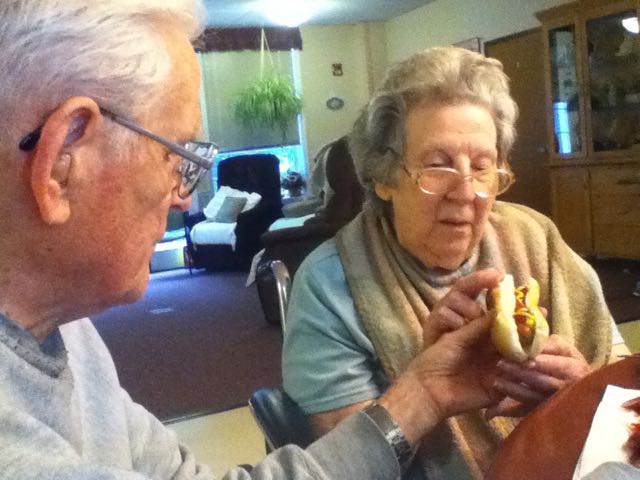
He patiently encouraged her to eat. When she wouldn’t feed herself, he fed her. Through them, I watched that final scene of Driving Miss Daisy over and over and over.
Hoke: Looka here. You ain’ eat yo’ Thanksgiving pie. Lemme hep you wid this.
My father gently fed my mother.
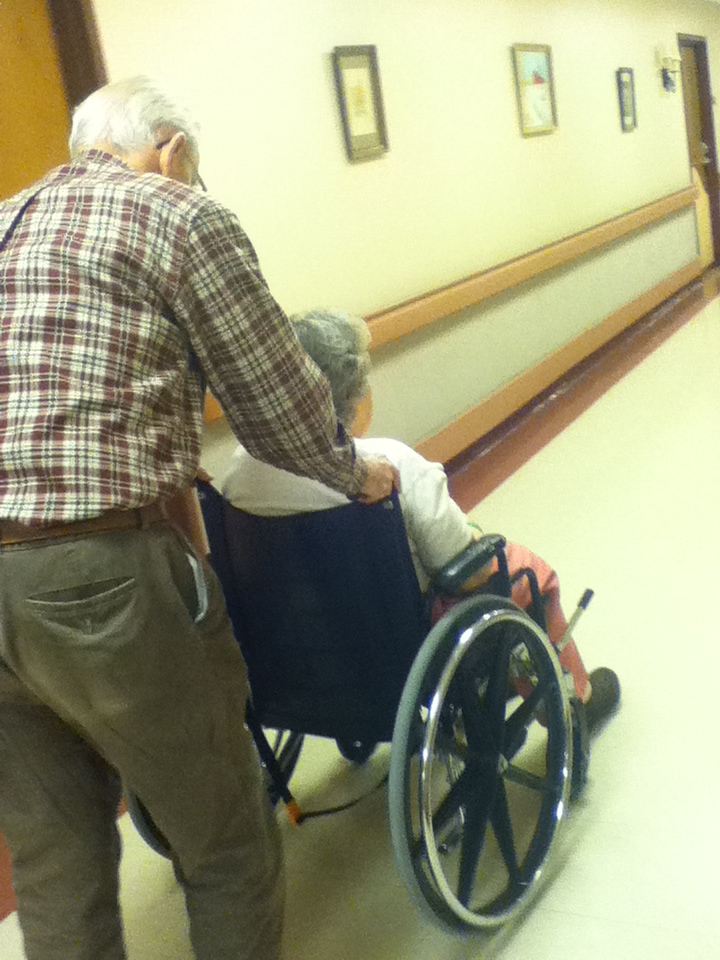
He slowly pushed her wheelchair through the halls and for walks in the courtyard, sitting to rest himself as needed.
He held her hand when they sat together.
They were still two-become-one but in smaller ways that were really bigger than the ocean.
When she passed away, even though she had been disappearing in dribs and drabs over so many years, he was lost.
F is for my father, for whom I ache, who is benevolence, who does and does and does, and did and did and did.
His love and devotion for my mother sets the bar high for the rest of us,


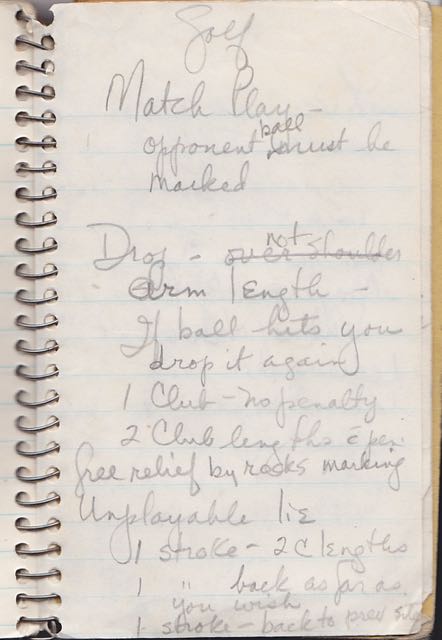
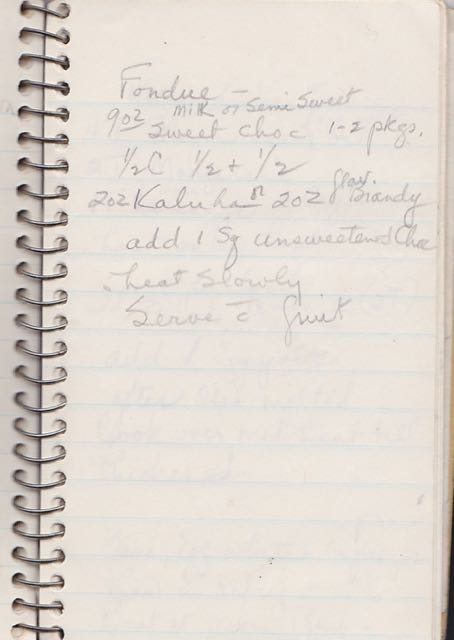
 I found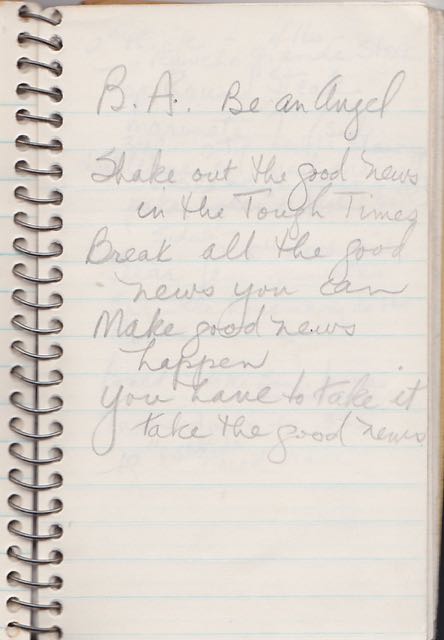





 Hot Dogs and Marmalade