While still in my pajamas yesterday morning, I carried the laundry downstairs, holding Tuga in my hand. His rigid little ears poked into my fingers and palm. I tried to shift him to a better spot but it was impossible to carry the basket and the bunny without a little discomfort.
“Could you just not?” I asked him, but he didn’t answer.
The lesson was easy to see. Sorrow is uncomfortable.
In today’s society, we are fairly averse to discomfort. We desire to be always at ease.
Have a headache? Take some ibuprofen.
Are you cold? Grab a blanket or a sweater, or turn up the heat.
Too hot? That’s why God invented A/C.
Plastic rabbit ears poking your hand? Put the silly thing down. It’s a dumb exercise anyway.
C.S. Lewis, in The Problem of Pain, said,
Everyone has noticed how hard it is to turn our thoughts to God when everything is going well with us. We ‘have all we want’ is a terribly saying when ‘all’ does not include God. We find God in an interruption.
Tuga is an interruption. He interrupts my day to remind me that there are people in pain all around me, if I would only open my eyes to them. Maybe this discomfort of my own will remind me.
I set Tuga on top of the dryer while I threw the clothes in the washer. An hour later I remembered him. See how I am?
Tuga is a mindfulness prop.
I know people who carry special coins in their pocket and I’ve given my own children fidget-toys to carry, but Tuga isn’t just for fiddling with when I’m bored. He’s there to remind me of the sorrow in this world, the sorrow people carry unseen in their hearts, the sorrow I carry in my own heart.
“I suppose I should take a picture of you,” I said to Tuga, pulling him out of my pocket yesterday while I walked around town.
He said nothing, which felt almost like a dare. I dare you to take pictures of a plastic rabbit. Won’t you look foolish!
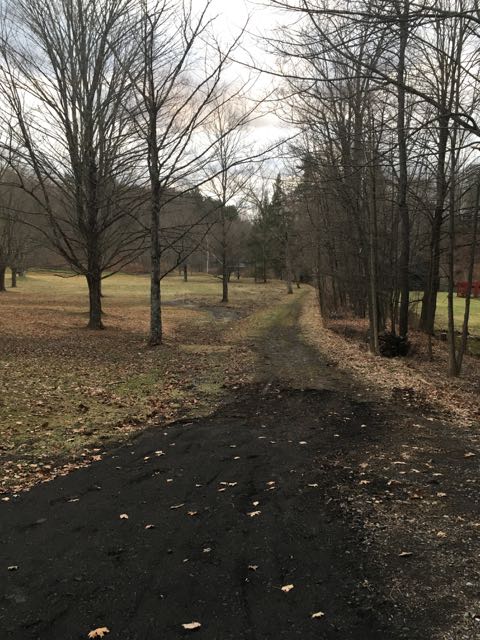
Ah, but I knew better. I was on the last leg of my walk, going down the path. Nobody walks on the path, especially after it rains because of the mud and it had just rained. I doubted anyone would see me photographing my plastic bunny.
I set him in a dry patch of grass.
He laid his ears back and didn’t look happy.
Oh, wait, his ears are always back.
He’s not supposed to be happy.
“Tuga,” I said, “you’re supposed to teach me something this Lent.”
I was hoping for a little more cooperation.
“How about you look out at the river?” I said, moving him a little and stepping back. I was thinking of the scene from Watershed Down where the rabbits must escape across the river.
But the blue sky with its big puffy clouds reflected so beautifully in the water that I took another step back to include it. Tuga, my little sorrowing bunny, all but got lost in the shot.
It struck me — isn’t that the way it is with sorrow? In the bigness and busy-ness of life, the sorrowing one can get lost.
I picked him up and tucked him in pocket, knowing I would have to ponder that a little more.
When I reached the stone bridge, I set Tuga on a parapet.
He looked rather lost in there, too. So small.
That’s when I saw the man on the stone bridge talking on his cell phone. We briefly made eye contact before I grabbed Tuga and stuffed him in my pocket again, hurrying on down the path.
Once again, I was struck by the picture of sorrow. How often do sorrowing people stuff their emotions away because they’re embarrassed or self-conscious?
If nothing else, Tuga is teaching me an awareness for the sorrowful. In my own busyness, I may pass them by, or, in their self-consciousness, they may hide their feelings.
Warning: This is probably one of the most boring posts ever. I walk around town and take pictures of the sidewalks.
“Now this is a sidewalk,” Bud said to me as we started our walk the other day.
We parked at the Clark Sports Center and headed out on the route I usually go around the perimeter of Cooperstown.
Susquehanna Ave
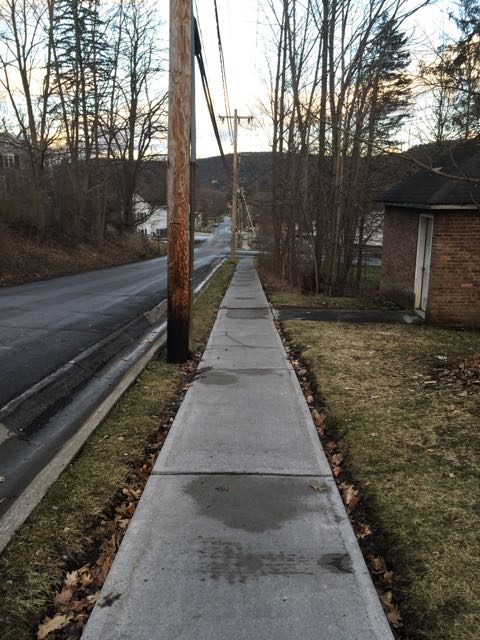
The sidewalk on Susquehanna is wide and new. Little kids ride their bikes on it, with plenty of room for mom or dad to walk beside them. The fellow in the distance was on his skateboard. It’s not unusual to see friends walking 3 or 4 abreast on it.
This sidewalk used to look like this:
The other side of Susquehanna
On the east side of the street, this sidewalk reminds me of what we used to walk on.
I always turn up Walnut Street. There are shorter ways to get downtown, but when I’m going for a walk, I’m not looking for shortcuts. I’m looking for the long-cuts, to prolong the experience.
Walnut Street
From Walnut, I turn onto Delaware Street. One of the joys of living in a small town is that so many of the houses also contain memories — friends I went to high school with, kids I’ve coached on swim team. The house represents a person or a family, and I treasure them as I walk past.
Delaware Street
Delaware to Beaver. Beaver Street is a direct shot between Rte 28 (aka Chestnut) and the hospital. At the juncture of those two roads, it’s really hopping with two gas stations, Price Chopper (the only grocery store in the village) and the new location for a giant CVS.
Beaver Street
I take a little jig-jag on Chestnut, quickly turning off it onto West Beaver.
West Beaver Street
West Beaver kind of turns into Maple Street.
Maple Street
At the end of Maple Street, I cross Route 28 again — except now it’s Glen Ave. Oh, the joy of small older villages! Streets take twists and turns and change names — just because they can.
I have to cut through a parking lot here. In the summer, it’s busy, but the rest of the year only a handful of cars park there.
Credit Union parking lot
On the other side of the parking lot is the top of Main Street. It’s a nice walk down, but tourists don’t know that. They shell out their $2 per person to ride the trolley, which actually is pretty cheap entertainment. The trolley makes a circuit around Cooperstown, and some trolley drivers give spiels about the village which are often full of alternative facts.
Upper Main
Just past the ugliest office building in the history of beautiful small villages, I turn onto Nelson Ave, a street of beautiful homes. It’s another stretch of homes that I identify with people I know or knew.
Nelson Ave
From Nelson, I turn onto Lake Street.
Lake Street
Oh, look! There’s the Otesaga! That’s where the Hall-of-Famers stay for induction weekend.
I walk a long stretch of Lake Street, all the way to where it ends at the Susquehanna River and River Street.
River Street
One block on River, and I reach Main Street again — but this is lower Main.
Main Street (going east from River Street)
The sidewalk ends just after crossing the bridge, but that’s okay. I’m heading to “The Path” — no sidewalk at all, but one of my favorite places to walk.
“The Path”
The Path goes along the river, past where Cooperstown’s hanging tree was in the early 1800s (or so I’m told), past the stone bridge (gosh, it’s lovely), past the Sugar Shack (where I suppose someone used to make maple syrup), past a colorful pile of kayaks and canoes, all the way to Mill Street/Brooklyn Ave.
I choose Brooklyn Ave. We used to live here. It is a wonderful street.
Brooklyn Ave
The sidewalk doesn’t go all the way down Brooklyn Ave. It ends as I leave the village. The condition of the road changes, too. It’s easy to tell where the demarcation between Village of Cooperstown and Town of Middlefield falls.
I walk all the way to the end, back to Susquehanna Ave, but now I’m at the end of Susquehanna that doesn’t have wide new sidewalks. In fact, it has no sidewalk at all, but that doesn’t stop me from walking along the shoulder, back to the gym, and back to my car.
The road taken by me is usually a sidewalk. I love walking.
A few months ago I made an impulse buy at Target — two plastic rabbits. I set them on my bookshelf to remind me of my “rabbit” friends — an affectionate term for the people I know through The Rabbit Room and Hutchmoot (tickets go on sale today, by the way).
A fellow blogger, Manee, posted pictures of her flamingo in February, calling it Flamingo February. I found myself looking forward to Fancy the Flamingo’s adventures — splashes of pink in an otherwise drab month.
I also started looking around for something I could use to follow suit, and caught sight of the rabbits. I hesitated, though, because March marks the start of Lent, and that’s not a time for silliness. Lippity-lippity Lent sounds goofy — even though I love Beatrix Potter’s descriptive words for a rabbit’s slow hop, and I really want to slow down even more during Lent.
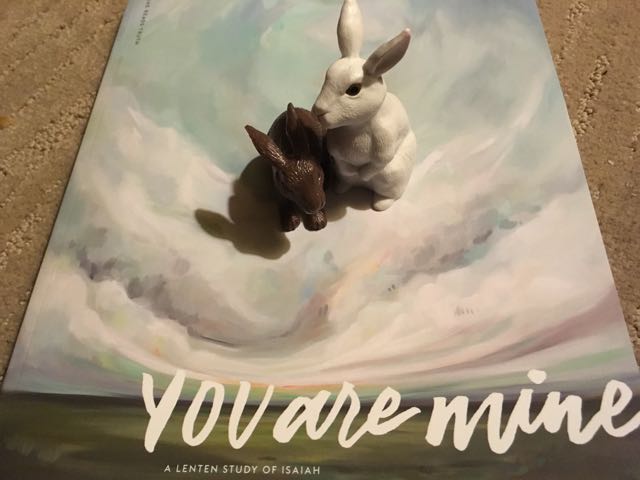
This morning I brought the rabbits downstairs with me for my quiet time. I set them on top of my Lenten devotional. They stared at me, unblinking.
“How can you help me with Lent?” I asked them.
My devotional is a study of Isaiah. The theme verse is Isaiah 43:1
… I have called you by your name; you are mine.
It reminded me of a theme that ran through Andrew Peterson’s Wingfeather Saga — the importance of names.
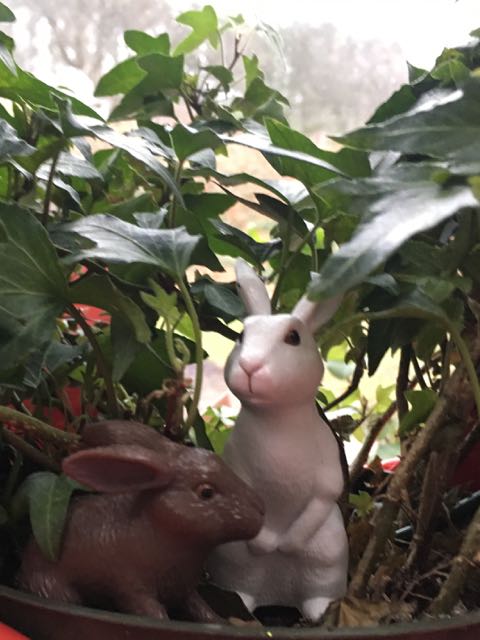
I decided to name my rabbits Tuga and Aleluja. Tuga is the dark-colored rabbit, and Aleluja is the white one.
Tuga is Croatian for sorrow. I’m going to carry Tuga with me throughout Lent.
Aleluja means, as you probably guessed, Alleluia.
I hid Aleluja away this morning, burying him as it were.
On Easter morning, he’ll emerge again.
This morning I went for a short walk with Tuga in my pocket. I patted my pants, making sure he was there. I could feel the hardness of his plastic ears poking against the denim.
He will be my companion for the next 40 days. I imagine he’ll show up here a time or two.
Three years ago, Ash Wednesday began with an early phone call from my sister telling me that my brother had died unexpectedly. It brought a whole new depth to “Ashes to ashes, dust to dust.”
Now the two events are forever linked in my mind — Ash Wednesday and Stewart’s death. Somber and sad.
This morning I was looking for a Collect for Shrove Tuesday and stumbled across a website where I would like to spend more time: Liturgy It’s the work of Bosco Peters, an Anglican priest in New Zealand. On his Shrove Tuesday page, he said,
This is the last day of the “Alleluias” until Easter. This day may even involve the burying of the Alleluia.
I loved the idea of making today a day of Hallelujahs, the last day of Hallelujahs before Easter.
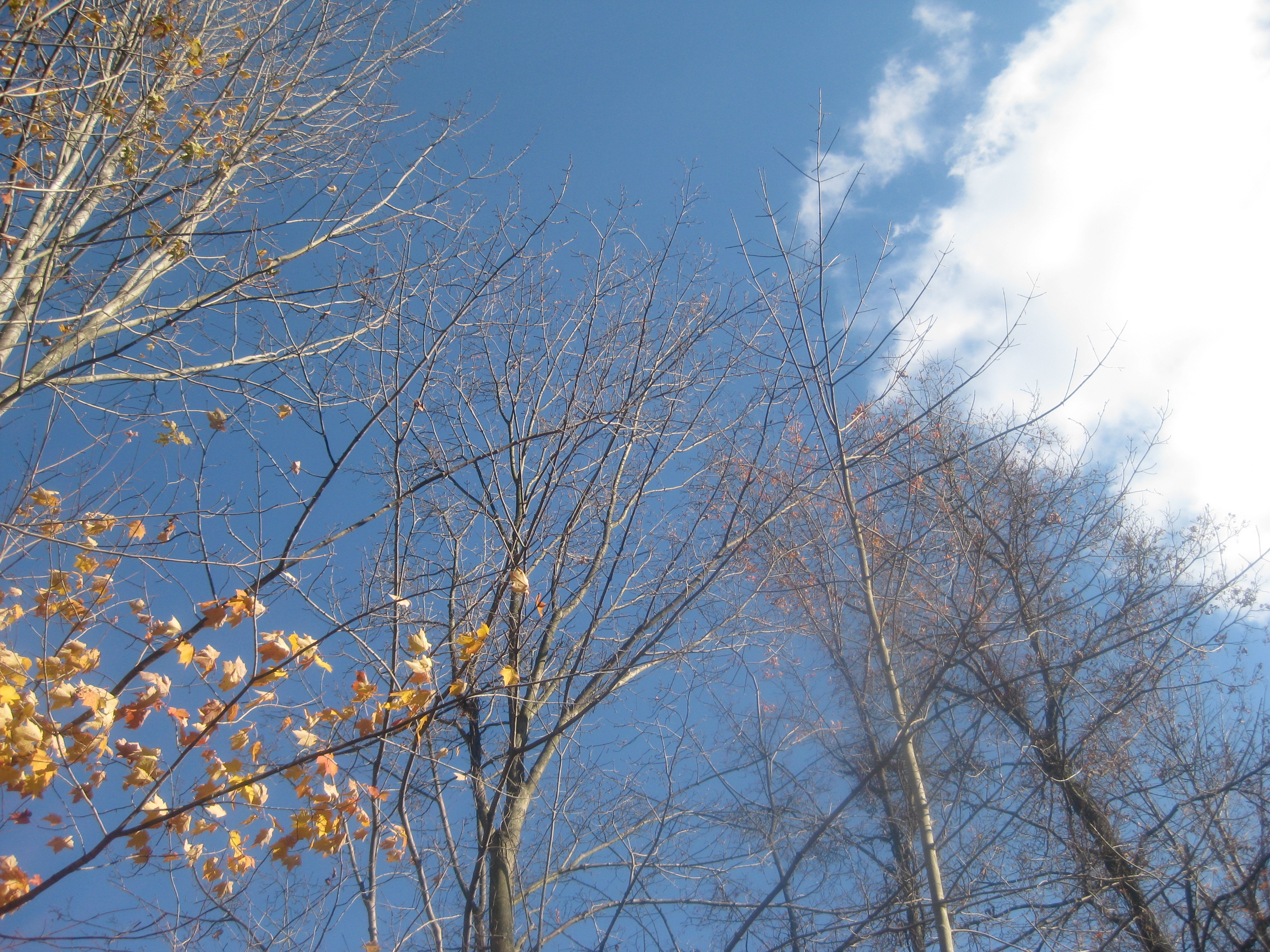
I looked out the window and saw a little chickadee hopping around on a tree and imagined it chirruping Hallelujah. I could hear the stream in the basement (not a good thing, but a sign of spring) and saw the clear blue sky with puffy white clouds. Before I knew it, I was writing a little Hallelujah poem.
My day will be filled with Hallelujahs. Will you join me?
The chickadee hops from twig, branch, to limb
Chick-chick-a-dee hallelujah
The gurgle of water as snow melts to spring
Burble-splish-splosh hallelujah
10X sugar piles on robin’s egg sky
Azurean cerulean hallelujah
Mud-luscious earth, spikes of green occupy
Plant-sprouting-spring-shouting hallelujah
Brisk breeze brushes cheek in a chilly embrace
Shiver and shudder hallelujah
Remembering the quickening, tender touches of grace
Life, light, and love — hallelujah
Tomorrow hallelujah dies from our lips
We walk with both Jesus and Judas
Today we rejoice, putting darkness aside —
Come sing! Come shout! Hallelujah!
“Here’s an old picture of us,” I said, passing Bud a family photo that I found in a pile of stuff. “We’ve got everyone but Philip there.”
“Where am I?” he asked.
“Behind the camera,” I replied.
It’s true. Bud took a lot of the family pictures when we were on vacation. If we didn’t snag a passer-by, he was out of the big group shot. He would appear in the just-a-Zaengle family picture that my brother or brother-in-law would take, but the everyone shot often didn’t include everyone.
Who is in the picture (and who isn’t) — just two of the clues about what year it was taken.
I’m in the center, behind Helen who is holding Laurel. Helen couldn’t possibly do that today because Laurel is now taller than Helen. Laurel’s age, though, tells me that it’s probably 2004.
Mary is wearing her Matt Kenseth Dewalt Tools hat. That tells me that we were in our NASCAR phase — everyone had a driver that they followed. Mary liked Matt Kenseth because she was fascinated with power tools; we had recently completed an addition on our house and she had seen an awful lot of yellow tools lying around.
Philip isn’t there. He must have been at college.
Karl’s cheeks are quite pink. He’s either sunburnt (unlikely, since no one else is), or had just been running around (likely, he’s a little boy). We, as a family, have this pink-cheek thing going on whenever we exercise.
My hair is short and I’m not wearing a jumper. That tells me a lot about me at the time.
But the man behind the camera, had his hair starting turning gray yet? I wish he was there beside me to complete the picture. Time to shuffle through more piles of photos to find out.
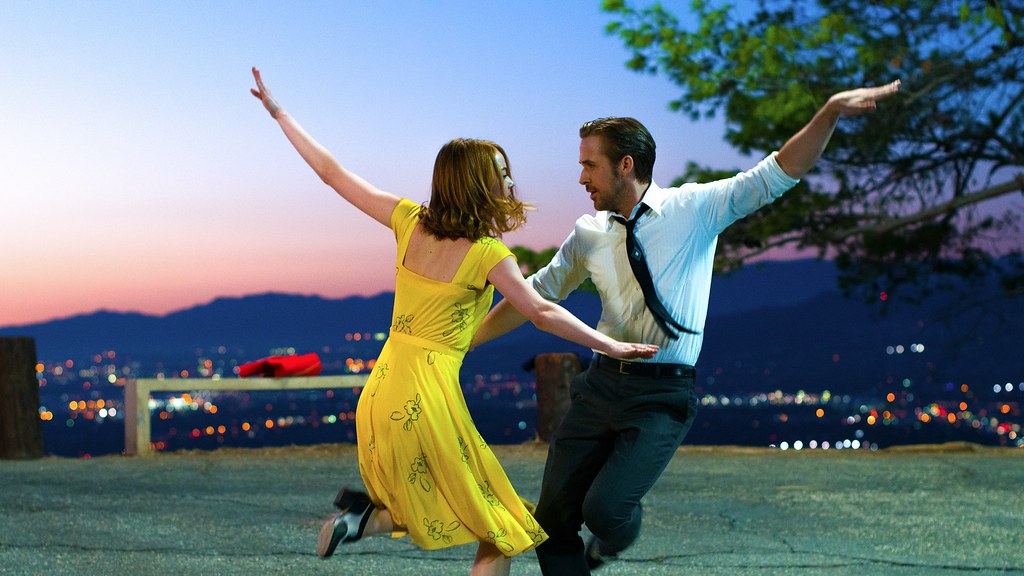
On the way home from La La Land Mary asked me which song was my favorite. I didn’t have to think about it — “The Audition Song.”
“You’re a storyteller. Tell us a story,” the people behind the desk told Mia. She stood for a moment, collected her thoughts, and then told a story about her aunt jumping into the Seine River.
In her audition she sang,
Here’s to the ones who dream
Foolish as they may seem
Here’s to the hearts that break
Here’s to the mess we make
I should have been forewarned by the lyrics that broken hearts were ahead.
I left La La Land feeling dissatisfied with the story.
Later, largely due to discussion about the movie over at the Rabbit Room, I realized that my problem was that I had been Hallmark-ized. The only ending I could consider happy was the one where the right guy and the right girl end up together.
Had that been its ending, La La Land would have fallen into the same category as so many of the movies I choose to watch. A feel-good moment soon forgotten. Hallmark movies that are simply background noise because I don’t need to pay attention to know what is going to happen. La La Land would have been, in so many ways, the same-old-same-old — good music, nice story, satisfying ending.
Like my father’s nightly bowl of vanilla ice cream.
A sweet way to end the day.
But La La Land left me unsettled.
The truth is the stories I love most leave me unsettled.
Fiddler on the Roof, Hunchback of Notre Dame, The Big Sky, A River Runs Through It, A Tale of Two Cities.
None have syrupy happy endings.
They all leave me with something to ponder. They take a long time to absorb.
I fear that I have gotten used to a jiggly jello diet — stuff that slides down easily and digests easily. I don’t know how to handle more substantial foodstuff.
On the way home from La La Land, Mary and I also talked about upcoming movies and what we’d like to see next. The ripples from the pebbles of La La Land may need to subside before I’m ready for another.
Three years ago for my birthday I was in the wilds of the Texas hill country, without cell coverage and with minimal wifi. Laity Lodge is great that way because it allows guests to make real connections.
But it was my birthday and I don’t think anyone there knew.
Not that it mattered, of course.
I called my husband on a land-line and talked with him and the kids. It was enough.
Stewart
He told me that my brother Stewart had called and wanted me to call him back.
When I got home, I put off that call.
My brother died from a heart attack 11 days after my birthday.
When did I last hear his voice? I don’t know.
In my mind I can still hear him, though. I remember what my name sounded like when he said it. I remember his laugh.
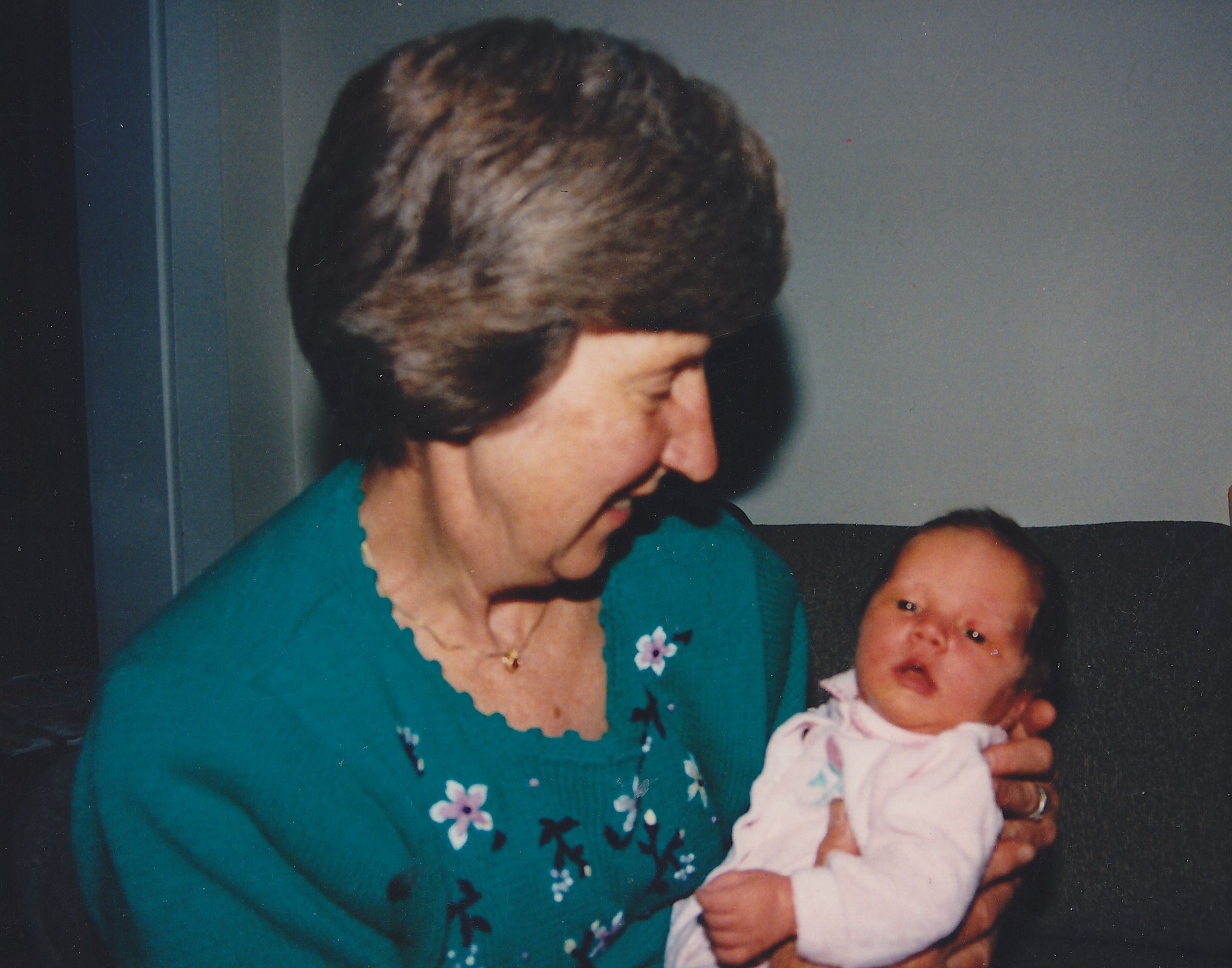
Mom February 2015
My mother forgot my name altogether. I used to remind her.
“I’m Sally,” I would say, and she would repeat back, “That’s right. You’re Sally.”
I used to use photographs to help her remember the names of family members, naming each person as we touched them in the picture. She eventually couldn’t do that either.
I don’t remember the last time she said my name.
And I have more trouble remembering her voice — maybe because it turned dry and creaky. She didn’t sound the way I wanted to remember her.
This year for my birthday, I heard from all my children — most with a phone call or FaceTime. Mary, Laurel, Bud and I went to see La La Land and then went out to dinner. It was very nice.
My morning started with a birthday card in my coffee maker (from Laurel) and birthday stickers on the newspaper (from my brother).
I was curious to see what my father would say about the birthday stickers. I knew he wouldn’t remember my birthday without some sort of reminder.
“Oh! I see we have stickers on the newspaper this morning,” he said as he sat down at the kitchen table.
He peered at them closely. “It says, ‘Happy Birthday,'” he read. “I don’t think it’s my birthday though.”
“No, Dad,” I answered, giving him his pills and his juice. “It’s my birthday.”
“Oh,” he said. “I guess that makes sense.”
And that was it.
No birthday wishes.
It wasn’t a slur against me. It doesn’t really matter.
But it did.
It does.
Because it means I’ve lost another little piece of him.
We lost my mother in dribs and drabs, an expression she used to use.
Now we’re losing my father the same way.
It’s almost certain that next year he won’t remember my birthday either. Dementia tends to only go in one direction.













 Hot Dogs and Marmalade