Faith · Life

Blatherings about Birches and Flexibility

I drove into town this morning for a Bible study but the church was locked up. I felt a little irritated. No one had let me know that it was cancelled. Or postponed. Or whatever happened. Although I had only attended once before, I felt like someone should have told me.

Hmph.

I expected them to be flexible with me in my sporadic attendance, and yet I was not being flexible with them.

In my heart, I mean. This was all taking place at a heart level. I wasn’t really that upset. I was being stretched.

Bud and I used to get a little irritated at the Christian-ese expression of “being stretched.” When someone was undergoing a trial, the “Christian” response included glib statements like, “I guess the Lord is stretching you” or “me” or “him” or “her” or whoever.

I guess I’m growing up. And growing more flexible.

But there’s still so much more room for improvement. Will I ever reach a day when I’m not irritated by a small inconvenience?


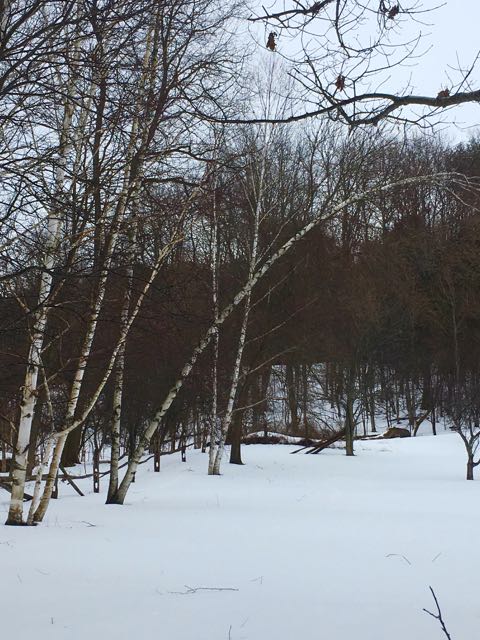
My father planted white birch trees along the north border of his lawn.

Over the years, some have grown quite tall. One bends quite low these days, showing the resiliency and flexibility that is its nature. My father comments on it every time he looks out the window.

IMG_5807[1]

Robert Frost says the birch is “the only native tree that dares to lean” — and lean it does. Its pliancy and resiliency are remarkable.


I’ve been going for long walks lately, and I feel the tightness in my legs. Yesterday I told myself that I need to start stretching again. As a coach, I’m aware of the different types of fitness: muscle strength, muscle endurance, cardio endurance, and flexibility. Flexibility takes the longest to gain, but it also is the slowest to lose.

In our muscles. In our lives.

img_1149


My friend, Alyssa, wrote about aspens, their frailty, their humility, the way their leaves tremble in community. I remember the day I first read that post. I wept because my brother’s death was still fresh and painful, and I knew she was telling me of a community weeping with me.

This morning I looked at the birch and knew that it had lessons for me, too.

To bend and not to break.

To keep working to develop that flexibility that will stay with me for a long time. The more I exercise it, the more flexible I will become.

I found myself grateful for a missed Bible study.

 

family · Life · poetry

Footprints on the Deck on a Snowy Day

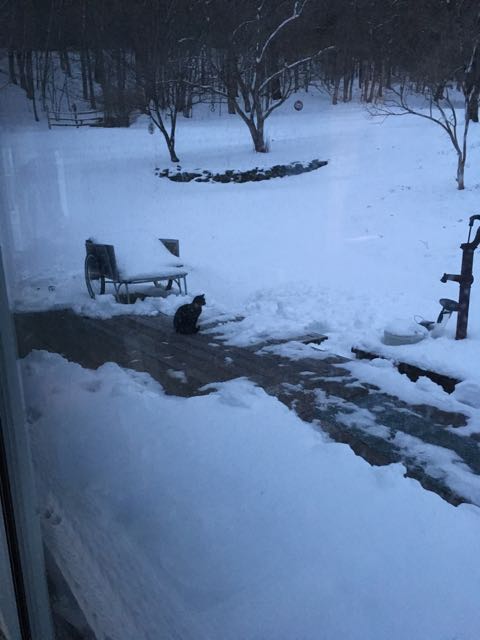
It all started when the cat wanted to go out — AGAIN — and then immediately wanted back in.

“It’s so simple,” I tell her. “Just make up your mind.”

But a cat’s brain doesn’t quite work that way.

So I wrote this — with apologies to Robert Frost.

Whose prints these are I think I know
She’s sitting by the window though
Her paws touched cold that made her veer
When out she ran into the snowimg_1109

My little cat must think it queer
Cold comes and goes this time of year
One day balmy, the next a flake
Falls — more fill the atmosphereimg_1118

Outside I watch her shiver, shake
Inside she mews her bellyache
To go outside where snow is deep
I wish in-out would take a breakimg_1115

Rough tongue wakes me from my sleep
Purring, padding, claws not deep
Outside she goes, then in she creeps

elderly · family · Life

10 Things To Do When Visiting an Elderly Person

I ran into someone who has been promising to visit my father. When I saw her at the Post Office and she asked, “What can we do to help you and your father?” my answer was easy. Visit him.

I was telling Mary about it later. “Visiting is so easy to put off.”

“Yeah,” she said, “I don’t think I’d be very comfortable with it either.”

Visiting isn’t hard, though.

I wrote a list of ten things to do when visiting an elderly person — to make visits easier, if you don’t know how.

1. Listen — Listening is a slow-paced skill that has gotten lost in our rush-rush society. My father struggles to find words. Finding the patience to listen is so good for me.

2. Ask questions — I once heard someone suggest asking elderly people to  talk about a time they got in trouble as a child. It brings out some funny stories. My father likes to talk about important days in history and the early days with my mother. Sometimes a question or two is all it takes to get a conversation rolling.

3. Look at photo albums — My mother always had a few small photo albums in her room at the nursing home.  My father has some by his chair. She worked at identifying the people. He recalls past adventures.

4. Read — Sometimes I read to my mother. I discovered that picture books worked especially well. Reading to someone with dementia, though, is not unlike reading to a toddler. Her attention span was sometimes short and we would skip pages to reach the end.

5. Listen to him (or her) read — My father reads to me. When he chooses books to read, he often chooses thick books with small print. “Why don’t you choose an easier book?” I asked him once.

“I like to challenge myself ,” he replied.

So he ends up reading passages out loud. I think it helps him process. He is not unlike a 3rd or 4th grader, following the words with his finger, moving his lips all the while, often whispering aloud — and then going back and reading it to me.

Right now he’s reading The Bounty Trilogy — a fat book containing all three of the Bounty books by Charles Nordhoff and James Norman Hall.

“Captain Bligh was a bad guy,” he told me about six times yesterday.

“Yes, that’s why the crew mutinied,” I replied. “Spoiler alert.”

We would repeat the conversation about an hour later.

Someone visiting him could easily ask about what he’s reading, and I’m sure my father would be happy to tell him and read to him.

6. Write a letter — My father has wanted to write a few letters but, in addition to the struggle for words, the fine motor skills required for writing are lacking. Recently I’ve taken dictation from him to try to help.

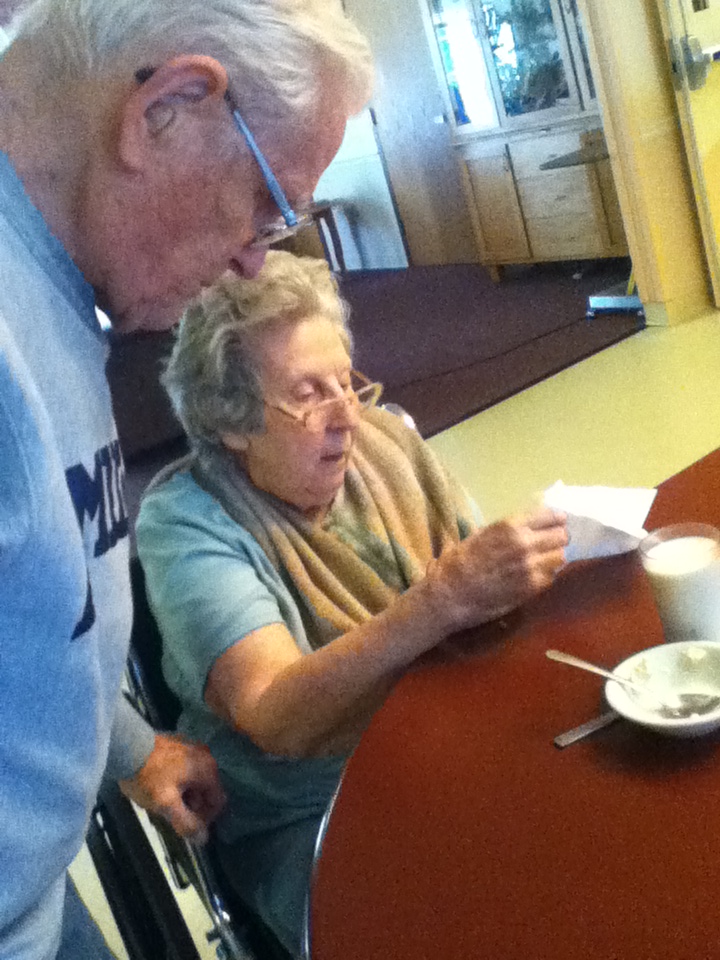
Helen and Fred
Helen and Fred

7. Do puzzles or play games — My father still does the daily jumble and crossword, but more and more he needs a little help. He transposes letters or gets the down and across mixed up. I usually help him with a few answers and then let him keep working on it.

Helen used to play rummy with an elderly man. He cheated constantly and accused her of cheating — and they both laughed about it. It was a great way for them to visit.

8. Walk — One person that came to visit my father asked about the house. He gave her a walking tour,  talking about the changes we had made to the house. It was a slow process because he stopped to talk about different pieces of artwork etc. He likes to walk outside, too, when the weather is nicer. But he needs someone with him.

IMG_6962
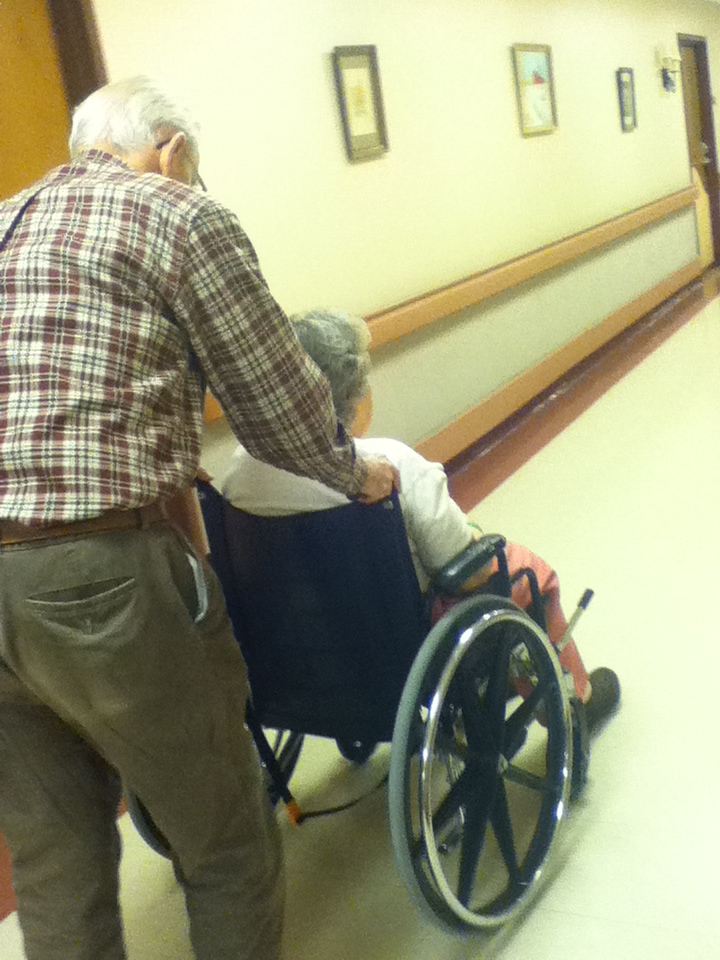
One of the twice daily visits which were always at mealtime.

9. Sit — For several years, I watched my father visit my mother every day twice a day. She couldn’t carry on a conversation toward the end so he just sat with her.

Now I sit with him most evenings while he watches television. Wheel of Fortune, Jeopardy, a baseball game, whatever.

10. Share a meal — My father could win prizes for being the world’s slowest eater, but we sit together every night to eat. I’m so thankful that my daughters patiently wait until he’s done. No devices. Just conversation. It is good.

The sad thing about a list like this is that the people involved in elder care will see it and nod in agreement, but most other people (myself included in years past) will just gloss over it.

But then, again, Karl applied for a job at a retirement home. Maybe this will be helpful…

family · Life · Writing

Success

The other day a friend posted on Facebook a rejection she had received for poetry submitted for publication.

She is a wonderful poet and writer, and I ached because a rejection feels like, well, a rejection — a failure — and she is not a failure.

How do we measure success? I asked myself — and, in a flash, I saw the scene that I wrote out below. It’s a totally made up story, kind of like a nightmare — but here it is for what it’s worth.

“Thank you for filling out the questionnaire,” the doctor said, studying the paper in front of him. He was checking off my answers with a pencil. I felt like it was more a quiz, than a get-to-know-you form for the first visit.

“You prefer to be called Sally?” he asked, looking up at me.

“Yes, I do,” I replied. I smiled at him, but he was already looking back down at the paper.

“Height, okay… Weight,” he looked up at me again. “You might want to lose a few pounds.”

“I know,” I said, “but things have been stressful lately, and I stress-eat…” My voice trailed off. I was hoping for a bye, but he just kept going down the list.

“You noted that you’re a writer,” he said, looking up again.

“I did?!” I said, questioningly because I didn’t remember putting that down.

He picked the paper up and turned it toward me, his finger pointing at a fill-in-the-blank mid-page. In my handwriting, next to the word “employment,” was the word “writer.”

“Oh,” I stammered, “I’m not really a writer. I don’t know why I wrote that.”

“Do you write?” he asked.

“I guess,” I said.

“Have you submitted pieces for publication?” he asked.

“A few, I guess, a long time ago.”

“How many times have you been rejected?” he asked. It was more of a demand.

I squirmed uncomfortably. What was this all about? I wondered.

“I don’t know,” I said. “I don’t understand. Why do you need to know this?”

He glared at me.

“Can I change my answer?” I asked.

“Real writers have a pile of rejections,” he said. “I think changing your answer would be wise.”

He picked up a pen and neatly crossed out my response, then sat with pen poised waiting for my new answer. “Employment?” he asked.

“Umm.. I’m mostly a mom,” I said.

“How many children do you have?” he asked.

“Eight,” I told him.  I found myself sitting a little straighter in the chair now. Surely this would impress the man.

“How many times have they broken your heart?” he asked.

“What?!” I asked.

“You know, how many times have they fallen, made bad choices, or failed?” he said.

“I thought you would want to hear about their successes. They’re doing pretty well,” I said.

“Real mothers have their hearts broken on a regular basis. They start off putting bandaids on skinned knees and move on to bruised egos and hurt feelings. They ache with their children. I’m trying to determine if you are a real mother,” he said, and then he repeated his question. “How many times have they broken your heart?”

I thought of the many emergency room visits, the hospitalizations, the times I stood outside a bedroom door and prayed for the child inside. I thought the listening and the insufficient advice I tried to give. I thought of skinned knees, skinned hands, stitches in the head, broken bones, tears, tears, tears, and more tears. I thought of driving when called for help and crying all the way, dropping kids off for college and crying all the way home, and watching them get married and crying for joy.

“How many times have they broken your heart?” he asked for the third time.

“None,” I said.


elderly · family · Life · photography

Graceful

The word prompt was “graceful.”

I debated about using photos of my children in sports.

Swimming, tennis, soccer, and diving all have their graceful moments.

Bubbles
graceful bubbles?
Aviary Photo_130563787939035300
graceful kick?

I also have little ballerina pictures. Ballerinas are the embodiment of grace.

The very last first time ballet recital for Laurel -- which also turned out to be the very last ballet recital for Laurel.
Mine is the one trying to curtsey.

But I knew immediately which photo spoke grace to me. The trouble was finding it.

It was a picture of my father taking care of my mother.

2015
Not this one

He visited her every day. Twice a day. He fed her. He pushed her wheelchair on walks.

5501_10152261695866043_678688786_n
or even this one

This was after my brother passed away. He went to tell her the news that her oldest child had died of a heart attack. Because of her dementia, she couldn’t understand, and he had to repeat the painful words over and over. It broke my heart. His grief was doubled because she was unable to share it.

But her bore it.

The graceful picture I thought of was this one. It may not be the best picture, but it was a special moment.

img_4297

My mother was in the hospital and my father brushed her hair for her.

Mothers brush other people’s hair all the time — sometimes even adding a little spit to do the trick. Of course, I never did that — added spit, I mean.

But this was new territory for my father. He was a little clumsy doing it. But he wanted her to be cared for, and he wanted to be the one to do it.

So he did the best he could to brush her wayward hair into place.

And it was an act that was full, very full, of grace.


family · Leaning In · Life

Weathered

Walk around the barn with me.

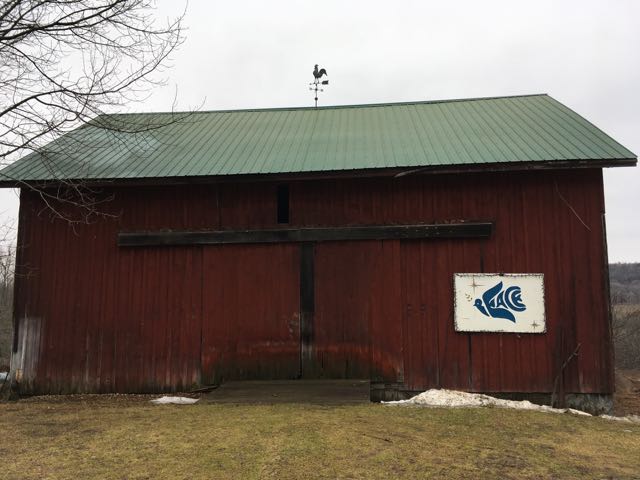
The side facing the road is red, the traditional color of many barns. My mother painted the Peace Dove around 40 years ago on a sheet of plywood. Bud found it in the barn this fall and decided to hang it for the holidays.

img_1087

The northern side bears remnants of the red. Also a few broken windows.

img_1080

And a tree with a cool twisty trunk.img_1080-1

The messy back side is a mish-mash of red, green (discolored plywood), and black, where the silo used to stand.

img_1081

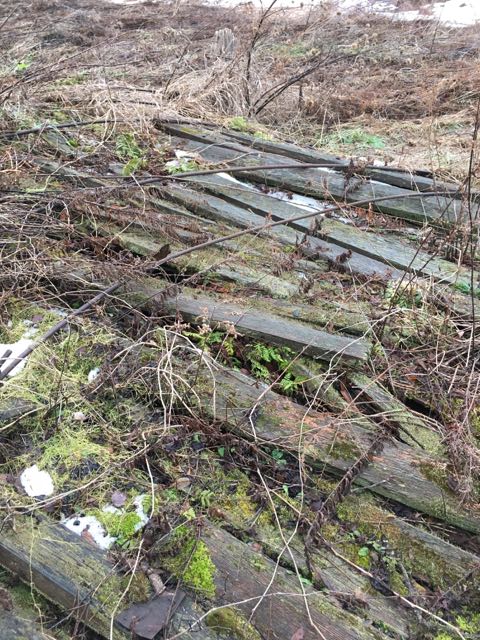
Here is what remains of the old silo — metal bands and wooden staves becoming one with the earth.

img_1086

The southern side is all gray, discolored in the one corner where a truck cap leaned against it for years.

img_1082

I think this side is the prettiest.

I took a picture of it during the summer just because I liked the way it looked.

img_7306

It’s lovely, don’t you think?

Exposure to the elements and weather brings about changes — like the trials in our lives. We end up with some scars and a few broken parts.

But if we lean in, we might find some beauty there.


family · Life

Colorblind

pict1161
The way you can tell which of these boys isn’t my brother is the Yankees shirt. No one in my family would dare to wear such a thing.

My parents did a good job raising colorblind children in a lily-white town. I never heard either of them make any kind of racist statement. Instead I watched both of them operate from a platform of compassion toward all people.

Every summer for a number of years my parents invited Fresh-Air children from New York City to stay with us for a week or two. Honestly, what made Hector and Barbara different from me wasn’t the color of their skin.  Rather it was their experiences as city kids.

We had a garden and a menagerie. We caught frogs in the pond during the day and fireflies in the yard at night. We could see the stars.

Barbara and I shared my room. We lay in bed at night and talked. She missed her mom and her mother’s food the same as I would have missed my mom and her cooking.

The battle for middle-class America isn’t about seeing or not seeing the color of the skin. It’s about understanding the similarities and differences of our experiences.

At our Sunday worship service before MLKJr Day, a woman talked about her experiences in the late 60s – early 70s when she, a white woman, was married to a black man. Her husband, college-educated and employed, some days was quite late getting home because police prevented from entering his own neighborhood simply because of the color of his skin. She spoke about “white privilege” — something we white folks can’t see because we live it.

In Cooperstown, I remember watching both white and black baseball players inducted into the Hall of Fame. Arrogance comes in all colors. But so does humility and friendliness.

My two favorite ball players that I met when I worked at the Hall of Fame — Cool Papa Bell and Ernie Banks — were both black. I don’t know a single one of their statistics, but I remember their smiles and the way they made me feel.

Jackie Robinson is one of my father’s heroes. When I read his story, it made me cry. Such indignity in the way he was treated. Such strength in his response.

But I ramble.

I hope I have passed on to my children what was given to me — eyes that don’t see skin color. It can’t stop there, though.

Now we need to understand the difference of our experiences.

We’re making progress.

But we still have a long way to go.


elderly · family · Life

Misunderstood

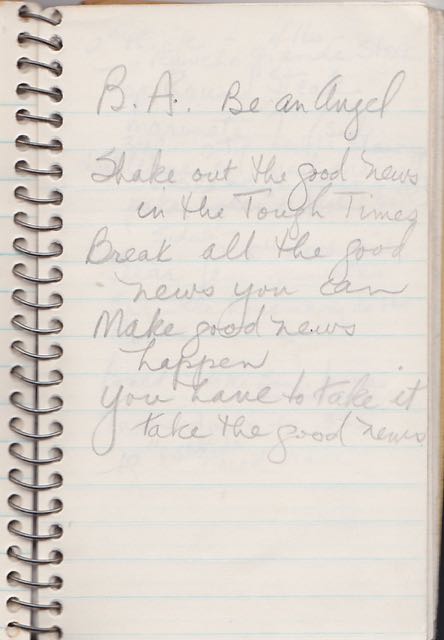
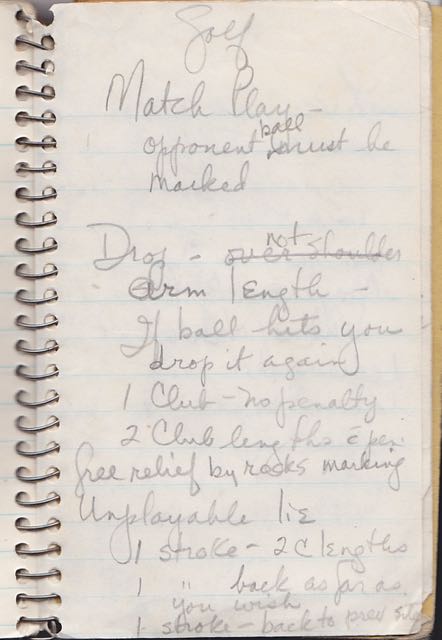
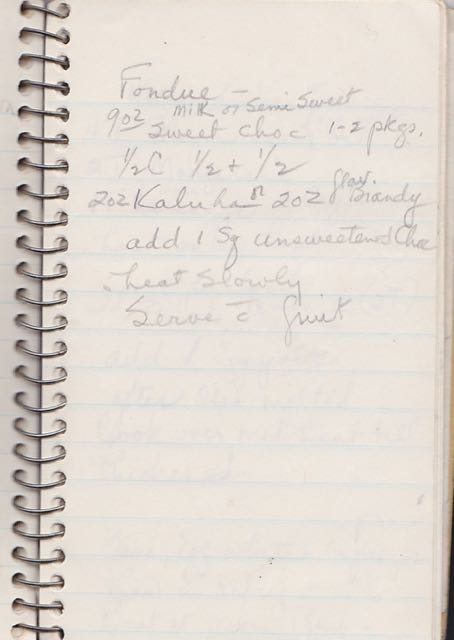
scn_0001-2I found a little notebook that my mother probably kept in her purse in the mid-to-late-1980s. The notes inside cover a huge span of topics:

Sermon notes?
Sermon notes?
Golf rules
Golf rules
Recipes
Recipes
Other miscellaneous notes

She even wrote a cheat sheet for my husband’s siblings. He has eight brothers and four sisters, so she wrote out their names and little reminders to help her keep them straight. I should have been so smart.

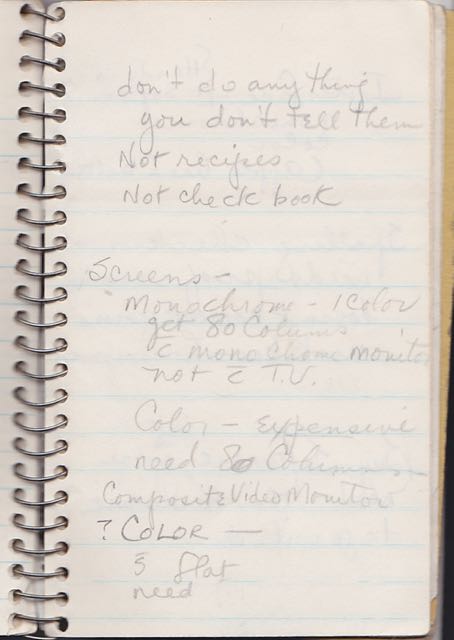
One note bothered me – partly because I couldn’t figure it out what she was trying to say, and partly because I have anxiety about doing things right for my father.

don’t do anything
you don’t tell them
Not recipes
Not checkbook

Helping elderly parents involves walking a fine line. On the one hand, I have a tremendous amount of respect, appreciation, and love for them, but on the other I sometimes need to take the reins.

The other day I took my father to get his haircut. When he was done, he fished his wallet out of his back pocket. He rifled through it with his fingers, pausing on a five dollar bill before looking at me questioningly.

“What do I need here?” he asked, and he pushed the wallet into my hands.

I handed the woman a twenty — the haircut cost $10 — and she gave back a five and five ones. I handed these to my father. “You need to decide how much you want to tip her,” I said.

It was awkward. She picked up the broom to start sweeping. He fanned out the money in his hand and fiddled around with the bills.

“What are you doing to me?” he said. Clearly he couldn’t think through the next step.

I felt terrible. I took some of the ones and handed them to the stylist.

But I wasn’t doing anything to him. I was trying to allow him some autonomy.

At home I’ve started paying some of his bills without discussing them with him. The bills are confusing for him, but cutting him out of the process feels wrong to me too.

don’t do anything
you don’t tell them
Not recipes
Not checkbook

The words in the notebook stung. I’m trying so hard to do right by him.

I have a futile hope that someday he’ll be able to do it all again. Will he understand why I took over?

I pulled out Mom’s notebook again and studied the rest of what was written on that page.

Screens –
monochrome – 1 color
get 80 columns
c/ monochrome monitor
not c/ T.V.
Color – expensive…

The next page had more computer-buying advice. Were these notes from an introductory computer seminar?

first
Buy Software ^ you
need — then Hardware
to go with it

Seriously?

But maybe those first lines, “don’t do anything you don’t tell them” refer to computers, and the fact that they are just machines.

But then, why “not recipes”?

Why “not checkbook”?

I’ll probably never know.

family · Leaning In · Life

Trapped

In the spirit of “Leaning In,” I offered to help my father write some letters.

During December I felt trapped, much the way a mother of a toddler feels. I remember being home with small children and wondering what it would be like to be able to do and go without worrying about other people. Now I sometimes feel that way again, but it’s not because of small children.

I had asked Laurel some of the same questions I asked Mary (see Explanation). Laurel knew how old I was. She also astutely answered the what’s-my-favorite-thing-to-do question. “You like alone-time,” she said — and I felt a little lump in my throat because she understood me so well.

Alone time. I crave it. Like chocolate. Or coffee.

When I was home with toddlers, I would retreat to the bathroom — and they would stand outside the door, talking to me, trying to get in, asking when I was coming out.

In December, my father would sometimes stand at the bottom of the stairs. “Sally? Sally? Are you going anywhere today? I’d like to go out,” he would say. And I would feel so selfish that I just wanted to go out alone. All. By. Myself.

With toddlers, sometimes they would follow me everywhere. “Fred” used to sit on my foot and hold onto my leg. I would hobble around, my steps uneven because I was dragging a little boy with me. He simply wanted to be with me.  If I stopped to read with him or play with him, sometimes that would satisfy his Mom-time need, and, in turn, I would have a little alone time. In the kitchen. Woohoo.

Of course, I couldn't find a picture of Jacob hanging on my leg -- they do exist! -- but this him, the youngest at the time, at about the right age.
Of course, I couldn’t find a picture of “Fred” hanging on my leg — they do exist! — but this is him, the youngest at the time, at about the right age.

So — leaning in. I decided in 2017 that I wouldn’t try to escape, but would rather lean in. Embrace.

Instead of escaping upstairs, I asked my father if I could help him write a letter. He had been saying that he wanted to write to a few people, but, beyond the struggle of gathering thoughts into words, he also struggles with the fine motor coordination of writing.

Yesterday, we sat to “write.”

It took him a long time to formulate his thoughts, but his words revealed how trapped he felt, too. He told his friend why he couldn’t travel to visit her —

 … I feel like I should accept the wisdom of the rest of my family that I should not drive a car.  I agreed to this reluctantly, but there’s no way out.

No way out. What a terrible feeling.

He got frustrated with the writing process and we put the letter aside.

So today, we’ll finish that letter and get it in the mail.

And I’ll take him out with me.

It’s a lot slower running errands with a person with a walker.

Not unlike a child hanging on a leg.


Leaning In · Life

Delight

It was a cold day
A cold day in upstate New York

Yesterday was a rush-rush day. I had too many things to do in the available hours.

Around 4:30 PM, I made a quick run into the grocery store. The wind was gusty and frigid as I dashed for the door.

In between the open doors a woman stood calling back over her shoulder, “Come ON!” The exasperation was clear in her voice. She pulled her coat tight around her, flipping up the lapels to block the wind.

As I got closer I could see who she was talking to. A little girl, maybe 4 or 5 years old, was in the estuarial space of warm and cold, the space where shopping carts and bottle return machines exist, between the two sets of automatic doors. She had her back to her mother, her hands over her head, fingers extended and wiggling. She crouched and wiggled her bottom a little before jumping up with excited squeals.

She was watching herself on an overhead monitor that showed all the people entering and exiting the store.

“She thinks she’s on tv,” her mother said to me, and rolled her eyes.

I laughed — delighted by the child’s delight. The girl continued her dance, crouching then jumping, waving her hands and arms, giggling and squealing all the while.

Her mother smiled back at me.

For just a moment the two of us watched together.

Then I went in, grabbed the groceries I needed, and headed for the check-out.

I was still smiling when it was my turn to pay.

I was still smiling when I got home.

Two observations I’d like to make:

  1. Delight is contagious. I’m glad the little girl shared hers with me.
  2. Leaning in and slowing down can be as simple as a momentary pause at the grocery store.