Faith · Grief · people

Lenten Rabbits

Five years ago for Lent, I carried a rabbit in my pocket as a tool for mindfulness. I wanted to remember that people are often smiling on the outside but hurting on the inside. I know, I know — this may not make much sense to you unless you followed my Lenten journey in 2017. If you want to read about it, here’s a semi-explanatory post from that year: Tuga and Aleluja.

Tuga is the Bosnian word for sorrow. Aleluja is the Bosnian word for — can you guess? — Allelujah.

This year I have two more little rabbits. Meet Dòchas and Bròn.
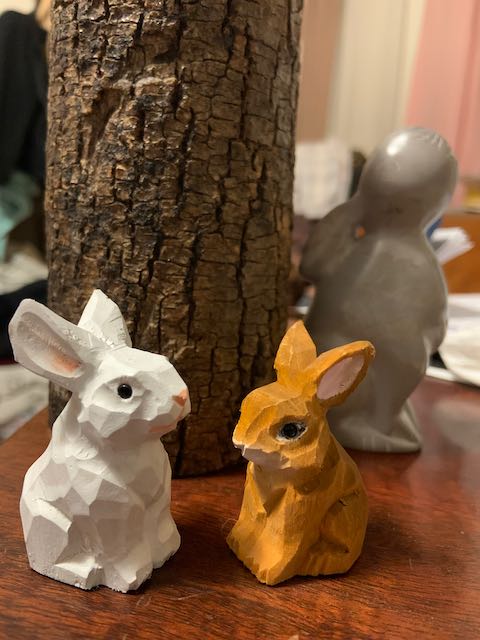
Dòchas is the Scottish Gaelic word for hope. Bròn is the Gaelic word for grief. I gave them last names, too. Dòchas a-Maireach and Bròn an-Diugh. Hope Tomorrow and Grief Today.

I carry them both in my pocket — separate pockets, of course.

For this Lenten season, I want to become friends with Bròn. Bròn an-diugh. (Pronunciation — and I may not have this totally correct — Bròn is like our word “brawn” but you need to roll that “r” a little. An-diugh sounds like on-jew, because the “di-” in Gaelic is our soft “g” sound as in giraffe, and the -gh at the end is silent.) Grief today.

I listened to a woman last week go into a long tirade full of conspiracy misinformation. She had told me weeks before that wearing a mask was the equivalent of the Nazis requiring Jews to wear yellow stars. Another gym member had started the whole confrontation by shouting at me about the masks — “This is BULLSH-T! This is BULLSH-T!” After the Nazi comment, I had turned and walked away from the desk.

Later that same day I put a check-in note on the woman’s membership — that if she checked in again, I wanted to speak to her. She finally came back on Friday — and I spoke to her a little and listened to her a lot. She has such deep fears and hurts.

“Tell me about despair, yours, and I will tell you mine.
Meanwhile the world goes on.”
Mary Oliver, Wild Geese

While she was talking, I reached in my pocket and held Bròn. I don’t know if hers was grief or just unhappiness at our world today. She needed to talk, though.

And I listened.

At the end of her diatribe, she extended her hand across the counter. “What’s your name?” she asked. I told her. “It was so nice to meet you,” she said.

“What just happened?” my co-worker asked after the woman had headed to the pool. She had been sitting there listening to the whole thing.

“I’m not sure,” I told her.

But I stuck my hand in my other pocket — and there was Dòchas, hope.

family · Grief · Life

Maggie

Maggie would have loved the snow this morning.

Even in this, her 14th year, she would run out the door when she saw fresh snow, throw herself down into it, and roll on her back, like the snow was scratching some itch that she couldn’t otherwise reach. When she was on her feet again, she would shove her snout into the snow, bringing it up with a small white pile on her muzzle. She always liked to grab a few bites of snow on her way back in the house.

I’ve never seen another dog love snow like that. The joy of Maggie’s snow-love always brought a smile to my face.

This morning’s snow is pretty — but there’s no Maggie to revel in it. No Maggie to bound through the depths of the drifts. No Maggie to chase the snow thrown from the shovel as we clear the driveway. No Maggie to leave that odd dog-snow-angel print just off the deck.

Maggie had been my birthday gift 14 years ago. I had long wanted for a dog, but my husband was resistant to adding a furry member to our family. In 2008, I received a leash, a collar, a dog dish for my birthday — and I looked up at him and said, “What’s all this?”

“You can get a dog,” he said.

And thus Maggie was adopted into our family.

On my birthday this year, we had to put Maggie down.

I still haven’t even been able to cry about it — life is too full. If you’ve ever been in that place of not being able to cry, you’ll know the giant lump of ice resting in your chest that can only be melted by tears — and the tears won’t cooperate.

I looked at the snow morning and missed Maggie intensely.

Now she’s a real dog-snow-angel and I hope someone somewhere is throwing snowballs for her to chase.

Rest in peace, Maggie.

A to Z Blogging Challenge · Grief

Blessed are those who Understand

The sympathy cards have slowed to a trickle. In the beginning it was a deluge.

Many of the cards said things like this:

Your dad was an amazing man, and I consider myself very lucky to have worked with him.

What a class act!

Don was a wonderful person: friendly, compassionate, smart and extremely generous…

I felt privileged to know him.

Here’s a sampling from his church:

Don and Elinor were two of the first people I met at church and I’ll never forget how welcome they made me feel.

His church will miss him much. I think he held at least every position twice and always took on the most challenging parts.

And a few of the many from the hospital:

He was one of the “Old Guard” at Bassett and embodied all of the wonderful good things of a medical career.

He was the one who recruited me to Cooperstown. He looked after me at work and worked so hard to make sure that our department ran smoothly. I’ll always remember how much he cared about the patients and making my early years there successful.

The more specific people were in what they wrote about my father, the more it touched me. For example, this story made me laugh because it captured his frugality:

Many years ago he asked me (chairman of building and grounds) to help him dig a trench across the driveway from the church house to the manse. If we put in the wires to connect a new manse computer to the one in the secretary office ourselves, we could save a lot of money. Although he was much older than I was, he outworked me with his pick and shovel!

After I graduated from high school I learned that my father had followed each one of his little league players all the way through graduation and had given each one a baseball necktie as a graduation gift. Apparently, he continued that baseball-themed gift-giving pattern into his later years as this person mentioned:

Our son loved baseball and Don often gave him baseball-accented gifts.

The words and stories people shared became a salve for my grieving heart. I read stories of him making housecalls,  of mentoring, of swapping “sappy stories,” of his Red Sox fanaticism, of his sweet tooth.

I also received cards from people who had never met my father but who only knew him through me. People who read this blog but that I never met in person. People I met at Hutchmoot or on other travels. Even people here in Cooperstown who know me through my church or my involvement with the swim team, but never met my father. I was so grateful. I felt so loved.

Two cards that especially touched me were from people who had also recently suffered loss:

Deepest sympathies and equally deep gratitude for all the love and care you shared with your dad. I know firsthand that is a gift that goes both ways and lives in memory always. (from another caregiver whose father had recently died)

We have a wonderful hope of  resurrection, but the grief is still so real right now. (from a grieving spouse)

Blessed are those who understand for God will give them words to ease another’s pain.

A to Z Blogging Challenge · Grief

Blessed is Resurrection

When my father passed away at home, I didn’t know what would happen next — so I went for a walk.

That Sunday spent watching him decline, decline, decline — sitting by his bed — pacing — calling hospice and family and hospice again — trying to make the best decisions based on what he had said he wanted — it all made for an incredibly long day.

Yet, at the same time, the day was too short.

Suddenly he was gone.

I cut across the yard when I left the house, walking past the red maples he had planted 40 years before. Their burgundy leaves were half on, half off —  trees caught mid-way through their fall undressing.

The oak tree I passed was barer. Its brown leaves and acorns littered the ground. Many of the acorns were cracked and broken. I wondered if the damage had been done by squirrels or the fat woodchuck I often saw in that corner of the yard or the heavy equipment that had driven through there earlier in the week to replace our septic system.

The acorns held no promise of a mighty oaks, just broken pieces with jagged edges.

The walk refreshed me, but, back at the house, we moved in a thick fog.

While I had been walking others had left, or come and gone, or stayed, waiting to say good-bye to me.

My two grandsons had been in the house when my father passed. When I heard them playing in the other room, I thought about an article I once read about Irish wakes and how healthy they are for children — to be around death and see that it is a part of life.

In the midst of life we are in death.

Book of Common Prayer

I said good-bye to the grandsons and to my oldest son who looked so weary and so grown-up. I wished he was the size of his boys and this hurt was a boo-boo a bandaid could cover.

A knock on the door surprised me. The man identified himself as a hospice nurse. “I’m here to clean the body,” he said.

I showed him to the room where my father lay. My father’s face looked ashen and waxy.

“Do you have some clothes I could dress him in?” the nurse asked.

My father was still wearing his old red Fenway shirt. He liked to wear Red Sox apparel when he watched their games, and the last game of the season had been on when he passed away.

I chose a favorite flannel shirt and a pair of corduroy pants that went with it.

Leaving the room, I re-entered the family fog. Pea-soup fog, my mother would have called it, so thick you can’t see your hand in front of your face. People may, or may not, have talked with me. I may, or may not, have responded.

The nurse finished. He ushered us back in the room with my father.

My father’s hands were folded on his abdomen. It was a pose I had never seen him in before. He looked so dead.

I look for the resurrection of the dead and the life of the world to come.

Nicene Creed

*****

It has now been 3 1/2 weeks since my father passed. When I close my eyes, I see that dead body. I see my sister coming out of his room, closing the door behind her, at 2 AM. She had just arrived and wanted to see him. I see the funeral director arriving at 8 AM and using the front door to remove the body.

I close my eyes and see death.

Ah, but the Nicene Creed. “I look for the resurrection…”

When I look for resurrection and life, it’s there.

The new grass pushing through the straw where the lawn was dug up for the septic. The two stubborn Shasta daisies that refuse to give way to fall. The geese flying south, calling my attention to them with their noisy honking.

It’s a beautiful sound.

At the memorial service, my son Owen read Wendell Berry’s poem, Wild Geese.

… Geese appear high over us,
pass, and the sky closes. Abandon,
as in love or sleep, holds
them to their way, clear
in the ancient faith: what we need
is here. …

I am surrounded by life in all its beautiful and terrible stages.

Many trees in the yard are already bare, but I’ve lived long enough to know that, in the spring, new leaves will appear.

I know the geese will return, too.

On my walks I see woolly bears hurrying across the road. Sometimes I help them along — picking them up and watching them curl into a ball in my palm, then gently placing them on the other side of the road. I figure it’s one less death for the day.

And I sort through a few of my father’s things.

Life goes on.


A to Z Blogging Challenge · Grief

Blessed is the Quiet

I turned the monitor off Sunday morning not knowing it would be the last time.

For three and a half years I have slept with one ear open, listening to the monitor, learning the sounds of the different creaks of the hospital bed in the room below me.

One creak meant he was getting up. It was followed by the shuffle-thud of him walking with his walker into the bathrooom.

A different creak meant he was getting back into bed. I could hear the soft rustle of the bedding as he rolled onto his side and pulled the blankets up above his shoulders.

If I didn’t hear the back-to-bed creaks but heard the click of the light switch, I knew I needed to go down and redirect. He would be heading to his closet to choose clothes for church — no matter what day of the week it was. Sometimes that happened at 11:30 PM and sometimes in the wee hours of the morning. Sometimes it was every hour throughout night.

The monitor sat on my bedside table where its yellow light showed me it was on and its faint buzz served as a secondary reminder.

Now I hear the deep breathing of my husband sleeping beside me.

Just the other day I had been telling someone that I hadn’t heard the coyotes all summer. With the monitor off and the insomnia on, I could hear them, their long lonesome howls coming from somewhere farther away than previous years, but still there.

I hear a bird I can’t identify.

I hear gentle rain hitting the wide leaves of the hydrangea.

I hear the obnoxious sounds of vehicles driving on wet road. I can identify the milk truck, the speeding pick-ups, the cars. I can tell it’s foggy because everyone drives so much slower.

It’s so quiet, though, without the monitor.

Too quiet.

I want to hear the bed creak and the shuffle-thud.

My father passed away Sunday night.

He had dressed himself Saturday morning and eaten a bowl of cereal. Mid-afternoon he vomited brown-black — a sign of a GI bleed. He went to bed before dinner, and never got out of it again. The next day he was gone.

Thomas Merton said, “Prayer and Love are learned in the hour when prayer has become impossible and your heart has turned to stone.” (Seeds of Contemplation)

Prayer and love are learned in the quiet of a monitor that been turned off.

Merton also said, “The monk faces the worst, and discovers in it the hope of the best.” (Contemplative Prayer)

I’m facing the quiet.

I’m looking for the blessing.

A to Z Blogging Challenge · elderly · family · Grief

Blessed Are Those Who Grieve

It has been three and a half years since my mother passed away.

A few weeks ago my father wanted to visit my mother’s grave. In the first year after she passed, I had tried several times to get him to go.

His way of dealing with grief was avoidance.

I would ask him if he wanted to bring flowers to her grave. He wouldn’t hear me.

I would ask again. He would change the subject.

I would ask again. No response.

On the first anniversary of her death, I bought a small pot of pansies and asked Bud to drop my father and I at the cemetery before church. Slowly we started down the path, but when it came time to turn towards the Columbarium, my father picked up his pace and headed straight for the church.

Alone I set the flowers I had bought for her at the base of the Columbarium,

The Columbarium

Blessed are those who grieve.

Jesus said, Blessed are those who mourn, for they shall be comforted.

The difference between grieving and mourning is this: grief is private, but mourning is the outward expression of grief that allows a person to move forward.

Grief is the emotional reaction to a loss, while mourning is learning to live again.

Grief muddles the mind, but mourning begins to put things back in place.

Grief is the raw emotions that say things will never be right again.

Mourning reflects on what was and what will never be again, and then works to  deal with that void.

About a month ago, my father asked to bring flowers to my mother’s grave.

“Can I see where she’s buried?” he asked.

He didn’t remember ever going there before, so I showed him pictures from her interment.

The avoidance had finally passed. He was ready.

I purchased a bouquet and tied an orange ribbon on it. My mother always liked orange.

We drove to town and I parked as close as I could to the Columbarium. He picked his way along the dirt and gravel path that led there, struggling with his walker, while I struggled to hold the bouquet and keep my arm supporting him.

Silently we stood before the gray granite corner of the Columbarium.

“Is this it?” he asked.

“Yes,” I said, and showed him my mother’s name carved in the granite.

He wept.

“Can you take a picture of it?”

I did.


Blessed are those who grieve, for they have loved deeply.

And blessed are those who mourn, for they shall be comforted.

Grief · Life

The Brindle Boxer

When I pulled in to the veterinarian’s office, the red-bearded man with the brindle boxer was standing out front.

Maggie was fluctuating between ecstasy and fear. She had been delighted when she got to go for a ride in the car, but she recognized the building when we pulled in. The dog out front delighted her — Maggie is very social — but the door just beyond terrified.

She jumped willingly out of the car. The boxer squared off in the middle of the sidewalk.

It was a big dog, solidly built. She laid claim to the sidewalk, blocking our way to the entrance. The man made no move to move her. I nudged Maggie to my right side so I would be between her and the boxer. I knew Maggie would want to give an exuberant hello and I wasn’t the boxer shared the sentiment.

The man watched me shift Maggie.

“Don’t worry,” he said, “she can’t see nothing.”

I had already launched into my usual Maggie’s-biggest-problem-is-she’s-overly-friendly line when I heard him add as we passed, “She’s dying anyway.”

His words seeped in as I took Maggie through the door.

I should go out and say something, I thought, as I sat on the bench in the waiting room, but Maggie had already started her shiver-and-shed routine. She really doesn’t like visiting the vet.

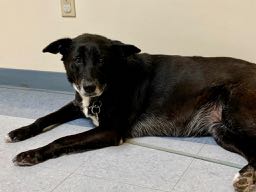
Maggie at the vet

While calming Maggie, I made small talk with a woman who had worked with my father. Her cat waited quietly in a red backpack cat carrier on the bench next to her. We waited and chatted while people dropped off and picked up their cats, mostly. Through a window, I could see the man with the brindle boxer standing outside, still owning the sidewalk, although it looked a lot less like ownership now.

A technician came out and called a name. Three people, a woman roughly my age and two young adult children, stood. The girl went outside and came back in with the man and the boxer.

“We have a private room here,” said the technician as she opened a door behind her.

I couldn’t see the other faces, but I could see the man, pressing his lips together, the corners of his mouth turned down, as he slowly led the boxer in. A few minutes later, the girl came out again, her eyes red and puffy. She went outside and came back with an older man, who walked very slowly.

The door to the room opened.

“Pop, we’re in here,” said the red-bearded man. His voice broke.

The girl followed her grandfather. She was openly weeping now. With her back to me, I saw the large sparkly letters on her gray hoodie — “LOVE LOVE PINK.”

I wished I could magically change it to read “LOVE LOVE BRINDLE” because I knew that’s what she was feeling.

The small talk ended. My father’s friend and I both watched the drama with heavy laden eyes as the family closed the door to their private room at the vet.

“So hard,” she whispered to me.

Yet, we were witness to a well-loved dog surrounded at the end by three generations.

Sometimes the most terrible things are also the most beautiful.

family · Grief

Peeps and Pictures

My husband’s youngest brother, Ken, passed away last September in Kansas. The New York memorial service was held this past Friday.

Bud’s sister, Jeannie, gave a eulogy. It reminded me a little of my own words about my brother Stewart — how we all carry pieces of our loved ones with us.

In her eulogy, Jeannie said, “[Ken] was the kind of person who would buy a huge roll of paper, paint, a palette, and not brushes, but Marshmallow Peeps for his kids to paint with for Easter.” I loved that image of Ken — fun, creative, involved with his kids.

The day after Ken’s memorial service, we had a Zaengle family reunion. Bud is number two of thirteen children — plus a cousin came to live with them when her mother died.

So Bud’s parents raised fourteen children.

In a tiny house.

With one bathroom.

But I digress.

His father passed away over 10 years. Bud’s brother, Jack, passed away in 2007, and then Ken in 2017.

On Saturday I tried to sneak a photo while a real photographer was taking a group picture of the remaining nuclear family. Clearly, I am NOT a photographer — Tom’s face is hidden behind Jeannie’s pink hat, Don is half hidden by Joe, and Mary is all but obliterated by Anne. But here they are:


Maybe when the big group pictures are available, I’ll post one here.

I left the party early on Saturday to bring Mary to a “thing.” (Trust me, there WILL be a post about that at a future time.)

The next morning, Bud was telling me about what I missed in the evening.

“Ellie did the cutest thing,” he said. Ellie is Ken’s daughter.

Ellie

Bud said, “She had a box full of little squares of yellow paper. She had drawn a picture on each one, and the picture told a story. She was handing them out and I got one of the last ones.”

He pulled it out of his pocket to show me.

“The person on the right,” Bud explained, “loves candy. He’s standing outside a candy store and looking in the window at all the candy. And he’s drooling because he wants to eat it all.”

I laughed.

And looked for the Peeps in the candy display.

Clearly, Peeps would not be found in the candy store though. They would be in the art store. With all the brushes.

I could see Ken in Ellie and in her picture.

Thank you, Jeannie, for that reminder to look for Ken. It’s a beautiful way to remember those who have gone before.

Grief

Dr. Purple’s Fall

Those who know me well know that I have spent hours researching Dr. William Purple from Greene. He was a fascinating man who lived a long life in service to his family, his community, and his profession.

The following story is based in fact; I’ve tried to tell it with Dr. Purple’s voice.

William D. Purple lived from 1802 to 1886. He and his wife, Julia, had four children: Julia, Agnes, William, and Mary.


October 4, 1864

Ah, William. You are my Icarus. How I longed to see you fly to safety!

When you registered for the Civil War draft in June of 1863, my heart nigh burst with pride and broke for sorrow. And when your name was called to serve, you readied yourself.

But you began a cough. With the date fast approaching for the regiment to leave, your cough grew worse. When I saw the blood in your sputum, I knew.

Consumption.

I had heard of soldiers leaving for the war and being sent home with consumption, but far more tales were of young soldiers who died away from home from that dread disease. I wanted to be sure of your care.

We scraped together the $300 to pay the commutation fee and release you from service. $300, dear Icarus, for wax and feathers, and, through friends, a bank job in the north, where the air is fresh and clean and curative. I had hoped that you would carve a place for yourself in the banking world.

You had not the heedless hubris of the ancient Icarus. What did Mr. Averell, the bank president say in his letter? “William was a man of great simplicity of character, purity of purpose, confiding and generous in his feelings. He will be missed.”

Yes, you will be missed by no one more than me. I missed you the moment I put you on the stage for Canton, daring to hope that it would not be the last time I would see you alive. Yet, one year later those waxen wings, the escape that I, your Daedalus had planned for you, dipped you toward the netherworld before allowing you to soar to Heaven itself.

I walked last night as if in a dream. It was a moonless night and I had not brought a lantern. As I passed the open doors of  the Chenango House, light streamed out. I could hear laughter and music within. Once passed, I walked in darkness and all I could hear was the flowing water of the Chenango River. It beckoned me, like the Icarian Sea.
“Come,” it said, “I can reunite you with your William, your Icarus.” I walked toward it, my thoughts lost in heavy grief. “Come,” whispered the river.

I remember approaching the bridge. The night was cool and I hadn’t worn an overcoat.

The next thing I remember was August Willard kneeling over me, his lantern held aloft by my Mary. My left arm, cold and wet, draped into the river. My feet felt tangled, and rested up the steep embankment that was strewn with leftover canal stone dumped there years ago. My head ached; the rocky pillow upon which it rested was coarse, cold, and damp.

“William,” August said, whilst shaking my shoulders, “Julia is so worried. We must get you home.”

Mary set the lantern on a rock and assisted August in getting me upright and to level ground. I leaned heavily on the two of them as we slowly made our way home. My whole body was bruised, but my left side – my shoulder, arm, hip and leg – was badly abraded as well. Blood from a gash in my head continued to trickle down my cheek as we walked. Julia paled as she saw us enter the house.

“I’ve been so frightened for you, William,” she cried, gently placing her hand on my bloody cheek before hurrying into my office for some medical supplies.

The story unfolded to me as August tended my wounds. I had been gone for hours. Julia had sent Mary across the street to August’s house. She roused him and he willingly searched for me. But, how long had I lain below the bridge? That was a mystery.

Had I accidentally stumbled?

The night was so very dark, and my thoughts occupied by one thing, my only son’s death.

Or, had I heeded the river’s call?

“Come, Daedalus. I will give you wings to fly to your son.”


The Greek myth of Icarus and Daedalus can be read here: Icarus and Daedalus

Consumption is better known as tuberculosis. During the Civil War, an estimated 14,000 soldiers died from tuberculosis. In the Union camps, it was treated with “fresh air” and lung surgery. Outside the war, tuberculosis was the leading cause of death in the 19th century.

family · Grief

It’s November 3rd, That’s Why

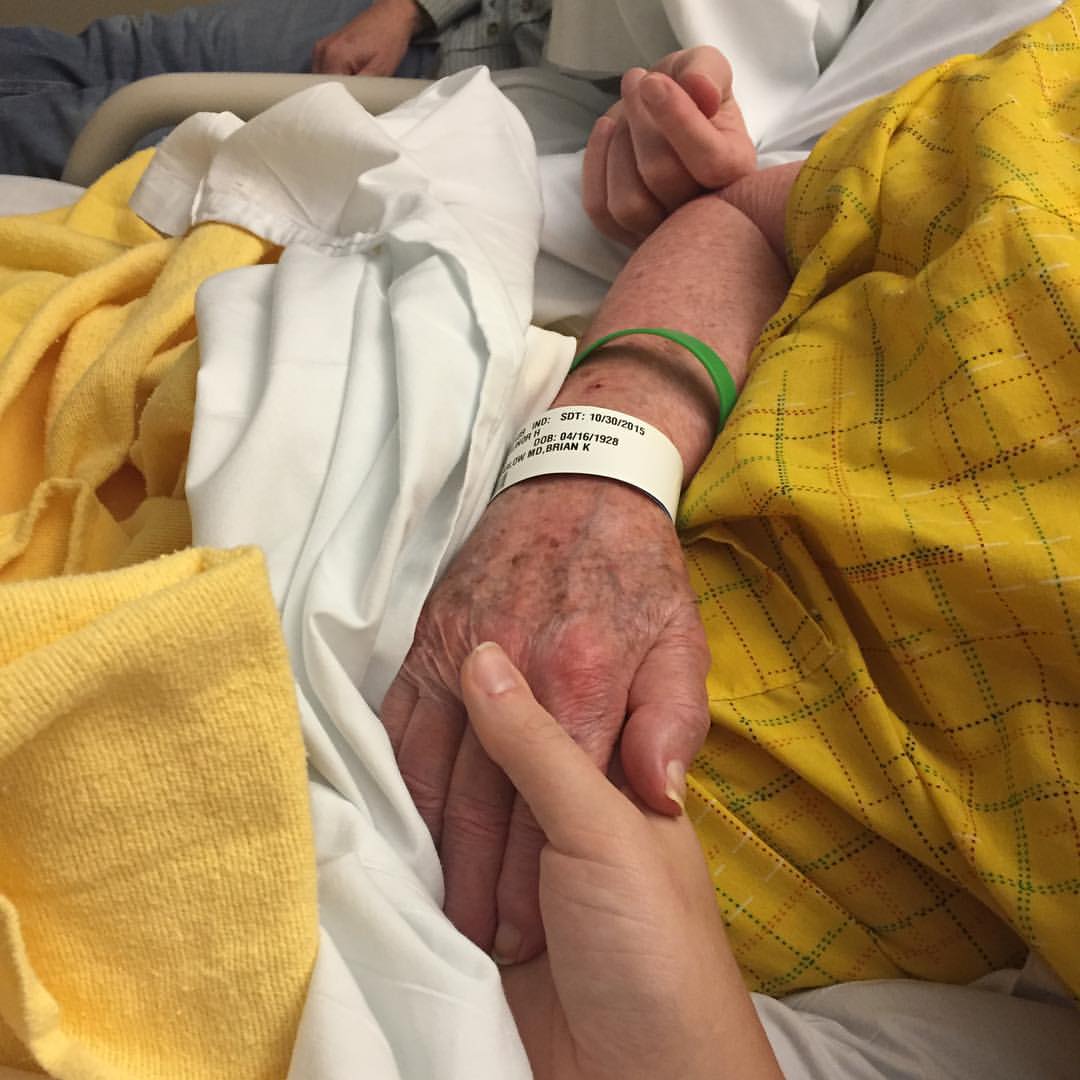
Two years ago this — Helen and I kept vigil through the night with my mother. Helen had snapped this picture while I was dozing.

Three generations of hands

I went home in the wee hours, grabbed a little sleep, then went back to the hospital to relieve Helen.

After struggling so much the day before, making terrible gurgling sounds as she tried to breathe, my mother finally slept peacefully. I think the atropine helped.

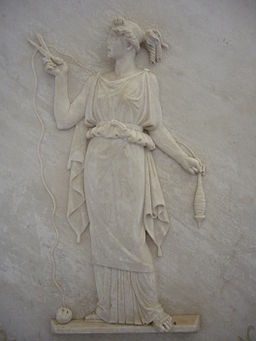
Atropine gets its name from Atropos, one of the Fates, the one who chooses the mechanism of death and ends a mortal’s life. I find that both strange and interesting.

But my mother slept.

And we took turns sleeping.

At the end, Helen was sleeping when my mother passed away. My siblings were all there, but Helen, who had been so close to my mom, so faithful and present in so many ways, was not. In retrospect, I should have called her. But I didn’t know when the thread of life would finally be severed. None of us really do.

November 3rd feels heavy, like a weight on my heart.

My friend, Michael McNevin, wrote a song we play every November 4. The first few lines run through my mind unbidden.

Thinking of the cold to come…

It was 61° this morning — not very cold, but I shivered anyway. Today my father goes for a physical as a step toward entering an adult home. I am so unsettled with this decision. Ah, the cold to come.

From what I hear it will make me numb…

I remember the numbness after my mother died. I don’t want to feel that again, and yet, it is inevitable. My father walks more slowly now, shuffling along with his walker. His pacemaker paces 90% of the time. His thinking is muddled at an unquantifiable percentage.

Two of his peers took him to lunch the other day. When his friend brought him home, he pulled me aside. “Your father really couldn’t follow any of the conversation today,” he said, “And he fixated on one small thing. That was all he could talk about.”

Yes, I’ve noticed that, too. It makes me sad.

Look at how the wind goes by…

A breeze refreshes, but the wind is the wind. It blows through our lives – pushing us along, trying to hold us back, knocking dead branches out of trees, grabbing loose items and skittering them away.

Two years ago my mother died on a cold November day.

I can remember walking up the hill to the hospital that last time when she was still alive. It was still dark, maybe 5 AM. I wanted to give Helen a chance to sleep. The wind blew tiny raindrops against my cheeks — portending tears to come.

It’s November 3rd, that’s why.