
Coke machines aren’t unusual — except when seen on a trail from a medieval fortification.

One of my favorite days on my recent trip to Croatia and Bosnia-Herzegovina involved a full day tour from Mostar. Our tour guide, Emir, was very knowledgable, engaging, and absolutely wonderful. I highly recommend him. (See: Kravice Waterfalls, Pocitelj Old Town and Blagaj Tekke Day Trip) I’m sure I’ll write more about his tour in the days to come.
But Počitelj.
It was our last stop after a full day of sightseeing. Emir drove us to the top of a little mountain or large hill — I’m not sure what the distinction is.
Side note: Bosnia is a country of panoramas. Every time I looked out the window of the train or car or bus, I was struck by the beauty of the place. A town nestled in a valley. Sheep grazing on a hillside. Haystacks. Farmland. Mountains. Rivers.
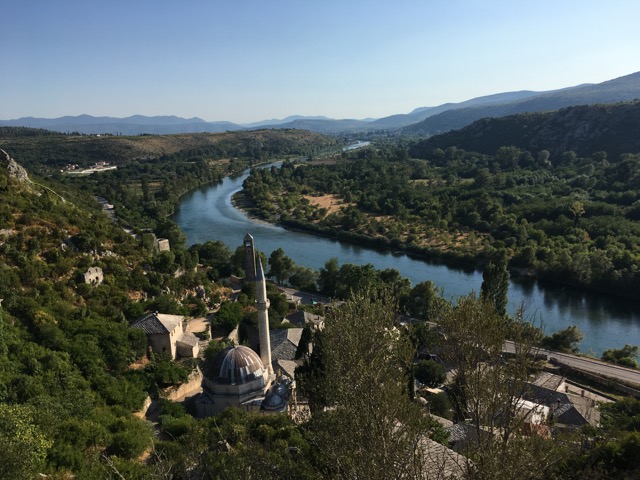
From the top at Počitelj, we looked out over the Neretva valley and down on a cluster of homes and the mosque.
According to Wikipedia:
The entire historic urban site of Počitelj and surrounding area suffered extensive collateral damage during the 1992-1996 war in Bosnia and Herzegovina. Namely, it was heavily damaged by Croatian forces during the 1993 Bosnian War. Following the bombing, Počitelj’s sixteenth-century master works of Islamic art and architecture were destroyed and a large part of the town’s population was displaced.
That’s Bosnia — beauty and war damage intertwined with each other everywhere. Destruction and rebuilding, rebuilding, rebuilding.
Hope.

Everyone else in our group climbed to the top of this tower, but the stairs of Dubrovnik had done me in. (I made 5x my stair goal one day in Dubrovnik.) I relish alone time, too, and saw this as an opportunity to sit and just enjoy the views.
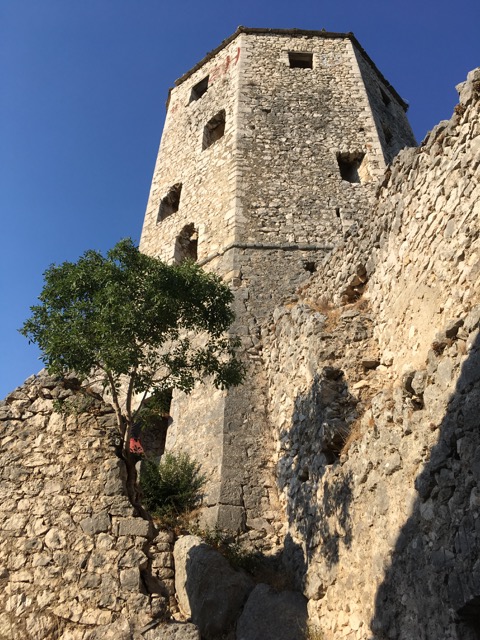

The place was spectacular.
The Coca-Cola machine on the path down, undoubtedly pre-war, was a reminder of a different time.
I laughed when I first saw it; it was so unexpected.
But if I think too much about it, I may cry.









 Hot Dogs and Marmalade