family

When Boys Become Men

The other day I worked a few hours in the mid-day so that the full-time staff could attend a meeting together. Karl was heading into the gym anyway to work out so I grabbed a ride with him. I made arrangements with “Fred” to pick me up, which turned out to be a good thing since I had forgotten my phone.

When I finished work I headed to the front door to wait for my ride. A number of welcoming couches sit in the lobby with a good view of the circle where cars pick up and drop off people. I thought about sitting — I tend to stand and pace when I lifeguard — but a man was sitting on one of the couches and I didn’t feel like making small talk so I stood at the door.

I stood.

And waited.

And watched.

Fred must have forgotten me, I figured. Fifteen minutes had passed and there was no sign of him. Sometimes he gets involved in his reading and loses track of the time. Really, don’t we all do that when we’re in the midst of a good book?

I walked back to the pool and called the landline at the house. No one answered, so I left a message, and walked back out to wait some more.

My feet were tired. I wanted to sit, but that darn man was still sitting in the lobby, his back to me, engrossed in a book. I sighed and decided to chance the small talk.

When I rounded the couch, I realized that the man was Fred!

How can a mother not recognize her own son?

One minute a little boy’s eyes are twinkling with mischief. His hair is tousled or buzzed right off. His t-shirts reveal what he had for lunch that day — or dinner the night before. His knees are covered with Buzz Lightyear bandaids. His feet are bare.

And the next minute, he’s six foot something, with hair cut by a stylist and clothes carefully coordinated for the activities of the day.

My whole family was together this past weekend. The kids all went into the sports center to play squash and swim. One of the ladies at the front desk stopped me on Monday.

“I saw some of your boys at the gym this weekend,” she said.

“They were all at the gym,” I told her.

“Even Sam?” she asked. She knows he lives thousands of miles away.

“Yes, even Sam,” I replied.

I pulled out my phone to show her a picture I had taken while everyone was together.

“Oh, my,” she said as I identified each of my children. “They’re all so grown up!”
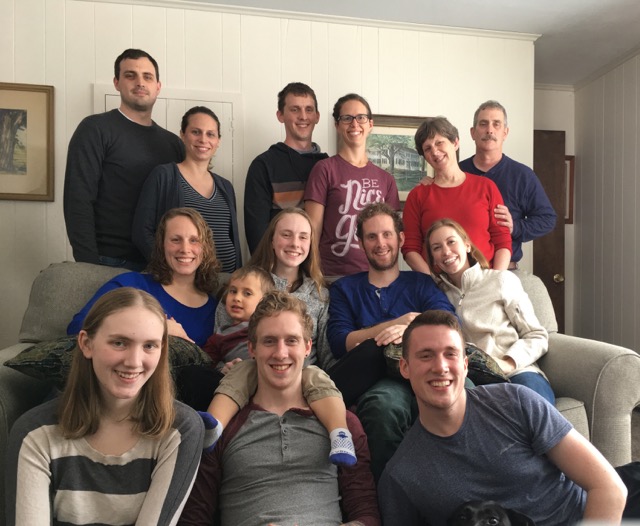
Back row: Philip, Amanda, Sam, Donna, me, Bud
Middle row: Helen, Laurel, Owen, Emily
Middle row .5: Henry
Front row: Mary, Karl, “Fred”

Yes, they are.

Boys become men.

Girls become women.

Family remains family — and grows.

I am so blessed.


dementia · family

Old Photographs

One of my kids told me, “I pulled some pictures out of the garbage by Grampa’s chair yesterday.”

“What?!” I said.

I knew my father had been going through old photographs. It’s something he enjoys. He’ll sit there for hours sifting through and resifting.

“Hey! Have I ever shown you this one?” he’ll ask as I walk past.

I’ll pause and squint to see the glossy black-and-white snapshot in his hand. “This is the house I used to live in,” he’ll explain, and sometimes launch into a story of how his cousin lived right next door and that there was a path worn through the trees, or how he and his father hid time capsules under the floorboards or in the walls.

“This is my father,” he’ll say. “He was a pretty handsome fellow, don’t you think?”

“Here’s one of my old girlfriends,” he’ll say, and my stomach gets a little squeezy because I don’t want him thinking about old girlfriends even though I know that’s silly.

As my son was telling me about the photographs that had been in wastebasket, he looked in. “Here they are again,” he said, and he pulled several out.

I was upset and a little bewildered. Why was my father discarding these old photographs?

“I think it was just an accident,” my son said, reading the unhappy look on my face.

No, the first time could have been an accident, but twice in two days seems pretty intentional.

I’ve heard my father say, in very general terms, “I don’t know who’s going to want all this stuff.”

“What are you wondering about?” I’ll ask.

“That Johnny Damon statue,” is a common reply. He went through a period convinced that we needed to take Johnny Damon to the Baseball Hall of Fame. Surely they would want it. 

I’m not so sure.

Maybe he was thinking that no one would want these old photographs.

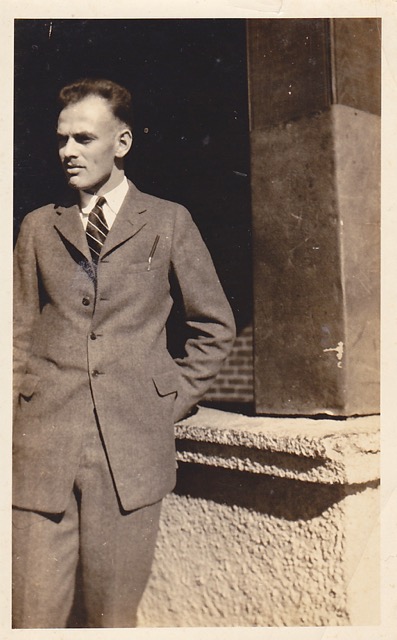
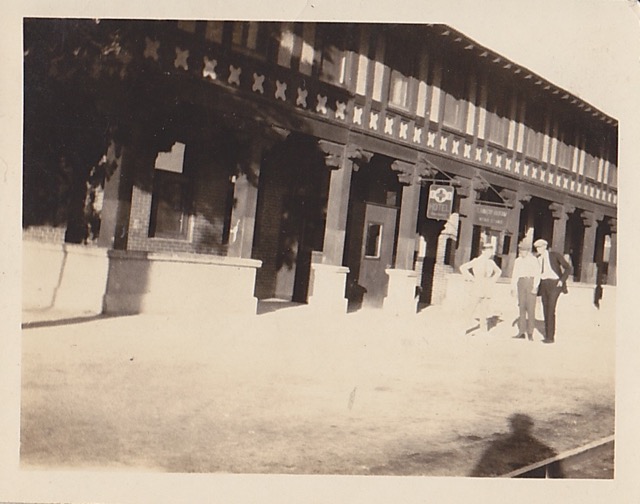
I looked at the most recent batch pulled from the garbage. They were all taken in Seligman, Arizona, in 1924.

The story goes that my grandfather and some friends had driven a car across the country in 1924, stopping in towns along the way to sell advertising on the side of the car and work for a short stint to earn money for the next leg of the journey.

Here’s my grandfather.  He is a handsome fellow.

This is the Harvey House where I think they stayed. I know that because my grandfather was very good about writing words on the backs of photographs to identify the picture.
Except he didn’t identify this one but I think it’s him and his friend and the car and a roadside picnic.

I’ll have to ask my uncle or my aunt.

My father’s memory is dwindling.

And his thinking is muddy.

Otherwise, I doubt he would have thrown out the pictures.

In any event, they’re safe now.

dementia

It’s like I never made a sound

I was scribbling times and notes to myself on my meet program when I heard two boys talking behind me. Despite the loudness of the pool area — the splash of water, coaches yelling, parents cheering — their conversation caught my attention.

“You know, the water isn’t wet until you touch it,” said one.

“What are you talking about?” asked the other.

“The water isn’t wet until you touch it,” the first boy repeated.

“It’s always wet,” said the second boy.

“Nope, not until you touch it,” said the young metaphysicist.

I quickly wrote the quote into my program so I would remember it.

That conversation reminded me of a Dear Evan Hansen song which then ran through my head for the rest of the day. The song, Waving Through a Window, had nothing to do with water or wetness, but had everything to do with metaphysics of perception, but on a deeper level.

Evan Hansen had taken the classic question — if a tree falls in the forest and no one is around to hear it, does it make a sound? — and morphed into a question of something more.  The original question really is: can something exist without being perceived? That’s exactly what my young swimmers were discussing. Is water wet if no one touches it?

The question Evan Hansen asked was: when you’re falling in a forest and there’s nobody around, do you ever really crash or even make a sound?

The whole song is sad, about being on the outside looking in and never really feeling like you belong.

It’s about the pain and insecurity of being vulnerable, and so choosing not to participate in society.

It’s about isolation.

Sometimes I think about the hidden-ness of what I do. Nobody sees the dishes, the laundry, the putting away of books and papers that will be gotten out again tomorrow by a man who doesn’t remember. Nobody sees the toilet cleaning or the sheet washing or the cleaning of unmentionables in unmentionable places.

People see me at the store. They ask how my father is doing, and I hesitate in my answer. He mixes up the Jumbles and puts wrong answers in the crossword. He makes comments that make me blush, or make me upset, but ultimately remind me that he grew up in a different era. He needs help finding things — his wallet, his hearing aids, his pens — and I help him.

But when someone asks how he’s doing, all those things run through my mind and I say none of them.

Yesterday a woman placed her hand on my arm while I hesitated. “I know,” she said. “I know.”

And I knew that she knew.

If you are a caregiver and never tell people all the things you do, it doesn’t mean you don’t do them.

Like the tree crashing in the forest, people who have heard that sound know that it exists. Other caregivers know what goes on in the home.

I believe that water is wet even before I touch it, and that trees make a sound when they fall, and that when people struggle, even if nobody sees them, the struggle is still real.

That thought is a comfort to me.

And reminds me to be kind.


Taking a page from Osyth‘s playbook — I used  a line from the song for my post title.


Life

Amen

Yesterday we had a guest preacher, a woman from a nearby city. When she called the children forward for the children’s sermon, two school-age boys and one toddler girl came forward.
The little girl was delightfully in her own world, jabbering and clapping her hands. At first the pastor tried to quiet her and distract her, but her efforts were fruitless.  The girl had obviously just figured out that she could string words together and adults would stop to listen.

The pastor moved on. With a steady little drone of chattering in the background, much like a cheerfully babbling brook, she launched into her mini-sermon on gratitude.

Then she made the mistake of asking the boys about the best Christmas present they got this year. I knew the answer before they said anything.

Lego.

Both boys are Lego maniacs and love to talk about it. They began describing the giant Lego sets that they had received.

“I think mine had ten bags of pieces in the box,” one boy said.

“No,” said the other, his brother, “it had twelve!”

They debated the full number of pieces and how long it took to assemble. Meanwhile, the little girl kept up her jabbering. I didn’t think the pastor was going to be able to reel in her children’s sermon, but she did.

“Let’s finish by saying thank-you to God,” the pastor said.

One boy threw his hands in the air and yelled, “Thank you!”

But the pastor said, “No, let’s bow our heads and close our eyes to talk to God.”

The boys complied. The girl twirled around.

“Thank you, God, for all the good things You give us,” preacher prayed. “Amen,” she concluded, emphasizing the “A”.

One boy’s head shot up, then his hand followed. “I have a question,” he said.

I’m sure she was anticipating more Lego talk. I was surprised she didn’t look exasperated.

“Yes?” she asked.

“Why can’t we say ‘A-women’?” he asked. “It doesn’t seem fair.”

I had to stifle my laughter.

Kids.

You never know.


Coaching swimming · Life · swimming · Uncategorized

Change

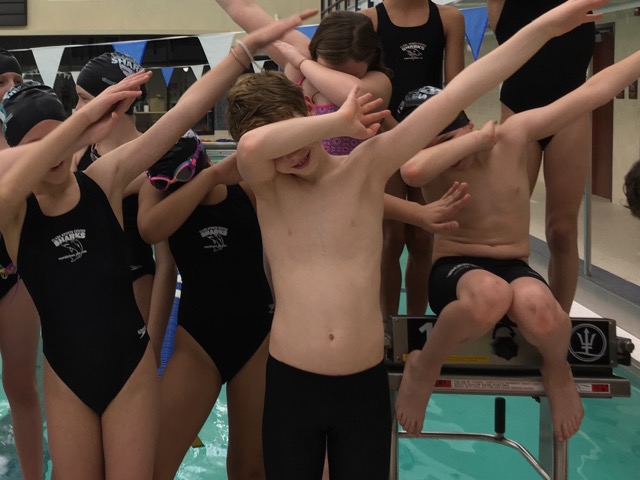
Some of my swimmers dabbing at practice. I love these kids.

When I walked into the pool area yesterday, one of my swimmers was waiting for me. She looked up at me with doleful eyes. The corners of her mouth were turned down. Way down.

“What’s wrong?” I asked, crouching down to talk with her.

She pressed her lips together and I could see her lower lip quivering.

“Is this because you moved up?” I asked. Technically, she wasn’t my swimmer anymore. She had moved up to the next group.

Almost imperceptibly, she nodded yes.

“Aw, Genna*,” I said, “we talked about this the other day. You are so ready to be part of the Orange group. Plus Coach Katy is super-fun, so much more fun than I am.”

She looked up at me doubtfully.

“Don’t worry about the warm-up. Coach Katy will tell you what to do,” I told Genna. “It’s different from ours, but you can do it.”

I was running out of encouraging/reassuring things to say to this sad little girl who obviously didn’t like change.

“Coach Sally,” she finally said in a tiny voice. I leaned in to hear what she had to say. “Coach Katy doesn’t have lollipops like you do.”

I laughed. At the beginning of the season, Genna had hung back, hesitant to try anything.

“What can I do to motivate her?” I asked her sister one day.

“Candy,” she replied.

I bought a bag of dum-dums. They were magical.

Yesterday I whispered to Genna, “I’ll give some lollipops to Coach Katy. Would that be good?”

Immediately her face brightened and off she went with her new coach. I sighed and headed to my lanes where my swimmers were already warming-up.

I studied the swimmers who were in the water. “Where’s Bern*?” I asked.

Bern had just moved into my group. Katy spotted him and brought him over to me. He stood shivering beside me, chewing on his goggle strap.

“They’re finishing their warm-up,” I told him. “You can get in and do 100 freestyle. We’ll be moving on to something else soon.”

He didn’t respond. His expression was inscrutable as he stared at the water and chewed his goggles.

“Do you know any of the other kids in this group?” I asked.

He took his goggle strap out of his mouth. “I don’t want to warm up,” he said.

“Warm-ups are important,” I said, and was about to launch into a mini-treatise on warming up when his mother came into the pool area and called him over.

Bern went over, stood in front of her, and immediately burst into tears.

I backed away. I had a dozen or so kids in the water who needed attention. Mom could talk to Bern.

I handed out kickboards and explained what we would be doing.  The kids started their kick set. Every so often I looked back at Bern. He and his mother were having quite a têteà-tête. Finally I saw Bern drying his tears.

Soon his newly-dried face wouldn’t matter because he jumped in the water and started swimming. He did fine.

At the end of practice his mother told me, “Bern doesn’t like change.”

“Neither do I,” I told her.

She said, “He told me, ‘I don’t care about swimming fast. I just want to swim with my brothers.'” His two younger brothers were still in the group he had graduated from.

With that, I appreciated Bern so much more.

We all hold onto things that are sweet and dear.

For Genna, it’s candy.

For Bern, it’s his brothers.

For me, it’s a thousand little things I want to freeze in time instead of watching my father age.

But time marches on, and change comes with it.

It will be okay.


*not their real name


poetry

My Baseball Hero

I live in a baseball town, and yesterday (I think) they announced the 2018 inductees into the Baseball Hall of Fame.

As part of a Christmas gift, I wrote the following poem about my favorite baseball moment ever. It’s a true story.


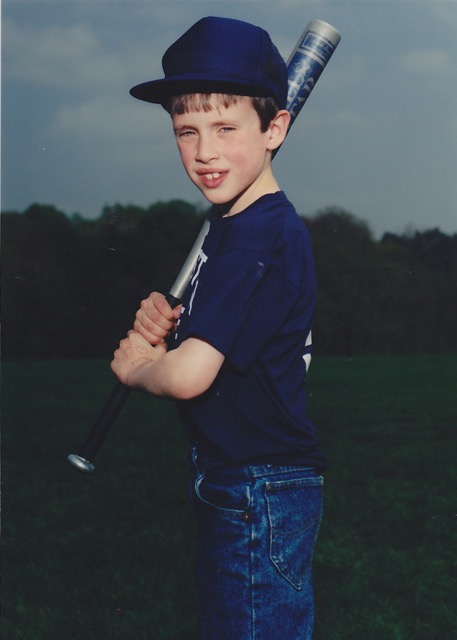
The outlook wasn’t brilliant for Philip’s team that day
Down one run, bottom of the 9th, not much more time to play
When the first kid hit a single and the next one drove him in
The winning run stood on 3rd. Why, yes — they just might win!

Next the powerhouse was up, swinging with such might
But never once connecting — a strike-out was his plight.
The next batter puffed his chest out; he had it in the bag
Strike One! Strike Two! Strike Three! We watched his shoulders sag.

Their final hope now rested on a boy who never hit —
Philip straightened up as best he could, and whispered, “This is it.”
Inside his floppy uniform, his heart was beating fast.
His team-mates in the dugout sat with eyes downcast

They couldn’t bear to watch their hopes whiz by in swingless strikes
They packed their gloves in waiting bags, and eyed their waiting bikes.
Philip took some practice swings, and caught his Grampa’s eye
Grampa winked and nodded — and Philip knew he had to try

He stumbled to the pentagon that marked where he must swing
He looked up at the pitcher — and then he did this thing
That his grandfather had told him — Just a give a little wink
When you’re looking at the pitcher. He won’t know what to think.

So Philip winked, the pitcher threw, and Philip swung bat
And, by gum, he hit that ball in a satisfying whack.
It sailed over the infield. It sailed to center-right.
I wish that I could tell you that it sailed right out of sight.

It fell in outfield grass and the fielders scrambled to it
But the guy on base came safely home, and Philip’s whole team knew it
He had hit the winning run. He had saved the day.
He had winked right at the pitcher, and then hit the ball away.

swimming

Streamline

I repeat the word “streamline” at least a dozen times every I’m on the deck.  I probably say it in my sleep.

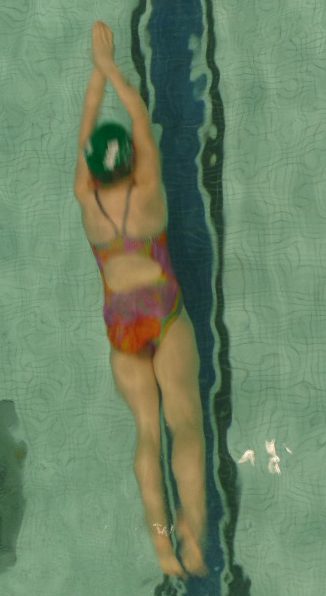
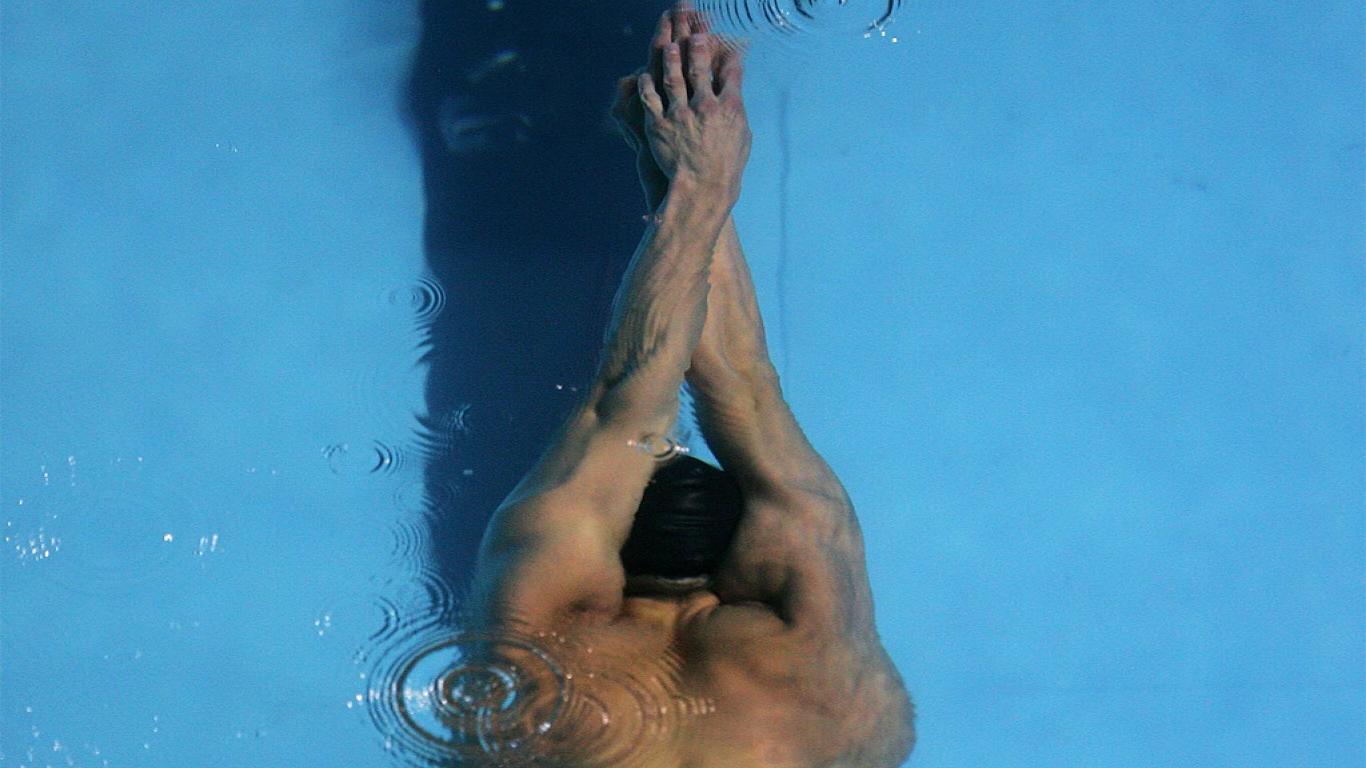
What I mean by streamline is what Michael Phelps is doing in this picture:

It’s pretty straightforward (no pun intended).

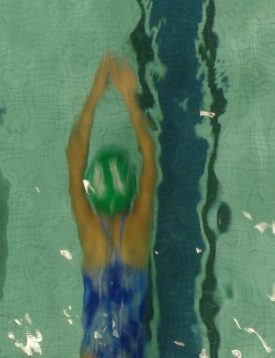
A couple of seasons ago I showed my swimmers the Michael Phelps picture, and then photographed them imitating it. I got quite a few variations on the streamline theme.


We work on streamline at every single practice.

I demonstrate while standing on the deck. I show them pictures. I stand behind them on deck and squeeze their little arms against their head, holding them in the correct position. I have them watch other swimmers in the pool who are doing it correctly. Still, streamline is a struggle and ends up in conversations like this:

Me (speaking to Cute Little Swimmer –or CLS — after watching her forget to streamline): Hey, CLS — when you leave the wall for backstroke, I want you to hold your streamline.

CLS: I do.

I watched her again, and then tried different words to explain it to her.

Me: When you leave the wall for backstroke, you’re doing a good job getting those arms up into streamline, but what you’re doing immediately after is pulling them to your side.

CLS: No, I don’t.

Me (pretending I didn’t hear that): This time really think about holding your arms above your head until you’re ready to take that first stroke.

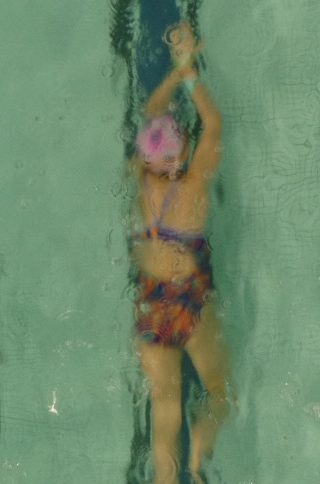
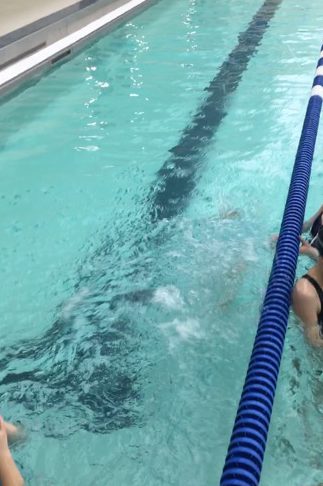
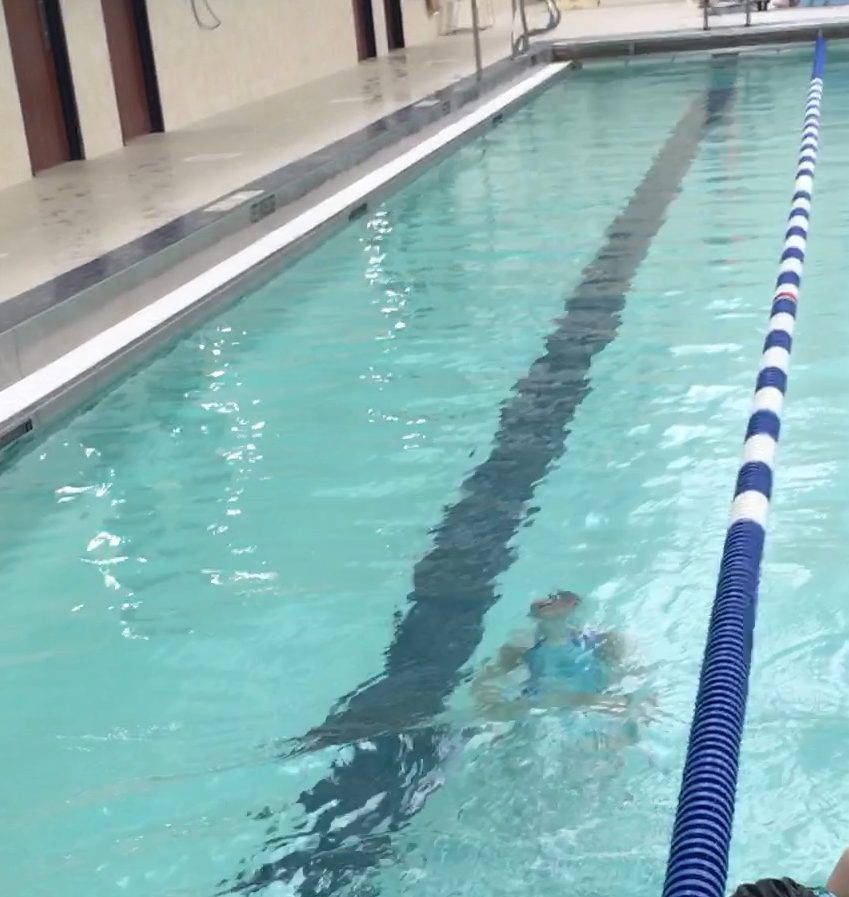
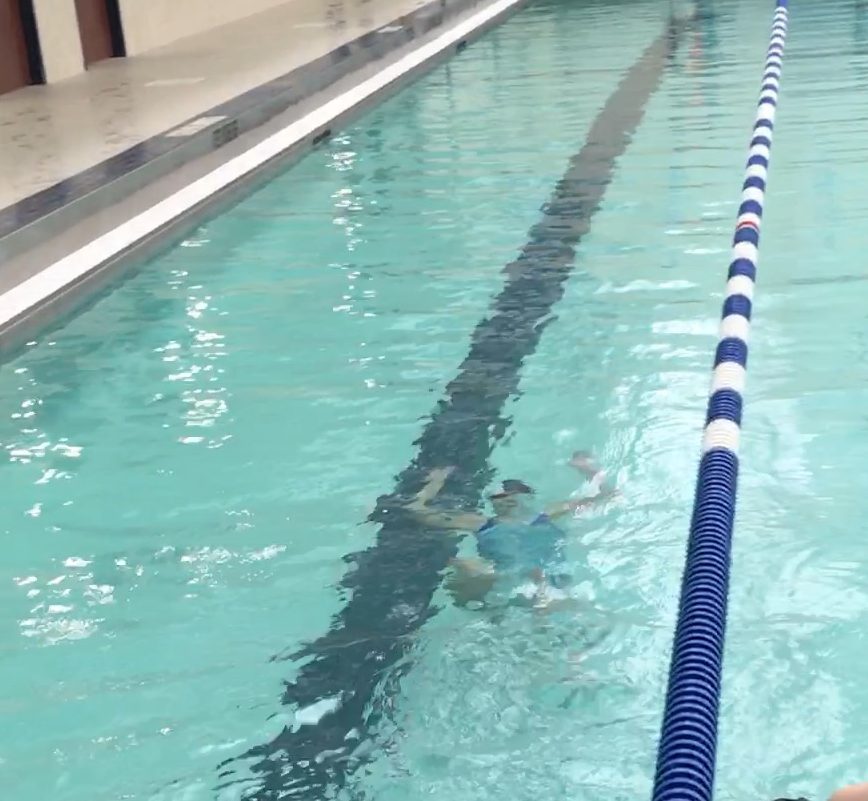
The next time, I took pictures. Here she is, leaving the wall. Her arms were heading towards streamline.But then she disappeared under the water, and I couldn’t see what was happening.

When I saw her right arm, it was out to the side. Not in streamline.

Then both arms were at her side.
She tried to get them back up into streamline.

But she pulled them down again.

When she came back to the wall, I showed her the pictures.

She looked at them, rather disbelievingly.

“I can’t do it,” she finally said to me. “I have asthma.”

It was my turn for disbelief.

Once I had a swimmer tell me she couldn’t kick at practice because she had gotten new boots. “My feet are still getting used to them,” she said. But she obviously wasn’t wearing her boots in the pool. And her feet looked fine.

I’ll keep working on streamline with my group.

At every practice.

Some day maybe CLS will get it.

Faith · Life

Pearls

Let me be candid. I was shouting in the officials’ room at the swim meet on Saturday.

Not my finest moment, for sure. That ugliness left me bone-weary at the end of the day.

The next morning when I got up early to read, I still felt the stone in my gut, the last vestiges of that conflict.

Several years ago, my friend and fellow-blogger Anna Brown made a reference to pearl-formation. I liked it so much I tried to incorporate it into my daily prayers, specifically in my creed where I state those things I believe. After many iterations, I settled on these words:

I believe that the trials in my life are ultimately God’s good for me; they are like grains of sand in an oyster that God uses to produce pearls.

When I arrived at that part the other morning, I thought of the man who had shouted at me and at whom I had shouted in turn.

“Lord,” I prayed, “I believe that ______ is a like a grain of sand, and that You can use him to produce a pearl in me.”

I sat there picturing the process that happens in an oyster. The presence of the irritant is sometimes a grain of sand, but often in nature is a parasite. The  oyster excretes a fluid that coats the irritant, and then coats it again and again and again. The fluid, called nacre, is otherwise known as mother-of-pearl. Shiny, luminous, iridescent. Beautiful.

The longer the irritant stays in the clam, the more coatings it receives. It’s a slow process that can take up to three years for the pearl to reach its size. “Lower-quality pearls have often been ‘rushed’ out of the oyster too quickly (sometimes a year or less) and have a too-thin coat of nacre.” (from Pearls.com)

As I prayed, I could feel the edges of my irritation softening.

I prayed it again, this time inserting a different name. I’ve been walking the edge of irritability for a while now, more and more often losing balance and falling into frustration with this person or that situation.

As I named specific people or issues and prayed the prayer over and over, I began to picture a string of pearls.

And tears began to roll down my cheeks.

The more irritations, the more pearls. I found myself feeling thankful for each one.

The funny thing is, I know I have three more years of interactions with the shouting man.

Three years. Just the right amount of time to form a good pearl.


Life

The Things I Do For Points

I signed up for Get Fit Right, a program at our local gym.  Each week I get a new punch card to try to fill.

As I got in the water the other day for an aquacize class, the shock of the cold water made me grimace a little.

Why am I doing this? I asked myself, but I knew the answer. I’m doing it for the points and the punches on my card.


The Things I Do for Points

Too many numbers on my punch-card need a punch now
Too many classes I don’t think that I can do
Like zumba-yoga-spin-pilates-pound —
The things I do for points, the things I do for points

Thirty minutes in the Fitness Center done now
Went on the treadmill, then the weight machines were next
I worked my pecs, my lats, and other stuff —
The things I do for points, the things I do for points

(yes, that’s me)

Like getting in the pool when it’s cool
And I feel like a fool
And I’m clumsy, but, you know, I’m really trying
And I’m looking to warm up through exercise
I think I’m s’posed to kick now
’cause I’m sinking like a brick now

ooh — I get a punch though
ooh — so that’s okay
ooh — I could go climbing up the wall

A few more points and I will meet my weekly quota
A little fitter, too – the icing on the cake
I’m getting fit right if it kills me now —
The things I do for points, the things I do for points


The real version of the song:

Grief

Dr. Purple’s Fall

Those who know me well know that I have spent hours researching Dr. William Purple from Greene. He was a fascinating man who lived a long life in service to his family, his community, and his profession.

The following story is based in fact; I’ve tried to tell it with Dr. Purple’s voice.

William D. Purple lived from 1802 to 1886. He and his wife, Julia, had four children: Julia, Agnes, William, and Mary.


October 4, 1864

Ah, William. You are my Icarus. How I longed to see you fly to safety!

When you registered for the Civil War draft in June of 1863, my heart nigh burst with pride and broke for sorrow. And when your name was called to serve, you readied yourself.

But you began a cough. With the date fast approaching for the regiment to leave, your cough grew worse. When I saw the blood in your sputum, I knew.

Consumption.

I had heard of soldiers leaving for the war and being sent home with consumption, but far more tales were of young soldiers who died away from home from that dread disease. I wanted to be sure of your care.

We scraped together the $300 to pay the commutation fee and release you from service. $300, dear Icarus, for wax and feathers, and, through friends, a bank job in the north, where the air is fresh and clean and curative. I had hoped that you would carve a place for yourself in the banking world.

You had not the heedless hubris of the ancient Icarus. What did Mr. Averell, the bank president say in his letter? “William was a man of great simplicity of character, purity of purpose, confiding and generous in his feelings. He will be missed.”

Yes, you will be missed by no one more than me. I missed you the moment I put you on the stage for Canton, daring to hope that it would not be the last time I would see you alive. Yet, one year later those waxen wings, the escape that I, your Daedalus had planned for you, dipped you toward the netherworld before allowing you to soar to Heaven itself.

I walked last night as if in a dream. It was a moonless night and I had not brought a lantern. As I passed the open doors of  the Chenango House, light streamed out. I could hear laughter and music within. Once passed, I walked in darkness and all I could hear was the flowing water of the Chenango River. It beckoned me, like the Icarian Sea.

“Come,” it said, “I can reunite you with your William, your Icarus.” I walked toward it, my thoughts lost in heavy grief. “Come,” whispered the river.

I remember approaching the bridge. The night was cool and I hadn’t worn an overcoat.

The next thing I remember was August Willard kneeling over me, his lantern held aloft by my Mary. My left arm, cold and wet, draped into the river. My feet felt tangled, and rested up the steep embankment that was strewn with leftover canal stone dumped there years ago. My head ached; the rocky pillow upon which it rested was coarse, cold, and damp.

“William,” August said, whilst shaking my shoulders, “Julia is so worried. We must get you home.”

Mary set the lantern on a rock and assisted August in getting me upright and to level ground. I leaned heavily on the two of them as we slowly made our way home. My whole body was bruised, but my left side – my shoulder, arm, hip and leg – was badly abraded as well. Blood from a gash in my head continued to trickle down my cheek as we walked. Julia paled as she saw us enter the house.

“I’ve been so frightened for you, William,” she cried, gently placing her hand on my bloody cheek before hurrying into my office for some medical supplies.

The story unfolded to me as August tended my wounds. I had been gone for hours. Julia had sent Mary across the street to August’s house. She roused him and he willingly searched for me. But, how long had I lain below the bridge? That was a mystery.

Had I accidentally stumbled?

The night was so very dark, and my thoughts occupied by one thing, my only son’s death.

Or, had I heeded the river’s call?

“Come, Daedalus. I will give you wings to fly to your son.”


The Greek myth of Icarus and Daedalus can be read here: Icarus and Daedalus

Consumption is better known as tuberculosis. During the Civil War, an estimated 14,000 soldiers died from tuberculosis. In the Union camps, it was treated with “fresh air” and lung surgery. Outside the war, tuberculosis was the leading cause of death in the 19th century.