family · Grief · poetry

Ode to a Plastic Box

My brother’s ashes
(I only really looked at them once
So my memory may not be accurate)
Were in a plastic bag
In a plastic box.

The bag was held shut
With a twist-tie.
I like to think it was green,
The color of life.

The rectangular box —
Neither orange
Nor brown
More the color of a dead autumn leaf —
Snapped shut
Like a pocket watch
Safely holding time inside.

It stood upright on the mantle
For at least year.

I whispered to it sometimes,
I miss you, Stewart. 
But he didn’t answer.
He smiled placidly at me
From the photograph
Beside the box.

We placed it in the Columbarium —
It seems like only yesterday —
But it was rainy
And spring
Not frosty
And fall

Tomorrow
The man will bring a new plastic box
Because my mother wouldn’t have wanted an urn
Jim joked about Cool-Whip containers
My mother would have liked that reuse
But I suppose it’s undignified
So she’ll have the box
That comes free
With cremation

She always appreciated a bargain.


This piece was originally written 11/18/2015 — two weeks after my mother died. I guess I never posted it because I found it in my draft folder while I was searching the word “miss” — Linda Hill’s Stream of Consciousness Saturday prompt.

Yes, miss is there — “I miss you, Stewart.”

I had looked at Linda’s prompt last night thinking maybe it would simmer during the night, like my mother’s soups used to on the woodstove. She made the best soup. She really did.

In the wee hours of the morning, the only miss I was thinking on was how I was missing sleep. I suppose I could have written a post on that.

Instead, I decided to give myself a hand by searching drafts. I have over 300 of them! This one hit home because I just had a conversation with a good friend (and this is the Stream of Consciousness part of the post.) It went something like this:

Friend: I suppose I should check on (insert person’s name). Her husband’s dying. He’s probably gone.

Me: You should definitely do that. Especially if you want to go the funeral.

[Note: he had served in Vietnam with the man who was dying.]

Friend: I don’t go to funerals.

Me: Even for someone you’ve known so long?

Friend: I don’t go to funerals. I only go to Celebrations.

I confess. I was judgy after that conversation, but reading this piece about the plastic boxes, I was reminded that grief is so individual.

We, as Americans, don’t have just one way to deal with death. Some have elaborate affairs and big funerals. Some celebrate the life. Some cremate. Some bury.

It seems to be a mix of honoring the person who died, and those left behind saying good-bye. I feel like my family did both with funerals.

And it’s Father’s Day on Sunday.

I miss my father.

family · Grief · Life

Terrible

The RDP prompt for today is twelve. I searched my draft folder and found this incomplete post that had last been edited in February 2016. My mother died in November 2015. I wrote so many posts following her death. I think it was my way of untangling the knot—and it helped.

This post was never completed. When I read it this morning, a flood of memories engulfed me.

Here’s the post which I called “Terrible.” At the end, I’ll try to complete it — though the 10 intervening years surely have changed where I was going with the original.


THE ORIGINAL


The one nurse said, “Well, I guess you’ve never seen a dying person before.”

She was matter-of-fact. Tart. A little smug. Definitely too cheerful.

The other nurse was different. Compassionate. Caring. Gentle.

“Can I do anything for you?” she asked every time she checked on my mother. “Can I get you anything?”

With twelve hour shifts for the nurses, we mostly saw only these two.

When I would ask the first nurse


THE 2026 COMPLETION


When I would ask the first nurse for anything, she did her job, but with so little compassion that I ended up avoiding her. Truth be told, today I can’t even picture her.

Forgettable — that’s what she was. I’m glad I didn’t spend time dwelling on her.

What I remember about my mother’s final hospital stay are definitely the kindnesses:

The other nurse bringing food in for us.

The doctor who called a family meeting. She began with these words, “Mom is very sick, and she isn’t going to get better.” She went on to talk about the fact that modern medicine could keep her alive, but we should think about what was best for her. One of my brothers still refers to her as “the doctor that told us to kill Mom.” It’s that dark famiy sense of humor that we have. I have no doubt in my mind that it was the right decision.

A group of women from the church came to the hospital room and sang to my mother. They had all been in the choir with her, and now they sang for her. It still brings tears to my eyes just thinking about it. Out-of-tune warbly voices of older women joined in some of the most beautiful music I’ve heard.

My siblings and I gathered around the bed, each telling my mother that we loved her. My youngest brother told my mother that it was okay for her to go. I had heard that it can be important to say that, and he said it, all the while rubbing her foot as he stood at that end of the bed.

I feel pity for that nurse whom I had labeled “Terrible.” Her words, I guess you’ve never seen a dying person before, are so hollow.

I don’t know what prompted them, but today, I would take her hands in mine, and say, “I hope that some day, you can gather with your family around the bed of someone you love very much, and you can be with them when they pass. It’s a beautiful thing.”

Terrible vs. beautiful. I’ll remember the beautiful.

aging · poetry

Hickory Dickory

Hickory dickory dock
Time is a melting clock
The hourglass sand
Slips through my hand
Hickory dickory dock

Hickory dickory dock
The windows need new caulk
Body falling apart!
When did this start?!
Hickory dickory dock

Hickory dickory dock
It’s getting harder to walk
No pep in these steps
Need some vodka and Schweppes
Hickory dickory dock

Hickory dickory dock
Did somebody just knock?
Dark spectre with sickle
Well, this is a pickle!
Hickory

dickory

dock


This is my response to this week’s W3 Prompt: write a poem inspired by a nursery rhyme.

I had so many ideas — Georgy-Porgy being taken down by the Me-Too movement. Mary being served a delicious lamb dinner and later finding out why her lamb had stopped following her to school. Three blind mice — what kind of mischief could they blindly cause? I settled, however, on Hickory dickory dock.

The picture was created by moi using ChatGPT

family · Life

Primary Experiences of Life and Death

Many persons live their entire lives without ever seeing a human being die.

Howard Thurman, “Life Must Be Experienced” in The Inward Journey
My father caring for my mother in her last days

At the time, I didn’t realize what a privilege it was to sit with my mother and then my father as they passed from one life into the next.

In some ways, it felt like an awfulness. Especially with my mother, with that gurgle of excess fluid that the nurse would suction out to make her more comfortable. It’s a sound I won’t forget.

And I prayed in my mother’s last few days conflicting prayers of “Please, Lord, let her live until my sister gets here” and “Please, Lord, relieve this terrible suffering.”

She lived until my sister arrived. We were all gathered around my mother’s bed in the hospital — her living children and my father — as she died.

My father went more quickly. One day he was up, dressing himself, coming out breakfast. Before the end of the day, my children had to help him back to bed. The next day he didn’t get out of it and he died that evening.

My brothers were there. One sister-in-law. One nephew. Most of my children. His home health aide. My sister had not yet arrived. My brother played a song on a CD for him as he passed.

My sister got there in the wee hours of the morning and went to see him as he was laid out in his bed. The hospice nurse who had prepared the body had clasped my father’s hands across his abdomen and it looked so unnatural. He looked so dead, and I wished with all my heart that my sister could have seen him alive one last time. We had Face-timed with her in the afternoon, but it’s not the same.

These days, the stories that come out of the hospitals impacted with COVID are awful — the shortages of rooms, equipment, and personnel. The makeshift morgues. The isolation.

I wept one day in the car listening on the radio to a nurse describe staying over and over after her shift had ended to sit with a dying patient because she didn’t want anyone to die alone. How many patients had she done that with? I don’t remember — but it was many.

And I realized the great privilege I had — to sit with my parents in a non-COVID world and tell them I loved them one last time.

A to Z Blogging Challenge · Grief

Blessed is Resurrection

When my father passed away at home, I didn’t know what would happen next — so I went for a walk.

That Sunday spent watching him decline, decline, decline — sitting by his bed — pacing — calling hospice and family and hospice again — trying to make the best decisions based on what he had said he wanted — it all made for an incredibly long day.

Yet, at the same time, the day was too short.

Suddenly he was gone.

I cut across the yard when I left the house, walking past the red maples he had planted 40 years before. Their burgundy leaves were half on, half off —  trees caught mid-way through their fall undressing.

The oak tree I passed was barer. Its brown leaves and acorns littered the ground. Many of the acorns were cracked and broken. I wondered if the damage had been done by squirrels or the fat woodchuck I often saw in that corner of the yard or the heavy equipment that had driven through there earlier in the week to replace our septic system.

The acorns held no promise of a mighty oaks, just broken pieces with jagged edges.

The walk refreshed me, but, back at the house, we moved in a thick fog.

While I had been walking others had left, or come and gone, or stayed, waiting to say good-bye to me.

My two grandsons had been in the house when my father passed. When I heard them playing in the other room, I thought about an article I once read about Irish wakes and how healthy they are for children — to be around death and see that it is a part of life.

In the midst of life we are in death.

Book of Common Prayer

I said good-bye to the grandsons and to my oldest son who looked so weary and so grown-up. I wished he was the size of his boys and this hurt was a boo-boo a bandaid could cover.

A knock on the door surprised me. The man identified himself as a hospice nurse. “I’m here to clean the body,” he said.

I showed him to the room where my father lay. My father’s face looked ashen and waxy.

“Do you have some clothes I could dress him in?” the nurse asked.

My father was still wearing his old red Fenway shirt. He liked to wear Red Sox apparel when he watched their games, and the last game of the season had been on when he passed away.

I chose a favorite flannel shirt and a pair of corduroy pants that went with it.

Leaving the room, I re-entered the family fog. Pea-soup fog, my mother would have called it, so thick you can’t see your hand in front of your face. People may, or may not, have talked with me. I may, or may not, have responded.

The nurse finished. He ushered us back in the room with my father.

My father’s hands were folded on his abdomen. It was a pose I had never seen him in before. He looked so dead.

I look for the resurrection of the dead and the life of the world to come.

Nicene Creed

*****

It has now been 3 1/2 weeks since my father passed. When I close my eyes, I see that dead body. I see my sister coming out of his room, closing the door behind her, at 2 AM. She had just arrived and wanted to see him. I see the funeral director arriving at 8 AM and using the front door to remove the body.

I close my eyes and see death.

Ah, but the Nicene Creed. “I look for the resurrection…”

When I look for resurrection and life, it’s there.

The new grass pushing through the straw where the lawn was dug up for the septic. The two stubborn Shasta daisies that refuse to give way to fall. The geese flying south, calling my attention to them with their noisy honking.

It’s a beautiful sound.

At the memorial service, my son Owen read Wendell Berry’s poem, Wild Geese.

… Geese appear high over us,
pass, and the sky closes. Abandon,
as in love or sleep, holds
them to their way, clear
in the ancient faith: what we need
is here. …

I am surrounded by life in all its beautiful and terrible stages.

Many trees in the yard are already bare, but I’ve lived long enough to know that, in the spring, new leaves will appear.

I know the geese will return, too.

On my walks I see woolly bears hurrying across the road. Sometimes I help them along — picking them up and watching them curl into a ball in my palm, then gently placing them on the other side of the road. I figure it’s one less death for the day.

And I sort through a few of my father’s things.

Life goes on.


A to Z Blogging Challenge · Grief

Blessed is the Quiet

I turned the monitor off Sunday morning not knowing it would be the last time.

For three and a half years I have slept with one ear open, listening to the monitor, learning the sounds of the different creaks of the hospital bed in the room below me.

One creak meant he was getting up. It was followed by the shuffle-thud of him walking with his walker into the bathrooom.

A different creak meant he was getting back into bed. I could hear the soft rustle of the bedding as he rolled onto his side and pulled the blankets up above his shoulders.

If I didn’t hear the back-to-bed creaks but heard the click of the light switch, I knew I needed to go down and redirect. He would be heading to his closet to choose clothes for church — no matter what day of the week it was. Sometimes that happened at 11:30 PM and sometimes in the wee hours of the morning. Sometimes it was every hour throughout night.

The monitor sat on my bedside table where its yellow light showed me it was on and its faint buzz served as a secondary reminder.

Now I hear the deep breathing of my husband sleeping beside me.

Just the other day I had been telling someone that I hadn’t heard the coyotes all summer. With the monitor off and the insomnia on, I could hear them, their long lonesome howls coming from somewhere farther away than previous years, but still there.

I hear a bird I can’t identify.

I hear gentle rain hitting the wide leaves of the hydrangea.

I hear the obnoxious sounds of vehicles driving on wet road. I can identify the milk truck, the speeding pick-ups, the cars. I can tell it’s foggy because everyone drives so much slower.

It’s so quiet, though, without the monitor.

Too quiet.

I want to hear the bed creak and the shuffle-thud.

My father passed away Sunday night.

He had dressed himself Saturday morning and eaten a bowl of cereal. Mid-afternoon he vomited brown-black — a sign of a GI bleed. He went to bed before dinner, and never got out of it again. The next day he was gone.

Thomas Merton said, “Prayer and Love are learned in the hour when prayer has become impossible and your heart has turned to stone.” (Seeds of Contemplation)

Prayer and love are learned in the quiet of a monitor that been turned off.

Merton also said, “The monk faces the worst, and discovers in it the hope of the best.” (Contemplative Prayer)

I’m facing the quiet.

I’m looking for the blessing.

Grief · Life

The Brindle Boxer

When I pulled in to the veterinarian’s office, the red-bearded man with the brindle boxer was standing out front.

Maggie was fluctuating between ecstasy and fear. She had been delighted when she got to go for a ride in the car, but she recognized the building when we pulled in. The dog out front delighted her — Maggie is very social — but the door just beyond terrified.

She jumped willingly out of the car. The boxer squared off in the middle of the sidewalk.

It was a big dog, solidly built. She laid claim to the sidewalk, blocking our way to the entrance. The man made no move to move her. I nudged Maggie to my right side so I would be between her and the boxer. I knew Maggie would want to give an exuberant hello and I wasn’t the boxer shared the sentiment.

The man watched me shift Maggie.

“Don’t worry,” he said, “she can’t see nothing.”

I had already launched into my usual Maggie’s-biggest-problem-is-she’s-overly-friendly line when I heard him add as we passed, “She’s dying anyway.”

His words seeped in as I took Maggie through the door.

I should go out and say something, I thought, as I sat on the bench in the waiting room, but Maggie had already started her shiver-and-shed routine. She really doesn’t like visiting the vet.

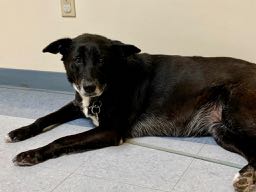
Maggie at the vet

While calming Maggie, I made small talk with a woman who had worked with my father. Her cat waited quietly in a red backpack cat carrier on the bench next to her. We waited and chatted while people dropped off and picked up their cats, mostly. Through a window, I could see the man with the brindle boxer standing outside, still owning the sidewalk, although it looked a lot less like ownership now.

A technician came out and called a name. Three people, a woman roughly my age and two young adult children, stood. The girl went outside and came back in with the man and the boxer.

“We have a private room here,” said the technician as she opened a door behind her.

I couldn’t see the other faces, but I could see the man, pressing his lips together, the corners of his mouth turned down, as he slowly led the boxer in. A few minutes later, the girl came out again, her eyes red and puffy. She went outside and came back with an older man, who walked very slowly.

The door to the room opened.

“Pop, we’re in here,” said the red-bearded man. His voice broke.

The girl followed her grandfather. She was openly weeping now. With her back to me, I saw the large sparkly letters on her gray hoodie — “LOVE LOVE PINK.”

I wished I could magically change it to read “LOVE LOVE BRINDLE” because I knew that’s what she was feeling.

The small talk ended. My father’s friend and I both watched the drama with heavy laden eyes as the family closed the door to their private room at the vet.

“So hard,” she whispered to me.

Yet, we were witness to a well-loved dog surrounded at the end by three generations.

Sometimes the most terrible things are also the most beautiful.

family

My Mother’s Closet

My mother’s  closet has only been hers.

When my parents bought this old farmhouse 50 years ago, it had one closet — a tiny one, at that.

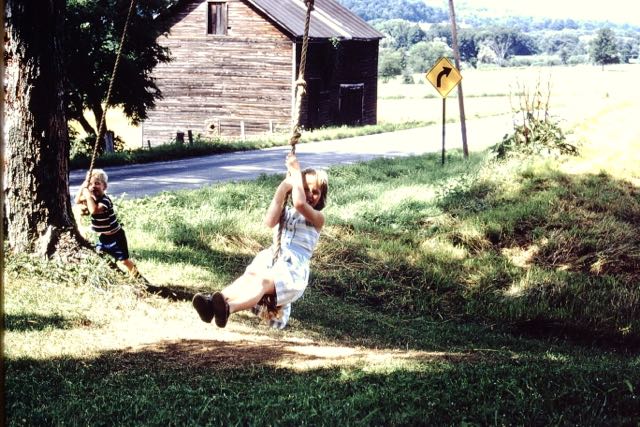
While we kids put up a rope swing, my father put in closets.

Putting up the rope swing

Swinging

putting in closets

Bi-fold doors must have been in then, because that’s what he installed — in his closet, my mother’s closet, my sister’s closet, and my oldest brother’s closet. The rest of us didn’t get closets; we had cardboard wardrobes.

I stood outside my mother’s closet the other day, hesitating to open the door. It has to be done — the cleaning of it, I mean. She’s been gone over a year and a half. My son is staying in that room. And he sure could use a closet.

But I stood there, not wanting to look again at what’s inside.

The brown wool plaid skirt. The green skirt with Greek meander border. The dress she wore at my wedding.

The ruffled blouses that she wore to dress up.

The sweaters.

The housecoats, even.

They’re housecoats, for crying out loud.

But I can picture her standing in the kitchen wearing them, making our lunches for school.

A woman I know lost her house in a fire recently.

Is that how you want to deal with your mother’s things? a voice whispered in my heart. I knew it wasn’t God, because He didn’t burn my friend’s house down. He doesn’t threaten to burn houses down. I saw, however, in my mind’s eye, my fingers being forcibly pried off the things I’m holding onto.

Is that how I want to deal with my mother’s things? No. Absolutely not.

But they must be dealt with.

Garbage? No. That’s wasteful. My mother was never wasteful.

A yard sale? No — I don’t think I could bear watching people paw through her things.

Donate to the church’s rummage sale? No — same reason.

I think I need to box it all up and take it to a donation point in another city. She would want some good to come of it all.

Then, I’ll have to look at an empty closet.

And mourn a little, allowing the closet’s history to move just a wee bit distant into the past.

Before my son moves his stuff in and the closet has its second occupant.


A to Z Blogging Challenge

November

“Did I do anything for your last birthday?” I asked Laurel this morning.

I honestly couldn’t remember. Laurel’s birthday and my mother’s deathday were too close together.

“Uh-huh,” she answered. “You made rice.”

Not really sure that will win me any parenting awards. Rice. In the microwave.

But it is one of her favorites.

November was a blur.

“Did I buy you any presents?” I asked her.

“Yes,” she answered. “Pajamas.”

At least it wasn’t socks and underwear.

Wait — maybe I got her those, too, and she was too polite to tell me.

I remember so little of that month.

Did we celebrate Thanksgiving? Did I make the turkey?

What did I do for the 30 days that November hath?

I looked through the pictures on my computer for clues.

Here is the story they told:

On the day my mother died, I noticed the sunset. IMG_7769 (1)

My sister and I helped my father.

Donabeth, Dad, and me

On Laurel’s birthday, I went for a walk.

The stone bridge

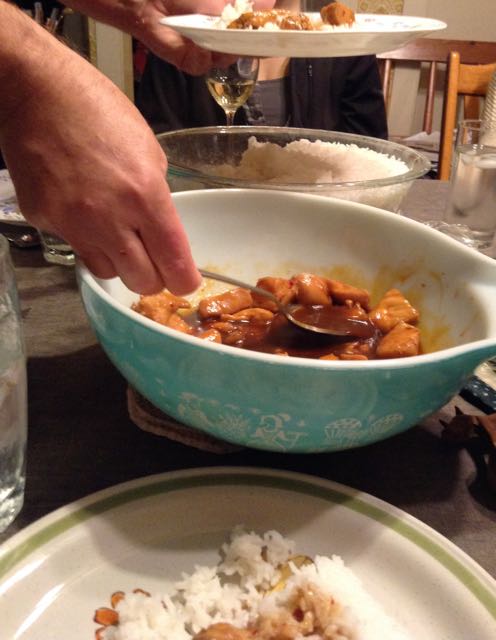
I made the previously mentioned rice — and some chicken to go with it. Broccoli, too, but it didn’t make the photo.

Birthday dinner

The kids played cards (probably while I was making rice).IMG_0340

And all through November, life continued.

Family gathered.

Jacob, Henry, Laurel

We played games.

Family games

I sat at the Columbarium.

The Columbarium

Laurel swam.

Swimming

I noticed a sunrise.

Sunrise

And I’m pretty sure we had Thanksgiving.IMG_7874


A to Z Blogging Challenge · family

Long in the Tooth

I’ve occasionally wondered what was in the guy’s trailer by the time he got home.

He started off with an empty trailer and some debts he needed to collect.

At the first stop, he got a dirt bike because the guy didn’t have any money to pay him.

At the next, he traded the dirt bike for a horse.

When he arrived at our house, it wasn’t to collect a debt, it was to look at a pregnant heifer that my dad had advertised in the Pennysaver (<— Craig’s List of 1970). To make the story of the pregnant cow short and tasteful, my brother had been given a Holstein calf which we named Sock-It-To-Me Sunshine.

Peter and the calf, named Sock-It-To-Me Sunshine, with Shetland pony, Rosie, in the background
Peter and Sock-It-To-Me Sunshine, with Shetland pony, Rosie, in the background

It grew up.

Clearly we were not sure what to do with a calf.

The dairy farm next door had a bull instead of an artificial inseminator. The bull and the heifer had a surreptitious rendezvous, and voila.

So the guy showed up with a horse in his trailer. He left with Sock-It-To-Me Sunshine (in the family way) in it instead.

Goldie
Goldie

Peter got the short end of that trade. He lost his cow and I got a horse, a large Palomino named Goldie. (I think, at the time, we also had a cat named Gray Kitty and another named Black Kitty. I would say that we weren’t skilled in naming animals, but I’m not sure if a cow named Sock-It-To-Me Sunshine makes my point or disproves it.)

Goldie was large and docile. I usually rode her bareback because getting a saddle on her and then getting the girth tight enough so that it didn’t slip was beyond my strength. Sometimes I didn’t even put the bridle on but just looped a rope around her halter. She was so patient with me.

I never knew how old she was. I asked my father, but he didn’t know. He also told me, “Don’t look a gift horse in the mouth,” and I had to look up the meaning of that saying. It turns out that a horse’s age can be determined by their teeth.

I also learned the saying, “Long in the tooth,” because a horse’s gums recede as they get older so their teeth appear longer.

Goldie was not long in the tooth when we got her. She was young and healthy and brought me great joy. When I grew too busy with school activities, she went on to bring another family great joy.

My mother was long-in-the-tooth by the time she died. Not literally.

But she was 87.

I’ll never forget the young doctor meeting with us and beginning with the words, “Mom is very sick.”

Here she paused and looked slowly around the room at the gathered family members. She wanted her words to sink in.

“And she has been sick for quite a while,” she continued.

She boldly laid all the cards on the table, face up, so we could all see the hand that had been dealt.

Long in the tooth, when it comes to elderly dementia, means a deteriorating brain.

She wasn’t just losing memory. She was losing the capacity to live.

Hours. We spent hours talking about my mother’s condition. I grew longer in the tooth in those few hours than I had in my whole life.

Weight piled upon weight piled upon weight.

I felt that I would never be able to stand under all of it.

When the meeting was over, we had acknowledged a trade.

Not a horse for a cow, but a new existence by letting go of this old one.

When we got home, my sister found the health directive my mother had written years before. We had followed my mother’s wishes, and that brought peace.

In trading, sometimes you win, sometimes you lose. I think both happened that day.