When I am an old woman I shall wear purple
With a red hat that doesn’t go and doesn’t suit me…
Jenny Joseph
Three “old” poems — one for my grandmother, one for my mother, and one for me.
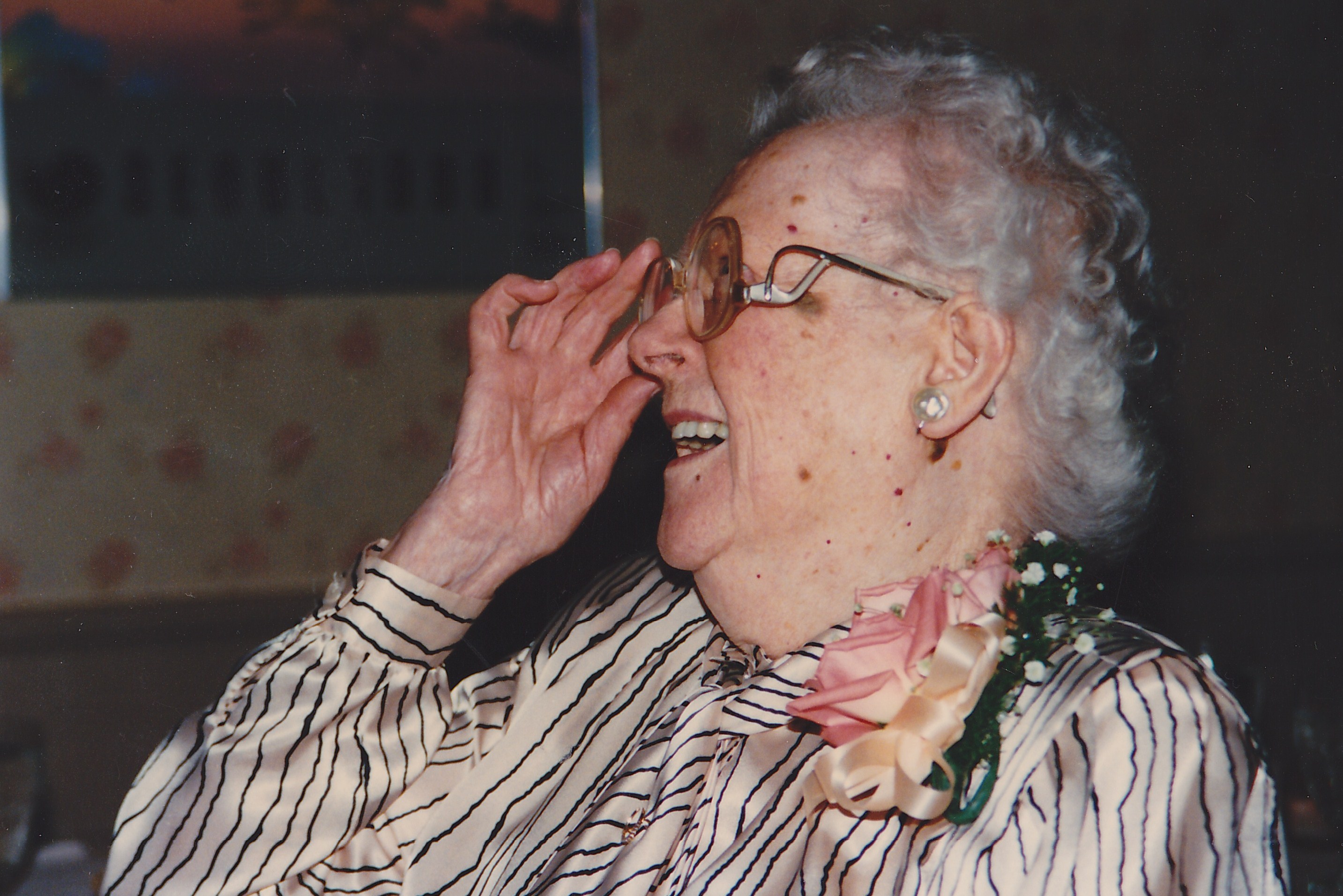
When I am old, I shall buy a piano And rest my fingers lightly on the keys, curved just so. I’ll retrain them to move the way they did when I was a girl, The time I accompanied my brother, Nichol, While he played his violin for Calvin Coolidge.
I’ll play hymns on the upright And sing along
With the nobody in the room. And I will drink dessert wine Even though I am a Baptist One glass every night before bed Because my doctor said I could.
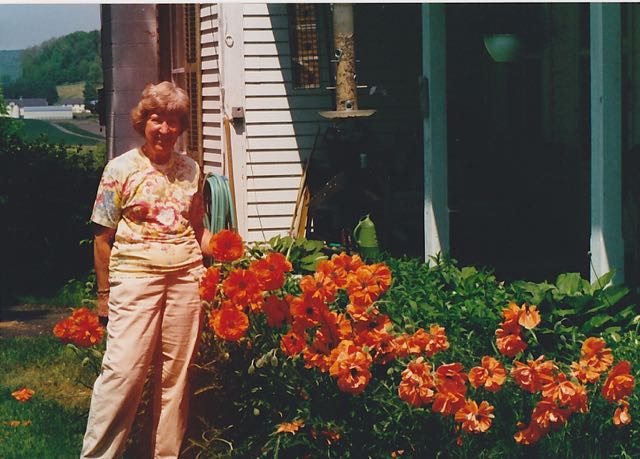
When I am old, I shall plant a garden
Not of practical vegetables like green beans and carrots,
But a banquet for the eyes.
Flowers,
A sumptuous spread of colors
That changes from week to week,
Crocuses, daffodils, bachelor buttons, and poppies.
I shall plant it close to the road For the passers-by to feast upon
If they but take their time.
But to those who drive too fast,
I will shake my fist
And shout –
“Slow down!
You’re missing the best part of life!”
When I am old, I will pump iron. I’ll pull my kettle bells out of the closet
And swing them. I’ll do squats and lunges, Deadlifts, presses, Russian twists, And Turkish get-ups.
My body may wear the softness of a slowed metabolism
But underneath I will be strong –
Strong enough to arm-wrestle with my children
And laugh at the absurdity of the thing
But still occasionally win.
About once a week I still try to go see I-can-do-it Mary. I wrote about her in “I Can Do It” and Leave Me Alone.
My father likes visiting people at the nursing home so I drive him over. While he’s visiting Linda, the lady who cuts hair, or Savannah, the bank window lady, I go down to Mary’s room.
She usually has her blanket over her head. When I see her like that, I just whisper a prayer for her in my heart.
The other day, though, her room was empty. The sun was out and I found her sleeping the sunshine of the courtyard. She loves being outside.
I stood beside her and laid my hand on her arm but she didn’t stir. When I removed my hand to leave, her eyes fluttered open.
“I brought you a present, Mary,” I told her. “It’s in your room.”
A dish garden with yellow tulips, miniature daffodils, and a pink hyacinth had beckoned to me from the flower kiosk at the grocery store. When my mother was alive, I tried to bring her flowers occasionally because I knew that she loved them. This week, I purchased some for Mary.
“Oh!” she said, reaching her good hand out to me. “Say, say, I can do it!”
“I can do it, Mary,” I said. I put my hand in hers and she kissed it.
“I love you,” Mary said.
“I love you, too,” I told her.
“Would you like to go see the flowers?” I asked and she nodded her head vigorously in response.
She hooked her good foot under her bad one and began pulling herself along using that one good foot.
“One. Two. Three. Four,” she said, counting her pulls. I had never heard her count before and she watched me to make sure I was seeing and hearing this new miracle.
By the time she reached “Thirteen,” she was at the door.
Clearly thirteen has gotten a bad rap. It was a beautiful number when she said it.
When we got to her room and she saw the garden, she said, “Wow! Wow!” She turned the dish slowly so she could see if from all angles, then she reached up and pulled me to her in a bear hug.
“I love you,” she said again.
“I have to go find my father,” I told her. “He’s visiting upstairs. Do you want to go back to the courtyard?”
She nodded.
As we walked back to the courtyard, suddenly Mary stopped. She grabbed my hand and looked at me. ” I en-,” she began, and then she frowned.
“I en-,” she said again.
I waited.
She frowned in frustration, then she waved her hand in the air, erasing the words that lingered there unfinished. “I can do it,” she said quietly.
When I got her settled back in the sun, she gave me one last bear hug. “I love you,” she said.
“I love you, too,” I told her.
*****
This is a video I took of Mary singing to my mother.
I’ve occasionally wondered what was in the guy’s trailer by the time he got home.
He started off with an empty trailer and some debts he needed to collect.
At the first stop, he got a dirt bike because the guy didn’t have any money to pay him.
At the next, he traded the dirt bike for a horse.
When he arrived at our house, it wasn’t to collect a debt, it was to look at a pregnant heifer that my dad had advertised in the Pennysaver (<— Craig’s List of 1970). To make the story of the pregnant cow short and tasteful, my brother had been given a Holstein calf which we named Sock-It-To-Me Sunshine.
Peter and Sock-It-To-Me Sunshine, with Shetland pony, Rosie, in the background
It grew up.
Clearly we were not sure what to do with a calf.
The dairy farm next door had a bull instead of an artificial inseminator. The bull and the heifer had a surreptitious rendezvous, and voila.
So the guy showed up with a horse in his trailer. He left with Sock-It-To-Me Sunshine (in the family way) in it instead.
Goldie
Peter got the short end of that trade. He lost his cow and I got a horse, a large Palomino named Goldie. (I think, at the time, we also had a cat named Gray Kitty and another named Black Kitty. I would say that we weren’t skilled in naming animals, but I’m not sure if a cow named Sock-It-To-Me Sunshine makes my point or disproves it.)
Goldie was large and docile. I usually rode her bareback because getting a saddle on her and then getting the girth tight enough so that it didn’t slip was beyond my strength. Sometimes I didn’t even put the bridle on but just looped a rope around her halter. She was so patient with me.
I never knew how old she was. I asked my father, but he didn’t know. He also told me, “Don’t look a gift horse in the mouth,” and I had to look up the meaning of that saying. It turns out that a horse’s age can be determined by their teeth.
I also learned the saying, “Long in the tooth,” because a horse’s gums recede as they get older so their teeth appear longer.
Goldie was not long in the tooth when we got her. She was young and healthy and brought me great joy. When I grew too busy with school activities, she went on to bring another family great joy.
My mother was long-in-the-tooth by the time she died. Not literally.
But she was 87.
I’ll never forget the young doctor meeting with us and beginning with the words, “Mom is very sick.”
Here she paused and looked slowly around the room at the gathered family members. She wanted her words to sink in.
“And she has been sick for quite a while,” she continued.
She boldly laid all the cards on the table, face up, so we could all see the hand that had been dealt.
Long in the tooth, when it comes to elderly dementia, means a deteriorating brain.
She wasn’t just losing memory. She was losing the capacity to live.
Hours. We spent hours talking about my mother’s condition. I grew longer in the tooth in those few hours than I had in my whole life.
Weight piled upon weight piled upon weight.
I felt that I would never be able to stand under all of it.
When the meeting was over, we had acknowledged a trade.
Not a horse for a cow, but a new existence by letting go of this old one.
When we got home, my sister found the health directive my mother had written years before. We had followed my mother’s wishes, and that brought peace.
In trading, sometimes you win, sometimes you lose. I think both happened that day.
Clearly I’m doing this A-to-Z Challenge all wrong.
I feel angry.
And not kind.
I hung up on Time-Warner yesterday. Told them we were switching to Direct TV.
I’m not happy with them.
I posted a rant yesterday and almost immediately the person I ranted about contacted me. I was in the midst of a conversation with a different friend.
“I should have said something to her before I posted it,” I told my friend about my other friend — are you following this? Too many unnamed friends, I know.
But I knew the right way to handle the situation — and I didn’t do it. I posted a stupid blog post. (It has since been edited.)
This is how not to do things, kids. Talk to people who upset you. Don’t rant on your blog. Do as I say, not as I do.
I believe in handling things the right way and in kindness. Sometimes belief isn’t enough. We have to actually do it.
I’m working to memorize Isaiah 58, a chapter where God is dealing with a people who are oblivious to their sin.
“Look at me fasting,” they say to God. “Look at my sackcloth and ashes. Look how humble I am. Why aren’t you noticing any of this?”
And God says to them, “I really want you to be nice to each other. Don’t be grumpy. Don’t strike out at people. I want you to fast from your meanness. Put that aside instead of food. Undo someone’s yoke. Feed a hungry person. Invite a homeless person into your home. Sheesh!”
He didn’t really say the “sheesh” part. I added that.
But you get the point.
Can I just say here, in the depths of this post where few people will probably read, that life is hard right now? My father is struggling — and he doesn’t even know he’s struggling.
“You’re not thinking clearly,” my brother and I told him, ganging up on him to persuade him to have a medical test which may put us on a path to improvement.
“That’s what they keep telling me,” he said, in a tone that showed that he clearly didn’t believe a word of it.
It reminded me of a post that I had long since taken down. The post, from April 2011, had been called “Four Questions.”
It ends with kindness — which works for “K”.
****
Four Questions
Mom — April 2011
Question #1
I asked my mother this question one day when we were in the car, “Mom, do you know what Alzheimer’s is?”
She knew the answer. “It’s a condition where people can’t think sensibly,” she responded.
Yes, it is. It’s not a condition where someone doesn’t think sensibly. They can’t. And yet, sometimes, they can. Like being able to answer that question with a pretty concise response shows some sensible thinking.
Question #2
Yesterday my mother handed me a sheet of address labels that had come in the mail to her.
“These are for you,” she said.
“I can’t use these, Mom,” I told her. “They have your name and address on them.” I tried handing them back to her, but she pushed them over to me again.
“That way you won’t forget me,” she replied.
I felt a little ache in my heart at those words. “Mom, I won’t forget you,” I reassured. “Will you forget me?” I asked it, even though I already knew the answer.
“Oh, no,” she said. “I’ll never forget you.”
But moments later, she forgot that she had even given me the address labels and took them back to her pile of things. She removed one and stuck at the bottom of a note she had written herself about dinner with a friend. It was a dinner with a friend that had taken place months or years ago. She had forgotten. But she stuck the address label on the bottom of the note.
“This will help me remember,” she said. Oh, if only it were that easy.
Question #3
Alzheimer’s is a condition where people can’t think sensibly. The varying pieces of information that are constantly coming at us are no longer being filtered correctly in the mind of someone with Alzheimer’s. It’s impossible to make sense of it all.
When my parents were going through some of the clutter that had accumulated at their house, my father picked up a kitschy dog made out of golf balls. “We could probably get rid of this,” he said.
“Are you going to get rid of me?” she asked. With the filters missing, that was what she heard.
“You’re too valuable,” he told her. “We’re not going to get rid of you.” She still has value. She needed to hear that.
Question #4
In difficult situations, so many people show little kindnesses. With my mother’s Alzheimer’s, people have been so kind. Total strangers, long-time friends and family members have all pitched in to keep my mother safe and to make life easier for my father. I know my father appreciates it, but I often wonder if my mother is even aware.
Yesterday, she answered the unasked question I have had for a long time. Are you aware of all the things people do for you?
She was looking for my brother. “He’s up at his house, Mom, right next door,” I told her.
“That’s right,” she said. “He has been so nice. Every night he brings dinner right down to us so I don’t have to fix anything.”
Yes, he does. And his wife does. And I’m so glad you recognize that. Even if you don’t always recognize me. I know it’s because you can’t think sensibly.
My mother was most at home in the kitchen. She cooked for our family, for her church family, for special occasions, and for the every day. Huge spreads. Humble soups. Everything always delicious. (Except the beef heart. And the lamb burgers.)
Her juggling took place in the kitchen. She had an amazing talent for getting all the food on the table piping hot for us to enjoy. Her timing was perfect.
I, on the other hand, serve lukewarm green beans with hot meatloaf and cold potatoes. I forget to heat the plates the way that my mother did. I can’t get people to the table on time. I have not yet figured out the art of juggling many food dishes in the kitchen.
When my mother began struggling in the kitchen, we should have seen it for it was, a sign of dementia. She couldn’t keep all the balls in the air anymore. She called me for help more and more.
And I was resentful.
Critical.
Unsympathetic and unaware that she was moving into a strange vortex that left her confused in the kitchen.
“You make such good scalloped potatoes,” she called one day to tell me. “Could you make some for Dad and me? We have company coming tonight.”
I bristled inside. I was home with seven or eight children, tired, frustrated — and honestly, the last thing I wanted to do was make scalloped potatoes for my mother so she could go golfing and still have a nice dinner to serve her guests.
But I did it.
In retrospect, I think she was worried about her cooking — and how sad that is for me to realize today!
But she had dropped one of the balls she was juggling and asked me to help pick it up.
If only I had known. If only I had understood better in those early days.
People — be patient and kind. Don’t mock the open mouth of someone keeping the balls in the air.
We had such a busy Saturday, but I was feeling the tyranny of the urgent regarding the A to Z Challenge.
“Just a minute! Just a minute,” I called to my family as they were heading out the door at 7:30 AM.
I wanted to edit some more. I wanted to delete and reword and create something that wouldn’t make me cringe when I pictured other people reading it.
But I hit “Publish” and ran.
And worried.
And cringed.
…
We had a great day — family breakfast at a diner with 10 Zaengles present.
Slow Art Day at the Stone Quarry Hill Art Park (followed by Slow Food prepared by local college students).
“Stacks” (Slow Art Day)Artist David Harper talking about “Stacks” (Slow Art Day)“The Trees Shall Be My Books” — working title for “Stacks” (Slow Art Day)
That particular installation, “Stacks,” has always been my favorite piece at the Art Park, and now even more so.
We spent the afternoon into the evening babysitting our grandson — who is the cutest baby ever.
By the time we left their house, it was 12 hours from the time we had left our house in the morning. Since I didn’t have my computer with me, I couldn’t obsess over the post. By the time we got home, I was exhausted and went to bed.
Yesterday — Sunday — I was determined not to spend the day worrying over my blog. And I didn’t. Mostly.
This morning, I went to the orthodontist with Laurel, and did no blogging.
By afternoon the letter “I” was looming, lurking, taunting.
I’ve seen the meme — There is no “I” in team — or something like that, and I kept thinking there is no “I” in art either.
Jennifer Trafton Peterson has talked about art as a gift that we offer. Each time I have heard her say those words, she uses the same hand gesture — cupped hands that move from her heart outward, like an offering of something precious.
But I used to bake cookies for extra income, and more than once, in the chaos of my kitchen, forgot to add the baking soda. Molasses crinkles don’t crinkle without the baking soda. They come out of the oven as hard little balls that are nearly inedible. Those cookies were so imperfect that they ended up in the compost heap. That’s all they were fit for.
The other day I brought my father to a concert at the nursing home where my mother had lived. The flutes were out of tune with each other, and the band struggled with tempo, but they played the old familiar songs and the people sang along with “God Bless America” and “O Susanna” not caring one lick about the tuning.
Their music was their offering, from the hearts of the musicians to the gathered — and appreciative — audience.
I recognize through them that art doesn’t have to be perfect to be appreciated.
But sometimes art is like cookies without the baking soda. It really belongs on the compost heap.
My heart poem has gone the way of inedible cookies.
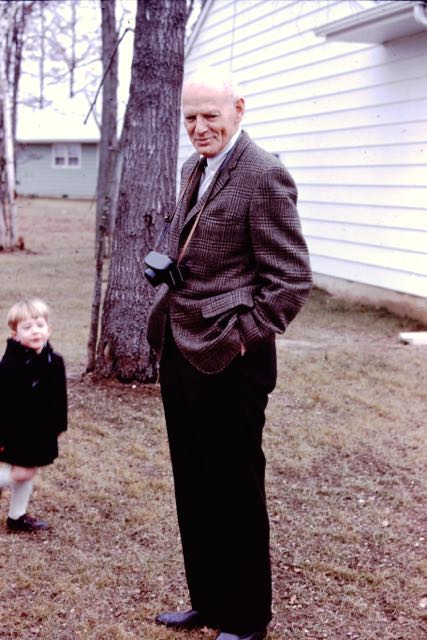
I wanted so badly to have Philip meet my grandfather, my father’s father. He was a great guy.
Bud and I had made a trip home that fall when I was pregnant, but that was the last time I would see my grandfather. On the next trip, when Philip was 6 weeks old, we attended my grandfather’s memorial service.
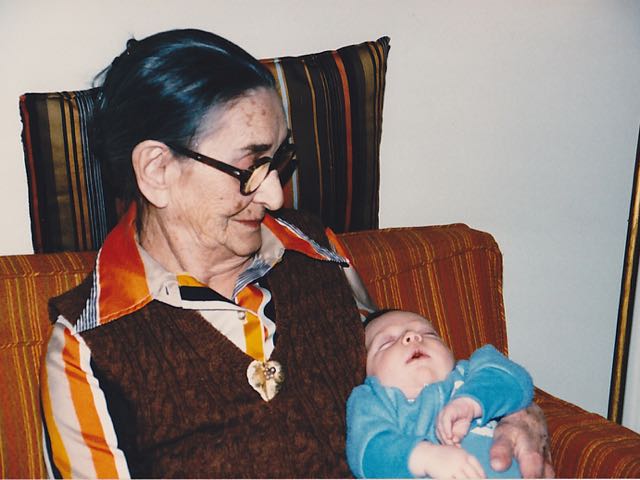
Nana and Philip
Nana, my father’s mother, was still alive, but she was quite ensnared in the web of Alzheimer’s. Still, there’s something about holding a baby that reaches beyond those cobwebs, and touches something deep inside.
Babies are magical beings with superpowers. A sleeping baby brings calm to a turmoiled spirit. A smile from a baby can soften the hardest heart, and a giggle can melt a glacier.
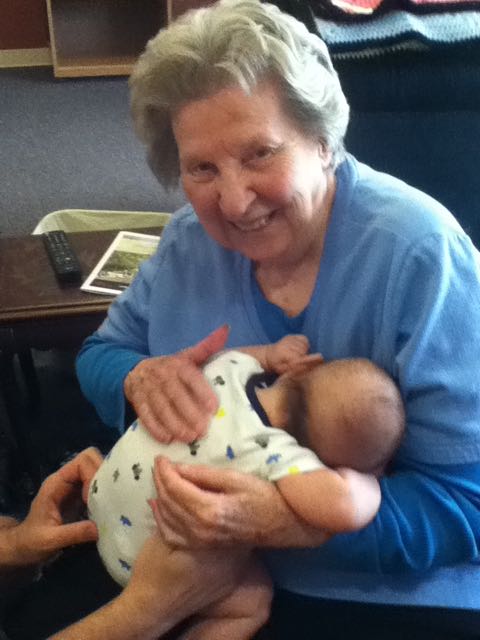
I’ll never forget when Philip brought his little boy, Henry, to meet my mother. My mother rarely smiled toward the end. Not real smiles that reached her eyes, anyway. She still occasionally laughed, but that usually bled into tears, and it was for strange things, like a recitation of Paul Revere’s Ride.
But Henry — Philip gently placed Henry in my mother’s arms and still held his hands there to support Henry lest she forget. He was so tiny at the time.
My mother gazed down at this tiny creature who snuggled against her bosom. Instinctively she patted his back, and then looked up at us with one of the best smiles in a long, long time.
My father has that picture out. He looks at it periodically.
“Look how happy Mom is there,” he’ll say.
Yes, she is.
Henry will never remember that day anymore than Philip would have remembered meeting my grandfather if things had worked out.
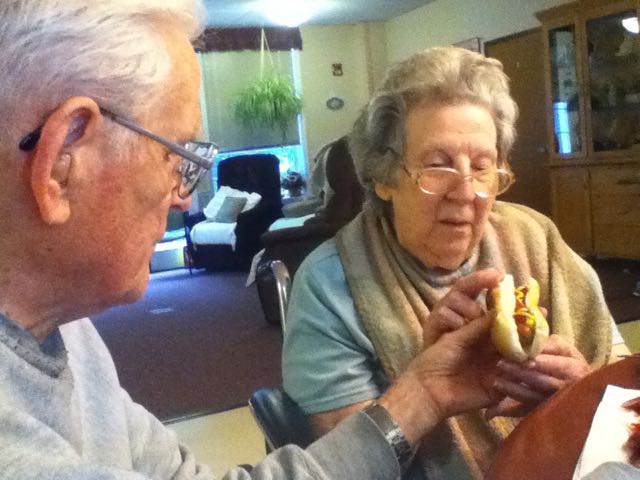
My father drove twice a day every day to visit my mother in the nursing home.
Noon meal.
Evening meal.
He patiently encouraged her to eat. When she wouldn’t feed herself, he fed her. Through them, I watched that final scene of Driving Miss Daisy over and over and over.
Hoke: Looka here. You ain’ eat yo’ Thanksgiving pie. Lemme hep you wid this.
My father gently fed my mother.
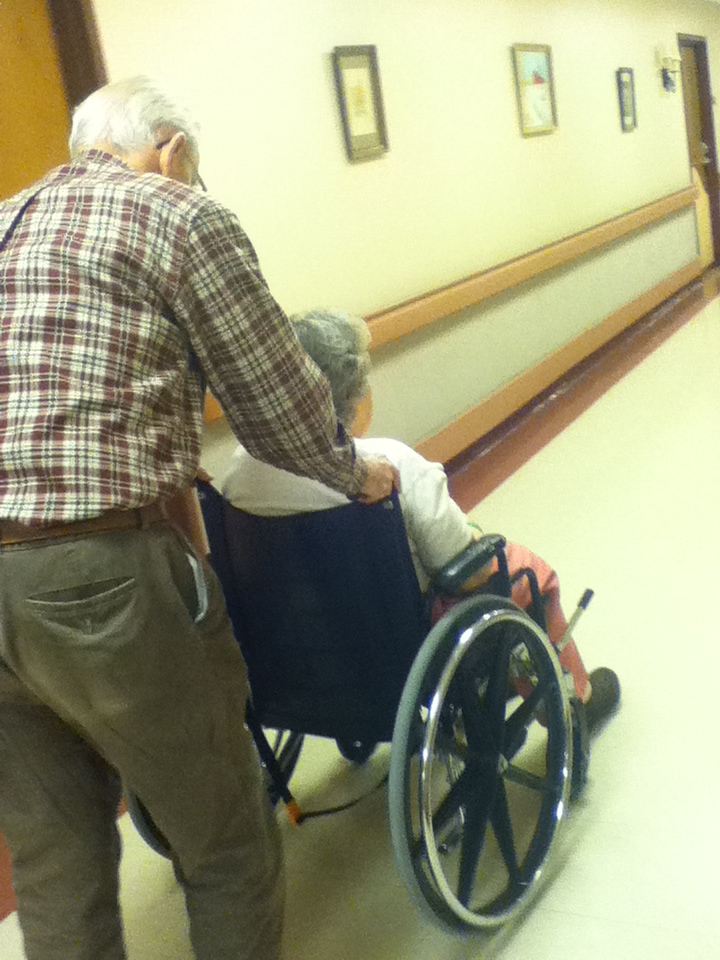
He slowly pushed her wheelchair through the halls and for walks in the courtyard, sitting to rest himself as needed.
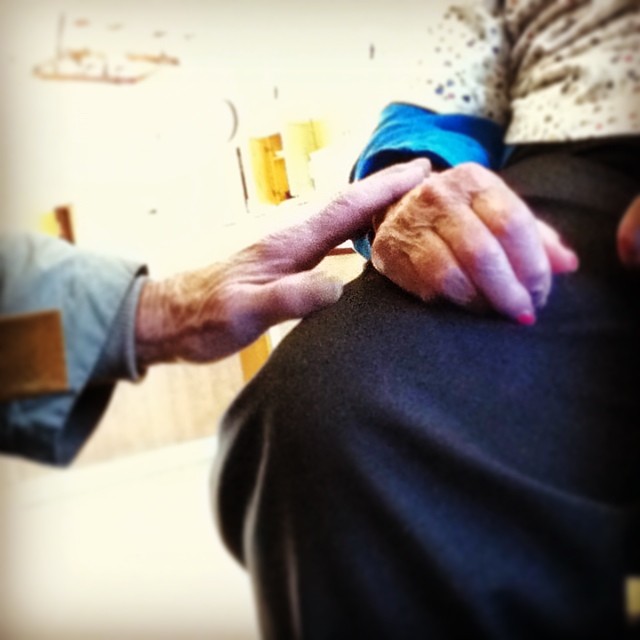
He held her hand when they sat together.
They were still two-become-one but in smaller ways that were really bigger than the ocean.
When she passed away, even though she had been disappearing in dribs and drabs over so many years, he was lost.
F is for my father, for whom I ache, who is benevolence, who does and does and does, and did and did and did.
His love and devotion for my mother sets the bar high for the rest of us,

 When I am old, I shall plant a garden
 For the passers-by to feast upon
 When I am old, I will pump iron.








 Hot Dogs and Marmalade