books

Brian Doyle’s life reading list

Brian Doyle is easily one of my favorite writers. When I found this little essay of his, I laughed out loud all the way through.

“Age one: Pat the Bunny. Arguably the most intimate reading experience of your lifetime. Read it every night with your parents. Where’s the bunny? There’s the bunny!”

“Age two. Reread Pat the Bunny. Try not to eat the pages this time. Write a paper of no fewer than three pages (single-spaced) on … the whole peekaboo blanket thing — does Homeland Security know?”

Doyle lists books and commentary on all those developmental years: “Age three: read Goodnight Moon while listening to Courtney Love on your headphones….” “Age four: you can ease up a little this year, go on cruise control. Ronald Reagan’s letters, the speeches of Marcel Marceau…”

Et cetera.

“Age twenty-two: Scotland, that moist mud puddle north of Manchester! Now that you are legally able to imbibe the whiskey of life, do so on January 25, celebrating Robbie Burns, while reading Robbie Burns aloud until the wee hours, in the company of lots of your friends. Do not eat haggis. Haggis is disgusting….

I stopped there, thinking about our upcoming Burns celebration. I’ve got the haggis and people had better eat it. The question is, should I bring whisky?

poetry · Writing

Writer’s Dice (Sort of)

Moments, Grateful, Grandkid, Free

Well, I just wrote a long post of gratitude yesterday and I saw two of my grandchildren today. I’m going to take that “FREE” cube and run with it.

This coming week, on Thursday, we’re having a Robert Burns celebration as part of our senior program. I’m excited and terribly anxious. I ordered haggis for it, then came into work one morning last week to see the box of haggis sitting beside the front desk. It had arrived after I left the previous day. It was clearly labeled, “PERISHABLE. REFRIGERATE IMMEDIATELY.” But there it sat in the lobby.

I was so upset that I couldn’t even open the box, so one of the custodians did it for me. Everything was still frozen inside. It was packed in styrofoam and ice packs. I’m still amazed that it was so cold.

Today, though, I worked on my own version of “To a Mouse” which I may share at the Burns event. In Robert Burns’ version, he’s apologetic for disturbing a mouse’s nest while plowing. I am slightly less kind. The first two lines are all Rabbie Burns’. The rest are mine.

Wee, sleeket, cowran, tim’rous beastie
Oh, what a panic’s in thy breastie!
I ken, I ken — ye smelt the yeastie
in discarded bread
But would it be too much to ask ye
go somewhere else instead

Ye leave yer jobbies* and I find them
On the counter, near a bread crumb
Or by the garbage, where ye oft come
to find a treat or two
I recognize where jobbies come from
they cause me to say “Ewww!”

Today I grant ye sweet release**
Across the street — and wish ye peace
Instead of plotting yer decease
I will allow ye live
May yer domestic tribe decrease
Today’s nibblin’s I forgive

But tomorrow, oh tomorrow
I may wish ye endless sorrow
Ye come into my home and borrow
That which is nae yers
Mousetraps are set those places ye go
BAM SNAP! – yes, death occurs


*Jobbie is a Scottish term for excrement.

** Yes, I release mice that are alive across the street in our compost pile.

family · gratitude · Life

TToT — January 18

  1. The Moon — when I left the house a little after 5 AM Wednesday, I had to pause to take a picture of it. The corona, the clouds — all so lovely.

2. A quote from Art and Fear (by David Bayles and Ted Orland) —
wanting to be understood is a basic need… The risk is fearsome; in making your real work you hand the audience the power to deny the understanding you seek; you hand them the power to say, ‘you’re not like us; you’re weird; you’re crazy.‘”
I have always thought that my biggest fear is failure. The authors are correct though. My biggest fear is not being understood and therefore not fitting in. This is the fear that mean girls target with their posse-mentality — and I’ve learned that mean girls exist at all ages.

3. Encouraging comments — this ties in with #2. I wrote a poem (Phoenix) which I hesitated to post because it’s …um… different. Okay, okay — it’s weird. It starts off with the word “phlying” and has some homophones thrown in. Also a backwards spelling of the word Phoenix which made sense to me as the Phoenix rising from the ashes. Well, the post sat there with no comment on the oddities. How polite, I thought. What a bomb, I thought. Until a little flurry of comments on phlying. So I’m thankful for Leslie Scoble, D. Avery, Sarah David, and crazy4yarn2. You encourage me.

4. A $5 tip — For the record, we don’t take tips at work other than workout tips because we’re a fitness facility. Yesterday, I helped a man with his membership. When we were done, he pulled out his wallet and put a five dollar bill on my desk.
“I can’t take that,” I said.
“I’m not taking it back,” he said.
We were at a stalemate. He told me a long story about how he likes to help people.
“Use that to help somebody else,” he said. “It’s five bucks. I’m not going to miss it and I’m not taking it back.”
Reluctantly, I put it in my drawer. Now I have to come up with a way to help somebody with five dollars — a fun challenge.

5. A new friend — I got together last night with a woman I met at a Christmas party. She is only in town occasionally, but when we first met, we had so much in common. Two introverted moms in the midst of changes in their lives. I’m glad it worked out that we could meet and talk again.

6. An old friend — I ran into one of my oldest friends (as in years I’ve known her) that I hadn’t seen in a long time. Thirty-five years ago, people used to confuse us for each other — and we have some great stories about that. So so so good to see her.

7. Another unpleasant situation that ended with an apology — Suffice it to say that I needed to speak with a member about an unkind thing she had done. In gathering information about our policies at the facility, another staff member said, “Oh, her. She’s terrible. We may have to kick her out.” Later, I ran into the woman in the hallway. This was our conversation:

Me: You’re just the person I was looking for!
Her: Really? What’s going on? What did I do now?
I recounted the situation to her.
Her: I am so sorry. Sometimes I speak without thinking. I didn’t mean to come across that way.
Me: It’s okay. I just wanted you to know how it DID come across.
Her: I’m really sorry. I will try not to do it again.

Sometimes people just need a chance. I’m willing to give her another one.

8. Fasting — I did a 24 hour fast and it’s amazing how good that feels for the body.

9. A message from my cousin letting me know that her father, my uncle, is “slowing down.” I will plan a trip to see him. I’d much rather get that message and have a chance to visit than what the message could have been.

10. Flowers — a member gave me flowers for my desk as a thank you. I LOVE fresh flowers.

fiction

What IS it?

“Hahaha – TAG! You’re it!” Johnny turned and ran.

Charlie wheeled to chase his friend but almost fell over the metal piece lying on the plaza.

“Whoa!!” he cried. “Johnny look at this!”

He picked up the long cylindrical piece he had stumbled over. It was heavy, rounded and finished at one end, rough at the other. The rough end had clearly fit into something.

“What is it?” asked Johnny. “It looks like an antique joystick.”

“You are absolutely daft,” Charlie said. “First, it’s too big. Second, it’s too heavy. Third, it’s metal and everyone knows that joysticks are made of plastic and have buttons on them.”

“I said it was an antique,” Johnny replied defensively.

“I think it’s a belaying pin,” Charlie said. “I saw them when my dad took us to a ship museum.”

Johnny looked puzzled. “I’ve never heard of a belaying pin.”

“When pirates were trying to climb on board a ship, these things were in the railing and the sailors could pull them out to whack the pirates on the head,” Charlie said, attempting to demonstrate. The proportions were wrong and the piece too heavy. “Maybe not,” he said.

Charlie rarely admitted that he might be wrong. Johnny beamed.

They both threw out ideas for what it might be.

“Part of a fancy fence?”

“Something that fell off an old piece of furniture?”

Just then, a man approached them. “You found it!” he said.

He took the piece from the boys and walked quickly away.


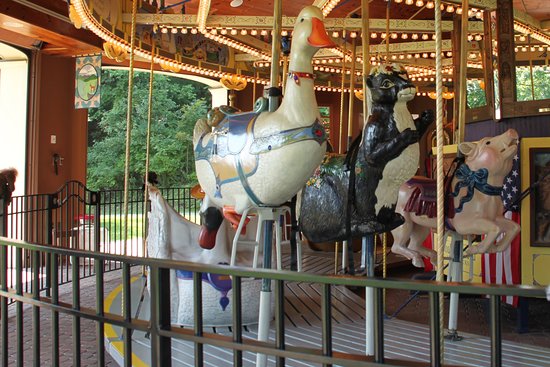
This is my submission for the Unicorn Challenge. It’s a simple challenge: No more than 250 words and use the photo as a prompt.

I have no idea what that picture shows. Can someone tell me what that is?

poetry

Phoenix

(Ph)lying up higher and higher
Hole-ness comes amidst the fire
Once upon a time, to cope
Every child learned the myth, the trope
New the stories of death, loss, hope
Icarus failed and fell to earth
xineohP rose from ashes in rebirth


This week on W3 the poet of the week (PoW) Sarah David challenged us to write a poem of up to 12 lines on the theme of hope or renewal. Poets can use this image (or another one) of a phoenix for inspiration if they like.

I decided to write an Acrostic, but, darn it all, the words wouldn’t cooperate. If Phoenix can begin with a ph, I gave flying permission to do the same. And that wholeness of life rising from ashes? Well, the w just wouldn’t work! New/knew — whatever. And X? Fuhgeddaboudit!

It’s a quirky poem, I admit.

fiction · The Swans of Ballycastle · Writing

The New Swans of Ballycastle

In the Irish seaside town of Ballycastle, the people still tell the story of the three wandering swans…

Thus begins the original Swans of Ballycastle, and thus begins my tale.

The children and a single father are introduced: “Deirdre, the oldest was ten, Kevin was eight, and Michael was only five. Their father’s name was Brian and he kept a small shop in the center of Ballycastle. The three children and their father lived on the second floor over the shop. Their mother had died when Michael was very young. Brian, the father, raised the children as best he could.

The children were incredibly happy. They played make-believe games in the shop or wandered to the beach and built sandcastles. They were happy. They were content. Life was good.

One day, their father journeyed to Belfast to buy goods for the store. “In his absence, Widow MacConnell ran the shop and looked after the children. Not that she had much to do on that score, for Deirdre, as usual, took care of her younger brothers. She cooked, served the meals, swept and dusted and saw that her brothers went to bed on time.

Brian was gone a long time.

One morning the children rose and went downstairs. In the kitchen they found their father. With him was a strange woman.

[Here the Sally-version takes over]

She was short and round. Her hair was white and curly, like the caps on the waves. She wasn’t old, but she wasn’t exactly young either. Her dress was ocean blue, billowy and soft. Her smile, when she saw the children, grew and grew. It was warm and welcoming.

Deirdre wanted to run to her immediately for a hug, but something stopped her. She didn’t know this woman and she was her brothers’ protector. Instead she looked to her father.

He took another sip of his coffee, stood, and said, “Deirdre, Kevin, Michael — This is your new mother.”

He opened wide his arms and the children ran to him. While they were gathered in their family hug, he reached his arm out to the new woman and pulled her into the embrace. Deirdre thought she smelled like the sea breeze and welcomed her closeness.

Her name was Cordelia, but she insisted that the children call her Corrie. “I would never dare to presume that I could replace your mother,” she said, “but I promise to love you as best I can.”

Corrie’s favorite thing to do was walk on the beach. Every morning, she led the little entourage to sandy shore. Michael held her hand now, instead of Deirdre’s when they walked.

Kevin and Deirdre found that Corrie had a wealth of wisdom about the sea and the shells and the birds and the fish. They would run ahead when the beach was in view and begin their hunts.

“What’s this?” they would ask, bringing her a shell. She always knew the name and a story about the creature that lived inside.

One day Deirdre found a golden coin stamped with the picture of a swan. “Look, Corrie,” she said, extending her open hand to her with the coin on it.

A shadow crossed Corrie’s face. “Throw that away,” she said sharply, “as far as you can into the sea.”

Deirdre pretended to throw it, but she folded her thumb over the coin while she made the throwing motion, then stealthily slipped it into her pocket.


Okay — this new story is going to take more than one day’s work. Tune in next Tuesday, for part Two.

family · Life · Writing

The Swans of Ballycastle

I ordered some of the books people recommended after 12 Months to read 12 Books but none have arrived yet. Meanwhile, I found this book in a pile while cleaning and read through it yesterday.

It’s an Irish folktale about three children with a single dad. They live an idyllic life with him until he goes off to Dublin and comes home with a wicked stepmother. Some other stuff happens (magic) and they turn into swans. They paddle off to live on an island with other swans.

There’s more to the story, of course, but I got stuck on the wicked stepmother. I mean, take Cinderella — what if her stepmother wasn’t wicked, but was nurturing. What if Snow White’s stepmother didn’t feel threatened by Snow White’s beauty? What-ifs can take a story in a whole new direction, right?

Tune in tomorrow for the delightful stepmother edition of The Swans of Ballycastle.

Life · people · Writing

Essay on Lessons from an Angry Stranger

It’s Writer Blocks Day. Here’s my roll: Essay, Lessons, Angry, Stranger.

Forgive me if I’ve told this story before.


Remember the days of COVID when businesses shut down and then slowly reopened with new rules and regulations. Masks. Social distancing. Hand sanitizer. Who could have imagined it all?

Cooperation was palpable in those early days. We looked for ways to make it all work. Hand-sewn masks were made and distributed because manufactured masks weren’t available. Restaurants developed take-out menus. Zoom changed its meaning; it became a way to meet and connect, rather than something a car did on the highway.

When the sports facility where I worked reopened, we required everyone to wear masks. In the pool, where masking wasn’t possible, we implemented social distancing rules. Every other lane was left vacant and swimmers had to sign up to reserve their lane.

Over time, the restrictions were slowly lifted. The mask rule remained, however, long after other businesses in town had removed it.

One morning, A.M. (Angry Man) came in the front door. “WHAT THE #@*!$# DO I HAVE TO WEAR THIS FOR?” he yelled across the foyer to me.

I started to answer, but he continued cursing and yelling. “I DON’T HAVE TO WEAR IT ANYMORE. THE STATE LIFTED THAT REGULATION.”

I wanted to say that I understand. I wanted to tell him that I’m sorry; I don’t make the rules. I wanted to remind him that we are privately owned and run; we have to wait for The Foundation to lift the rule.

But he was yelling and other members were coming in, wearing masks, checking in at the front desk.

As one woman scanned her membership card, she said to me, “This is how Hitler got started, you know,” and she pointed at her mask.

A.M. was still yelling, F-ing this and F-ing that. I swear, the Hitler woman was smirking at me behind her mask. Other people were staring — at me, at A.M., at the mask sign on the front desk. I turned and walked away.

I walked into the back office where my supervisor worked. She wasn’t there. I walked down the long hallway to the Director’s office and knocked on the door. I interrupted a meeting.

“I don’t get paid enough to be compared to Hitler,” I said, and I told her the whole story.

When I finished talking, I saw A.M. coming down that long hallway. He reached me and went down on his knees.

“I’m so sorry,” he said. “Please forgive me. I’m so sorry for the way I spoke to you.”

“Of course, I forgive you,” I said. “Thank you for apologizing.”

We had a brief conversation and I went back to work. I think he stayed to talk with the Director.

Just the other day he was in my office.

“You know I have opinions,” he said.

I smiled. “Yes, you do, but this is a nicer way to handle them.”

He shared with me a concern/complaint/suggestion. I listened and thanked him.

That first angry interaction did not define our relationship and he is no longer a stranger. I think there’s a lesson or two in there somewhere.

gratitude

TToT – January 11, 2025

Ten things for which I have been thankful over this past week:

  1. Writing: I actually posted every day. I hope I didn’t just jinx myself.
  2. Pensée of the day: “People are generally better persuaded by the reasons which they have themselves discovered than by those which have come into the mind of others.” (Blaise Pascal) I read it this morning and was so appropriate for a situation I’m dealing with. I could attempt to strong-arm, but I’ll wait for the other person to arrive at the correct conclusion.
  3. Aiden — I was delighted to get to know one of my newer co-workers. He’s a young man, roughly the same age as my youngest child, with a shy smile and a desire to learn. The circumstances that broke the ice between us were less than desirable — I was called in to work on Sunday morning because of trouble they were having with the computers — but I can honestly say that I’m glad it happened. Yesterday, as I was leaving, Aiden said to me, “I’m sorry if I bother you with too many questions.” “You can never ask too many questions,” I told him. I think we’re going to get along well.
  4. Jean Johnson died last Sunday. I knew her from the 8 AM service I usually attend, but, I have to confess, I didn’t really know her. I’ve spent time this week working on her funeral bulletin and getting to know her posthumously. I wish I had made the effort earlier.
  5. Tissue; So Close but Out of Reach — a tanka submission for the W3 challenge that made me laugh. Funny, clever, true.
  6. A new swim friend — A week or two ago I sold a membership to a young man who I assumed was like 97.6% of the young men who join, wanting to head straight to the weights. Instead, I saw him in the pool. Between you and me, he’s a pretty terrible swimmer. I’ve ended up swimming in the lane next to him and I try not to judge. One day this week, I had stopped to put my fins on and he was resting in the next lane over, when he initiated a conversation with me. “You’re a good swimmer,” he said. “I’ve been doing it for about a hundred years,” I replied. “How do I get better?” he asked. I gave him a few tips which he immediately tried. Now, whenever I see him in the pool he gives me a big smile and wave and shows me his stroke. He has a great smile; someday, maybe he’ll have a great freestyle, too.
  7. Snow. It’s pretty. It’s just awfully cold.
  8. My messy desk. Albert Einstein said, “If a cluttered desk is a sign of a cluttered mind, of what, then, is an empty desk a sign?” My mind is far from empty.
  9. Ham and Scalloped Potatoes. I dug out my recipe and made some this week. They were delicious.
  10. A chance encounter with Annie Halvorsen, an old friend whose art I LOVE! I had gone out to eat and walked past her on my way out. I did a double-take, said hello, and had a lovely conversation with her.
Les Platanes #2 by Annie Halvorsen