Life

Not My Favorite Place

“What happened to your hand?” my friend Kate asked.

I was reclining in a chair at one of my not-favorite places

Kate’s office
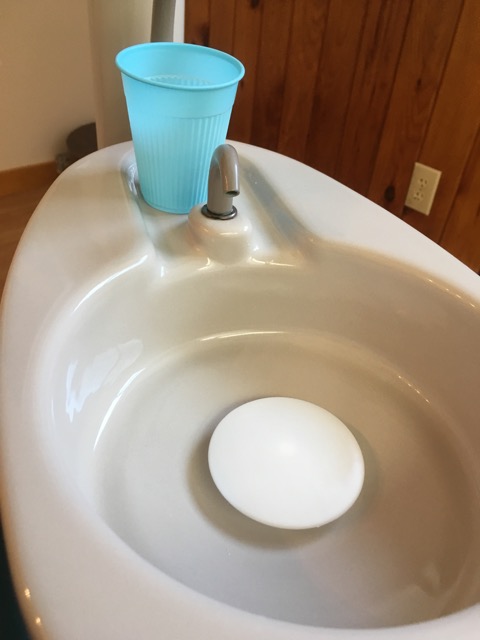
At the dentist
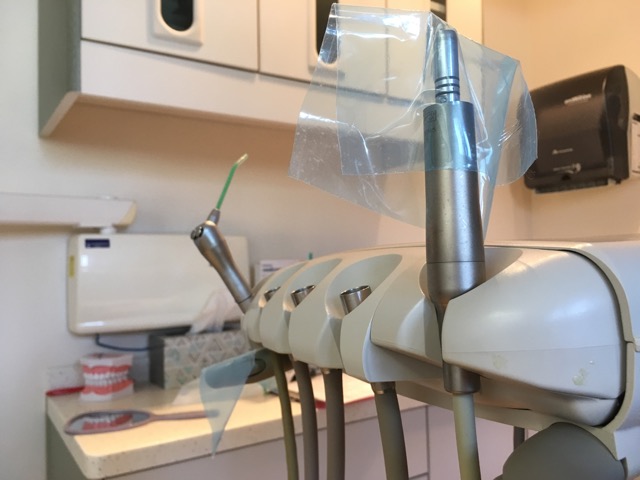
Tools of torture

What she asked about had happened at a new not-favorite place — the GI Lab.

It was a week of taking care of myself.

On Tuesday I had my first colonoscopy. After talking my way out of it for eight years, I finally lost my bargaining power and had to go.
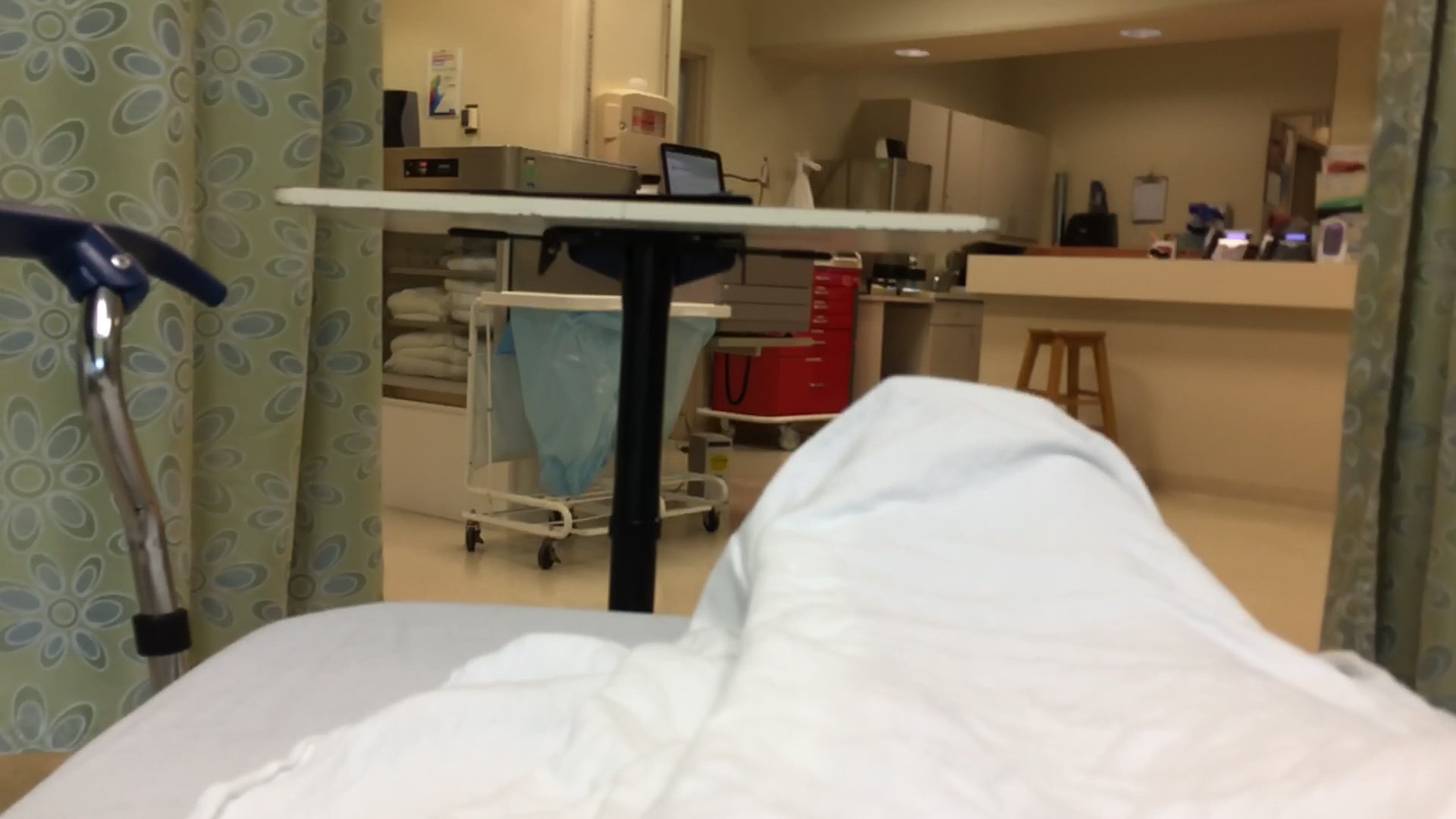
Waiting at the GI Lab

The nurse chided me. “You should have come years ago,” she said.

I shrugged. I mean, really, what did she want me to say? I was there.

But, when she tried to put the IV in the back of my hand, she blew my vein.

Helen picked me up after the procedure (she was my designated driver) and I showed her my bruised hand.

“Just imagine that your daughter could have done that,” she said, and I understood her to say that every nurse has those moments when IVs don’t go perfectly. A little grace was in order. Thinking about that didn’t make my hand hurt less, but it made me complain a little less about it.

The bad part of a colonoscopy isn’t the IV, though. It’s the prep. It’s the low fiber diet followed by the clear liquid diet followed by the nothing diet. It’s the Miralax and the Dulcolax and the everything-else-lax. I found myself thinking about the scripture that talked about the less honorable parts of the body. (from 1 Corinthians 12)

On the contrary, the parts of the body that seem to be weaker are indispensable, and on those parts of the body that we think less honourable we bestow the greater honour, and our unpresentable parts are treated with greater modesty, which our more presentable parts do not require. But God has so composed the body, giving greater honour to the part that lacked it, that there may be no division in the body, but that the members may have the same care for one another. If one member suffers, all suffer together; if one member is honoured, all rejoice together.

I can tell you, from my colonoscopy prep, that when one part of the body suffers, the whole body really does suffer.

On Wednesday morning, when I drank my first cup of coffee in days, I rejoiced. It’s also true — when one part of the body rejoices, the whole body rejoices.

On Thursday, I went to the dentist. I do this every 6-8 years, whether I need it or not. I love my dentist. I just hate sitting in a chair feeling and hearing the scraping of metal against my teeth.

My not-favorite places. And two of them in one week!

Of course, I go to one of my favorite places every morning.

The pool at 5:15 AM

It’s beautiful to watch the sun reflect off the water.

Sun dance

Soon, when spring arrives, I’ll be able to visit another favorite place —
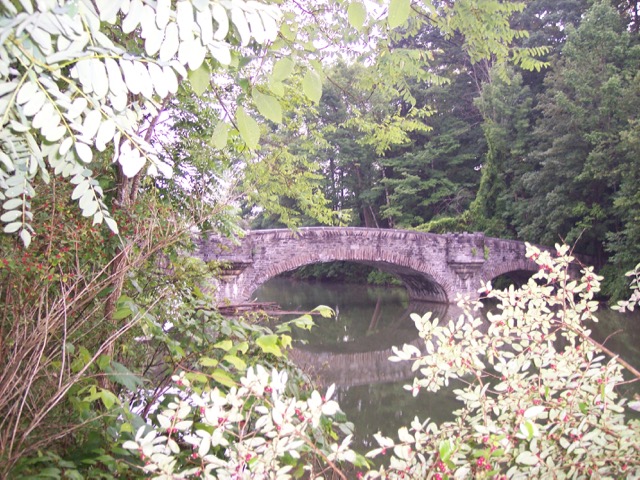
The stone bridge
Going over the stone bridge

And if winter drags on, I have this favorite place –

Sitting by the fire in the family room

Plus the really, really good news is that I don’t have to go for another colonoscopy for 10 years.

And I don’t have to return to the dentist immediately because I had no cavities.  Of course, she’d like to see me every year, but I think I can stretch it out a little longer.


family · photography · poetry

Today Is Good

I’d rather be right where I am today
Yes, I would
Yes, I would
Today is good

I’d rather keep in step with time than stay
Yes, I would
As I should
Today is good

Sometimes my heart begins to stray
To other times, to other days

My memories may not obey
This need to stay
Here in today

The day will come when I will say good-bye

Yes, it will
A moment still
And so until

I’ll lean into the sadness and I’ll sigh,
This is good —
For I have stood
Right where I should

Sometimes my heart begins to stray
To other times, to other days
My memories may not obey
This need to stay
Here in today
Here in today


My first thought when I saw the photo challenge was Simon & Garfunkel’s El Condor Pasa. 

My second thought was wishing to go back in time to when my children were young and my parents were both still alive. I quickly realized that wasn’t a healthy road for me to go down.

So I ditched Paul Simon’s sparrows, snails, hammers, and nails, and wrote this about my need to stay in the moment.

family

Celebrate 88

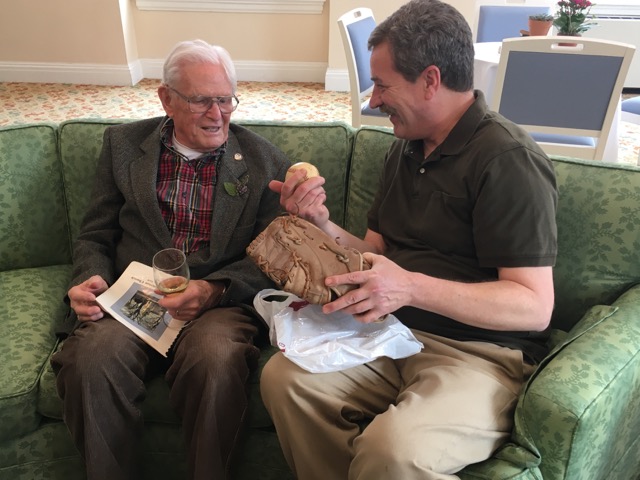
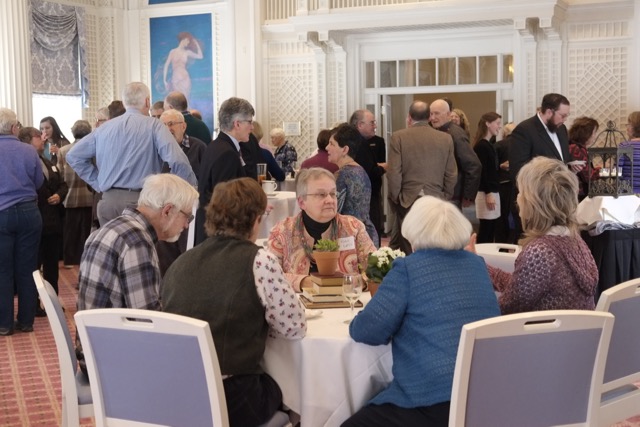
“This is such a great idea,” any number of people said the other day when we hosted a birthday party for my father at the Otesaga.

Not to be morbid, but the idea came from receiving lines at funerals. When my oldest brother died four years ago, I stood in a funeral receiving line for the first time. It felt like everyone had a story to tell about Stewart. I wished he could have heard them. He would have felt so loved.

When my mother died, the same thing happened. Person after person held my hand and told me a story about my mother and how much she meant to them. It gave me comfort to hear, but I wished my mother could have heard the stories too.

When Mr. Hanson, my 7th grade math teacher, died, his funeral was packed. The receiving line stretched out the door of the Vet’s Club and down the street. I wished I could have grasped his hand one last time, looked him in the face, and told him how much I appreciated him.

That’s why I started thinking about a party for my father.

I bounced the idea off my siblings. Before long, I was on the phone with the Otesaga. It had to be a strange call for their event planner.

Me: I’d like to have a birthday party for my father.

Planner: How many people do you expect?

Me: I have no idea.

Planner: I really need a number.

Me: I have no idea.

She worked with me.

I am so thankful for Brooke. She listened and guided and suggested.

For instance, she suggested that we use several adjoining rooms so it never felt crowded. She suggested we set up one room with comfortable seating, so my father could sit on a couch instead of a dining chair. She and her staff put out the decorations we had brought — books and photographs. She was wonderful.

The real quandary was how to get the word out. Friends of Bassett helped SO much. They blasted the invitation to retired physicians, current physicians, administration, and I forget who else. The local churches also helped to spread the word. As I ran into people at the grocery store or the gym or the post office, I invited them. It’s hard to corral a lifetime of people.

Among the first to arrive were two nurses from Dermatology, his last hold-out in his long and varied medical practice. He was delighted when he saw them.

Dermatology represents

From the home health aide who takes care of him,

Doreen and family

To a former CEO of the hospital,

Dr. and Mrs. Streck

To one of his secretaries,


To a little leaguer he had coached,
To family,

Family

More family,

His sister surprised him

And a slew of friends and colleagues, his life was well-represented.

The next day, as he started working his way through all the cards, he asked, “How did all those people know it was my birthday?”

I just smiled.


family · Life

If I Just Keep Moving

“If I can just keep the car moving,” I said to Laurel, “I think we’ll be okay.”

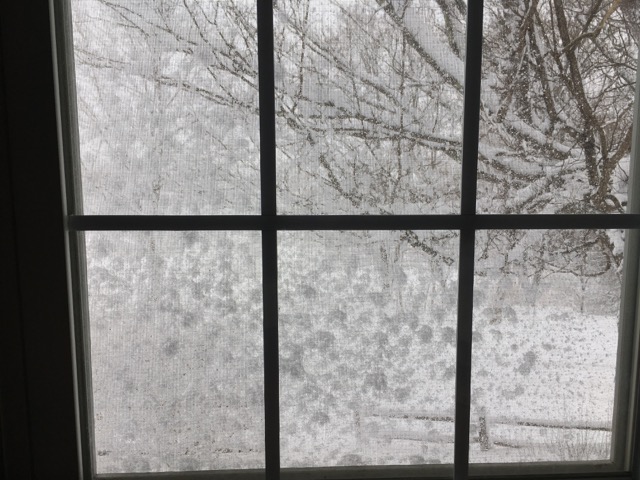
Earlier last Friday, I had marveled at the way the snow surrounded the house, blowing, swirling, sticking to windows on every side.

North
West
South
East

Schools had announced their closures the night before. The hospital had called twice to reschedule appointments that family members had for Friday. The pool — actually the whole sports facility where I work — had decided to close pre-snowstorm.

But the swim meet was still on.

Swim meets are never canceled.

Ever.

Bud shook his head in disbelief, but handed me the keys to the car that has better snow tires.

And off Laurel and I went, driving the 80+ miles to Half Moon, NY.

The roads were bad.

“Take a picture,” I told Laurel, handing her my phone and quickly returning my hands to the steering wheel. 

It was white-knuckle driving time.

I usually take back roads, zipping up and down hills, past farms, through hamlets, to save time. Not Friday, though. I chose my route based on which roads I thought would be clearest.

Route 20

Route 20 wasn’t bad when I finally got on it.

Not bad, but not great either.

The viewable area in my windshield grew smaller and smaller as the wipers got caked with ice.

“I have to stop and clean the wipers,” I told Laurel — but there was nowhere to stop. The plowed lane was narrow and the shoulder non-existent.

We passed a huge Walmart truck leaning at an odd angle in the median and covered with snow. I wondered how long it had been there.

We passed an SUV down an embankment. “Do you think anyone is in that car?” Laurel asked.

“I don’t know, but I can’t stop,” I told her. “It wouldn’t be safe.”

I watch a state trooper in my rearview mirror pull over beside it. He put his flashers on for safety, and I assume he went to check.

Grimly we drove on.

“I’m going to stop at that gas station,” I said to Laurel, “so I can clean the wipers.”

But I couldn’t see the entrance and the brakes didn’t want to cooperate, so I continued driving.

30 mph seemed optimum. If I slowed, the car skidded. If I went faster, I felt like I was flirting with out-of-control.

“If I keep the car moving,” I said to Laurel, “I think we’ll be okay.”

We pressed on.

Past the tree tipped into our lane.

Past more vehicles off to the side.

Past snowmobilers.

Past 4-wheelers with plows attached.

Past bundled-up people with shovels who made me think of people bailing out sinking ships with tea cups.

Once we got to Albany, the roads were fine. The last little jaunt up to Half Moon was easy.

I sighed with relief when we checked into our hotel.

As I lay in bed that night listening to the thumps, hall noises, and plumbing sounds that go with staying in a hotel, I thought about how much of life is like that drive.

Sometimes it’s white-knuckled and demanding of every ounce of my attention.

Sometimes questions of whether I made the right decision overwhelm me.

Sometimes obstacles fall in my path.

Sometimes I can’t enjoy the scenery.

Sometimes I just have to keep moving.

Sometimes that’s all I can do.

dementia · family

God Bless the Moon

Every morning I go downstairs and sigh when I see the tray table beside my father’s chair. It’s a mess.

I tidy it — but I know my organization will erode to disorder by evening.

The problem these days is that he has taken to playing the boombox my brother got him last year. My father doesn’t understand the difference between a DVD and a CD, or, for that matter, between the radio setting on the boombox and the CD setting. He needs help, but often won’t ask for it. The CDs and their empty cases cover his tray table.

Whenever he puts a CD called “Scottish Tranquility” in, we have this conversation.

Dad: This music is so mournful.

Me: It’s supposed to be peaceful.

Dad: There are no words!

Me: It’s instrumental.

Dad: I understand that, but where are the words?

Me: Instrumental means it’s just the instruments.

Dad (pointing to the CD case): But it lists the names of the songs.

Me: Yes, the songs still have names.

Dad:  This music could put you to sleep.

Me: That’s why it’s called Scottish Tranquility.

Dad: Can you put something else on? This is terrible.

It really isn’t terrible. It’s soothing and quiet, just what my soul needs.

This morning, at 4:30 AM when I got up for work, I looked at the mess on his table. Open books, half-done crossword puzzles, CDs, and empty cases.

“Why is everything always out of place?” I said out loud, frustrated, longing for that Scottish Tranquility.

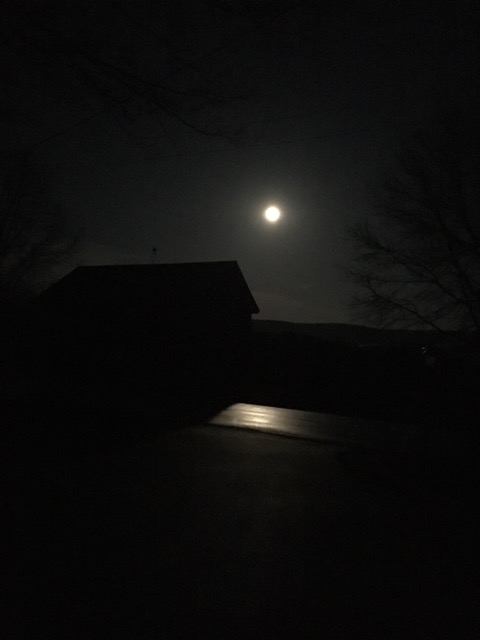
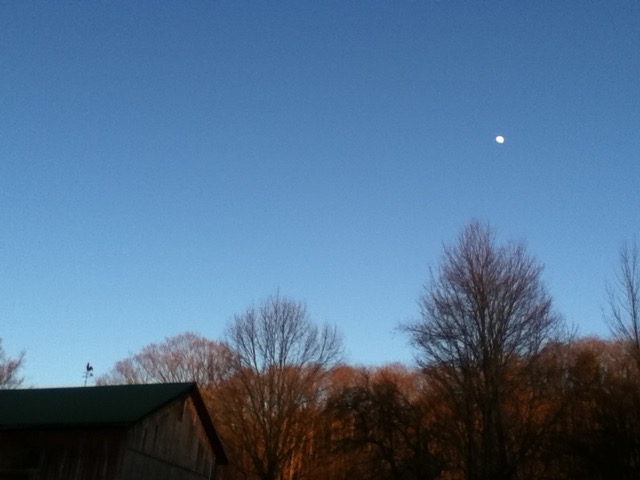
Half an hour later, when I walked outside, I was pleased to see the moon in its proper place. It silhouetted the barn and reflected off the road. A restart to a messy day.

Something about that sight gave me peace.

The moon is always right where it should be.

The other night it was peeping through the trees.

Sometimes it’s out in the daytime.

I’ve seen it from an airplane.

And it was gorgeous in Bosnia.

photo by Nicole Flohr

I can’t count on the moon to be in the same place every night.

But it will never be misplaced.

It may not be as reliable as the sun — rising in the east, setting in the west — but it’s there.

All I have to do is look.

Ah, the Sea of Tranquility.

family

Subscriber of the Day

My youngest brother composed this song when he was a wee lad.

The daily newspaper that my parents read was called the Oneonta Star and one day my little brother burst into this song. It’s much better than my first song which was called “Freckle Face.” Lyrically, my song was more interesting (although a little disturbing), but overall, his was better.

Oneonta — pronounced Oh-nee-on-ta, not, as tourists occasionally say, “Won-on-ta” — is the small city to the south of Cooperstown. 2014 population = 13, 838.

Some of you may be shaking your head saying, “That’s not a city. That’s a town.”

Well, when Cooperstown’s population is only 1,812, Oneonta sure looks like a city.

The Oneonta Star eventually changed into the Daily Star. Old timers still call it the Oneonta Star, just as they still refer to the Price Chopper as the Great American, our local grocery store which changed hands close to 20 years ago.

Old habits die hard.

My middle brother delivers newspapers for the Daily Star. He started when one of my older sons had a paper route and occasionally needed a back-up. My brother enjoyed getting up early and running the paper route. As he told me once, “It’s like getting paid to exercise.” It doesn’t pay terribly well otherwise.

But the people on his route love him. He gives them each a crystal for Christmas and then does little things throughout the year, like occasionally putting stickers on the papers to brighten their days — black cats and pumpkins for Halloween, hearts for Valentine’s Day, fireworks stickers for the 4th of July — you get the idea.

Last year, on my birthday, he put a Happy Birthday sticker on the front page. My father looked at it and said, “I wonder what the devil this is about. It isn’t my birthday.”

“It’s mine,” I told him.

“Oh,” he said.

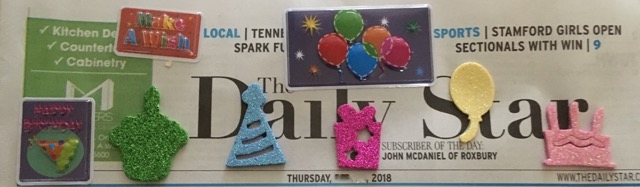
This year my brother added a bunch of stickers, to make the occasion unmistakable.

But my father didn’t say a word.

Every day, the Daily Star announces the “Subscriber of the Day.” My father comments on it frequently.

“I wonder what you have to do to get that honor,” he asks when he reads it.

The person is usually unknown to us because the Daily Star covers quite a large rural chunk of upstate New York. A few weeks ago one of his friends was named.

“Look,” he said. “John Davis is famous.”

Subscriber-of-the-Day famous.

It’s a strange honor that seems so important to him. He always checks that name above the fold, and then scans the obituary names below the fold — “Just in case my name shows up,” he says, with a morbid humor that I appreciate less and less.

Today’s paper had many celebratory stickers. I wondered at the occasion — until I saw what my brother had surrounded with his stickers — the Subscriber of the Day, my father.

“Did you notice all those stickers?” I asked my father when he sat down to breakfast.

“Peter likes putting stickers on,” he replied.

“These ones are pretty special,” I said. “Look.”

He peered at the newspaper, and peered some more. Suddenly a wide grin spread across his face.

“I’m the subscriber of the day!” he said, fist-pumping the air. “Hallelujah!”

Hallelujah indeed.

I almost burst out singing — “O-ne-on-ta Sta-aa-ar!”

Faith · family

Shall We Gather At the River

Yesterday morning, when Dad came out for breakfast, he told me that he had composed a song while he was sleeping.

“Really?” I said. “Are you going to sing it for me?”

“Yes, I will,” he replied. “Just give me a minute to remember it.”

He sat there thinking, while I took his blood pressure and got his morning meds for him.

My father has compared his singing with Lee Marvin’s in Paint Your Wagon. In fact, I can remember times when my father would burst into “Wand’rin’ Star,” singing the first few lines. Lee Marvin’s gravelly baritone-bass was just enough off-key that I felt a kinship to him, and just enough on-key that I enjoyed the song — but my father was just off-key. I always smiled, though, when I heard him singing.

My mother was a soprano. Yesterday we sang “Shall We Gather at the River?” at church. I got a little lump in my throat because I could hear her singing this good Baptist hymn. It reminded me of my mother’s Baptist upbringing. I remember her singing it.

Shall we gather at the river,
Where bright angel feet have trod,
With its crystal tide forever
Flowing by the throne of God?

Refrain:
Yes, we’ll gather at the river,
The beautiful, the beautiful river;
Gather with the saints at the river
That flows by the throne of God.

My father was bobbing his head a little, trying to find the rhythm for this song he wanted to sing for me.

“The words are kind of crazy,” he said. “I don’t think I can remember them all.”

“Just sing what you can,” I said, getting more curious by the moment.

He closed his eyes and sang, “Humpty-backed camels and chimpanzees…” He swayed to some internal music, then finished with, “but there ain’t no uni-corn,” and opened his eyes to see what I thought.

“I hate to break it to you, Dad,” I said, “but that song has already been written.”

He laughed, “Well, isn’t that the darnedest thing.”

I sang The Unicorn Song for him, (not nearly as well as The Irish Rovers)

There was green alligators and long-necked geese
Some humpty-backed camels and some chimpanzees
Some cats and rats and elephants, but sure as you’re born
The loveliest of all was the unicorn*

He mouthed the words with me and nodded, remembering them better as he heard them.

“That’s right!” he said.

“You were listening to it last night,” I said. “It probably got stuck in your head and played in your dreams.”

He shook his head, “The brain is an amazing thing, isn’t it?”

The funny thing about the Wand’rin’ Star song is that my father was born under the farthest thing from a wandering star. He was born under a stay-put star. Fifty-some years ago, when he left the Army, he bought a house and settled in.

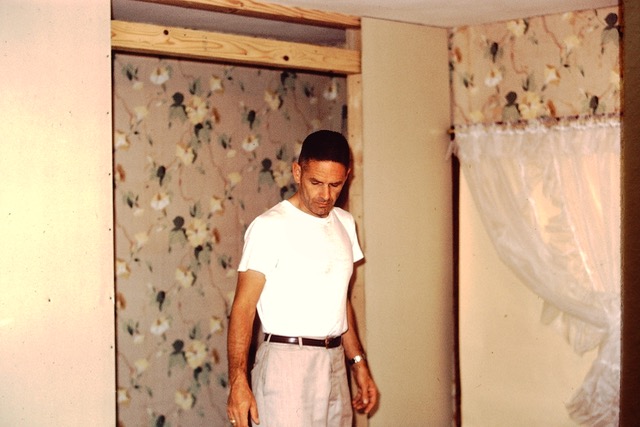
He put closets in the house.

The house had only one closet when he bought it — not nearly enough for a family of seven.

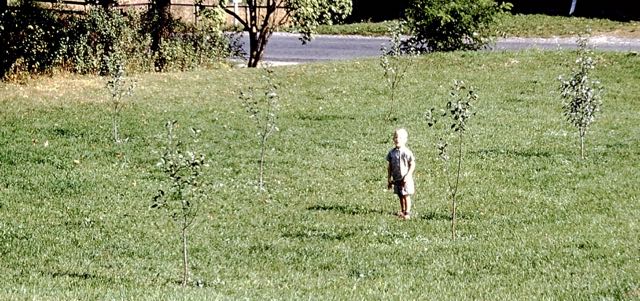
He planted trees, putting down roots.

My brother standing by the newly planted orchard – 1968

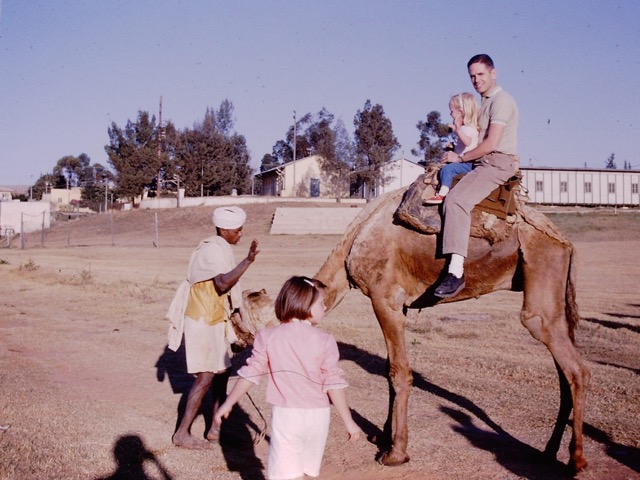
Those humpty-backed camels — I suppose they were a part of his life, too — but only a small part.

My father and I riding a camel

The last verse of Shall We Gather says —

Soon we’ll reach the silver river,
Soon our pilgrimage will cease;
Soon our happy hearts will quiver
With the melody of peace.

Perhaps it’s there that we’ll find those missing unicorns.


family · photography · Travel

Sweet

Our trip to France was sweet.

I’m not talking about the food, which, of course, was amazing.

My food pictures leave something to be desired — not the food, my pictures.

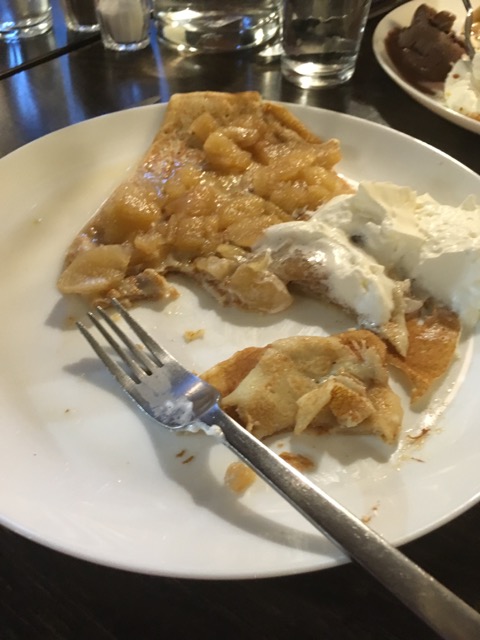
Like this dessert — I don’t remember what it was, but it was delicious.

Or these crepes — which looked so wonderful that I started to eat them and then remembered to take a picture.

I took a picture of these meringues on Day 1 because I had never seen such large meringues. The patisserie was closed but I wanted to remember to buy some later. Unfortunately I forgot.

This pastry with apricots was really good but I can’t remember the name.

The sweetest thing about that pastry, though, was that my siblings and I sat outside on a bench to enjoy our selections from the patisserie together. We talked and enjoyed the morning sun before heading back to our hotel.

For years, I had heard my father say that he really wanted to see the beaches of Normandy — so we made it happen.

He probably doesn’t remember the trip today — at least not without the aid of the photo book we put together.

But we remember.

For one week last May, we fulfilled one of my father’s dreams — and had a good time doing it.

That’s the sweetest part.


family

A Privilege

Yesterday I ran into someone at the pool that I hadn’t seen in years — Bridget‘s father.

Bridget was on the first team that I coached and I still think back on her fondly. In fact, I had just been telling Laurel about Bridget the other day.

Bridget held all her team records with open hands. When Helen was quite young, Bridget told her to go break all those records. It was such a gift, so encouraging. Helen went on to break quite a few of them.

Anyway, Bridget’s father, Mike, asked about my father. I told him that I was staying with my father to take care of him.

“It’s such a privilege, don’t you think?” he asked.

I nodded in agreement.

Those were words I needed to hear.

Sometimes caregiving doesn’t feel like a privilege. It feels more like a chore. When I was home with small children, there were days when I would  look out the window and long for the freedom to go do something, anything besides laundry and cooking and changing diapers and wiping noses.

I used to bring my kids to the gym for a playtime we called “Kiddie-gym.”  The pre-schoolers would climb around on the mats and throw balls and scoot on scooters. The moms would sit and talk.

One day one of the moms talked about trying to find childcare for her twin two-year-olds so she could go back to college for a graduate degree. The mom next to me leaned close and whispered, “After all she went through to have those children, she’s abdicating her responsibility.”

It’s true that the woman with the twins had used in vitro fertilization. It’s true her husband had a good job so she didn’t need to work. But abdication? It seemed like a strong term to describe a mother furthering her education. Abdication was what a king did when he gave up his throne.

My take-away from that conversation, though, was that motherhood was on par with royalty. It was an honor and a privilege to be a mom. On my looking-out-the-window days, longing for something else, I would remind myself of that. I would lean in and embrace the wearisome work because not everyone has that privilege.

This morning a woman complained to me about the child-care hours at the gym.

“They don’t open until like 8:15 AM and they aren’t even open every day,” she said. “What if someone wants to work out before they go to work?”

“Maybe their spouse or significant other can watch the children,” I suggested.

“That discriminates against single moms,” she replied.

“Being a parent involves a lot of sacrifice,” I said, but I could see that she didn’t appreciate my answer.

I was glad for my conversation the previous day about care-giving being a privilege. It reminded me to stop thinking about the things I can’t do, but to appreciate the things that I can.

I can find the Jumble in the newspaper.

I can change the channel to Jeopardy.

I can fix over-easy eggs.

I can help with crossword puzzle clues.

I can drive him to the doctor or to get a haircut.

I can rescue photographs from the garbage.

I can remind him of people’s names.

I can tell him at 3 AM that it’s time to go back to sleep.

I can keep him in the home where he has lived for over 50 years.

Yes, it’s a privilege.


Faith · family

Lent 2018

My sister messaged me yesterday, “…about Tuga… has he returned to your pocket, or was he so last year?”

Tuga, the little brown bunny who stayed in my pocket for Lent 2017 as a reminder of the sorrow in the world, is not so last year. He’s so in Bosnia.

I have other Tugas. Three sets, as a matter of fact, of Tuga and Aleluja, sitting on my shelf. One set is promised to someone. The other two are at-the-ready, for when I meet someone who needs a mindfulness token of sorrow and joy.

Ash Wednesday, the first day of Lent, has had new meaning for me since 2014. That year, early in the morning of Ash Wednesday, my sister called with the news that my oldest brother had unexpectedly passed away after a heart attack.

Yesterday I read through some of the posts I had written in the subsequent days. Most are private now — as in, you can’t read them; I took them down because they were too personal — but the Ash Wednesday one is public.

When I’m telling someone about Stewart, I almost always refer to him as brilliant. Hamilton College undergrad — their first Russian Studies major. Yale Divinity School for his M. Div. and then Syracuse Law for his J.D. He had a home computer before that was a thing — like in 1983. He had set it up to run tessellations — which, of course, has nothing to do with Russian or Divinity or Law.

In the last few years of Stewart’s life I had been frustrated with him.  He had been nearly job-less, doing pulpit supply and seemingly little else. Every month my father sent him money to pay his rent.

In the meantime, I was running myself ragged, driving back and forth between Greene and Cooperstown, trying to help my father take care of my mother.

“Why can’t Stewart move in with Mom and Dad?” I griped to my sister. “He could be of real help to them and Dad wouldn’t have to keep sending him money.”

It irked me.

It seemed unfair.

But when Stewart died, and I met the many people whose lives had been touched by Stewart’s, I realized that I only knew part of the story. Stewart lived in a low-income area. He drove neighbors to doctor’s appointments and listened to their lives. His congregation gathered every evening in the apartment complex’s gazebo.

“That’s where Stewart sat,” one lady told us, pointing to a bench at one of the picnic tables. “He was always here for us.”

He had a church, unrecognized by anyone, because it was so informal, yet so personal. It didn’t pay the bills. It paid in intangibles.

I couldn’t see it — I don’t think anyone could — until he was gone, and we slowly unknotted the knot that was his life.

In his book, Great Lent, my Lenten reading for this year, Alexander Schmemann said,

If God loves every man it is because He alone knows the priceless and absolutely unique treasure, the “soul” or “person” He gave every man. There is no “impersonal” love because love is the wonderful discovery of the “person” in “man,” of the personal and unique in the common and general. It is the discovery of the unique in each man of that which is “lovable” in him, of that which is from God.

I looked around my room this morning for something to carry in my pocket for Lent. Tuga had been a good companion last year, but I wanted something to remind me of the hidden person, the God in each person I meet.

I settled on a Monkey’s Fist that had been sitting on my dresser. It probably belongs to one of my children — but it’s mine for this season. A knot, the heart of which is hidden from me.

Wikipedia says, “Monkey’s fists are commonly used as a convenient and unobtrusive method of storing and transporting precious gemstones.” What can be more precious than God?

God wears a costume of human flesh. He’s in the guy at the gas station, and the friend that encourages me.

But He’s also hiding somewhere in the woman who irritates me, and the man sitting on the couch in the other room, rifling through papers again and again.

I’m going to be on the lookout for Him.