I seen what they are I ain’t been where they been But I ain’t gonna lie — When they look at my skin And see all my tats I seen judgment begin — But, God, they don’ know Diddly zip nothin’
‘Cause they’re full o’ themselves And full o’ shit too They can’t lend a hand To help me or you They just bitch about this And bitch about that I ain’t got no patience For those miserable prats
Write a contemporary poem inspired by Robert Burns on one of his three themes: love, nature, and the human condition. Also, try to include some local dialect.
This is based on my many conversations with one of my co-workers. He is one of the most genuine people I know — comfortable with himself, willing to help anyone in need, judged frequently by those who don’t know him.
Sad, but true — I don’t hear his dialect anymore and had to pay attention to it yesterday as he leaned on the counter and told me about his dogs (one of his loves) and the current bourbons he is considering (another of his loves). He and I share a frustration with the way people complain and complain and complain, but do nothing to make anything better.
I love villanelles (in theory). I especially love when other people write good villanelles. I’ve decided, though, that I don’t like writing them.
I wish I was Dylan Thomas and knew how to not go gentle. Instead I found myself monkeying around with a ton of bricks. Such an overused cliche.
My father died in 2019 and my memory is so blurred. I have very few clear recollections of that day.
I went for a walk. I DO remember doing that — more, I remember my own NEED to do that. There were too many people in that one room and one of them was dead. I needed to get out.
Now, when I look back at that time, there’s a pandemic in the way. It’s like a wall that I can’t see over.
Something significant happened in September 2019. I have vague memories of it.
In my attempt at villanelle-ing, I ended up with two, neither of which I’m terribly happy with —
Here’s the first:
My father’s death hit me like a ton of bricks It happened late September but the day’s a blur And then we had a pandemic thrown into the mix
I was his care-giver, but I couldn’t fix The inevitable. Yes, we knew it would occur! My father’s death hit me like a ton of bricks
A gastric bleed that would totally eclipse The dementia to which I had begun to defer And then we had a pandemic thrown into the mix
When I look back on that time, nothing sticks Nothing stays in order, no memories pure My father’s death hit me like a ton of bricks
I went for a walk — yes, that clicks But after that? I fear it’s all a whirr And then we had a pandemic thrown into the mix
I know I have good reason for the memory skips How did I make it through? I am not sure My father’s death hit me like a ton of bricks And then we had a pandemic thrown into the mix
And here’s attempt number two:
Enough with all this talk Words are a garbled mess I need to go for a walk
The night we hear death’s knock We gather to pray, witness, bless — Enough with all this talk
The hospice nurse notes the clock Done? Begun? Your guess — I need to go for a walk
To walk and walk — the shock — I can’t express — Enough with all this talk
Dear God, I need sound blocked I need so so much less I need to go for a walk
Trite, kind, angry words interlock Into some noisy distress Enough with all this talk I need to go for a walk
I asked myself, Is it possible to write a rhyming poem in stream-of-consciousness?
Hmm… First I chose a structure: a Cethramtu Rannaigechta Moire, an Irish poetic form that requires 3 syllable lines in quatrains. The second and fourth lines rhyme.
Then I opened a tab in Rhymezone and typed in “spruce” — the Stream-of-Consciousness Saturday prompt for this week.
Here goes:
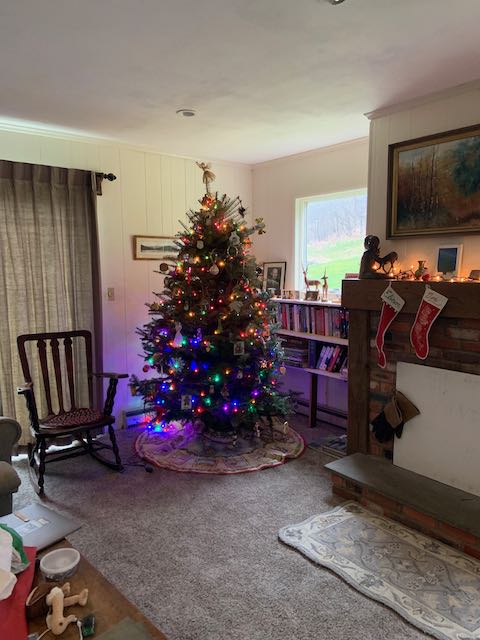
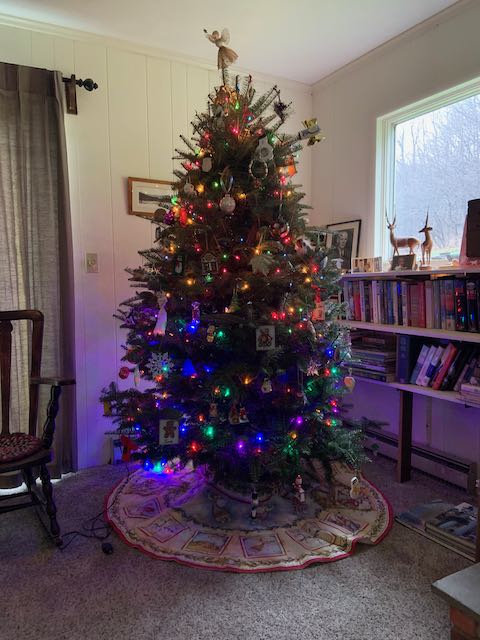
Christmas tree Little spruce I hereby Name you “Bruce”
Quite a name For a tree Many folks Would agree
Bruce the Spruce Tall and green Sparkling lights Lovely scene
Write a Naani poem — “Naani is one of India’s most popular Telugu poems. Naani means an expression of one and all. It consists of 4 lines, consisting of 20 to 25 syllables. This form is not bound to a particular subject.”
Reena, the poet of the week, also provided the image as inspiration.
Do you remember that teenage girl You talked to years ago? Instead of oyster, you saw pearl – She was a tough one though! She pushed against all that you said When you tried to reaffirm That she had value –No! Instead She tried to worm and worm Her way away from your kind words Why didn’t you give up? Why not say, This is for the birds?! But no, you filled her cup —
And now my life reads like a long and wondrous book If he wants to know the good he did, dear God, let him look
This is in response to the W3 prompt for this week — to write a memory poem. Here are the instructions:
Imagine a person from an old memory looking in on you through an open window;
You’d all but forgotten about this person, but today their presence has given rise to this memory;
What do you see? What’s going on?
Write this as a Memory Poem:
Purge this memory out of your system; allude to the memory; banish the memory;
Poem length: 100 – 300 words;
The poem must end with these words: “Let him/her look”
I don’t know if I did the whole memory poem thing correctly. First, it’s only 98 words.
But — true story — in my early teens, I was a pretty mixed-up kid. I was part of a perfect family, but I was pretty less than perfect. One summer, when I was making all sorts of bad choices, these two guys came from Cornell to spend the summer working in our county with the 4-H program. One of them started a summer band.
Indirectly, I suppose, music saved me. I got involved with the summer band and then got roped into other activities with a different group of kids and a more wholesome focus.
I think I was 14 years old. I remember swearing at the one guy in a long tirade about I-don’t-know-what and he just took it. He didn’t scold me. He didn’t kick me out. He just took it.
And continued to treat me nicely.
Of course, I didn’t keep in touch with those guys. I was a kid. They were Cornell students. At the end of the summer, they went back to Cornell. Honestly, I can’t even remember the band guy’s last name.
“Can I have a little kitty?” I asked my dad one day. My mother put me up to it; she knew what he would say. When I had first asked her, she said, “You need to ask your dad.” The thought of having NO kitten made me rather sad – So in my simple six-year-old heart, I began to pray.
When I first saw those kittens, much to my dismay, The lady said to ask my mom and I knew I must obey So I asked my mom with every ounce of sweetness that I had — Can I have a little kitty?
My father loved to tell this tale. I can hear him now portray How this funny freckled blonde-haired girl stole his heart away With such a simple question — and he would often add “How could I say no to that?” Yes, he would be a cad To deny his own dear daughter the joy that came with one “Okay” Can I have a little kitty?
The cat’s name was Ichibon. We lived on an army base at the time, and the family with the kittens had recently returned from a stint in Japan. Ichibon means #1 in Japanese, and she was allegedly the first kitten born in the litter.
Ichibon was first in a long long string of cats in my life. Today, I have an obese cat who doesn’t understand that he’s supposed to be a working cat and taking care of the mice in this house — but that’s probably a poem for another day.
Some may think it strange — This is my favorite time I sit quietly Watching leaves waft their way down Or swirling as if unsure Where to fall. It’s fall — Leaves falling, falling, falling Left behind ’til spring Or raked into piles and hauled To the compost where they rot “It’s so cold today!” People say, pulling on coats Wild geese preen feathers Preparing for fall; they fly In formation; I stay home
When my granddaughter was littler (she’s now a big 4 years old), I wasn’t working full-time and would go babysit once a week. So. Much. Fun.
Anyhoo — she was just a wee little thing, and I would put on music to play in the background while we played. I had a whole playlist for her.
I pulled it up the other day because I (obviously) hadn’t played it in a long time. It was a lot of Scottish songs. My granddaughter loved Ally Bally Bee and “danced” to it — which involved running around the couch.
I loved The Broon Coo, a song about a mischievous cow that breaks oot and eats all the hay and neaps (turnips) and chases the ducks.
Cows are near and dear to my heart. The cow population is our area has significantly declined over the 50+ years since my parents bought the house I am now living in. When we first moved here, though, there was a working dairy farm next door.
I wrote a poem about it some years ago and thought that I had posted it. Maybe I had and then took it down. Who knows? It happened to be in my overfull WordPress draft folder and I’ll put it at the bottom of this post. It’s not really stream-of-consciousness, you know.
If you’ve ever experienced feeding a cow something from your hand, you’ll know that it’s an unforgettable thing. The smoothness of their nose. The tongue pulling whatever it is off your hand. The slow patient chewing that ensues.
So many people are just in a hurry when they eat. They could learn a lesson from cows.
A horse’s muzzle is dry and it will use its lips to take whatever you’re holding. A cow’s nose is slimy — but in the best of ways, if there can be a best of ways for slime.
I used to walk down the road and play music for the cows. They would walk alongside me on their side of the fence.
Then there was the year the cows stampeded up our road when the guy was trying to load them in a truck. He eventually rounded them all up, save one — and there were feral cow sightings over the winter that year as it wandered the back hills. I don’t know whatever happened to it.
But the Broon Coo song is about a cow that breaks out and gets into trouble — which is what my poem is also about (kind of) except our cow was a black-and-white Holstein.
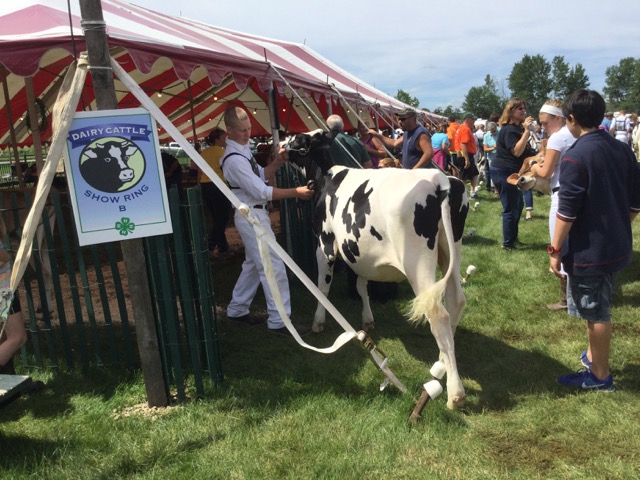
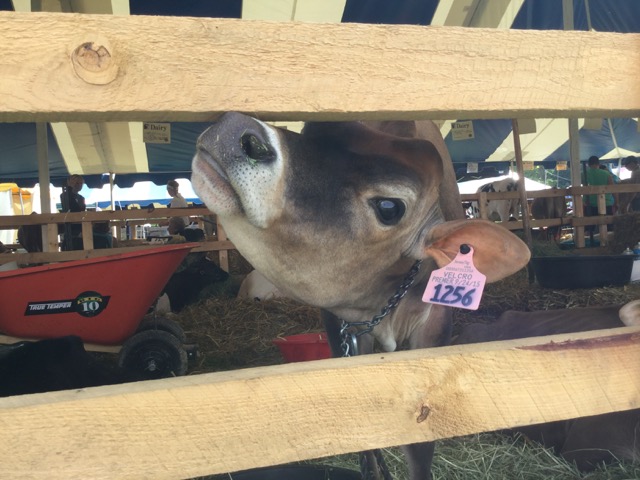
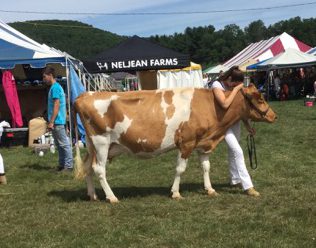
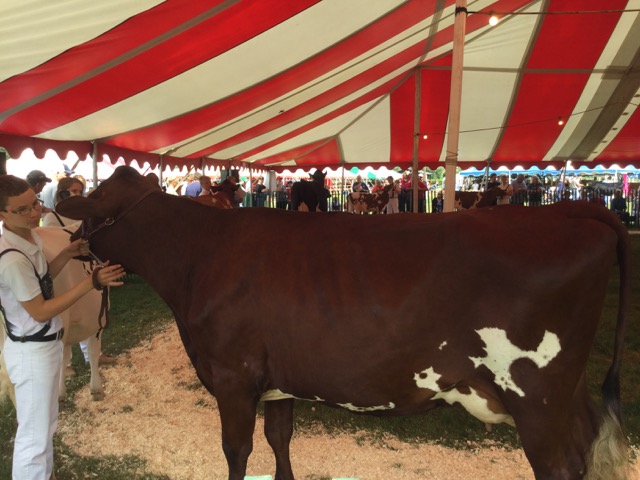
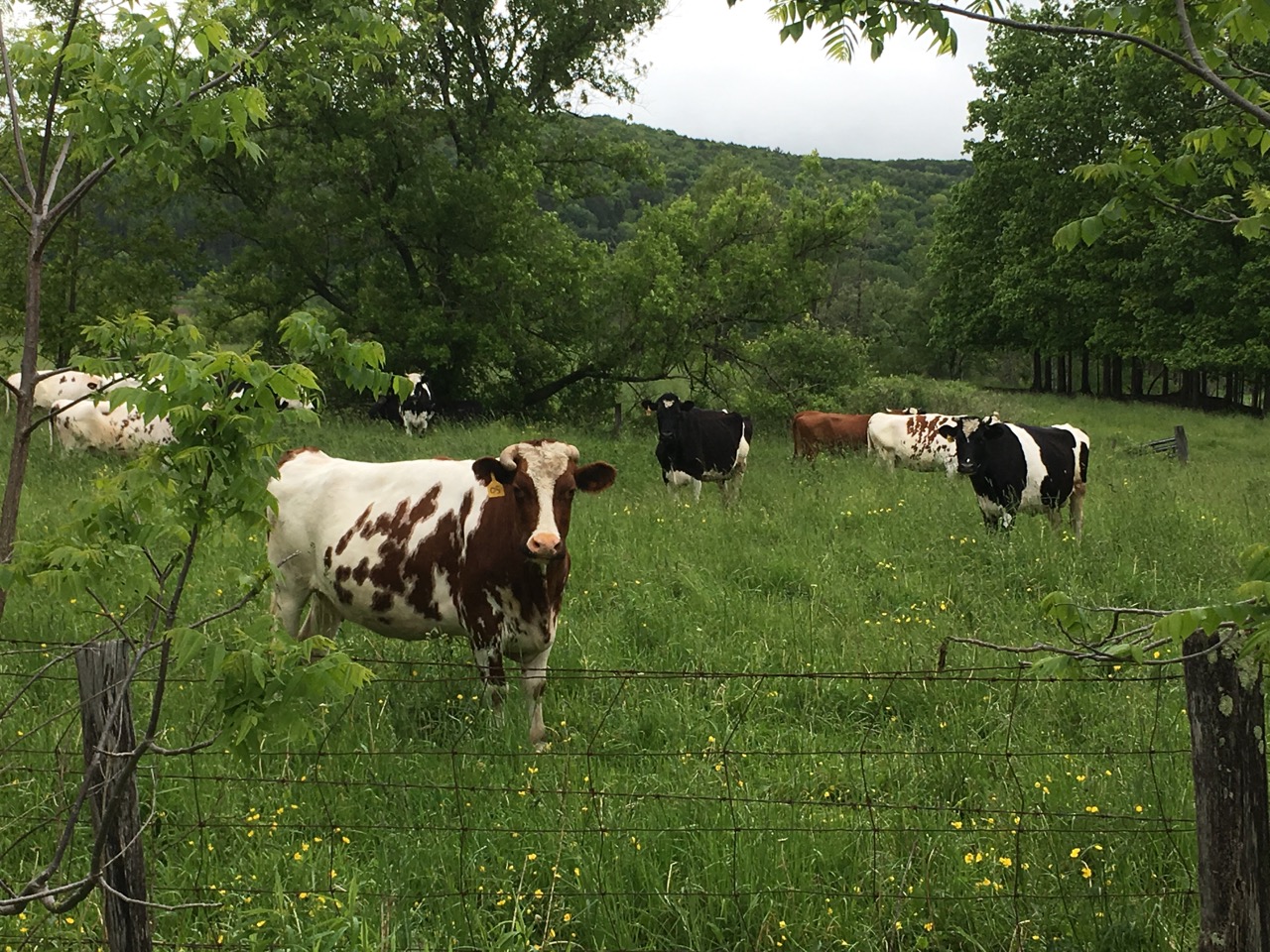
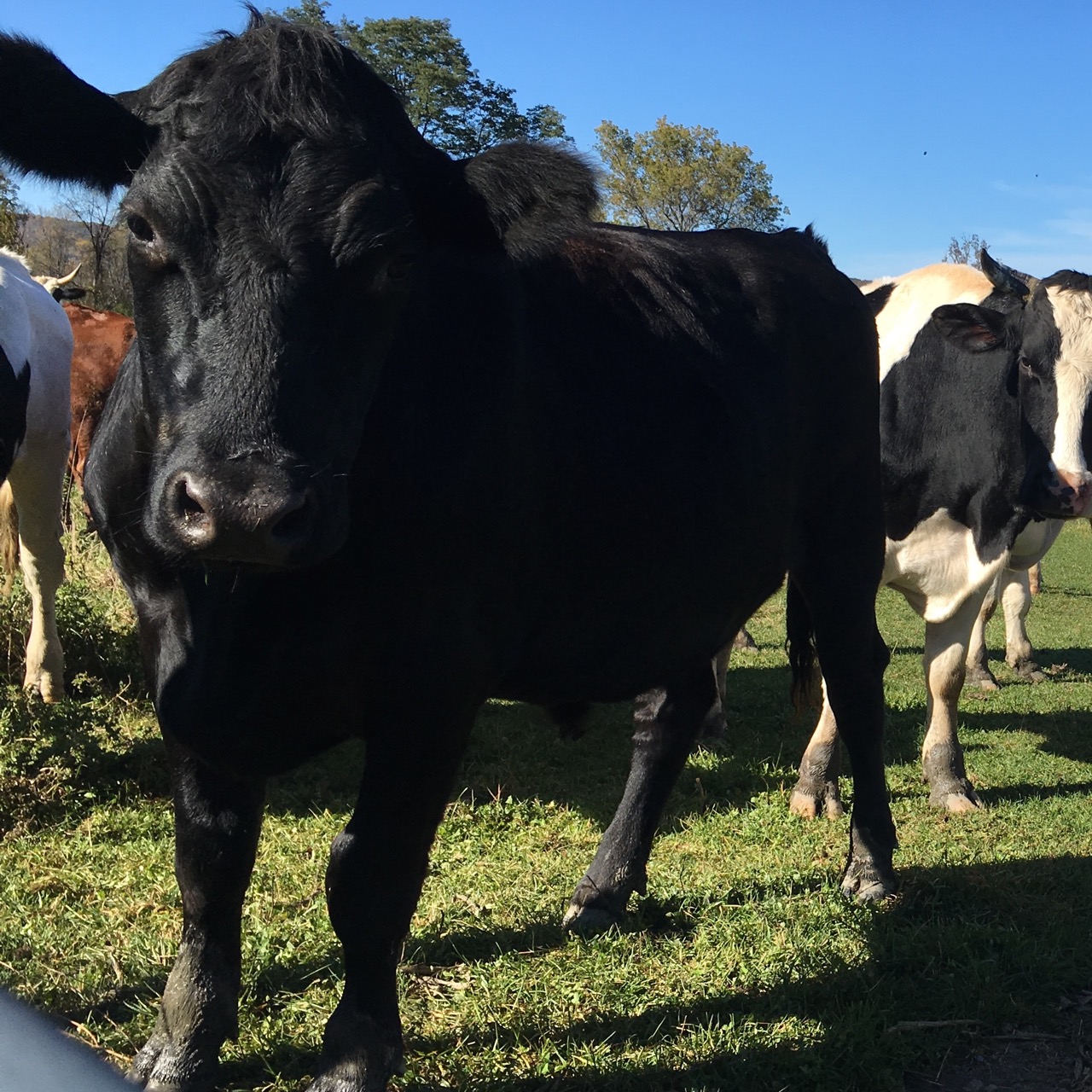
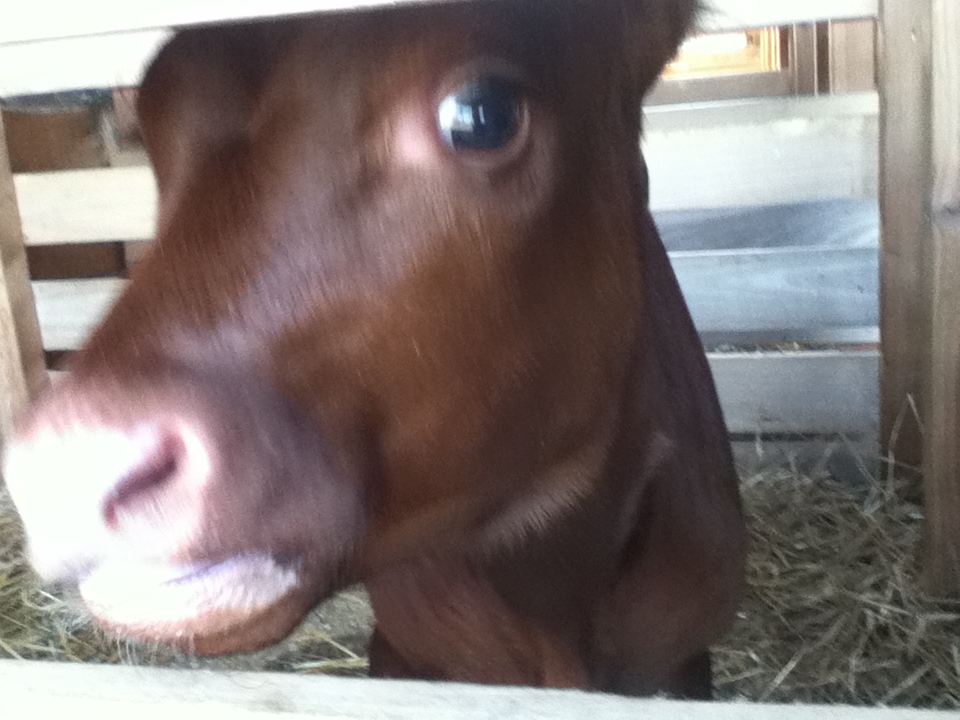
So I’ll leave you here with a few cow pictures and a poem. 🙂
When my parents bought the farm (literally) Pa Jackson was over the hill (euphemistically and literally)
He milked the cows by hand While the barn cats tumbled in the hay (euphemistically and literally) I watched with wide eyes (the milking, not the euphemistic tumbling)
The Jacksons had a bull To do the job of the artificial inseminator And when our pet heifer, Sock-it-to-me-Sunshine, Wandered over To visit the Jacksons’ cows The bull also got to know her (euphemistically)
Then, our heifer Was in the family way (euphemistically) She was loaded on a truck And sent to a home For unwed cows
The next summer The Jackson’s cows Were also loaded onto trucks And sent to auction Because Pa Jackson was Extremely Over the hill (euphemistically)
A few years later We read in the newspaper That he had bought the farm. (euphemistically)










 Hot Dogs and Marmalade