Overheard Malicious whispers Between two Co-workers My heart grew cold at their words Squeezing in my chest
Breathing stopped Blackness obscured sight My fists clenched And unclenched Thoughts swirled like a tornado Unholy and wild
Office chair Calmed me in this storm I held on Took a breath Straightened my back and went out “I heard what you said”
This is my response to this week’s W3 challenge: to write shadorma poems.
The shadorma is a compact Spanish syllabic form built from a six-line stanza with a strict syllable pattern: 3 / 5 / 3 / 3 / 7 / 5 (26 syllables total). It is typically unrhymed, and a poem may consist of a single stanza or a series of stanzas.
For this challenge, the theme is Sensory Details.
Write a close-up study of a single inanimate object or a very specific moment. Think small and focused rather than narrative or expansive. The power of the poem should come from sensory observation—what can be seen, heard, touched, smelled, or felt.
Yes, this actually happened. It was a specific moment and I tried to write the sensory details of it.
“Can I have a kitty?” itty- bitty me asked my father — rather, my mom put me up to it. It seems that she knew new kitten would equal no. No, unless she rigged the odds. Odds are he would say yes to me, mea- ning I asked, pleading, “Yes?” — “Yes.”
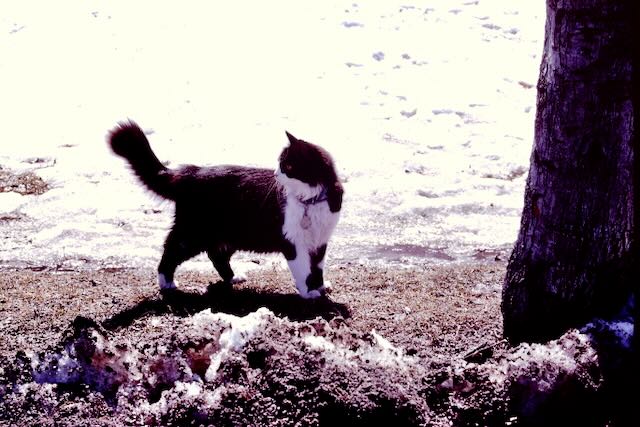
Ichibon — Ichi + bon — Japanese for Number One — our first cat
We were on an army base at the time. The family with the kittens had recently come back from Japan.
How could my father say no?
This is my attempt at an Echo Poem, this week’s W3 Challenge. An echo poem repeats the ending syllable (or syllables) of each line. That’s it. No strict rules about meter or length.
The next time change is two weeks away! GAH!!! On March 8, we must turn our clocks ahead and lose an hour. I’m not a fan.
In Val’s Seasonal Scavenger Hunt, prompt #3 is to write a Dizain describing your personal journey into the new season. A dizain is a ten-line French poetic form, popular in the 15th-16th centuries, featuring 10 lines of 10 syllables each (or iambic pentameter) and a strict ababbccdcd rhyme scheme.
Here’s a dizain bemoaning the upcoming time change.
I bristle when it’s time to change the clocks It seems to me that time is time is time The change of seasons we cannot outfox Circadian rhythms are somewhat sublime To muck with them just seems to be a crime C’mon, old body, you can re-adjust! It’s not a choice — in fact, you must! You must! In the fall, then once again in spring I’ll do it, but I’ll do it with disgust The brittleness of age dislikes the swing
The apples at the store were soft Their crispness was long gone Too long sunsets were early And too late was the dawn
Snuggling with her Tigger-Tiger Kept little Molly warm As outside snow swirled and blew Another winter storm
“It’s almost March! When will this end?” Mamma wailed and whined The blinding blizzard hammered down Of Spring there were no signs
Molly hugged her Tigger-cat And cried, “But Mommy look! Since we can’t go outside today Let’s read another book!”
This is my response to Val’s Winter Scavenger Hunt‘s second prompt: Use the following words in a poetry form of your choice: apple(s), sunset, tiger, hammer.
Rubbing fuzzy leaves Releases distinctive smell Pink geranium Awakening memories Mom’s thriving houseplant green thumb
I’m late to the scavenger hunt (thanks, Val, for sharing it with me) but here’s my response to the first prompt: “Write a poem inspired by leaves (dying ones or newly emerged). For bonus points use a Tanka to express your feelings about the leaves…”
Since the scavenger hunt started in the fall, I’m sure it was intended to inspire poetry about the beautiful colors of autumn. However, I’m writing in February, and immediately thought of my sad geranium. It’s the one plant that I’ve been able to keep alive for multiple years. That alone tells me that it’s an easy plant.
Its leaves turn crispy brown starting at the edges when I forget to water it — which happens more often than it should. Now I’ve placed the plant in a place I walk past all the time so I’ll see it.
“Oh, yeah, you,” I say to those brown-edged leaves. “You need water.”
So I give it water and the whole plant perks up.
Once, when I went on vacation, my son was taking care of the house for me. He remembered to feed the cats but forgot to water the geranium.
Priorities, right?
Anyway, I thought the geranium was a goner that time — but just add water and it’s back.
I do love the smell of the leaves when I’m dead-heading and dead-leafing. They make me think of my mom who, I’m pretty sure, never killed a plant in her life.
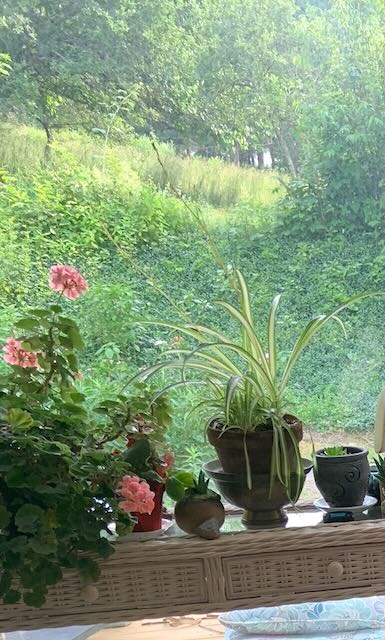
This is a photo from a few summers ago. The geranium, on the left, is still alive today. Nothing else in the photo is.
You hide, avoiding spotlight and regard, Let others have their moments in the sun Small talk, large groups for you are both quite hard Thus you oft eschew the words, “Well done”
What creature, then, can I compare with thee? An earthworm making soil in the dirt? Or detritivore cleaning up the sea, Hard-working anti-social introvert
A hoverfly works hard to pollinate The lovely flowers everyone enjoys Yet no one pauses to appreciate The busy flying workers of no noise
Some people never see, will never know The one who does, and doesn’t seek to show
W3 Challenge this week: write a love sonnet to yourself.
Let this line guide you:
There is in you something that waits and listens for the sound of the genuine in Yourself … that is the only true guide that you will ever have.— Howard Thurman (1899 – 1981)
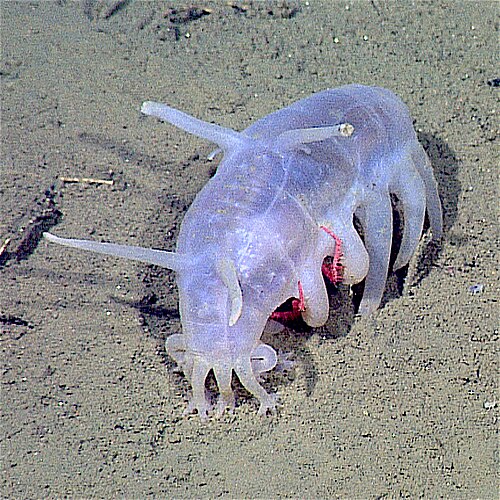
For Christmas, my brother gave each of his surviving siblings a mug with a QR code on it. My QR code leads me to a trivia question each day. My sister gets the bird of the day. Another brother learns a little history from his. The gift-giving brother learns about an unusual creature each day. The other day his creature was a Sea-Pig:
This high definition video framegrab was taken from MBARI’s ROV “Doc Ricketts” aboard the R/V Western Flyer at a depth of approximately 1260 meters on March 9, 2010.
Scotoplanes globosa, commonly known as the sea pig, is a species of sea cucumber that lives in the deep sea. It is considered a detritivore, or something that eats detritus, decaying organic matter. These kinds of creatures are crucial to the ecosystem, but we seldom consider them.
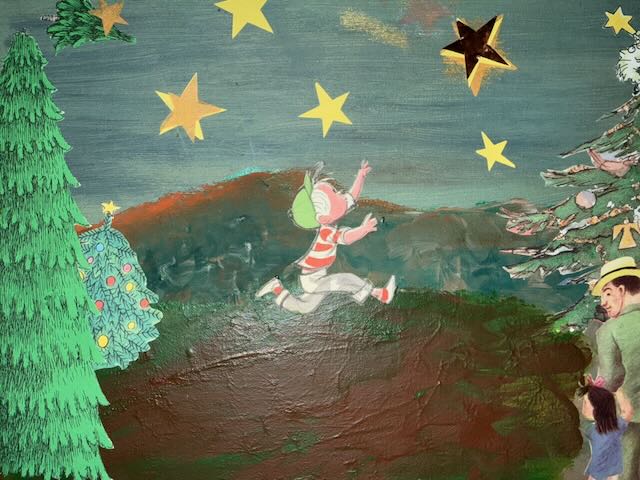
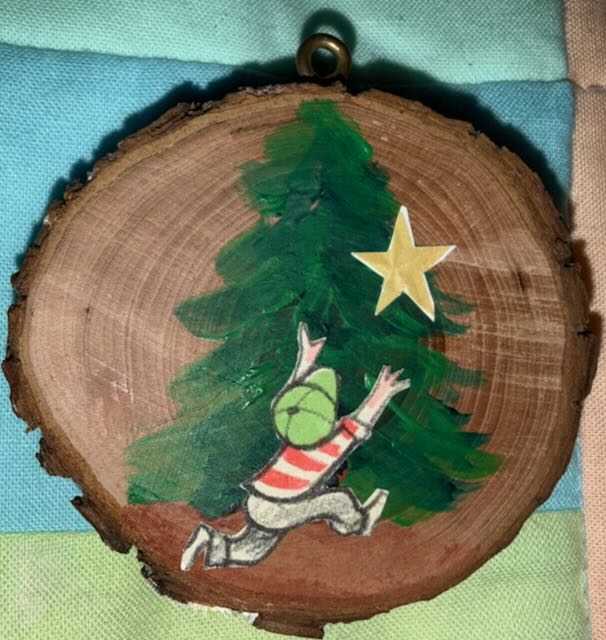
Oh, to pocket time It flies one season to next Simply catch a star
This is my response to this week’s W3 challenge which is to create a haiga by pairing a haiku (traditionally about nature) or senryu (traditionally about human foibles) with a visual art form of my choice. The theme: the long-awaited shift from winter to spring.
I think this is a senryu? It is a human foible to think we can control time, right?
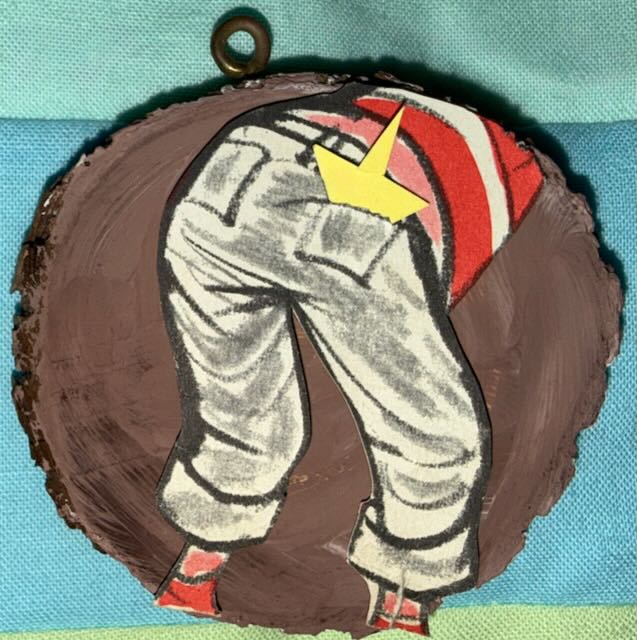
The artwork is a little self-indulgent. It’s a collage I made at Christmas. I also made a few ornaments along the same theme, but never did anything with them.
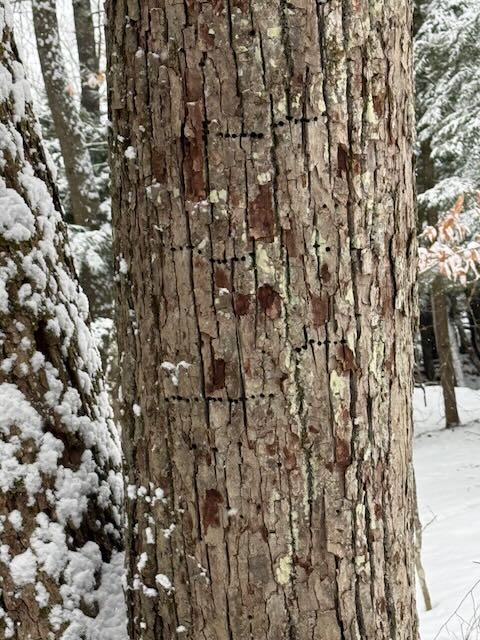
Basswood tree with holes drilled by a yellow-bellied sapsucker
Detailed? Abstract? Both?
I was searching for blogging challenges this morning. Having a challenge keeps me posting. The challenge of Detailed or Abstract — or both came from Cee’s Fun Foto Challenge (CFFC) which, it appears, has been taken over by Dan Antion. Cee Neuner started the long-running challenge. She encouraged blogger/photographers to take photos or go through photo archives and post photograph(s) based on the prompt. Mostly, she said, to have fun.
This was a photo I took in the Adirondacks. I was there with a friend who is very knowledgable about nature. If you’ve never walked in the woods with someone who knows them well, make it a bucket list item. My Adirondack-loving friend knows the common names and Latin names of all the trees. He know the birds. He knows the stories and the lore. I love hearing it all.
The yellow-bellied sapsucker pecks holes in horizontal lines in basswood trees because they like the soft bark. Apparently they also like apple trees, birch trees, maples and more. They drill their rows of holes then leave them for the sap to ooze out. Later, they return to eat both the sap and the insects trapped in it.
To me, I just liked the look of the tree with its vertical bark lines and the horizontal sapsucker lines.
In my quest for blogging inspiration, I found a poetry challenge: frozen water that called for using synonyms for the famous “frozen water” in Minneapolis without using the word for immigration enforcement. I’m way over the word count for the challenge, but I’ll put it here FWIW
Winter walk Snow and cold Past a tree Many holed
Does sap freeze? (Water will) Sap won’t run In this chill
What do birds Who eat sap Dine on now Sap’s the trap
People use Something worse [sideways move in this verse]
Intimidation Immigration We are lost As a nation
Take away Legal status Now they are Called non-gratis
They are NOT All worst-of-worst [unintentional outburst]
I sigh a sigh ‘Cause I don’t know How to help Or where to go
At the feeder There’s a jay “BULLY, BULLY GO AWAY!”


 Hot Dogs and Marmalade