dementia · Faith · family

If You Say So

The following is an edited version of a post first published on January 2, 2012. I wrote it when my mother was still living at home and I was trying to help my father with her.

My sister and I can carry on conversations using just things my mother says.

For instance, my mother often says, “If you say so.”

Making the sandwich #1This is usually in response to something she doesn’t believe to be true.  Like, she’ll be preparing a meal for, say, 150 people.  (150 is her favorite number.)  I’ll say to her, “Mom, there are only going to be five of us for lunch today — You, me, Dad, Mary and Laurel.”

She’ll look at me with a look that says, I don’t believe a word of that.  But out of her mouth will come the words, “If you say so.”

It’s a phony acquiescence.  She’ll continue right on making 150 sandwiches.

Or, she’ll be getting ready for church, and I’ll say, “Mom, today is Tuesday.  There’s nothing going on at the church today.”

She’ll answer, “If you say so,” and then continue getting ready for church.

She started saying it as a cover for her memory loss.  It was easier than arguing.

The reason I wanted to start off the new year with those words, though, is because they tie in so beautifully with something else I’ve been thinking about.  I’ve been thinking about how the earthly life of Christ was book-ended with two statements of yielding.

First, when the angel told Mary she was going to have a baby, she responded with,

Behold, I am the servant of the Lord; let it be to me according to your word.

Luke 1:38

I’m quite sure there must be a translation out there that translates her words as, “If you say so,” not in an I-really-don’t-believe-a-word-of-it way, but in the way I would like to be able to say them to God. A yielding.

When Jesus was praying in Gethsemane before his death, he said these words,

Father, if You are willing, remove this cup from me.  Nevertheless, not my will, but Yours, be done.

Luke 22:42

Can’t you just hear the “if you say so” in there?

“Father, take this cup away from me, but, if you say so, I’ll do it.”

When God asks me to go through something, I’d like to be able to say, “Okay, God, if You say so.”

I want 2012 (and now 2017) to be an “If You Say So” kind of year, a year of yielding to the Father’s will.  I want to be like Mary and Jesus,  who, facing trials and uncertainty, still trust God’s overarching plan.

However, I want to be sincere in my words — not like my mother  just saying words to smooth things over.

If you say so.

Simple words from a person with Alzheimer’s.

Words also to live by.

Faith · family · Writing

Leaning In

“What’s your theme for 2017 going to be?” my friend asked.

I could barely remember what my theme for 2016 was. If 2015 was hard with the death my mother, 2016 was … um… I don’t even know. Rich? Full? Exhausting?

And where did 2016 even go? A snap of the fingers, and — poof! Good thing this isn’t a 2016 recap because I can’t remember.

My life is rich and full, mostly because of these people —

img_0990-2
Christmas 2016
Starting on the top step — Amanda and Philip
Owen and Emily
Sam and Donna
Me and Bud
Jacob, Helen, and Laurel
Karl, Henry, and Mary

But my 2017 theme is coming from the exhausting part of my life.

My theme is “Leaning In” — the idea of embracing my challenges.

On Christmas Day,  I was standing in the laundry room, seeking solitude and a brief escape from an irritating situation, Helen asked if she could help.

“What can I do about this?” I asked her and told her what was bothering me.

Among her suggestions — write it out.

Write it out.

That’s why I had started this blog in the first place — to make sense of the difficult, to find good in the bad, to untangle the knot — all by writing it out.

So — leaning in. In 2017 I am going to lean in — and part of my embrace will be to write again here.

I thought of three general concepts that relate to leaning in —

  1. Leaning in, as a horse leans into a harness to pull a heavy load. Head down, not high and haughty. Muscles straining– it is hard work. Moving forward, little by little, not giving ground, but gaining and pressing on.
  2. Leaning in, as in a team huddle. Sharing strategies. And concerns. Supporting others — and they supporting me. I can’t do it alone.
  3. Leaning in, as one paying attention to detail. I can’t gloss over things, nor do I want to. Little things are sometimes so much more important than big — and I need to remember that.

Specific goals for 2017 —

  1. Postaday — I’ll write again (or try to), but I may also dust off old posts that I have taken down. My daily posts will be a mix of old and new.
  2. People — I need to cultivate relationships with people who can be part of my team huddle. Again, I see this as a mix of old and new. Friendships needs attention and time. I need to reach out to others on a regular basis — get together with other people, share joys and sorrows, pray, laugh, eat, walk, send cards, write letters, talk on the phone.
  3. Pursue beauty — I toured the Lackawanna Coal Mine once. It was dark and scary, but men found something of value there. Same with my life. I need to look for those places of beauty and goodness. They’re there. I know they are.

So forgive me if my writing muscles are a little rusty. It may take me some time to get my groove back —

But 2017 — here I come.

family

Moving On

“He was my mentor,” she said to me as she gave me a hug. “If there’s anything — really anything — I can do, don’t hesitate to call.” She was a woman doctor, a little older than me, who had known my father for many, many years.

I couldn’t respond. My eyes well up with tears at the slightest provocation these days.

This past Sunday in church, I stood in the communion line behind an elderly couple, he supporting her down the aisle, waiting for her to dip her bread in the cup and get it into her mouth before he took his. I felt the tears.

Then it was my turn. “The body of Christ broken for you,” said the pastor as he extended a chunk of bread toward me. My friend held the cup. I think she said my name as I dipped the bread. I was too busy trying to blink back tears to really hear.

Christ’s ultimate sacrifice of Himself, remembered every time we eat the bread and drink the cup, is echoed in the smaller self-sacrifice of the couple in church and the multiple self-sacrifices I saw as my father cared for my mother over the last years of her life.

When she thought that he was her father and argued with him about waiting for her date to pick her up for the dance, he seem unfazed. It had to have hurt — his wife not recognizing him and waiting for another man.

When she wouldn’t sleep in the bed with him — she sat in a chair all night, because there was a strange man in her bed.

When she served him inedible foods.

He patiently coaxed her to do the right things and kept her safe from the wrong things.

He learned to do new things — laundry and cooking — that had been her domain.

He finally made the difficult decision to place her in a nursing home.

Then he visited her every day. Twice a day.

These days, I have so many people offering advice.

“Just march right in and stand there with your arms crossed,” one person said as I told him about a deplorable incident at the nursing home where my father is staying for rehab.

“You can’t bring him home yet,” another person said. “You need to take care of you and get some help set up.” And she is so right.

“Isn’t it time,” asked another friend, “to think about permanent placement?” No. No, it isn’t.

My father was my mentor, too. He taught me what it meant to care for the elderly. Partly through having me work at a nursing home when I was young, but mostly through his example, his constancy with my mother.

When I hit a roadblock these days, I try to think, how would he handle this?

I can’t ask him anymore. That hurts just to write it down. But his advice-giving days are past, and it’s up to me and my siblings to figure this out.

How do I care for an aging parent? One who argues and cajoles and insists that he’s fine. One who falls and faints and forgets how to shave. One who all his life has cared for other people.

I think that the answer is one day at a time.

Looking too far down the road is scary.

For now, I’ll work to get him home again, and then work to care for him. One day at a time.

IMG_9693
At the Fenimore Art Museum this summer

I began this blog when I was helping to care for my mother. It was my formal extensive education in elder-care, given by the best teacher, my father.

Now, I’ve taken the fallen mantle. My role has shifted to becoming the primary care-giver.

And I need to set Hot Dogs and Marmalade to rest. Over the summer, I have felt this blog hanging there, waiting, waiting.

But I can’t write about him.

Not here.

Not now.

Faith · family

Graceball


IMG_8900Cleaning off the shelves in my father’s study reminded me of the things he loves to read about — history and baseball. The older I’ve grown, the more I’ve loved reading about those things as well.

I’ve always loved reading about baseball. Not modern baseball, but the old days. Like the deadball days in The Glory of their Times by Lawrence Ritter, one of my favorite baseball books ever. Or the Brooklyn Dodgers. Or the Negro Leagues, both awful and beautiful.

So I grabbed a book on my dad’s bookshelf called The Teammates by David Halberstam. It’s a story about the enduring friendship between four ballplayers: Ted Williams, Bobby Doerr, Dom DiMaggio, and Johnny Pesky.

Ted Williams was one of my father’s heroes. An unlikely hero, in my mind, because he was a hero with baggage. He was foul-mouthed and arrogant. Loud. He wasn’t gracious, wouldn’t tip his cap to the crowd, even in his last game, at his last at-bat, where he nailed his last home run.

John Updike, in Hub Fans Bid Kid Adieu, said about Ted Williams, “Gods do not answer letters.”

But Ted Williams could hit the ball.  Lou Boudreau came up with the Williams Shift for a reason. Why Ted Williams, in that instance, didn’t follow Wee Willy Keeler’s motto — “Hit ’em where they ain’t” — is a mystery to me.

The Teammates softened my thoughts on Ted Williams. It showed a more human side to him.  One Ted Williams story lingers with me.  In the words of Bobby Doerr  —

“… and when lunch was over Ted turned to us and said he wanted to take and show his dad’s photography shop.  And so we went across the street from the hotel, and there was a building there, all the offices empty now, nothing there but an empty building. Then he began talking about his father, who had not been successful, was out of work a lot, and had been drinking a lot. And as he talked you could just see it roll out, this little kid in this terrible world, all the unhappiness, all the things which had never gone away, and which had been stored up for so long. It was clear that his dad had never been there for him.  And then when we came out he took us to this nearby corner, and he said, ‘This is where my mother made me march with the Salvation Army, and I would try and hide behind the bass drum.’ As he talked I could see it all, the little boy back then, the shame, and the pain, and the broken home, and how much he hated all of it. As we were walking around, and he was letting us into his childhood, I was thinking to myself, ‘This is where it all started.’ I’ll never forget that day when he took us around because all you could feel was the sadness of it. The sadness of that little boy, and the sense that it had weighed on him so heavily for so long.”

As I read that story i understood better how baseball is a game of grace. The very best players fail two-thirds of the time when they get up to bat. A batter is allowed three strikes. A pitcher is allowed four balls. A team three outs.

Baseball is not like the pure athleticism of a race, where the first one to finish wins. It’s a game of trying and trying again. Perseverance. Moving on past a failure. And another failure. And another failure. Grace.

The whole game is grace. There’s always another pitch, another at-bat, another game, another season.

It’s why the battle cry of the Red Sox — “Wait till next year” — rings true.

Hope is a cornerstone in baseball. It exists at every single base.

*****

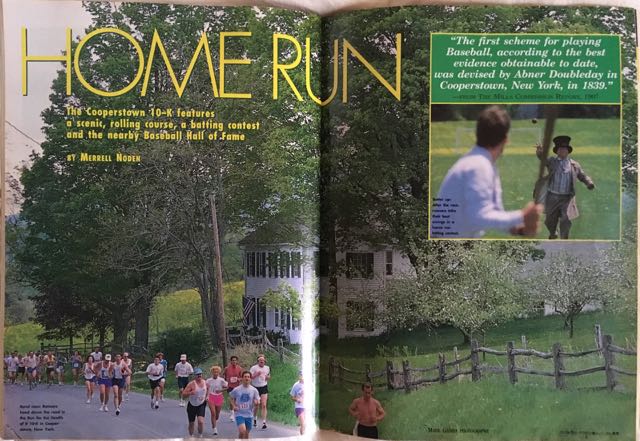
Today my daughter Mary follows in my footsteps (and her aunt’s) by starting a job at the Baseball Hall of Fame.

When combined with the Daily Prompt: “Childhood”, and the fact that this post turned up when I did a draft folder search of that word, you can understand why I’m posting this today.

Originally written last October. Never posted till now.

family · poetry

The Wreck of the Eliza


An original Sea Shanty

Not the Eliza, but maybe similar

(1) Captain Hopkins had a schooner
Eliza was her name
Come hear the story of her wreck
“tis such a crying shame
She sailed out from Hyannis
In April 1899
Heavy seas when she departed
Though the morrow’s forecast fine

(2) Captain Hopkins had a worthy crew
Of 13 men with him
Many were related,
Brothers, cousins, kin —
Eliza had been prosperous
So the Captain laid aside
Money to soon build a house
For his sons and his bride

(3) Eliza made a quick run
Through Nantucket sound
The Great Round Shoal lightship
They sailed right around
The night was clear, but a relic
Of the Northwest gale that day
Made the seas a little choppy
Still it did not cause delay

(4) Course was set for Great Rip
Also called Nantucket Shoals
Captain Hopkins knew his way
All around these fishing holes
Two men were on watch
When they hit the Rose and Crown
A miscalculated shoal
That brought their lady down

(Chorus)
Hey, there, Cap’n Hopkins!
Climb aboard wi’ me!
But – No-ho, he shouted,
The dory won’t survive this sea

Hey, there, Cap’n Hopkins!
There’s room for all aboard!
But – No-ho, he shouted.
And the pleas were all ignored.

(5) A wave swept o’er Eliza
From her stem to stern
She was broken with one pound
The surf was all a-churn
While some men grabbed the rigging
The dory was prepared
To launch for this emergency
That their lives would be spared

(Chorus)

(6) A wave swept the dory
Right off the deck
Three men fought to right her
And keep her by the wreck
“Come on board,” they shouted
To the remaining crew
Cap’n, he refused to go
And the others followed suit.

(Chorus)

(7) The dory, she was stove in —
Two men rowed, the other bailed
And they stayed right near Eliza
To save the crew, but failed —
The onboard crew refused them
“That dory is too small
Dawn will be here soon
We’ll be seen and save-d all.”

(Chorus)

(8) The men in the dory
Stayed the whole night through
Listening, hoping, praying
To know what they should do
But when dawn’s rays illuminated
Here’s what met their eyes:
The schooner gone to pieces
And nobody survived.

(Chorus)

(9)They rowed that broken dory
Through the Rose and Crown
Bailing water constantly
Till they came in sight of town
And so these three were rescued:
Nickerson, Miller, Doane,
But oh, dear Captain Hopkins –
Why didn’t you come home?

(Chorus)

*****

Based on the true story of my great-grandfather, a fishing boat captain who died at age 37, going down with his schooner, the Eliza.

A to Z Blogging Challenge · family

Long in the Tooth

I’ve occasionally wondered what was in the guy’s trailer by the time he got home.

He started off with an empty trailer and some debts he needed to collect.

At the first stop, he got a dirt bike because the guy didn’t have any money to pay him.

At the next, he traded the dirt bike for a horse.

When he arrived at our house, it wasn’t to collect a debt, it was to look at a pregnant heifer that my dad had advertised in the Pennysaver (<— Craig’s List of 1970). To make the story of the pregnant cow short and tasteful, my brother had been given a Holstein calf which we named Sock-It-To-Me Sunshine.

Peter and the calf, named Sock-It-To-Me Sunshine, with Shetland pony, Rosie, in the background
Peter and Sock-It-To-Me Sunshine, with Shetland pony, Rosie, in the background

It grew up.

Clearly we were not sure what to do with a calf.

The dairy farm next door had a bull instead of an artificial inseminator. The bull and the heifer had a surreptitious rendezvous, and voila.

So the guy showed up with a horse in his trailer. He left with Sock-It-To-Me Sunshine (in the family way) in it instead.

Goldie
Goldie

Peter got the short end of that trade. He lost his cow and I got a horse, a large Palomino named Goldie. (I think, at the time, we also had a cat named Gray Kitty and another named Black Kitty. I would say that we weren’t skilled in naming animals, but I’m not sure if a cow named Sock-It-To-Me Sunshine makes my point or disproves it.)

Goldie was large and docile. I usually rode her bareback because getting a saddle on her and then getting the girth tight enough so that it didn’t slip was beyond my strength. Sometimes I didn’t even put the bridle on but just looped a rope around her halter. She was so patient with me.

I never knew how old she was. I asked my father, but he didn’t know. He also told me, “Don’t look a gift horse in the mouth,” and I had to look up the meaning of that saying. It turns out that a horse’s age can be determined by their teeth.

I also learned the saying, “Long in the tooth,” because a horse’s gums recede as they get older so their teeth appear longer.

Goldie was not long in the tooth when we got her. She was young and healthy and brought me great joy. When I grew too busy with school activities, she went on to bring another family great joy.

My mother was long-in-the-tooth by the time she died. Not literally.

But she was 87.

I’ll never forget the young doctor meeting with us and beginning with the words, “Mom is very sick.”

Here she paused and looked slowly around the room at the gathered family members. She wanted her words to sink in.

“And she has been sick for quite a while,” she continued.

She boldly laid all the cards on the table, face up, so we could all see the hand that had been dealt.

Long in the tooth, when it comes to elderly dementia, means a deteriorating brain.

She wasn’t just losing memory. She was losing the capacity to live.

Hours. We spent hours talking about my mother’s condition. I grew longer in the tooth in those few hours than I had in my whole life.

Weight piled upon weight piled upon weight.

I felt that I would never be able to stand under all of it.

When the meeting was over, we had acknowledged a trade.

Not a horse for a cow, but a new existence by letting go of this old one.

When we got home, my sister found the health directive my mother had written years before. We had followed my mother’s wishes, and that brought peace.

In trading, sometimes you win, sometimes you lose. I think both happened that day.

A to Z Blogging Challenge · family

Generations

G is for generations.

PICT0937
My grandfather (1968?)

I wanted so badly to have Philip meet my grandfather, my father’s father. He was a great guy.

Bud and I had made a trip home that fall when I was pregnant, but that was the last time I would see my grandfather.  On the next trip, when Philip was 6 weeks old, we attended my grandfather’s memorial service.

Nana and Philip
Nana and Philip

Nana, my father’s mother, was still alive, but she was quite ensnared in the web of Alzheimer’s. Still, there’s something about holding a baby that reaches beyond those cobwebs, and touches something deep inside.

Babies are magical beings with superpowers. A sleeping baby brings calm to a turmoiled spirit. A smile from a baby can soften the hardest heart, and a giggle can melt a glacier.

I’ll never forget when Philip brought his little boy, Henry, to meet my mother. My mother rarely smiled toward the end. Not real smiles that reached her eyes, anyway. She still occasionally laughed, but that usually bled into tears, and it was for strange things, like a recitation of Paul Revere’s Ride.

But Henry — Philip gently placed Henry in my mother’s arms and still held his hands there to support Henry lest she forget. He was so tiny at the time.

My mother gazed down at this tiny creature who snuggled against her bosom. Instinctively she patted his back, and then looked up at us with one of the best smiles in a long, long time.Mom and Henry

My father has that picture out. He looks at it periodically.

“Look how happy Mom is there,” he’ll say.

Yes, she is.

Henry will never remember that day anymore than Philip would have remembered meeting my grandfather if things had worked out.

But I’ll remember my mother’s smile that day.

A smile is a good thing to remember.

A to Z Blogging Challenge · family

Father

My father drove twice a day every day to visit my mother in the nursing home.

Noon meal.

Evening meal.

He patiently encouraged her to eat. When she wouldn’t feed herself, he fed her. Through them, I watched that final scene of Driving Miss Daisy over and over and over.

Hoke: Looka here. You ain’ eat yo’ Thanksgiving pie. Lemme hep you wid this.

My father gently fed my mother.IMG_6956

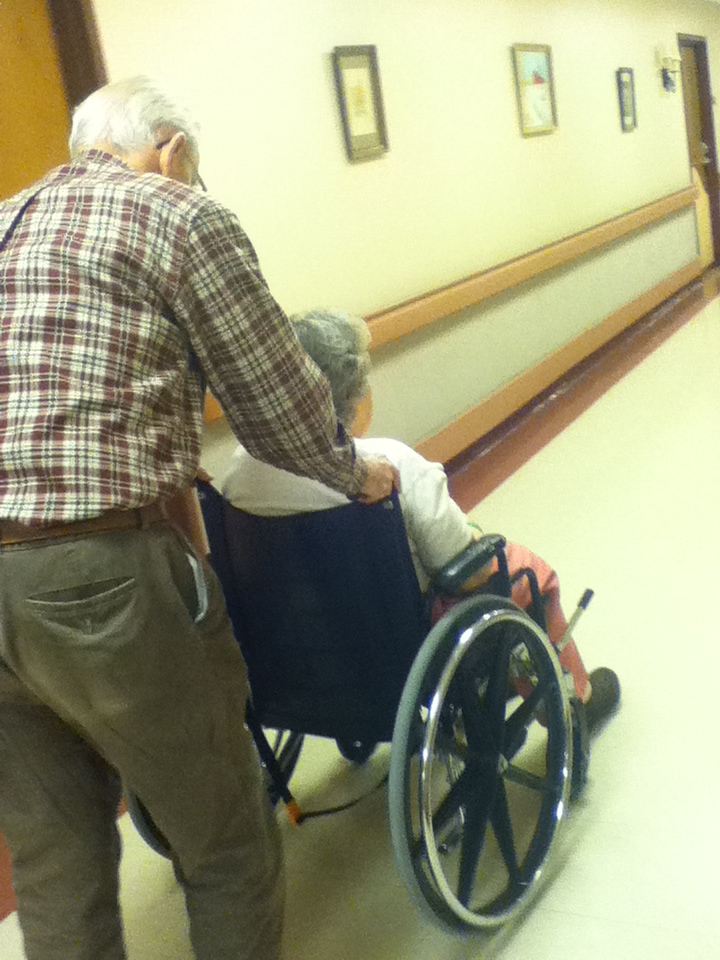
He slowly pushed her wheelchair through the halls and for walks in the courtyard, sitting to rest himself as needed.

2015

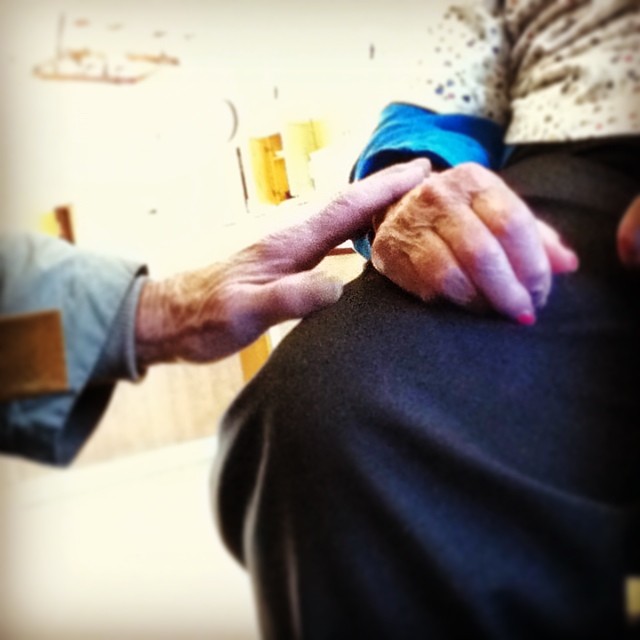
He held her hand when they sat together.5501_10152261695866043_678688786_n

They were still two-become-one but in smaller ways that were really bigger than the ocean.

When she passed away, even though she had been disappearing in dribs and drabs over so many years, he was lost.

F is for my father, for whom I ache, who is benevolence, who does and does and does, and did and did and did.

His love and devotion for my mother sets the bar high for the rest of us,

A to Z Blogging Challenge · family

Do

The very best advice ever given to me was given by my mother-in-law.

When I had just one little boy, life was fun. Oh, I thought it was hard because he didn’t sleep very well, but, all in all, it was fun. I had plenty of hands and plenty of help.

My mom, Philip, and me

When I went from one to two, life just got funner.

Two artists
Two artists

Going from two to three, though, meant that I ran out of hands, but that was okay. Backpacks and front carriers worked well.

Feeding seagulls
Feeding seagulls

From three to four presented a problem. I had no where else to put a child.

Myrtle Beach - 1993
Myrtle Beach – 1993

Somewhere in that two-three-four child range, I realized I was really struggling to do this job. My mother-in-law raised thirteen children. Well, actually, fourteen, because a cousin came to live with them when her mother died. I asked my mother-in-law one day how she did it.

“You just do,” she said. That’s all there is to it.

D is for Do.

“Fred” asked me a riddle the other day, “How do you eat an elephant?”

I think he was hoping I would say, “With an elephant fork,” but I knew the answer — one bite at a time.

You just do.

You take one step forward. Then another. Then another.

That advice helped me through child-rearing, and later, in the midst of adult caregiving. Caring for someone with dementia is not unlike caring for small children.

When life is overwhelming, look around for something you can do — some small thing, a baby step you can take forward or even sideways, a tiny bite you can take of the elephant.

Do.

Family Reunion
My mother-in-law (center) surrounded by the fruits of her “do”-ing — 2011


A to Z Blogging Challenge · Faith · family

Community

John 5 begins with the story of Jesus at the Bethesda pool where lay “a multitude of invalids.” The belief was that after an angel troubled the waters, the first one in was healed. Jesus spoke with a man who had been there for thirty-eight years.

“Do you want to be healed?” Jesus asked him.

“Sir, I have no one,” the man replied. No one to put him into the pool when the water is stirred. A multitude of invalids, but each concerned for himself.

To have no one.

In contrast —

C is for Community.

My father and mother enjoyed traveling after my father retired, but as my mother’s dementia grew worse, traveling became more difficult.  One night in New York City, my father awoke to hear the heavy hotel door click shut and realized that my mother was no longer in the room. He found her in the hallway. Another time she got away from him at the airport, and still another time she wandered off in Greece.

On that trip to Greece, their last big trip, the other ladies in the tour group saw the need and began watching out for my mother. What began as a group of strangers ended as a caring group.

My mother and father on their trip to Greece
Strangers at the start, friends by the end

“Without a sense of caring, there can be no sense of community.”  Anthony J. D’Angelo

Community doesn’t have to be intimate to be functional.  Even a small thing, like holding the door open for someone struggling with mobility, can be an act of community. It says, “I am willing to help you, even if it inconveniences me a little.”

Sometimes community is very intimate. I was horrified to see that my mother had had an incidence with incontinence while visiting an old friend of my father. “Oh! I’m so sorry!” I had said when my mother stood to go. “Let me get something to clean that!”

“No, no,” the woman had said. “Your job is to take care of your parents. I can clean this up.”

Community.

Looking out for one another.

Circling the wagons in Greece, in Florida, in Cooperstown.

We can be community to those we encounter. We just need to be willing.