Life · poetry

Rashness

I was mad
He had done something
He oughtn’t
It caused work
Excess work for me, you know,
Now I have no time

Take a sec
Vacuum the carpet
Just sit and
Breathe, breathe, breathe
Go to his office to talk
Self-control takes time

When I’m rash —
Act impulsively —
Instead of
Taking time
Weakness rules instead of strength.
I need to be strong


This is in response to the W3 prompt this week:

  • Write a Shadorma of a minimum of 2 stanzas on the topic of strength (physical, emotional, mental, ethical, or of character…)
    • A shadorma is a poem comprised of six-line stanzas with a syllable count of three syllables in the first line, five in the second, three in the third and fourth lines, seven in the fifth, and five in the sixth.

This is also in response to a situation at work, where I chose not to immediately lambast the person who had caused the problem. I literally vacuumed my office and then sat for a few minutes before tackling the issue that needed to be dealt with.

The lesson for me (and maybe for you, too) — when frustrated and angry, it’s important to take a little time.

Waiting isn’t weakness; it’s strength.

Procrastination, however, is a different story.

poetry

Yoga Class

Yoga class: “Take a deep breath in”
My lungs fill, inhaling slowly
The act of breathing is so holy
Inhale, exhale; there, time begins

Or does it stop? Air held within
Bronchial ducts, alveoli
Yoga class, restorative Yin
Lungs empty, exhaling slowly

Peace settles where tension has been
I engage mind-body wholly
On the floor, time passes slowly
Meditative haze, then again –
Yoga class: “Take a deep breath in”
My lungs fill, inhaling slowly


Yoga studio

This is my attempt at this week’s W3 prompt:

Write a sonnet or any other 14-line poem about “The concept of time and how it affects our lives.”

Side note from me: I got the 14 line part right and I said something about time. Does that count?

This is also my attempt at a Rondel. Lines 1-2 were supposed to be repeated at 7-8 and again at 13-14. I took a few liberties at the 7-8 version. I figure that I’m fairly new at these forms and can cut myself a little slack.

poetry

Rootedness

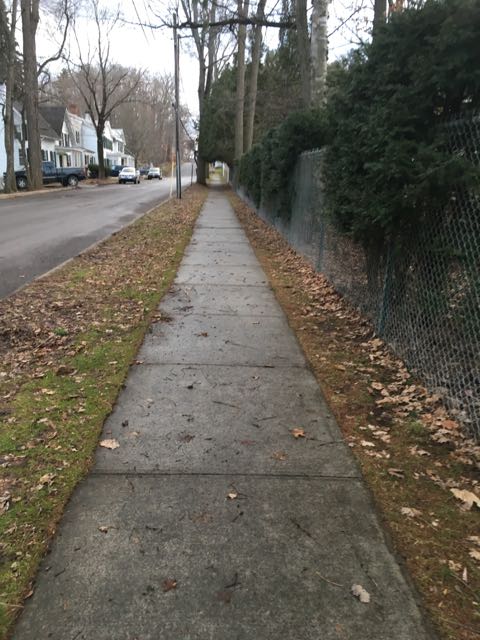
While walking on the village streets
Showing a friend the sights and eats
I was struck once more
At my very core

For this shore
My heart beats


In response to this week’s W3 prompt: Write a poem in any style about a place that evokes emotion (a place where you find poetry) I wanted to somehow address the rootedness I feel toward where I live.

This is home. This is home. This is home.

Trying another Welsh form: Clogyrnach

poetry

On a Wire

Five, six, seven on a wire
Whether to fly or stay, sway
With the breeze, watching the hawk
Soar and stalk mice on the brae


New word I learned this week: ekphrasis. It means “a literary description of or commentary on a visual work of art.”

The W3 prompt for this week was to write 1) an ekphrastic poem of no more than 15 lines inspired by the photo above, and 2) include the word “wire”.

I chose to have another go at the Awdl Gywydd form, a Welsh form with internal rhymes.

Then I tried to take my own photo of birds on a wire. Some days I see so many. Today, I spotted a lone red-winged blackbird.

Life · poetry

The Fawn

I looked out and saw a fawn
On the lawn fleeing the road
Toothpick legs receiving weight
Then airborne! Smol greatness flowed


This is a Welsh poetic form: Awdl Gywydd. I liked it because it called for internal rhymes — but, good golly, it was hard! I have to say that I’m not happy with the poem, but I tried.

For the We’ave (W3) challenge, we were to “Write about the first wild creature that you see which inspires you on the day you write your poem.” #30DaysWild

Yesterday, I set out to watch for a wild creature. Almost daily, I see deer on my way to work — but, of course, this was not one of those days. It was rainy-ish, so everyone was staying in, I guess — even the squirrels!

After work, as usual, I fell asleep in the chair in the living room. The trials and tribulations of being old, you know. Suddenly, I was awakened by my daughter in the neighboring chair crying out, “Oh! Oh! Oh!”

I jumped up to see what she was looking at and barely caught a glimpse of a tiny fawn racing across the lawn. Where its mama was, I have no idea.

But I can still see those spindly little legs stretching forward, catching the body weight, and then stretching out again as the rear legs caught up. In the midst of each cycle, that little body was airborne.

Sidenote on the word “smol” — one of my kids uses this, and I thought it was just a misspelling. It turns out that it’s a word — it is internet slang for cutesy smallness, like puppies and kittens and, for my sake, fawns.

poetry

Over the Town (a poem for two voices)

Come fly with me!

(a leery look)

Come fly with me!

(nose in book)

Come fly with me!

(a heavy sigh)

We’ll go up high
And see the town from the sky!


I’m dubious.

I’ll keep you safe,

I’m dubious.

My darling waif.

I’m dubious.

Come now! Make haste!

Your hope is quite displaced.
My feet on earth are firmly based.


We’re going up!

I’m not a bird!

We’re going up!

This is absurd!

We’re going up!

Cannot look down.

Oh! Look around!
You’ll see our lovely little town.


Oh me! Oh my!

Look at the trees!

Oh me! Oh my!

Feel that breeze!

Oh me! Oh my!

It’s charming, yes?
And you would never guess!

I was blinded by my stress.


This is in response to this week’s W3 prompt — a choice of two Marc Chagall paintings for inspiration. Initially I was going to use the other painting — The Big Wheel — and try to write something about my trip to Paris in 2017, but I kept going back to the other painting, Over the Town, which I ultimately used.

I’ve never written a poem in two voices before. I wanted to tell a story. This is what came out.

poetry · swimming

How I Relax

Dive into coolness
Catch, pull, release, recover
Stroke, flutter kick, stroke
Exhale into the water
Turn my head to catch a breath


The W3 prompt for this week is:

The more I read about haikus and tankas, the more I realize that something is lost in translation. A tanka is more than 5-7-5-7-7 syllable counts. It’s actually not syllable counts, it’s kana.

What’s a kana, you ask? I’m not 100% sure because it’s something in Japanese. And Japanese “uses a combination of logographic kanji, which are adopted Chinese characters, and syllabic kana.” (according to Wikipedia) English is phonetic. These two language systems aren’t the same. How can we adapt something like poetry from system to the other. I don’t know.

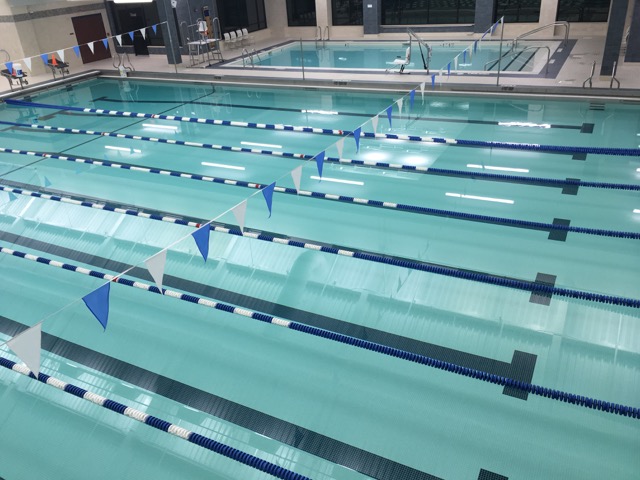
But I know how I relax. A pool is my happy place and swimming laps helps me unwind.

So here’s my tanka-ish whatever.

collage · poetry

Meditation

My mind’s a scattered mess
Errant thoughts I cannot catch
Direct result of stress
I deeply breathe — attach
This diffuse excess
As if herding butterflies
To scented blooms of peace
I deeply breathe — and sighs
Open me — I cease
Needing order. Chaos dies.


This was much harder than I thought!

The challenge was to write an acrostic poem using one of five words: Discipline, Meditation, Enthusiasm, Tumult, or Trouble.

My poetry muscles are weak.

I just started working out with weights again at the gym. Some of my flesh-and-blood muscles are SO SORE. Thank goodness my brain doesn’t hurt the same way 🙂


I realize this collage is not terribly meditative, but I was looking through my photos for one of a butterfly and found this collage that I made years ago. It made me laugh.

flowers · poetry

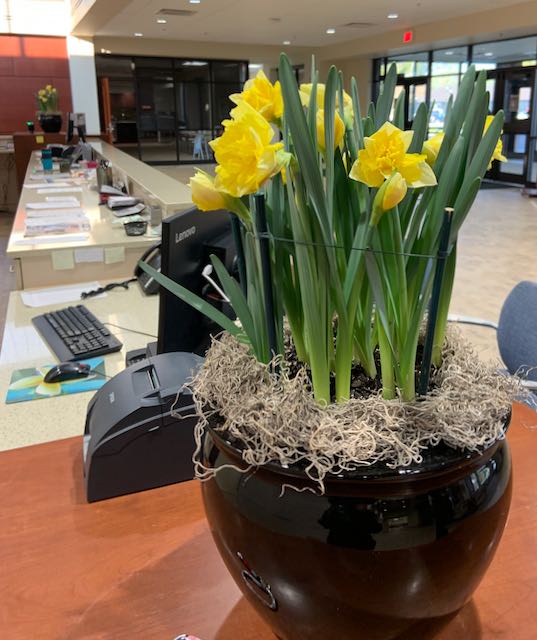
Daffodil

Daffodil
Smiling flower
At my workplace
Joy in the clutter
Laughter

Daffodil
Overfriendly salesman
Hogging the conversation
“Hey, there! Notice me!”
Pretension


A double-elfchen written to participate in a poetry prompt from The Skeptic’s Kaddish W3 #54

An “Elfchen” has a set form of 11 words, the lines having 1-2-3-4-1 words, respectively. The first word is the topic and the final word is often a commentary or summary. The two elfchen are supposed to present opposing views.

Seriously, though — is there an opposite to Daffodil?