poetry

First Loves in Poetry

The fog comes on little cat feet
Highwayman comes riding
First loves
In poetry become heartbeat
This love is abiding
Because

The moon’s tossed upon cloudy seas
And meanwhile the wild geese
Fly home
i thank you God, for rhymes like trees
That become gentle breeze
Poem


This week’s W3 challenge is to write a Memento — a poetic form created by Emily Romano. A memento poem captures a holiday, anniversary, or meaningful moment held in memory.

The poem is written in two stanzas. Each of the two stanzas follows this syllabic pattern:

  • Line 1: 8 beats
  • Line 2: 6 beats
  • Line 3: 2 beats

This pattern is repeated once per stanza, for a total rhyme scheme of a / b / c / a / b / c in each stanza.


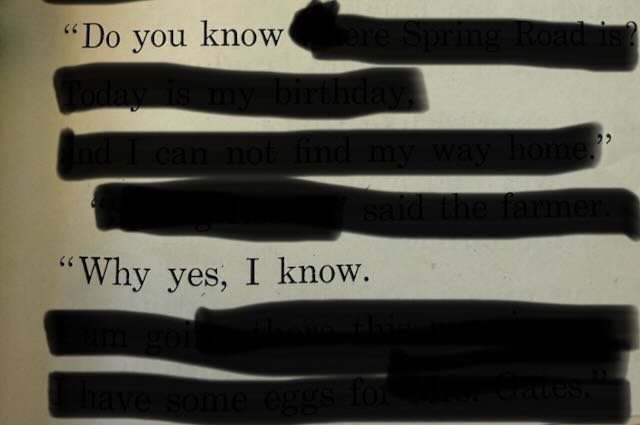
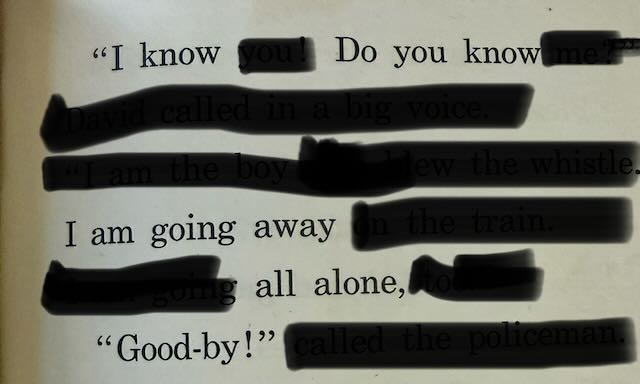
True story: I wrote a Memento poem about what I thought was the first poem that I ever wrote. My mother had saved the paper witten in my blocky large first grade printing. She told me that it was the first poem I wrote. I always thought it was a pretty darn good poem for a six year old.

Then I fact-checked my mother this morning. I did NOT compose that poem. Oh, I wrote it on a piece of paper and got a gold star from my teacher, but it was not my original words. [sad face]

So, I tried to remember when my love affair with poetry began.

It was probably One Fish, Two Fish by Dr. Seuss. He still influences my writing.

But Carl Sandburg’s poem Fog is the first stand-alone, non-nursery rhyme, non-Dr. Seuss poem that I remember loving.

I memorized The Highwayman by Alfred Noyes a few years later. That was the beginning of my love affair with story poems. We had a book of story poems that included Casey at the Bat and The Cremation of Sam McGee, but I loved the melodrama of The Highwayman.

I found that story-poem book in a box recently. It was in sad shape. Such is the fate of much-loved books.

So what was the first poem I ever wrote? I have no idea.

poetry

The Cave

The shadows flicker on the walls

Distorted images, truths, faces, facts
They grow, shrink, grow again, moving all the while

What am I seeing?
What is true?
I must escape this cave…


This song, The Cave by Mumford and Sons, has long been a favorite of mine. When it was in its auto-repeat phase for me, I was fascinated by the lyrics.

What does it mean to “Come out of the cave walking on your hands”? I looked it up. Those lyrics are a reference to both Plato and St. Francis of Assisi, who both sought to understand life.

The song challenges us to look at the world differently.

While not using the word “philosophy”, it IS a response to Sadje’s JusJoJan prompt: philosophy.

It’s also my attempt at a Cherita, the W3 challenge for this week. Cherita is the Malay word for story or tale.

A traditional cherita unfolds in three verses, each growing in length:
Verse 1: one line
Verse 2: two lines
Verse 3: three lines

poetry

The Old Homestead

I grew up in this old famhouse. Here
I stumble over memories
Stub my toe on them even
Sorting is quite daunting
This house is haunting
Daily I try
To get one
More box
Done


This is my response to TWO prompts!

The JusJoJan prompt for the day is stumble.

The W3 prompt is: Write a Nonet about the new year — 2026. How does this year feel to you so far? Are you hopeful, uncertain, energized, reflective? Have you set any goals or intentions? Are there resolutions you’re excited (or nervous) about? My goal for the new year is to wrap up dealing with my parents’ estate.

poetry

Brrr…

But —
But what?
But you’re wrong
Yeah? And I’m King Kong
That doesn’t make you right
You wanna fight?
Ok, tell me how you figure
That minus five is bigger
Than minus two
That’s easy to do!
You think you’re smarter ‘cuz you’re older
But minus five is clearly colder


This is my response to this week’s W3 challenge:

Write a poem (up to 20 lines) as a conversation, text thread, or inner dialogue. Let the two voices go back and forth — negotiating, hesitating, contradicting — but never quite landing on a plan. Play with repetition and everyday details to build tension and show who these people are. Slip in small observations that make the moment feel real. And when you get to the end… leave it unresolved.”

poetry

Traveling Woes

“I know it’s in here somewhere,”
She said as she dug through her pocket
She pulled out some coins, some random keys
A gold chain and her grandmother’s locket

She set in the dish a wadded up tissue
A hair clip, a Swiss army knife
“I know I didn’t forget it,” she said
As she pulled out a drum and a fife

“Could I offer you this?” she said to the man
As she pulled out a cup of iced tea
The TSA agent sighed a big sigh–
“Ma-am, I just need your Real ID”


This week’s W3 Challenge:

Let’s send 2025 off with a giggle!

Write a poem of 10 lines or fewer that places someone—or something—in a delightfully improbable location. Think sharks in a bathtuba dragon in a bar, or any unexpected presence where it clearly doesn’t belong.


I know, I know — it’s 12 lines, not 10 — but I was on a roll.

poetry

Longing

The world is too much with me. Go away!
Ah — to be untethered from my phone
Walk in the woods and hear trees creak and groan
Or on the beach to feel the ocean’s spray

Instead I’m at its beck and call all day
Unless, of course, I chance upon a zone
That’s “dead” — and then (what pity!) I am thrown
To MY devices! Yes — for this I pray!

Perhaps I should “forget” my phone at home
When I go off upon my next vacation
I might find time to sit and read a tome
Goodness! This is such a real temptation!
Maybe I could even write a poem
Tempting. Oh-so-tempting — that cessation


I am humbled to say that my poem, Monongahela, led to me being chosen as Poet of the Week for the W3 Challenge. That meant that I got to choose the challenge for this week.

First, I was stunned to be chosen. And grateful.

Second, I was faced with The Challenge challenge.

Recently, I woke up one night with the words of a Wordsworth poem running through my head. As I told David, the keeper of the site that hosts the W3 challenge, it’s not totally unusual for me to wake with a poem in my head, but it’s almost always e.e. cummings who haunts my dreams. Strange, but true.

Anyway, I said to David, “Let’s use the Wordsworth sonnet as inspiration.” And that’s what the challenge turned out to be. He wrote:

William Wordsworth wrote “The world is too much with us,” and honestly… same. The holidays tend to sharpen that sense of disillusionment with materialism.

Below is Wordsworth’s sonnet. Choose one phrase from it and steal it—boldly and poetically. Weave the phrase into your own poem in any way you like; it should be recognizable, but the poem should be yours.

Your poem doesn’t need to be a sonnet, but in a nod to the form, limit yourself to 14 lines or fewer.

‘The World Is Too Much With Us’ by Wordsworth

The world is too much with us; late and soon,
Getting and spending, we lay waste our powers;—
Little we see in Nature that is ours;
We have given our hearts away, a sordid boon!
This Sea that bares her bosom to the moon;
The winds that will be howling at all hours,
And are up-gathered now like sleeping flowers;
For this, for everything, we are out of tune;
It moves us not. Great God! I’d rather be
A Pagan suckled in a creed outworn;
So might I, standing on this pleasant lea,
Have glimpses that would make me less forlorn;
Have sight of Proteus rising from the sea;
Or hear old Triton blow his wreathèd horn.

poetry

Monongahela

Home built into hillside
Limited where she could go
The little girl stood on the deck
And watched the water flow

“She doesn’t talk!” her mother wailed
And true, she spoke not a word
But watched the river morn ’til dusk
Adults found this absurd –

“Can you say Dada,” her father said
Hoping to break through
“How ’bout Nana,” Grandma said
But she ignored that too

The water flowed. It churned and toiled,
Dirty brown below her
One year passed, then two, then three
Still mute – no one could know her

Then one day, as the river flowed..
Her mother said, “I feel a –“
But her daughter interrupted her
And said, “Monongahela.”

Her mother stopped. Her mother stared.
“What did you say, dear daughter?”
“Monongahela,” said the girl.
“That’s the name of the water.”

From that time on she talked and talked
’bout turtles, carp and bass
And muddy water, boats, and birds
That she had watched go past

Monongahela — what a name
She said it o’er and o’er
The water she had watched so long
That flowed below her door.


Violet (the Poet of the Week for the W3 challenge) said, “Choose one of these three artworks and let it take you wherever it wants. Write whatever it stirs in you — a memory, a question, a scene, a poem.” She had three pieces posted, but I chose Pittsburgh People – (1942) by Reynold Weidenaar.

My sister used to live in Pittsburgh. I remember going to visit her and taking my kids to ride the incline, a cable-car-train thing that had originally been used to transport workers up and down the steep slope.

Pittsburgh also has three rivers — the Allegheny and Monongahela converge to form the Ohio. They were there at the bottom.

Monongahela is just a fun word to say, though. And Violet said, “… whatever stirs in you.” Monongahela.

poetry

Gas Gauge

Hey, look! You’re full
I’m holding my arm up high
You put that gas in and I pull
Up to the “F” — up to the sky

Okay — I’m not there anymore
You drove a bit, the gas level is down
But hey! That’s what I’m for!
So you don’t hit empty driving ’round!

’tis such a simple task that I perform
Positioning myself in such a way
From “F” to “E” – yes, I inform
How many miles you can go today


This is my response to this week’s SoCS challenge: use full/empty in a post.

The idea was very stream-of-consciousness, but I confess, I didn’t write the post without any edits. Rhyming poems take an edit or two.

This is also my response to this week’s W3 post which challenged us to write a poem with a subject that “must be an unimportant, non-emotive object that carries no nostalgia, metaphorical uplift, or symbolic gravitas. It simply is.” I’d say the gas gauge on my car fits the bill.

Life · poetry

Framing a Moment

Look. Take a snapshot and frame a moment:
[The deer too near the road frozen in fear]
[Tourist on black tarmac, the bestowment
Of a lei, Hawaii’s first souvenir]

A magnifying glass serves as a frame
That convex lens enlarging [blades of grass]
If dry, the grass might swiftly burst in [flame]
[The magnifier aims sun rays en masse]

I can make [a frame with fingers and thumbs]
And raise them high, see [bits of sky and cloud]
[Wispy white] turns [thunder gray] as [storm comes]
See [lightning flash], hear thunder crash too loud

The best of poems (I think you’ll agree)
Capture something intangible and small
A dumb thing overlooked you wouldn’t see
Unless there was a frame that brooked it all


This is my response to this week’s W3 Challenge. The Poet of the Week instructed us to write a poem that utilises internal rhyme where possible and keep the length between 8 and 16 lines.

poetry

Mashed Potatoes and Gravy

Is there comfort in a lump,
Or something that is lumpy?
Lumpy screams out IMPERFECTION
Or something that is dumpy

Lumpy gravy is the worst
I think most would agree
But lumps in mashed potatoes
With smooth gravy? HARMONY!


This week’s W3 challenge is to write about a food or drink that brings you comfort.

  • Form: Any
  • Length: Up to 24 lines
  • Include: The word “comfort”

Last night I went out to dinner with a friend. One of the sides that came with my dinner was mashed potatoes with gravy. The potatoes were lumpy — and I loved it.