Faith · Life · poetry

Unexpected

In the press of the crowd
He said out loud,
“Who touched me?”
After the shock
Those with whom he walked
Smiled and said to him bravely,

“You must understand,
Many folks, many hands —
How can we know who touched You?”
Poor woman quaking
Timidly shaking
Confessed ’cause she knew that He knew

While He was speaking
Others came seeking
Bearing the saddest of news
“Change of plans,” one said
“You can’t wake the dead.”
He pressed on, ignoring their blues.

“Why are you weeping?
The child is but sleeping,”
He said when he came to the place
And taking her hand
He told her to stand —
And she did! What joy! Such grace!

Miracles start when we go
Disbelieve what we “know”
For no one can truly know God
Reach out and touch
Ask Him too much
Human knowledge makes quite a facade


This is my day-late response to the MLMM Monday Wordle which challenges us to use these words in our post: must, wake, shake, make, shock, smile, brave, walk, plan, hands, pants, sad.

I wrote another fractured Bible story and got all the words in except “pants.” Can you see a place where pants could fit?

This story can be found in Mark 5. I love it because it reminds me to press beyond what we think we know.

The woman with the flow of blood would have been considered unclean under Levitical law — and yet, there she was, in a crowd, just wanting to touch the hem of Jesus’ robe.

He felt that touch. He healed her.

The little girl was dying when they sent for Jesus, but He didn’t make it in time. She died. The servants were dispatched to save him the trip.

But He came anyway — and raised her from the dead.

The whole story can be summed up with this — don’t put God in a box. Don’t think you know God so well that you know what He will do. As CS Lewis said of Aslan, He’s not a tame lion.
Faith · Writing

The Bodyguards

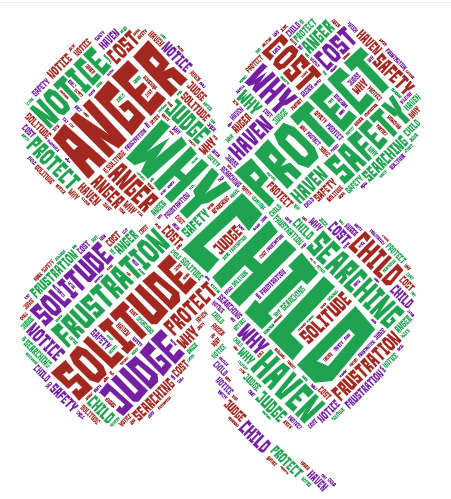
Today’s Wordle (from MLMM) challenges us to use these words in a post of whatever kind we want: child, protect, solitude, anger, searching, haven, cost, frustration, why, judge, safety, notice

This is my contribution.


They were trying to protect him.

The crowd was thick. One of the bodyguards leaned in and whispered to another. “You know he needs some solitude, right?”

Another was searching the landscape for a haven to hustle him off to — for his own safety.

Then they began to notice — it wasn’t just people, a bunch of them were bringing their kids. The frustration continued to grow.

“We’re going to have to go elbows up,” one said, raising his elbows in a defensive stance.

“Nah — they aren’t that unruly,” said another.

“Yet,” said a third one. “But I don’t know why he doesn’t say something.”

One in particular was beginning to feel the twinges of anger rising in him. Doesn’t he realize the cost on all of us? he thought judgingly.

Then Jesus looked up at the crowd and his disciples trying to block the children from coming.

“Let the children come,” he said.


You can find the original story three times in the gospels: Matthew 19:13-15, Mark 10:13-16, and Luke 18:15-17

Faith · Writing

The Wedding

It wasn’t one of those smug sort of weddings. You know the kind, right? Over the top in lavishness. No expense spared. The kind where the bride and groom are ostensibly the center of attention, but really they aren’t, because it’s all about showing off perceived wealth.

No, it wasn’t that kind of wedding.

It was the kind where the whole town turns for the celebration because they’re so happy for the couple. Because they’d watched those kids grow up since they were little. Because both sets of parents were nice hard-working people who probably had, at one time or another, helped every single person in that town.

J’s mother went. She had been invited.

Well, so had J — and he went along with some other people who were with him.

Everyone was having a great time — until the wine ran out.

J’s mother scoured the crowd looking for him. She finally found him sitting in a corner, away from the noise, chatting with some people.

She went to him and gently placed her hand on his arm to get his attention. When he looked at her she whispered, “They have no wine.”

“Woman,” he said — (why DID he call her ‘woman’ like that?? I don’t think it was meant to be unkind) — “what does this have to do with me?”

They looked at each other quietly, each studying the other’s expression. They knew each other so well. She knew things about him that no one else knew. Finally, he spoke again, “It’s not my time.”

His mother thought for a quick second. She had assumed he would take action. Were his words an acknowledgment that he could do something if he felt the time was right? She seized the moment. She turned to the wait-staff. “Do whatever he tells you,” she said.

And the rest, you know, is history. J delivered.

Water became wine. People scratched their heads and marveled, surprised and amazed. Some guests were totally oblivious — as we all are at times — and simply thought that the host had reserved the best wine for the end.

But one day the story would be told and retold and written down, because it was a miracle, and miracles need to be remembered.


This is my contribution to the MLMM Monday Wordle where the challenge is to weave some or all of the prompt words into a bit of writing. I chose to rewrite another well-known story from the Bible. This one appears in John 2. Of course, it may have happened in a way that is nothing like what I have written — but it’s fun to imagine.

The prompt words are: smug, noise, celebration, assumed, gentle, quiet, reserved, delivered, surprised, guest, one, unkind

poetry

Delilah

My darling,
Much better than quarreling
Is this: I will stroke your hair,
Swear

Devotion
To you while you’ve no notion
(Have you?) of whose side I’m on.
Yawn

My pretty;
Sleep on my lap. I pity
Your great surprise when you wake.
Take

Care, dumb thing.
Out of the strong came something.
Sweet fool, you yielded to me
Key

Expertise
That I might put you at ease
And take from you that which God
[prod]

Had conferred
On you. Soon the deed’s occurred —
Come take the hair of this mutt!
Cut!


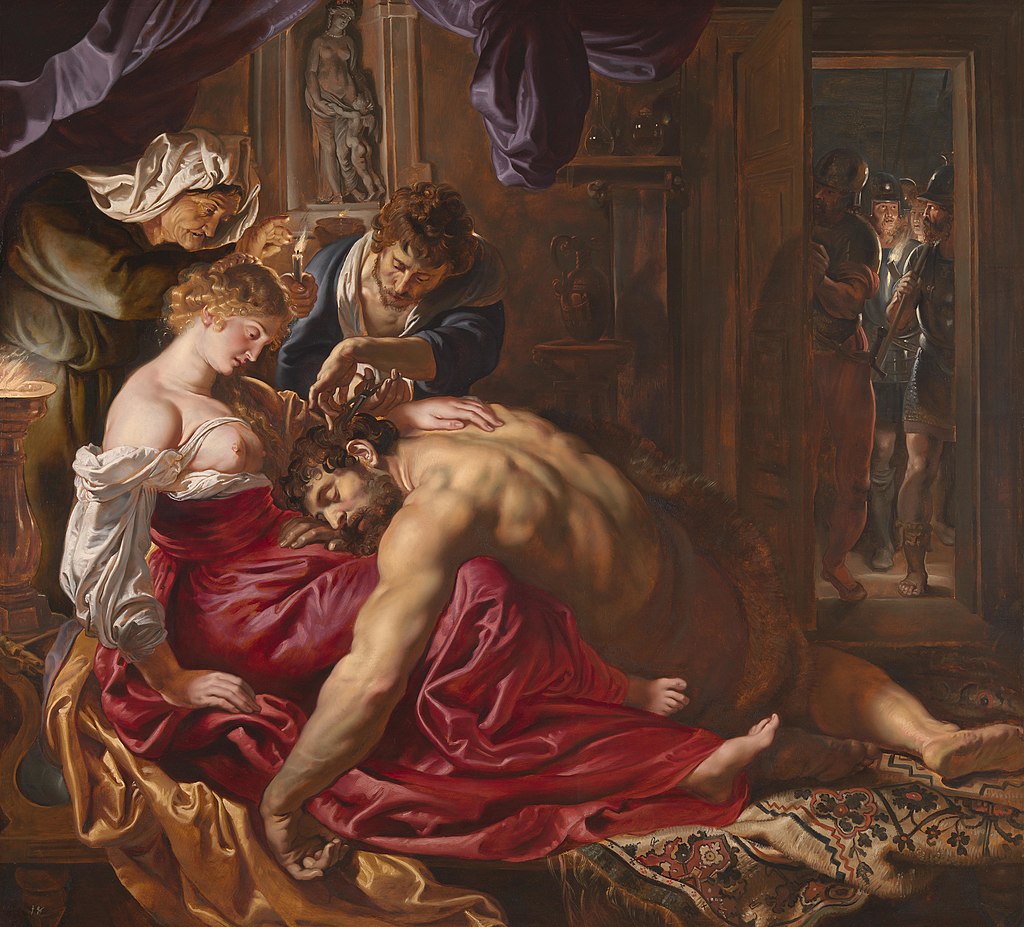
The W3 prompt for this week was to write an ekphrastic poem about the Rubens’ painting of Samson and Delilah.

The more I looked at the painting, the more I disliked Delilah. She’s so false. What did Samson see in her? Well, I think that’s pretty clear in the painting, too.

This is an Irish form I’ve used before: deibide baise fri toin. Syllable count for each quatrain: 3-7-7-1. Rhyme scheme: aabb. The first two lines rhyme on two syllables, and the last two rhyme on one.

The poet of the week gave an additional challenge of including a line from Samson’s riddle: “Out of the strong came something sweet.”