fiction

Secrets

“You know what’s wrong with America?” George frequently said. “Storage Units.”

His wife, Suzanne, listened, nodded and mentally added closets, attics, garages, and barns. Specifically, barns full of stuff, not hay and animals.

In attempting to clean out her parents’ home so it could be sold, her brother’s room was off-limits.

“Keep away from my stuff,” he growled, but he never came over to clean it out.

George whispered, “It’s the dead body.”

The dead body became a running private joke.

The dead body became the reason her brother, who hadn’t lived in that house for decades, kept the door to his bedroom locked.

On the news one day Suzanne heard about bodies discovered in a storage unit. It made her stomach twist inside. Someone complained about the smell. When the unit was opened, there they were, rotting. Maybe George was right.

Finally, the realtor was scheduled to come look at the house so it could go on the market. The room had to be opened.

Suzanne fiddled around with the ring of skeleton keys until she found one that worked.

The room was mostly empty. A dusty dresser. A dusty bare bed. A dusty desk

Dust was the predominant feature in the room.

She opened the closet, though, and gasped. It was packed full of red prom dresses.

Oh, the secrets her brother had kept. She wanted to tell him that it was okay.

At least there were no dead bodies.


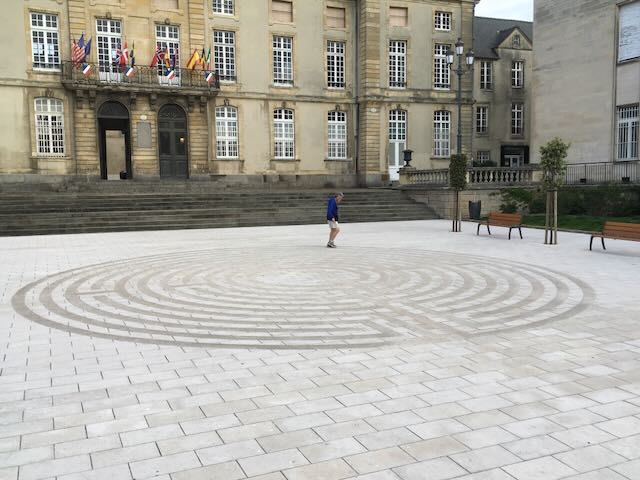
This is my submission for the Unicorn Challenge. The rules are easy — no more than 250 words and use the photo as a prompt.

Alzheimer's · dementia · poetry

Dementia

It follows nobody’s rules
But makes up its own
Every day
Which, for my mom,
Happened to be Sunday

Alzheimer’s is
Soup cans in the wrong cupboard
Flour in the sugar canister
Lipstick on the eyebrows

It’s marmalade on lasagne
And hot dogs

Forgotten names
Remembered faces
(Sometimes)

But that poem that she memorized
In 5th grade
And still can recite
(Come, listen, my children and you shall hear…)

That dogged determination to get to church
Because it’s Sunday
(which it isn’t)

That desire to prepare food
(with marmalade on it)
And serve it to family
And guests

That’s my mom
Who battled a disease
That followed nobody’s rules


This is my submission for the W3 Challenge this week. We were challenged to read and draw inspiration from Poet of the Week Bob Lynn’s poem ‘What Remains’ — which you can find if you follow the link to the W3 page.

Two further requirements were as follows:

Requirement 1: Poetic Device

  • Your poem must prominently feature metaphor as a central device. Like the dandelions in the inspiration piece, use metaphorical imagery to explore themes of persistence, belonging, growth, or survival.

Requirement 2: Required Phrase

  • Your poem must include the exact phrase “nobody’s rules” somewhere within the text. You may use it as written, or incorporate it naturally into your poem’s flow and structure.

My mom had Alzheimer’s. She died in 2015. She was the inspiration for this blog — hence the name “Hot Dogs and Marmalade.” I still remember the day, during her marmalade phase, she served that to my father and me. It wasn’t that bad.

Life · poetry

I Am Lost

A song to the tune: Beecher (aka Love Divine, All Loves Excelling)

I am lost —
Oh, can you help me?
To the airport I must go —
I don’t know
What language you’re speaking
Yet, to you, I tip my chapeau
You are one who knows this landscape
I am sadly ignorant
Yet, I trust you
To be honest
With this poor itinerant

I am lost —
Oh, can you help me?
I don’t know which way to turn!
Status quo?
Or major adjustment?
It’s so hard for me to discern!
Do I take some easy way out here?
Do I battle through some strife?
Someone, please, tell me what the way is
To steer safely through this life!

I am lost —
Oh, can you help me
Find the way to where I should be?
Life for me
Is so confusing
Do I make choice A or B?
C does really have some merit
D — I have ruled out thus far
Making choices
(Can I share it?)
Is so very hard for me


This is my response to the Unicorn Challenge. It’s easy-peasy, right? Except when it’s not. Write no more than 250 words and use the photo for a prompt.

Life is a struggle. I know, I know — this only happens to me. But it happens to me a lot.

poetry

Ring around the Rosie

Sorting through lives
Letters and photos
Trinkets and baubles
What once was important
Is no more
The poignant priorities
Tyrannies of the urgent
Become nothing but ashes

Ashes, ashes
We all fall down
While holding hands
Clinging, connecting
Laughing, crying
And supporting one another


The W3 prompt this week is write a quadrille—a 44-word poem with no required rhyme or meter — on “what remains.”

Poet of the week Sheila Bair has been caring for her mother with dementia, which is, indeed, the fading away of a person. I watched my own mother disappear that way.

This week my sister is helping me sort through the stuff that remains in the house. So many letters and papers and objects that hold memories are here. We hold them in our hands; we feel the moment for which they existed; then, it’s decision time. Save? Recycle? Gift to someone else that they, too, might hold it for a moment?

fiction

Bird’s Eye View

“This monitor taps into city cameras and cameras we’ve placed,” he said. “Yes, we have a camera on the roof of this building.”

He moved to the center screen. “This one shows what the gull is ‘seeing.’ It’s looking through its eyes.”

The woman remarked, “Lovely view.”

He smiled. “This last monitor is a city map that shows the gull’s location.”

She nodded.

He gestured at the controls — a joystick, keyboard, mouse, and a stylus and screen. “The gull can be maneuvered using all of these. Flight, direction, speed — all here. There are built in sensors so it won’t fly it into a fixed object like a window or building. If we want a photograph, it will be from gull’s eyes’ perspective. Just tap here.”

“Who actually operates all this?” she asked.

“I do. I’ll warn you, though — it’s pricey,” he said.

“Money is no object,” she replied.

He smiled. “In that case, let’s get started.”

She pulled out a paper. “This is our address,” she said, “and this is where he works. I want to know everywhere else that he goes.”

He studied the paper and nodded.

“Can the gull look into windows?” she asked.

“We’ve had success with first floor windows. The gull can usually perch or walk outside,” he replied.

“That’ll work,” she answered. “I’m especially interested if he goes into stores.”

“You think he’s seeing someone in a store?”

“Seeing someone?!” she scoffed. “I want to know what he’s getting me for my birthday!”


This is my submission for the Unicorn Challenge. The challenge has only two rules: 1) no more than 250 words, and 2) must be inspired by the photo prompt.

I think my bird spy camera could adapt to the locale. A crow would do well in rural America. Or the ubiquitous robin, although they are nowhere near as brazen as a gull or crow. Pigeons might do nicely in most cities. I may be on to something, right?

poetry

Understanding

This is my response to the W3 Challenge this week, which basically is to write a poem and then feed it into http://www.spoonbill.org/n+7/, a site which “replaces the nouns with another one a bit further on in the dictionary. No AI involved.”

So — I wrote a Triolet in response to the vitriol on the news. There’s a HUGE part of me that wishes people — not politicians — could sit at the same table and listen to each other.

A triolet is a poem of eight lines, rhyming abaaabab and so structured that the first line recurs as the fourth and seventh and the second as the eighth.

My original:

I sit across the table from
One whose thoughts veer far from mine
“Tell me, friend — why so glum?”
I sit across the table from
Someone wounded by the scrum
I listen, hear the counterline
I sit across the table from
One whose thoughts veer far from mine

The Spoonbill version (with a few tweaks to make it fit the poem structure)

I sit across the tangle from
One whose times veer far from mob
“Tell me, future — why so glum?”
I sit across the tangle from
Someone wounded by the scrum
I listen, hear about your job
I sit across the tangle from
One whose times veer far from mob

_______________

New word for me, which I think I love because it so suits the situation:
Counterline: A secondary melody that contrasts with the main melody and is played at the same time.

Listen. Really listen. Can you hear both melodies?

A to Z Blogging Challenge · Life

Q is for Quiet

Silence is the absence of sound and quiet the stilling of sound. Silence can’t be anything but silent. Quiet chooses to be silent. It holds its breath to listen. It waits and is still.

Frederick Buechner, Whistling in the Dark

The other day I was talking with a friend in the driveway when a flash of blue caught both our eyes. We followed it to the upper branches of a sugar maple.

“It’s not a bluebird,” my friend said.

“No. I know this one,” I told him. “It’s an Indigo Bunting.” I knew this because one had flown into the glass of a window and lay stunned on our deck some years ago. I took this photo to identify it and wrote a less-than-titillating post about it called “Bleh

Aren’t the blues stunning?

What has this to do with quiet? Well, my favorite time of day has long been early morning. I get up before the sun to sit with a cup of coffee, a book, and a journal. I need the alone time. I need the quiet time.

Of late, I’ve been using Merlin to identify the birds that join me one at a time in my early morning quiet.

The robin is nearly always first — and monopolizes the conversation. I laugh when it’s the first — you know, getting the worm and all. But it’s quickly joined by sparrows and vireos, wrens and woodpeckers.

And indigo buntings.

The other morning, the bunting was outside my window and I snapped this photo:

Years ago, I had held one, stunned, in my hand and later watched it fly away.

Every morning now, I hold my breath in quiet and listen to the birds, remembering the resurrection of one, and marveling at life.

fiction

Art

“That’s weird,” Johnny said. “I don’t understand it.”

“I’m not sure I do either, but that’s art,” his mother replied.

Johnny scoffed. “Everything about it is wrong,” he said. “The hands are too big. The feet are too big. The head is too small. The body itself is disproportionate.”

“Did you just say ‘disproportionate’?” she asked.

“It’s a big word, Mom. I learned it at school. Do you need me to explain it you?” Johnny replied, looking up at his mother who was fighting back laughter.

“No,” she replied, “I know what it means.”

“I’m right, aren’t I? If he came alive and climbed down from that chair, he would be a scary dude.”

His mother carefully considered the piece. Johnny was right. “I think the sculptor was trying to say something,” she said.

“What?” Johnny asked.

“I honestly don’t know.”

“You know what I think? I think the sculptor did a terrible job. If I was Art, I’d be mad,” Johnny said.

“What are you talking about?” his mother asked.

“You’re the one that recognized the statue guy!” he exclaimed. “You said it was Art!”

His mother started to laugh.

Johnny repeated, “If I was Art, I’d be mad!”


This is my submission for the Unicorn Challenge. The weekly challenge offers a picture to inspire your writing and a limit of 250 words.

I came in at a cool 200 words today.

The Sally Rule for the Unicorn Challenge: When you have no idea about the picture, turn it into a parent-child conversation.

poetry

Without a Hurt

“Without a hurt, the heart is hollow”
At 17 my heart o’erflowed–
My boyfriend left (I did not follow)
Lost, alone — I carried the load

A load of grief — weak teenage heart!
But without hope, the heart is heavy
What feels so insurmountable then
Is but a tax that life must levy

Levy, impose, charge, collect
The one-two punch when child leaves home
Without a home, the heart is haggard
We need belonging to find shalom

Ah, Shalom, you’re so elusive
Particularly when life is knotty
It is so humbling to sit in failure
Without humility, the heart is haughty

Still and still and still again
Hurt and hope, home, humility
When life brings sorrow to our heart
We can find strength in our fragility


I’m going through boxes of stuff trying to clean house and came across a syrupy, nauseating, teen-angsty poem that I had written when my high school boyfriend broke up with me. In the poem, I quoted a song from The Fantasticks, a play I love: “Without a hurt, the heart is hollow.” I ended the poem, quite melodramatically, with “my heart is not hollow, but full.”

Do you remember how, as a teenager, a break-up felt like you were picking your way through a wasted post-Armaggedon landscape, with absolutely nothing left for you?

And yet, somehow, we survive.

It makes me laugh now.


The W3 Challenge for the Weeks asks a lot. Poet of the Week Bob Lynn gave us these requirements:

a. Required Poetic Device: Repetition/Anaphora

Your poem must include deliberate repetition of a word, phrase, or sentence structure at least three times throughout the piece. This could be:

  • The same word beginning multiple lines or stanzas
  • A repeated phrase that acts as a refrain
  • Parallel sentence structures that create rhythm and emphasis

Example from the inspiration piece: “keep cookin’”, “keep settin’”, “keep talkin’”

b. Required Word: “Still”

Your poem must incorporate the word “still” at least twice. This word can function as:

  • An adverb indicating continuation (“I still remember…”)
  • An adjective describing quietness (“the still morning”)
  • A verb meaning to calm or quiet (“to still the waters”)

This word connects to the poem’s themes of persistence, memory, and the tension between movement and stillness in grief.

Additional Notes

  • Your poem should explore how physical spaces hold emotional significance
  • Consider writing in an authentic voice that feels personal and conversational
  • There are no restrictions on length, form, or rhyme scheme
  • Focus on creating vivid, sensory details that ground your emotions in concrete imagery
fiction

Riding the Bus

I climbed onto the bus and smiled. We don’t have buses like this where I come from. As a newby traveller, I was determined to make my way places using public transport.

I only spoke English. “Should I learn their language?” I asked my friends from home.

“Nah, everyone speaks English,” more than one person had said.

It turns out that not everyone speaks English, especially in the smaller, more isolated cities.

The bus was mostly empty. I rested my head against the window and closed my eyes listening to the rumble-hum of the bus, the psssssshh of the airbrakes at each stop, and the murmur of words I couldn’t understand.

Suddenly I recognized words whispered in English.

“Your job is to grab the old lady and tie her up,” said a male voice in a gravelly whisper.

“Hush,” replied another male whisperer.

“She’s the only one in earshot,” said the first voice, “and I doubt she speaks English. Besides she’s sleeping.”

As they reviewed their plans to rob a rich woman in her home, I listened in horror.

Quickly I came up with my own plan.

The bus stopped in a crowded market area. The men behind me got off. I followed.

“Excuse me,” I called. They turned, and I snapped a photo of them on my phone.

“I’m scheduling a ‘send’ of this photo to the police. Meet me here tomorrow at this time with my cut and I will cancel the send,” I said, and slipped away.


This is my contribution to the Unicorn Challenge. The rules are easy: 1. Use the photo for inspiration, and 2. No more than 250 words.

Sometimes Most of the time my ideas are bigger than 250 words. That’s the hardest thing. I don’t think I did this idea justice, but I did bring it in at 250 words!