I debated about using photos of my children in sports.
Swimming, tennis, soccer, and diving all have their graceful moments.
graceful bubbles?graceful kick?
I also have little ballerina pictures. Ballerinas are the embodiment of grace.
Mine is the one trying to curtsey.
But I knew immediately which photo spoke grace to me. The trouble was finding it.
It was a picture of my father taking care of my mother.
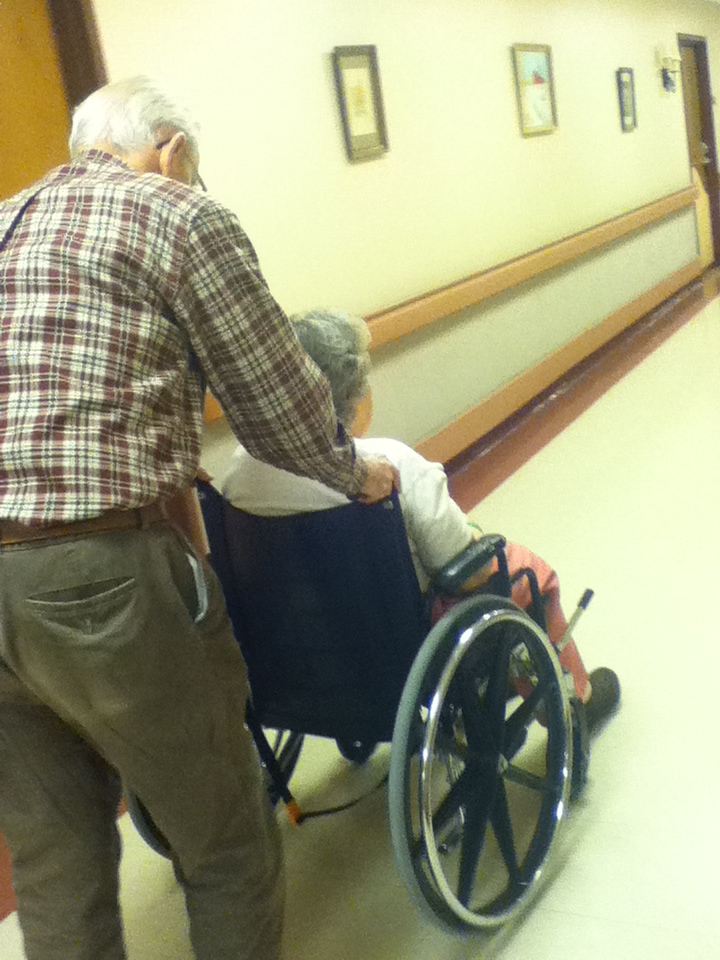
Not this one
He visited her every day. Twice a day. He fed her. He pushed her wheelchair on walks.
or even this one
This was after my brother passed away. He went to tell her the news that her oldest child had died of a heart attack. Because of her dementia, she couldn’t understand, and he had to repeat the painful words over and over. It broke my heart. His grief was doubled because she was unable to share it.
But her bore it.
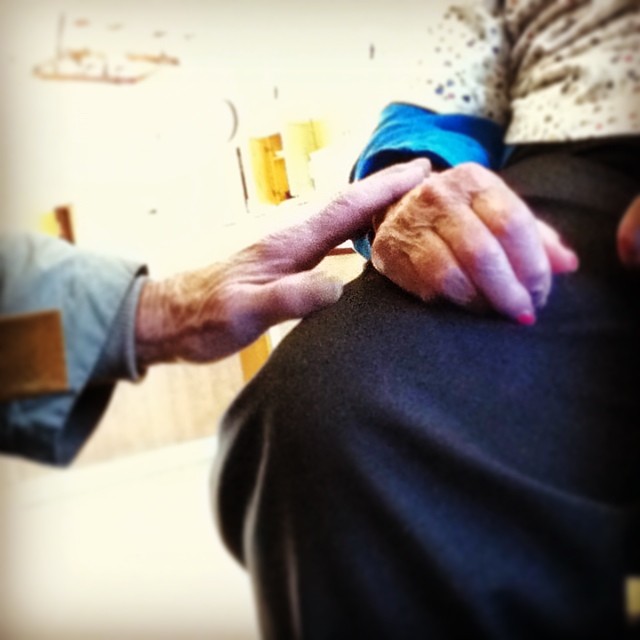
The graceful picture I thought of was this one. It may not be the best picture, but it was a special moment.
My mother was in the hospital and my father brushed her hair for her.
Mothers brush other people’s hair all the time — sometimes even adding a little spit to do the trick. Of course, I never did that — added spit, I mean.
But this was new territory for my father. He was a little clumsy doing it. But he wanted her to be cared for, and he wanted to be the one to do it.
So he did the best he could to brush her wayward hair into place.
And it was an act that was full, very full, of grace.
Whenever I drive my father anywhere, he comments on the houses we pass.
“Those are some well-kept houses,” he says, especially in the summer when the yards are groomed and flowers are blooming.
Somewhere along the line maintaining his house became too much.
My mother kept beautiful gardens. She was outside nearly every day in the spring and summer planting, weeding, and pruning so that passers-by were treated to some beauty.
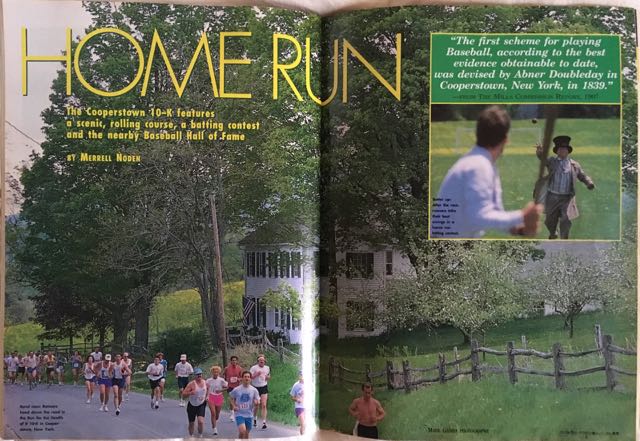
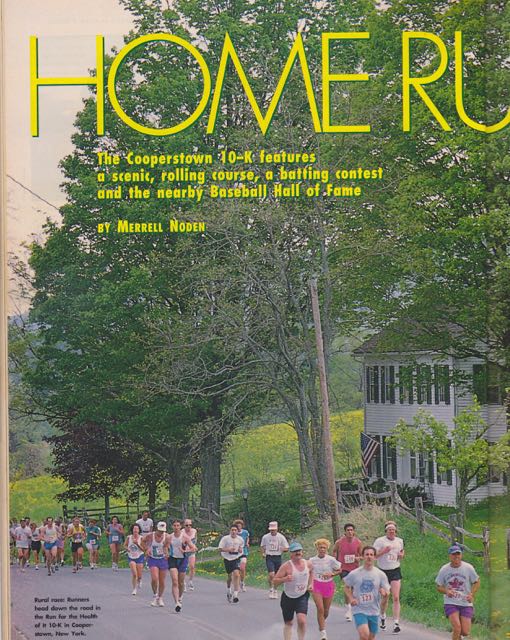
In May 1994 the house was featured in a 2-page spread of Runner’s World magazine. A 10K race was routed right past the house.
the 2-page spreada better picture
As dementia crept in, we discouraged her from being out near the road. I was worried about her safety.
Plus she would shake her fist at cars that drove past too fast.
I was worried she would get a reputation for being a crazy old lady.
As the gardens were overtaken by weeds, the fence rotted. The split rail fence needed a number of rails replaced but when my father purchased new rails a few years ago and brought them home, he discovered they were too short.
“That’s okay,” he said to me. “I’ll just dig up the posts and move them closer.”
My eighty-something father, who was struggling was balance issues and growing frailer by the minute, honestly thought he could do that.
With aging parents — as with children — figuring out how to address challenges without totally discouraging them with you-can’ts is tricky.
“How about if we get someone to help you with it?” I suggested.
“I can do it,” he insisted.
But he didn’t.
And now the rails are rotting in a pile.
Bud has been working hard to reclaim the gardens. Last summer, he weeded and weeded and weeded. He cleared brush. He mowed. He pruned. He’s one of the hardest working people I know and I wondered if my father even noticed.
We were driving to get his haircut last week, and he commented on how well-kept the houses were on the way.
“It takes a lot of work to keep a house looking nice,” I said.
My father was quiet for a few minutes staring out the window. “When is Bud coming again?” he finally asked.
“Friday,” I told him, “when he gets done with work.”
I was relieved because that told me two things:
He made the connection between the work required to keep the house looking nice and Bud.
He recognized that Bud and I don’t get to see each other every day.
We’re doing it for him.
It isn’t easy, but it’s important.
And I’m grateful that we can be there — and get that house looking nice again.
Below is a(nother) dusted-off post from 2011. In 2011 my mother was still alive and living at home. She clearly had dementia and her body was slowly failing on her. My father was her main care-provider, but that summer was hard on him, too. With all that was going on, I helped out as best I could.
Mom and Dad — summer of 2011
Last Thursday we went for the follow-up visit for my mother’s bladder biopsy.
The baby-faced doctor handed my father the pathology report. “It’s bladder cancer, just as I suspected,” he said.
He continued speaking, “It’s high-grade papillary urothelial carcinoma.” I could see the words on the path report in my father’s hands. “The cancer hasn’t spread past the lining of the bladder. There is no invasion into the muscle or the subepithelial tissue.”
When he began discussing the treatment options, it was truly a discussion. He listened to our concerns, answered questions, explained, and listened some more.
We finally reached the point in the process that I was anticipating (and dreading).
My mother is now incapable of making decisions, especially decisions like this. She can decide what she wants for lunch — usually something involving marmalade. She can decide what she wants to wear — usually the same thing she has been wearing for the past three days. She can decide when she wants to take a nap — often. She cannot make an informed decision about her health care.
My father has always shown the utmost respect for people and guarded their dignity. I knew my father would want to include my mother in the decision-making process. When the moment came, my father turned to my mother and said, “I suppose we need to ask the patient what she would like to do.”
I started to pipe up, “Dad, I think we’re at the point when you need to make these decisions for Mom,” but my mother interrupted.
My mother, with the utmost clarity, said, “I don’t think I understand what’s going on. I trust whatever you decide.”
Hallelujah! If the angels weren’t singing in heaven, they were singing in my heart!
I hadn’t known to pray for this, but this was an answer to prayer.
The rest of the visit was a piece of cake. We made the decision to simply wait. At 83, any treatment may have been worse than the disease itself….
I had forgotten so much about that time period. The bladder cancer turned out to be a red herring. So many other things made that season hard. Had I know what lay ahead, I would have said that I was not capable of any of it.
But I was.
God makes our path a little windy so we can’t see what’s around the next bend. Perhaps if we knew, we wouldn’t want to go on.
Today, January 13, 2017, I can look back and say, Thank you, God, for getting me through those years. It makes it easier to trust You on the road I’m traveling now.
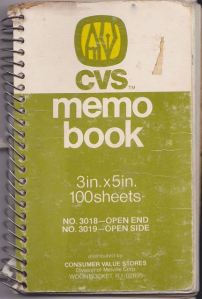
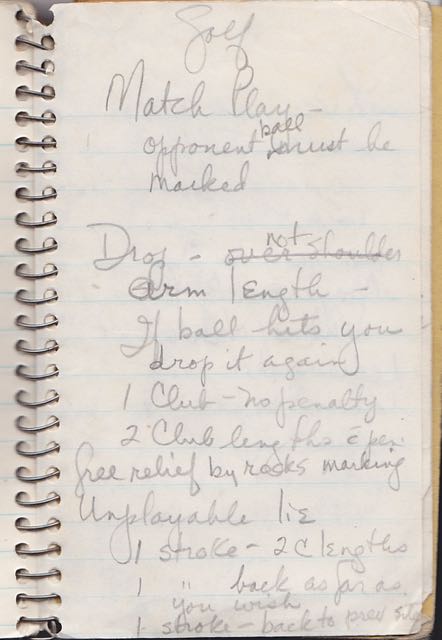
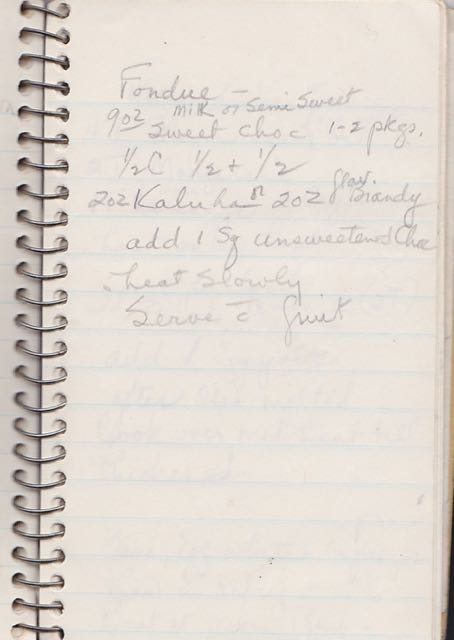
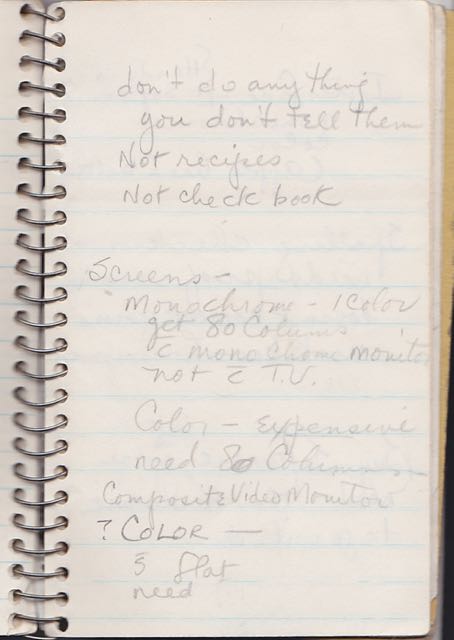
She even wrote a cheat sheet for my husband’s siblings. He has eight brothers and four sisters, so she wrote out their names and little reminders to help her keep them straight. I should have been so smart.
One note bothered me – partly because I couldn’t figure it out what she was trying to say, and partly because I have anxiety about doing things right for my father.
don’t do anything
you don’t tell them
Not recipes
Not checkbook
Helping elderly parents involves walking a fine line. On the one hand, I have a tremendous amount of respect, appreciation, and love for them, but on the other I sometimes need to take the reins.
The other day I took my father to get his haircut. When he was done, he fished his wallet out of his back pocket. He rifled through it with his fingers, pausing on a five dollar bill before looking at me questioningly.
“What do I need here?” he asked, and he pushed the wallet into my hands.
I handed the woman a twenty — the haircut cost $10 — and she gave back a five and five ones. I handed these to my father. “You need to decide how much you want to tip her,” I said.
It was awkward. She picked up the broom to start sweeping. He fanned out the money in his hand and fiddled around with the bills.
“What are you doing to me?” he said. Clearly he couldn’t think through the next step.
I felt terrible. I took some of the ones and handed them to the stylist.
But I wasn’t doing anything to him. I was trying to allow him some autonomy.
At home I’ve started paying some of his bills without discussing them with him. The bills are confusing for him, but cutting him out of the process feels wrong to me too.
don’t do anything
you don’t tell them
Not recipes
Not checkbook
The words in the notebook stung. I’m trying so hard to do right by him.
I have a futile hope that someday he’ll be able to do it all again. Will he understand why I took over?
I pulled out Mom’s notebook again and studied the rest of what was written on that page.
Screens –
monochrome – 1 color
get 80 columns
c/ monochrome monitor
not c/ T.V.
Color – expensive…
The next page had more computer-buying advice. Were these notes from an introductory computer seminar?
first
Buy Software ^ you
need — then Hardware
to go with it
Seriously?
But maybe those first lines, “don’t do anything you don’t tell them” refer to computers, and the fact that they are just machines.
Painting at the Fenimore Art Museum: Village Post Office, 1873. Thomas Waterman Wood
I stood in a very long line at the Post Office yesterday.
Post Office line definitions for a small town:
No line = go directly to the counter
Brief wait = someone already at the counter
Line = someone waiting, someone at the counter
Long line = 2 someones waiting, someone at the counter
Very long line = more than 2 people waiting in addition to the person at the counter.
Yesterday, when I first got there, a young couple was at the counter mailing several packages. They held whispered consultations with each other about every package. I think the cost was more than they expected. When the clerk announced, “That’ll be $79.50,” they looked at each other briefly before she swiped a card and they were done.
I still had two people ahead of me, but three or four people now stood behind me in this very, very long line.
The elderly woman at the front of the line approached the counter. She placed two packages on it.
“This one is FedEx,” the clerk said. “I can’t take it here, but you can mail this other one.”
“What?” the woman asked.
The clerk spoke slowly as she repeated in a louder voice, “This package goes to FEDEX. You have to take it down to THE COMMONS. But I can help you with THIS PACKAGE.”
I couldn’t hear what the elderly woman said, but I watched the postal clerk’s face soften.
“Let’s look at this one,” the clerk said, holding the FedEx mailer. “I don’t handle these but I think we can figure it out.”
She read aloud the instructions on the FedEx slip.
The man behind me groaned and left.
The woman ahead of me looked at me, shrugged, and followed him with her eyes out the door.
“You need to sign HERE,” the clerk was saying, “before you put it in the DROP BOX.”
The elderly woman said something.
“THE COMMONS,” said the clerk. “You know, THE SHOPPING CENTER SOUTH OF TOWN.”
The woman nodded and asked something.
“THERE’S A DROP BOX. YOU JUST HAVE TO PUT YOUR PACKAGE IN,” the clerk explained.
The door opened and closed several times over the course of this, each time bringing a wintry draft. I could feel the people behind me shuffling their feet and shifting packages between arms.
The clerk was remarkable — so pleasant, so patient, so unperturbed by the growing line. She took care of the package that was being mailed postal service and reminded the woman again where she needed to take her FedEx package, before turning her attention to the next person.
In this year of “Leaning In“, I knew that I needed to be more like the postal clerk. Too often I have been like the man who left, feeling the tick-tick-tick of time slipping away.
I don’t have time for this, I tell myself — but, really, what is so pressing?
Life is too short to rush through it.
Yesterday I learned something from an elderly woman who didn’t understand the difference between FedEx and USPS, and a postal clerk who took the time to help her.
Lest you think I am picking on my mother later in the post, let me start by listing for you just a few of the things on my desk right now that I can see with moving anything.
a pack of gum
a golf ball
headphones
a highlighter pen
two pairs of scissors
“Amistad” DVD
a Webkinz code
a Staples easy-rebate receipt
my cup of coffee
a letter Mary wrote to her Compassion child
Christmas labels
an empty CD case
an SD card
a silk Gerber daisy
folders filled with papers
two 3-ring binders
my laptop
much, much more!
Why should I ever buy an “I Spy” book or an “I Spy” game when I have a desk that looks like this? Can you find all the things I listed?
Yesterday, when I was at my parents’ house, I went in the laundry room to see if anything needed to be washed. The bin above the washer caught my eye. Usually, this was where cleaning rags were kept, but lately other things have been showing up there. The kitchen towels, which used to be kept in a drawer, are almost always in this bin these days. But yesterday, there was even more.
I started taking things out, just to see what all was there. Here is what I found:
rags (expected)
bags – plastic bags from the grocery store and used zip-loc bags (sort of expected, but I have to ask, does anybody else’s mother wash zip-loc bags? Mine has for years.)
several ShamWows (purchased at the state fair after my parents were wowed by that demonstration. Have they ever used them? I don’t know…)
dish towels (expected these days)
paper placemats (spilled upon in several places, but once quite pretty. I threw them away.)
styrofoam cups (Where did these come from? Why are they here?)
a pretty bowl (This does not belong to my parents. Somebody brought them food in it. Usually it is sitting on the counter with the rest of the dishes that don’t belong to them.)
Bounce fabric softener sheets (sort of expected. At least it’s in the laundry room.)
loose kleenex (these are everywhere in the house. Fortunately, they did not go into the washer or dryer. From my experience, kleenex does not wash well.)
a stretched out glove (this would not fit anybody that I know. I threw it away.)
pieces of a broken plate in a plastic bowl (less than half of a stoneware plate, so I threw it away. Even if we had the whole plate, would we have glued it back together? I don’t think so.)
As I was taking all these things out and shaking my head over them, I thought about my desk at home. Any sane, normal person could start pulling things off my desk and saying, “Where did this come from? Why is this here?”
I think the difference is — and this is an important distinction for those of us who wonder if the same thing is happening to us — that this is a fairly new behavior for my mother. When I was in 3rd grade my desk was such a disaster that my teacher, Miss Bliss, dumped it out in the middle of class to my horror and embarrassment. It made an impression on me, but it didn’t fix the problem. My desk in college was cluttered, and my desks in my homes have been cluttered.
And the really weird thing is, I usually know where things are. I know right where to find a paper clip on my desk because I watched the box spill. I just haven’t picked them all up yet. I know there is a check I have to give Bud to sign. It’s in the pile to my left, either underneath or on top of the two library books that don’t have to be returned for two weeks.
My mother has always washed and saved zip-loc bags. That doesn’t worry me. It’s the fact that she no longer puts them in the same place. It’s this new disorganization that concerns me and reminds me that she is no longer in full possession of her faculties. If the person who owns that pretty little blue bowl ever shows up looking for it, I wouldn’t know where to start looking. In the workshop? In the bathroom?
My mother no longer understands where things go. It makes life hard for my father.
Maybe if I get Alzheimer’s, I’ll get neater. My desk will be organized. My husband and children will scratch their heads in wonder because it will look tidy. But I won’t know where anything is.




 I found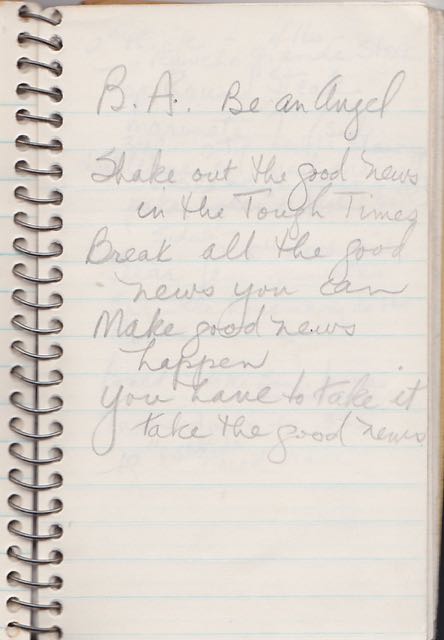

 “You need to sign HERE,” the clerk was saying, “before you put it in the DROP BOX.”


 Hot Dogs and Marmalade