dementia

Lost in the Hospital

Today I lost my father.

No — it’s not what you think. I misplaced him, or he misplaced himself.

It felt a little odd to tell people, “Umm… I can’t find my father.”

He had a doctor’s appointment this morning, so I dropped him at the hospital door and went to park the car.

Every single other time that I have done this it has worked. He slowly makes his way to the registration, answers the questions about black lung benefits and whether he has traveled outside the country in the past three weeks — and somewhere in the midst of this I catch up with him and shepherd him to the appropriate clinic.

This morning, however, I had trouble finding a parking spot. By the time I got inside, he was nowhere to be seen.

I ran up the stairs to the second floor where the Prime Care clinic was. He wasn’t in the waiting room.

I ran back down the stairs to registration. “I lost my father,” I told the woman at an open registration desk. “Can you verify for me whether he checked in or not?”

After answering a few questions, she confirmed that he had registered for an appointment in Prime Care.

Up the stairs again — but he still wasn’t in the waiting room. I went to the reception desk there. “I lost my father,” I told the woman who helped me. “Can you call back and see if he has already gone back into an exam room?”

“Oh,” she said, “did you want to go back with him?”

“I need to be back with him,” I told her. “He’s 87 and has some dementia.”

She called the nurses’ desk immediately and then said to me, “No, he’s not back there.”

I ran to the third floor. He goes there for cardiology appointments. Maybe he was confused about what clinic to go to. But nope.

I ran to the first floor. Maybe he went to surgical clinic. We’ve gone there a few times recently. No sign of him, though.

I ran back up to the second floor. I was getting my stair workout in early. There was still no sign of my father.

My last idea was for them to page him over the loudspeaker in the hospital, but, to be totally honest, I wondered if he would even hear it. And where would I ask him to be directed to? I was running out of ideas. But I approached the reception desk anyway.

“I still can’t find my father,” I said.

She looked at me sympathetically. “Do you want me to try to put an announcement on the PA?”

I sighed, and looked around hopelessly.

Just then, who should come shuffling along with his walker? My father.

“I went up and down on that elevator,” he said. “It’s a terrible thing to not know where you are.”

Yes, I thought, it was a terrible to not know where you were.

photography · Travel

The Texture of War

Imagine to yourself a gloomy city, all burning with brimstone and noisome pitch, full of citizens who are unable to leave it.

St. Francis de Sales, in Meditation VII: Of Hell

Leah and I watch a short movie about the 1991 siege on Dubrovnik. In it, we saw people clustered in doorways and pressed against walls as they watched the attack on their city. Buildings burned in the background. When I read St. Francis’ description of hell, I thought of Dubrovnik.

When I traveled to the former Yugoslavia, reminders of war were all around me.

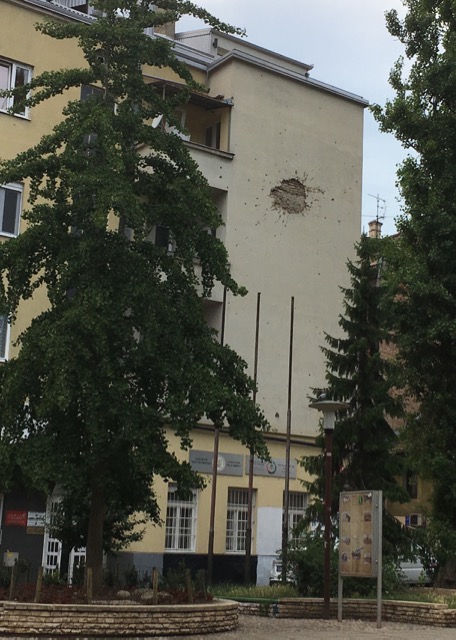
I saw shells of buildings, or were they shelled buildings, or both?

I’m the kind of person who averts her eyes in war movies, but I couldn’t avert my eyes there.
I drank it up, storing far more images in my mind than I did on my camera.

War leaves a texture all its own. Even 25 years later.

From Dubrovnik:

Dubrovnik

From Mostar:

Mostar

From Sarajevo:

Sarajevo

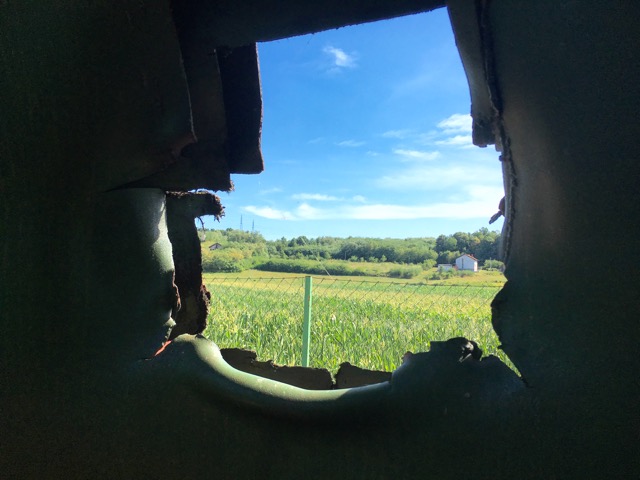
From Gradačac:

View from an armored train outside Gradačac

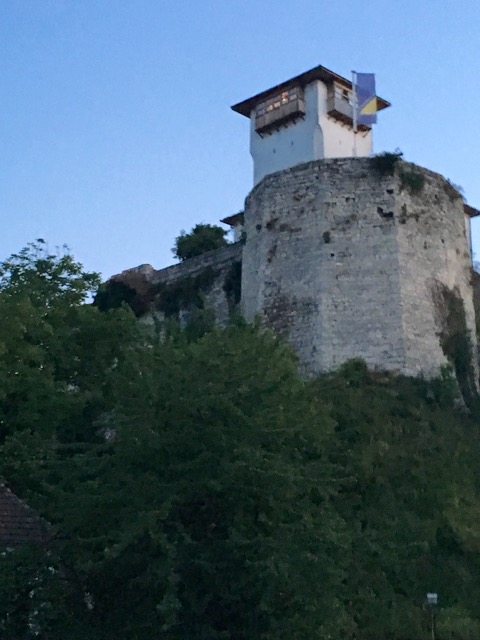
We stayed in a castle in Gradačac. Here’s a picture of the castle in 1992.


And here’s what it looked when we were there:

Gradačac castle

Rebuilding brings hope.

dementia · family

Helpful Words

A foggy morning (that has nothing to do with the post)

“It happens to all of us, you know,” someone said to me when I was talking about my father’s latest foggy episode.

Yesterday morning, when my father was studying his watch, I asked him what time he had.

“Hmmm,” he said, studying the hands and the numbers, “it looks like it’s two minutes past… past… I think it’s two minutes past Tuesday.”

I texted my sister. “I have the title for the book about Dad and dementia — Two Minutes Past Tuesday.”

Funny — but so not funny. Not even remotely funny the more I think about it.

Later in the day he had essentially forgotten my oldest brother, or, at the very least, key elements of Stewart’s life.

“It happens to all of us,” this person said to me, when I told about the things my father had said. “It’ll happen to you. It’ll happen to me. It happens.”

Such a glib response made me wonder if I talk too much about my father and his struggles. I try not to.

The other day when two of my children had a discussion that devolved into nastiness, I said, “Let’s try this again. First she said this (fill in the blank), and then you responded with this (fill in the blank) — but what could have been a better response?”

We talked through possible responses that could have diffused rather than ignited the situation.

It probably won’t work. The next time, they may get after each other again, but maybe a seed has been planted. A seed with a better fruit.

Last night as I lay in bed thinking about the unhelpful response thrown my way, I wondered what I really was looking for in sharing the story of my Dad’s poor thinking. What would have been a better response?

Nobody can really fix the situation. It is what it is.

But here are a few things that may have sounded better.

My sister’s response — “Oh my.” Two words show that she feels the same dismay that I do.

“I’m sorry.” It can be a pat response, but it can also be very sincere. It shows compassion and sympathy.

“That must be so hard.” Yes, yes, it is. I appreciate when people acknowledge that.

“Is there anything I can do?” Yes, there is. You can visit him. Don’t worry about whether he’ll remember your name or not — because the visit isn’t about you. Don’t worry if there are long periods of silence while he searches for words, or if he loses his train of thought altogether. He loves having people sit with him, talk with him, and listen to the same stories (or story fragments). Don’t feel that it’s a waste of time because he may not remember. For that hour that you’re there, he’s loving it. I’m loving it, too, because he’s being fed mentally by the presence of another person.

“How are you doing?” Some days I’m not doing terribly well with all this. Thanks for asking.

photography

Free Parking — Then and Now

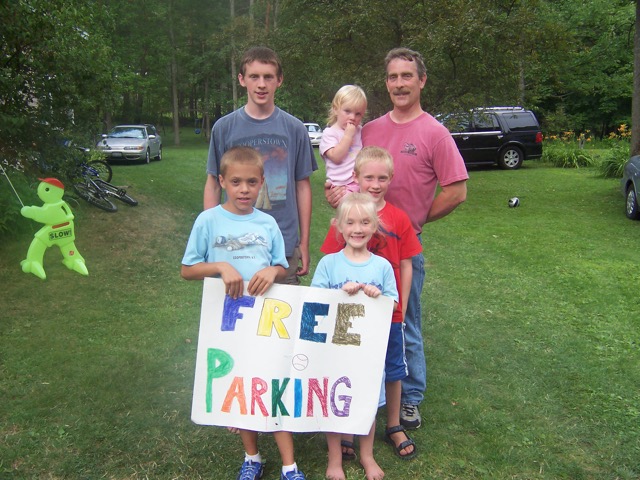
When we lived down the road from the Baseball Hall of Fame Induction ceremonies, we offered free parking.

Free — no strings attached — just free.
2005 

We generally had quite a few takers. We were, after all, less than half a mile from the site.

But we sold that house in 2006 and my brother, 2 miles from the ceremony site, took up the task.

He offers free parking AND a free shuttle.

2017

He even offered free water and hot dogs, although they didn’t make the sign.

This year, he had only three takers. To be fair, it was a smaller crowd than some of the past years.

Two guys pulled up and asked what the deal was.

“You can park here for free,” my son said, “and we give you a ride to and from the ceremony.”

“What’s the catch?” the man asked.

“No catch. My family just likes to do nice things,” my son replied.

They parked.

My brother drove them in and gave them a paper with his phone number on it so they could call when they were ready to be picked up. They called when it was over, he picked them up, and that was it.

Really. No strings.

In the next few years, the crowds may be larger.

Derek Jeter will probably set some records. Yankees support their own.

But then, so do the Red Sox, and David Ortiz will probably go in the year after Jeter.

Free parking may be more appealing when no other parking is available.


On an unrelated note, on Induction Sunday, I decided to walk home from church — about 2 1/2 miles — to take some pictures of the crowds.

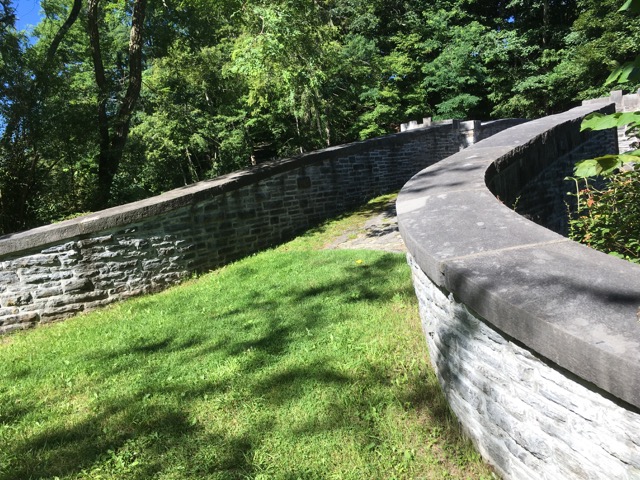
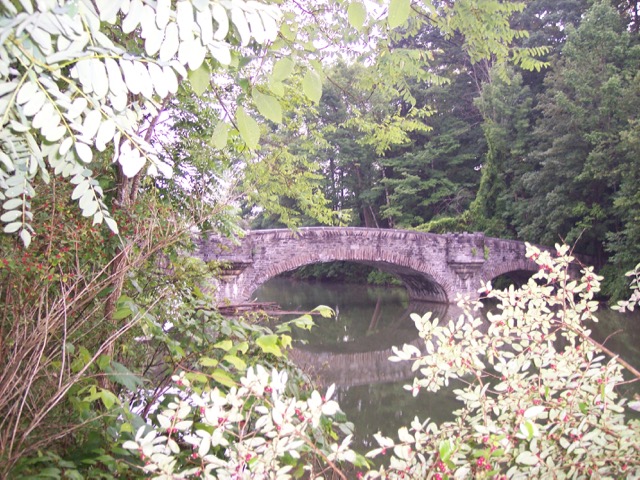
Of course, I forgot all about the crowds when I walked down the path and instead took pictures of my favorite bridge.

Some things about Cooperstown (or me) don’t change. I’ve been taking pictures of this bridge for years. It’s always beautiful.

the bridge on Hall of Fame Induction weekend 2017
the bridge on Hall of Fame Induction weekend 2005
the bridge on Hall of Fame Induction weekend 2017
the bridge on Hall of Fame Induction weekend 2005

#pastmeetspresent

family · photography

Sunset – Sunrise

Last night, I picked Mary up at 8:30. She had to work late because of induction weekend. Everywhere in Cooperstown, it’s all hands on deck.

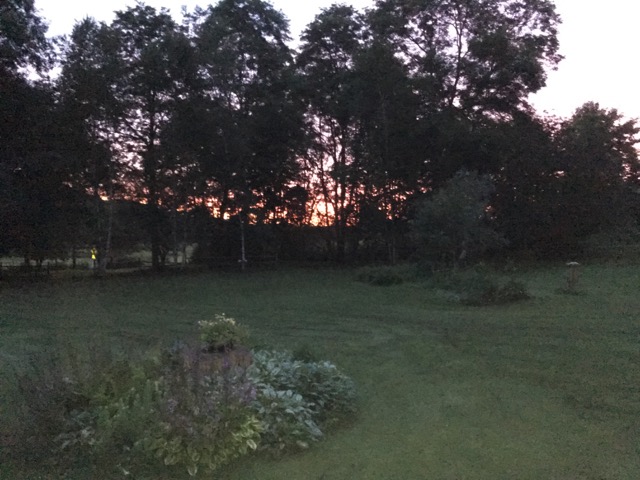
On the way home, I kept saying, “Look at that sunset!” It was red and orange and gorgeous.

She dutifully looked and agreed.

Then I said it again.

Lather-rinse-repeat.

When we pulled in the driveway, I said, “I can’t stand it. I have to take a picture of it.”

“Sunset photograph number four-thousand-six-hundred-and-fifty-three,” Mary said. She knows me well.

I snapped this shot on my phone.

“Dang,” I said. “The colors are never right.”

“You can focus it, you know,” Mary told me.

No, I didn’t know.

She took my phone/camera, pointed it at the sunset, tapped the screen on the sunset itself, and took this picture.

Yes, that was closer to the colors. Still not the same as being there — but definitely closer.

This morning the sunrise was ridiculous. I couldn’t stop looking at it.

“I can’t stand it,” I said to myself. “I have to take a picture.”

In my head I heard, Sunrise photo number five-thousand-four-hundred-and-sixty-two. Someone somewhere was laughing at me.

First shot:

Not terribly exciting.

I tried the Mary-technique and tapped the screen, focusing on the colors of the sunrise.

So much better.

Thank you, Mary.

Sometimes it’s possible to teach an old person a new trick.

family

The Rest of the Story (or, An Ethical Question)

If you knew that one phone call to an influential person would elevate the level of care received in a health care setting, would you make that phone call?

I delved into that question yesterday when I met with someone on an unrelated matter. After taking care of some business, our conversation detoured into my father’s most recent emergency room experience.

“Call me next time,” he said, and handed me his card. “Keep this in your wallet and call me.”

“I won’t call you,” I told him.

My parents raised me to believe that everyone should be treated in the same way. Everyone deserves dignity. Everyone deserves good care. Everyone.

Yet, despite my saying otherwise in this man’s office, I had, the day before, been searching for his phone number while sitting at Hallway 6 with my father. It turned out the website wouldn’t load because it was down for maintenance.

As my sister would say, “It was a God thing.”

I was ready to throw my principles out the window for a little respect for my father. See how shallow I am?

But God, or happenstance, kept me from calling, and my principles remain mostly intact.

Because, in the midst of this search for someone who could get us out of the hallway situation, Roy the cheerful PCA came along.

Tell him a story,” he said.

The rest is history — castles in Bosnia and a hallway bed that became a place for storytelling.

Next time, would I make the phone call? I like to think not.

When I sit quietly with my ideals, everything is clear. I am confident in how I would act given a difficult situation.

But in the midst of a trial, idealism and nobleness vanish like smoke. I need safety measures and reminders in place. I need websites to malfunction.

I intentionally did not put that business card in my wallet. I don’t want to be tempted.

A different hallway bed I sat beside last year.
The call bell for the hallway bed last year. My father didn’t even receive this.


family · Life

Tell Me a Story

During our down time in Bosnia, Leah starting asking, “Tell me a story.”

It was so open-ended that I struggled with it.

I asked her if she got the idea for that from La La Land. Those words were the lead-in to my favorite song from the movie.

Leah assured me that, no, she had been asking that question for years. I’m pretty sure that La La Land got the idea from her.

So, sitting in the shade one day, she said, “Tell me a story.”

“I can’t,” I told her. “I need some parameters.”

“Okay. Tell me a story about when you were in grade school,” she said — and I did. I told her about a day in 3rd grade when I experienced agony and ecstasy, as best a 3rd grader can.

In short, our class had gotten back from a trip to the library. I had checked out Mark Twain’s “The Prince and the Pauper.” My teacher, Miss Bliss, held up the book (and me, figuratively) as an example of a student choosing good literature to read. Later in the day, I couldn’t find my math paper in my desk — I’ve been a messy for as long as I can remember — and she dumped the contents of my desk on the floor in the middle of the classroom. I can still remember that shame. Same day.

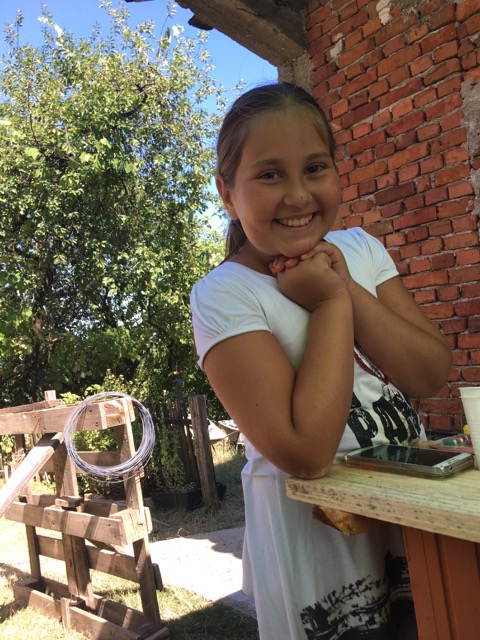
Later, Leah asked Mary to tell a story, and Mary launched into an imaginative story with dragons and little girls. Ajla, one of the Bosnian girls, listened wide-eyed and delighted.

“You are a great storyteller,” she told Mary, “in the lies.”

Ajla

Ajla’s English was excellent. Except when she didn’t know the right word.

Yesterday, I spent some time at the emergency room with my father.

As we waited and waited, I grew fidgety. An excellent PCA named Roy helped turn my attitude around.

Roy had stopped by my father’s hallway bed several times. He was always cheerful. On one of his check-ins, he looked at me and said, “Tell him a story.”

I was busily mentally drafting complaint letters and griping to my sister via text. I didn’t respond to Roy, so he repeated it.

“I’m talking to you,” he said. “Tell him a story.”

“I can’t,” I said. “I need some parameters.” It was a deja vu moment — and I was back in Bosnia.

“I’ll get you started,” Roy said. “‘Once upon a time in a castle far, far away…’”

I laughed, and took up the story.

“Dad, did I tell you about the castle where we stayed in Bosnia?”

“A castle?” he asked.

the castle

“A real castle,” I repeated, “from the Ottoman Empire.”

Telling him about the castle took our minds off the fact that we were waiting in the emergency room.

With Leah, it took our minds of the heat and lethargy of the day.

“Tell me a story.”

Those are magical words.


photography · Travel

Summer Swimming

Hitting is like swimming. Once you learn the stroke, you never forget it.

Stan (The Man) Musial, inducted into the Baseball Hall of Fame 1969

A baseball quote, because Baseball Hall of Fame induction weekend is closing in, but the topic is swimming.

I hadn’t gone swimming in well over a year. Our local pool had been closed, and I’m rather loathe to be seen in a swim suit.

But during my travels, I swam multiple times.

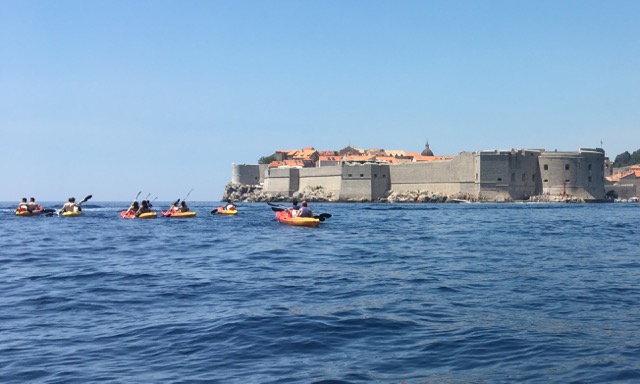
I got in the first time because I was so hot. Leah and I took a kayaking tour around Lokrum Island. The guides had told us the temperature in Celsius which didn’t mean a whole lot to me. 

But it was hot.

On our way around the island, we stopped at a cave. Leah was, I think, the first to hop in the water. Then other people from the group jumped in — so, finally, I joined them. It was so refreshing. Refreshingly cold.

That was swim number one.

A few days later, we walked down a gazillion steps to a little swim area we had noticed on our way to and from the Airbnb.

We got there early. A young woman was doing yoga on the pier while a handful of people were already in the water. Of course, Leah ventured in first. I followed.

Even at 8 AM, Dubrovnik was hot, so the water felt good — cold and refreshing. I swam to the far post, to the mouth of a cave, and back to the post. I hadn’t forgotten how to swim, despite my hiatus.

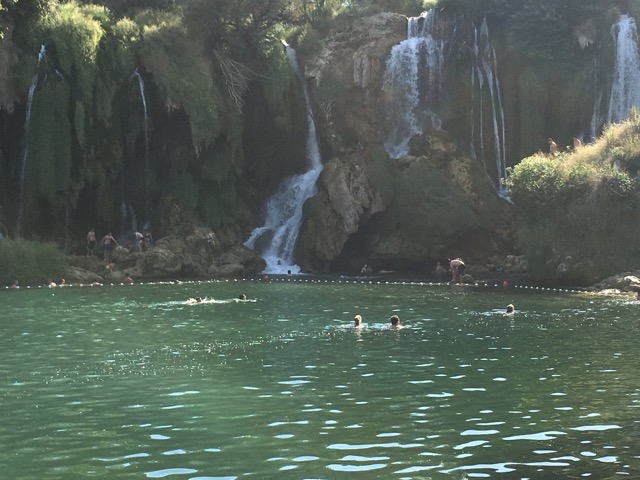
Swim number three took place during a tour from Mostar. We spent a few hours at a place called Kravice Falls.

Our tour group consisted of Leah, a family of four from Sweden, a young woman who was a recent college graduate, and me.

The two girls from the Swedish family immediately headed for the water. The rest of us sat at a table and ordered some lunch. The girls called and waved to their parents from the water.

“The younger one just learned to swim on this trip,” said the mother.

Subconsciously, I scanned the swim area for lifeguards. Nada.

“A week or so ago, she just decided she would swim,” the mother continued.

There were ropes out in the swim area, but no clear designations what they were all about. People just seemed to swim wherever they wanted.

“There are no lifeguards here,” I said. “Does that make you nervous?”

I asked because it was making me nervous.

“No,” said the mom, “they’ll be fine.”

I realized that Americans are far more safety conscious than the rest of the world.

And that someone who has been a lifeguard/swim instructor/swim coach can’t turn off that part of her brain.

I swam at Kravice Falls with the young woman who was part of our group. We got in the middle of the swim area on our way to the falls, and she said, “I’m feeling really panicky. I don’t think I can make it.”

We stopped and treaded water for a while. Right there, in the middle, we paused and talked. I told her that I was a swim coach. I asked her about her life. I watched the anxiety dissolve before we continued to the falls where we sat on a rock together and let the water beat down on our backs.

My fourth swim was at a lake in Bosnia.

One of the men from Gradacac had made arrangements for us to visit a scuba club. At a lake. In Bosnia.

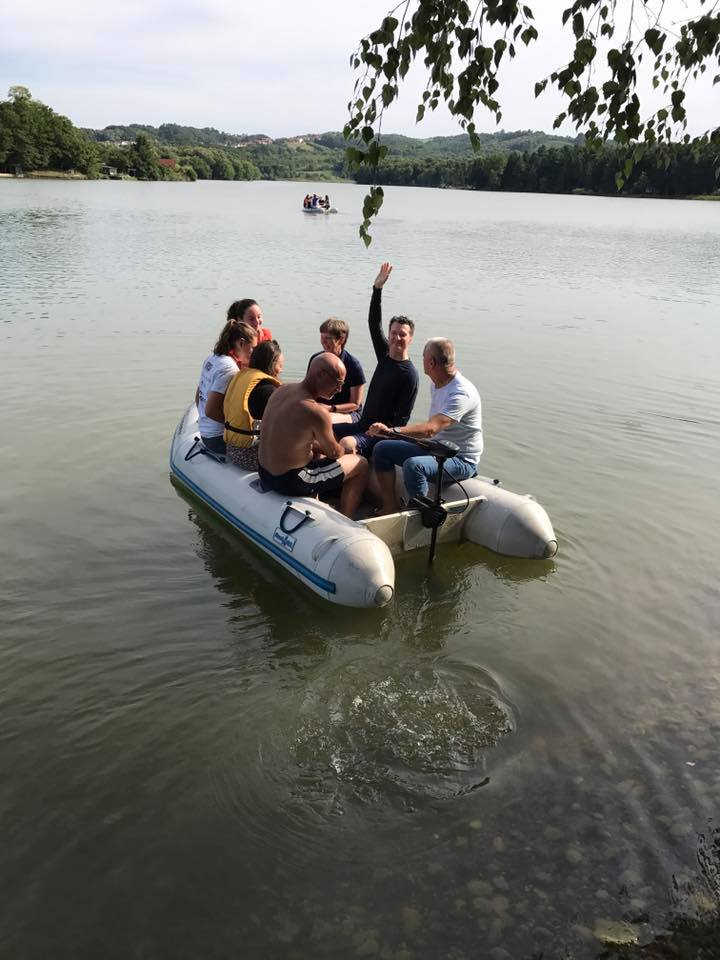
We didn’t scuba, but we did go out on a boat tour of the lake.

Our sweet translator, Amina, didn’t know how to swim, so she put on a life jacket. And clutched Nicole’s leg.

I reminded her to breathe. And took lousy pictures of her.

After the boat ride, I swam out in the lake. It was cool (not cold, like the Adriatic) and refreshing.

Swimming again gave me great satisfaction.

I hadn’t forgotten how.

I still loved it.

Now that the pool has reopened, I need to get back.

Leaning In · Life · Travel

Things I Would Have Done Differently in Bosnia

While I was in Bosnia, I began thinking of things that I would do differently next time.

First, I would bring my computer.  I intentionally did not bring my computer on this trip, so I could “unplug” a little. I had my phone which I thought would be adequate.

I learned something about myself, though. When I journal with a notebook and a pen, I tend to write little notes to myself. Reminders of the day. Conversations occasionally, but with minimal extras.  When I write on my computer, I write complete sentences. Or complete thoughts. (<– see what I did there?) I edit, delete, rewrite, and write a little more — because the process of writing helps me to unfold my thoughts more completely.

In Bosnia mosques and churches – side by side — something I’m still pondering

For two weeks, I didn’t do that. Now I am left with a hopelessly tangled knot. I try to write about an experience I had there and I can tell something isn’t right about what I just wrote, but I’ve lost the moment. Sigh.

So — next time, the computer travels with me, and journalling will be worked into the schedule.

Second, I would bring more gifts. I was overwhelmed with the generosity of the Bosnian women. They gave us clothes, jewelry, hand-made lace items, plums — not because we needed them, but because they wanted to express things that only a gift can express — Thank you. I appreciate you. I want you to remember me. I was thinking of you and I wanted you to have this.

Group photo — I’m holding some clothing given to me as a gift

Quite frankly, I wasn’t prepared at all for that. I had thrown a few things in my bag to give, and gave them on our last day. (Stay tuned for a future post about that.) But I really wished I had more, much more, because I wanted to say all those things that only a gift can express. (See previous paragraph.)

Third, skip the brick brigade.

Passing bricks

Ostensibly, we were there to help build a house. I was a little skeptical of my part in that from the get-go, but figured there must be something I could do. A prerequisite for the trip was the ability to carry bricks uphill. Well, we carried them downhill. And not even that. We formed a brick brigade and passed them down the line in the many-hands-make-light-work spirit. Moving a palette of bricks took, maybe, 20 minutes. It just felt like, um, fluff — well, as fluffy as brick-moving can be. Later in the week, I saw a truck deliver bricks much closer to the work site. It made me wonder how much of the original delivery site was so that the Americans could feel useful. I didn’t want to feel useful; I wanted to be useful.

Which is why, fourth, I would have volunteered more in the kitchen. On the last day, I went into the kitchen with the Bosnian women. Perhaps I should have stuck with moving bricks because I was pretty terrible at scraping potatoes. Had I started earlier in the week, by this point, I might have gotten the hang of it. Had I known I would be doing that before we left, I would have brought some peelers. As gifts. To say, I want you to remember me — every time you peel potatoes.

Cutting cabbage

But peeling potatoes and cutting cabbage were the highlights of my week. We communicated through hand gestures (when the translator stepped out) and demonstration. We laughed at my clumsiness – ineptness needs no translation and neither does laughter. The women asked if I wanted to make the traditional pie, but, if I couldn’t peel a potato well, I was afraid what I would do to the pie.

Our hostess making pie

Next time, though, I would head straight for the kitchen. I would help with the daily bread-making and soup-making. And I would learn the Bosnian way of rolling out pie dough. (It was pretty amazing!)

Last, I would leave the photography to other people. If I had left my computer home so I could be unplugged, I should have left the camera off so I would stay in the moment. I’m not the greatest photographer. One girl on the trip was truly gifted in that area. My pictures are adequate at best.

In addition to shoveling cement, Nicole took fabulous pictures

Once, when we went out on a boat, Amina, our translator, asked me to take a picture of her. The first three or four pictures that I tried to take were so bad that she turned to someone else. I should have warned her that I was lousy photographer.

As the week went on, I took less and less photographs. I tried to memorize the things I was seeing, smelling, tasting and feeling. All the pictures in the post were taken by someone else — proof that I didn’t need to take any.

A number of people have asked if I will go back to Bosnia.

I guess I need to, if only to do it better.

Travel

Dubrovnik

On one of our first nights in Dubrovnik, I told Leah that finally I was starting to understand parts of Isaiah 60, the scripture I’ve been trying to memorize for months.

We don’t have any walled cities near where I live. I needed to walk the walls of Dubrovnik to “get it”.

Foreigners shall build up your walls… (Isaiah 60:10)

One of our guides told us that back when the city was being built, men coming to trade were expected to bring stone to Dubrovnik and the women eggs. Stone for building. Eggs for the mortar that would hold it all together.

Your gates shall be open continually;
day and night they shall not be shut… (Isaiah 60:11)

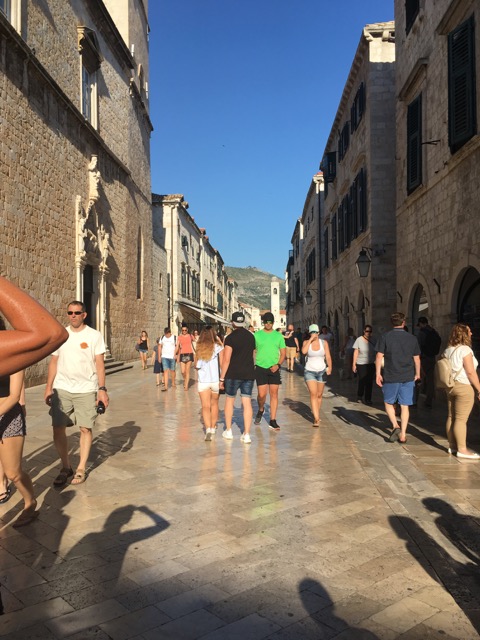
The gates were, most definitely, open. The drawbridge was down, the moat dry. In fact, part of the moat had been turned into a playground.

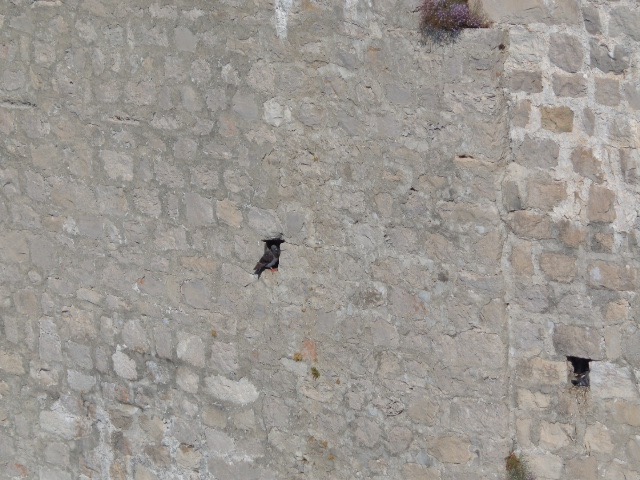
Swallows screeched and soared above us down the narrow streets. Pigeons nested right in the walls. Every time I saw them, I thought about this verse.

Who are these that fly like a cloud,
and like doves to their windows? (Isaiah 60:8)

I know that the Isaiah passage is actually talking about Jerusalem, which is the city I most want to visit. How Leah and I happened to end up at Dubrovnik was serendipity.

But I’m so thankful.

It wears the scars of recent violence —

Inside the Franciscan monastery in Dubrovnik

But the bustle and busy-ness of the place tell a different story.

Violence shall no more be heard in your land,
devastation or destruction within your borders;
you shall call your walls Salvation
and your gates Praise. (Isaiah 60:18)

One day, I pray, we will have no more violence.

In the meantime, I’m thankful to have visited Dubrovnik.