poetry

Geranium

Rubbing fuzzy leaves
Releases distinctive smell
Pink geranium
Awakening memories
Mom’s thriving houseplant green thumb


I’m late to the scavenger hunt (thanks, Val, for sharing it with me) but here’s my response to the first prompt: “Write a poem inspired by leaves (dying ones or newly emerged). For bonus points use a Tanka to express your feelings about the leaves…”

Since the scavenger hunt started in the fall, I’m sure it was intended to inspire poetry about the beautiful colors of autumn. However, I’m writing in February, and immediately thought of my sad geranium. It’s the one plant that I’ve been able to keep alive for multiple years. That alone tells me that it’s an easy plant.

Its leaves turn crispy brown starting at the edges when I forget to water it — which happens more often than it should. Now I’ve placed the plant in a place I walk past all the time so I’ll see it.

“Oh, yeah, you,” I say to those brown-edged leaves. “You need water.”

So I give it water and the whole plant perks up.

Once, when I went on vacation, my son was taking care of the house for me. He remembered to feed the cats but forgot to water the geranium.

Priorities, right?

Anyway, I thought the geranium was a goner that time — but just add water and it’s back.

I do love the smell of the leaves when I’m dead-heading and dead-leafing. They make me think of my mom who, I’m pretty sure, never killed a plant in her life.
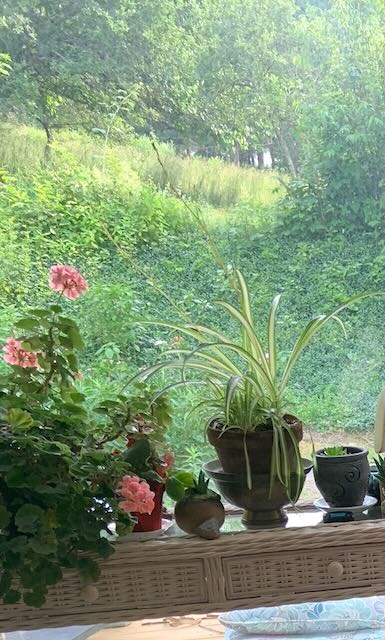
This is a photo from a few summers ago. The geranium, on the left, is still alive today. Nothing else in the photo is.
poetry · swimming

How I Relax

Dive into coolness
Catch, pull, release, recover
Stroke, flutter kick, stroke
Exhale into the water
Turn my head to catch a breath


The W3 prompt for this week is:

The more I read about haikus and tankas, the more I realize that something is lost in translation. A tanka is more than 5-7-5-7-7 syllable counts. It’s actually not syllable counts, it’s kana.

What’s a kana, you ask? I’m not 100% sure because it’s something in Japanese. And Japanese “uses a combination of logographic kanji, which are adopted Chinese characters, and syllabic kana.” (according to Wikipedia) English is phonetic. These two language systems aren’t the same. How can we adapt something like poetry from system to the other. I don’t know.

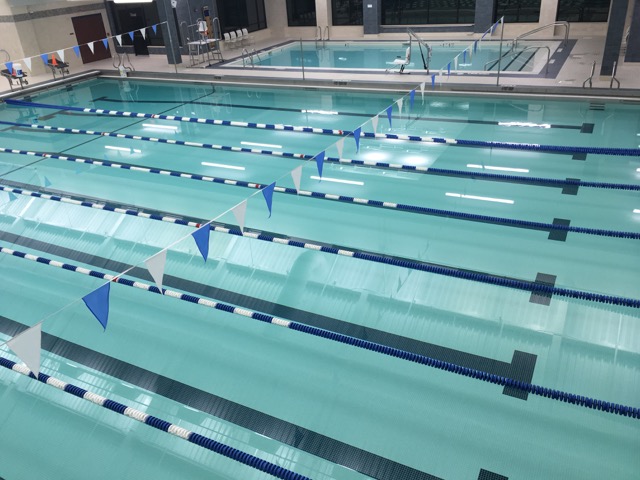
But I know how I relax. A pool is my happy place and swimming laps helps me unwind.

So here’s my tanka-ish whatever.

23 words · poetry

Lady Agnew of Lochnaw

She cinched it too tight –
I can hardly breathe, and yet
Composed, I pose here,
While imagining little
Ways to punish that servant


I’m going beyond the 23 words of my Ekphrastic Tanka (5-7-5-7-7) — To be honest, I’m not really sure I did the Tanka right because I know good poetry is more that counting syllables.

Lady Agnew of Lochnaw (by John Singer Sargent) looks annoyed, doesn’t she? That’s all I see when I look at the painting.

And yet that seems so unfair to Lady Agnew. What if I’m just projecting my own annoyances onto her.

How about this tanka, instead.

I’m going to sneeze
I mean it — I can feel it
Rising, rising up –
So that my eyes smart [breathe in,
Relax, slowly breathe] — ACHOO

Really, it’s a lovely painting. I’m not trying to make fun of Lady Agnew. I want to know what she’s thinking. Is it deeper thoughts than the little annoyances she may be experiencing?